

&imwidth=800&imheight=600&format=webp&quality=medium "Why did India abstain from voting on the UN climate change resolution?")
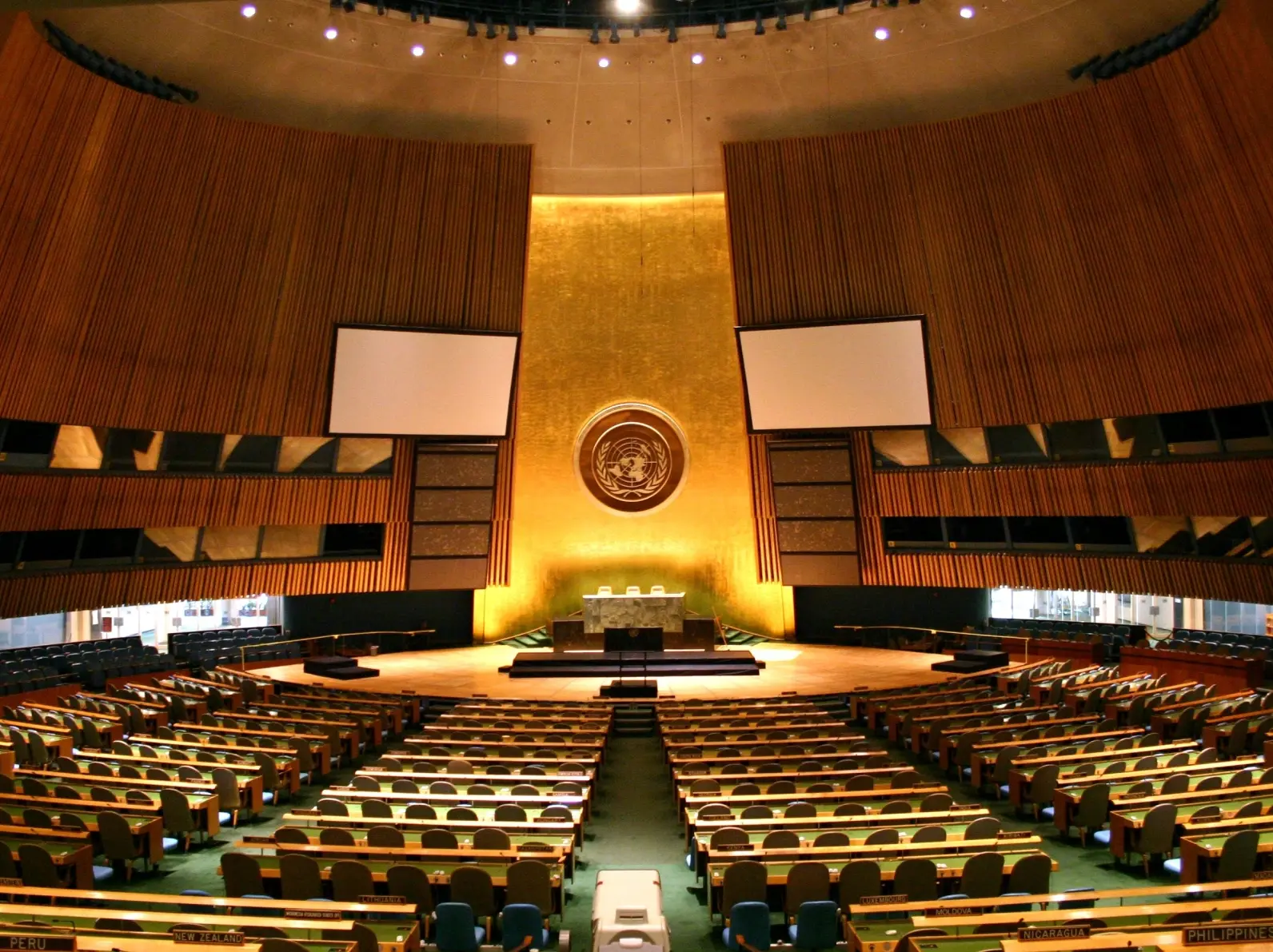
India refused to vote on a UN General Assembly resolution calling on nations to comply with their obligations on climate change, raising concern over the draft, which "undermines" the "sacrosanct architecture" of the United Nations Framework Convention on Climate Change. The resolution was passed in the 193-member UN General Assembly on Wednesday with 141 countries voting in favour, eight against it and 28 abstaining, including India. New Delhi stated that it had engaged constructively during negotiations on the resolution and consistently articulated its concerns and positions during the process.
"We are therefore disappointed that our concerns were not addressed, despite our best efforts to find common ground," it said. Explanation India's vote, First Secretary at India's Permanent Mission to the UN, Petal Gahlot, said adoption of the resolution by the General Assembly does not impose any legally binding obligations on India. b"Our obligations arise only from outcomes adopted under the UNFCCC process. Hence, in line with our stated position on climate change-related issues, India was not in a position to vote in favour of this resolution," she said.
The resolution, titled ‘Advisory opinion of the International Court of Justice on the obligations of States in respect of climate change’, welcomed the unanimous advisory opinion issued by the International Court of Justice in July 2025 on countries’ responsibilities regarding climate change. It also recognised the opinion as an authoritative interpretation of existing international law.
Why does India abstains to vote?
India has consistently raised concerns in the past that climate obligations must be negotiated through the UN climate framework, as it recognises the principle of "common but differentiated responsibilities". Under this principle, developed countries, which are the largest historical emitters, are supposed to take the lead on emissions cuts initiatives and provide finance and technology support to developing nations.
Introduced by Vanuatu, the resolution urged all nations to fulfil their obligations under international law to safeguard the climate system and environment from human-induced greenhouse gas emissions. It also called on countries to take steps, consistent with the Paris Agreement and their respective national circumstances, to limit the increase in global average temperatures to 1.5 degrees Celsius above pre-industrial levels. India, however, maintained that the draft resolution does not adequately emphasise the advisory and non-binding character of the ICJ opinion.
Trending Stories
&imwidth=180&imheight=135&format=webp&quality=medium)
Blasts heard in Sanaa as Saudi-led coalition warns civilians to evacuate; Houthis vow retaliation
&imwidth=180&imheight=135&format=webp&quality=medium)
China's counter-surveillance industry booms amid heightened espionage fears | Gravitas
&imwidth=180&imheight=135&format=webp&quality=medium)
Saudi Arabia strikes Yemen oil sites as Houthi missiles target Riyadh; 'limited fire' breaks out at Aramco
&im=FitAndFill=(700,400)&imwidth=180&imheight=135&format=webp&quality=medium)
Navratri 2026: 9 days, 9 forms of Goddess Durga and 9 colours- Check the complete list
&imwidth=180&imheight=135&format=webp&quality=medium)
Trump accuses Houthis of driving up oil prices before US midterms, warns of consequences
&imwidth=180&imheight=135&format=webp&quality=medium)
New Delhi rejects Beijing’s claims and remarks on Ladakh location naming exercise
&imwidth=180&imheight=135&format=webp&quality=medium)
US Midterms 2026: In Alaska, cost-of-living anxiety meets strangest ballot in high-stakes Senate race
&imwidth=180&imheight=135&format=webp&quality=medium)
CMs Vijay-Naidu meet in Vijayawada, discuss water sharing, river-linking
&imwidth=180&imheight=135&format=webp&quality=medium)
'Don't ever mess with nature!': Trump’s tiger attack post triggers social media backlash as victim's family issues heartbreaking tribute
&imwidth=180&imheight=135&format=webp&quality=medium)
OpenAI employee arrested by FBI after allegedly hiding recording device in office
&imwidth=180&imheight=135&format=webp&quality=medium)
Man dies at Six Flags Georgia: Past accidents at Six Flags amusement parks across US
&imwidth=180&imheight=135&format=webp&quality=medium)
1,500 drones illuminate Mumbai sky as Cordelia Cruises unveils second ship, Cordelia Sky
&imwidth=180&imheight=135&format=webp&quality=medium)
Pope Leo XIV diagnosed with lung cancer after surgery, Vatican says 'successful surgery and recovering'
&imwidth=180&imheight=135&format=webp&quality=medium)
Pakistan to chair UN-backed global Borrowers’ Platform as its own debt burden mounts, triggers sarcastic reactions on social media
&imwidth=180&imheight=135&format=webp&quality=medium)
Suicidal man survives jump from 11th floor in Japan, could now be tried for murder
&imwidth=180&imheight=135&format=webp&quality=medium)
Robot gropes girl, makes thrusting movements in bizarre crime in Germany
&imwidth=180&imheight=135&format=webp&quality=medium)
France accuses Musk of ‘online harassment’ of European leaders, warns of poll interference
&imwidth=180&imheight=135&format=webp&quality=medium)
MI5 chief warns Russia is UK’s ‘aggressor number one’ as Iran and AI threats grow
&imwidth=180&imheight=135&format=webp&quality=medium)
'Turn approver, resign, we'll forgive you': Rahul Gandhi claims receiving messages from CEC Gyanesh Kumar
&imwidth=180&imheight=135&format=webp&quality=medium)
Inside the alleged drug-money trail behind a Mumbai couple’s properties
&imwidth=180&imheight=135&format=webp&quality=medium)
‘My president, I mean my husband’: Trump's new press secretary Katie Zacharia's first briefing goes off the rails in 14 minutes
&im=FitAndFill=(700,400)&imwidth=180&imheight=135&format=webp&quality=medium)
IMF World Economic Outlook: 10 economies to watch for growth in FY27 and FY28 - Where does India stand?
&imwidth=180&imheight=135&format=webp&quality=medium)
Marco Rubio to visit India next week, focus on energy cooperation and strategic ties
&imwidth=180&imheight=135&format=webp&quality=medium)
Is the AI chip boom already over? Global semiconductor stocks slide as investors question unbridled spending
&imwidth=180&imheight=135&format=webp&quality=medium)
L Murugan resigns as Union Minister, expresses wish to return to grassroots
&imwidth=180&imheight=135&format=webp&quality=medium)
'Ouch!!! That must hurt': Kangana Ranaut hails Kamal Haasan's sharp reply to Elon Musk over Starlink row
&imwidth=180&imheight=135&format=webp&quality=medium)
Girl 'dead' for 8 hours wakes up at her own funeral, dad insists she wasn't breathing
&imwidth=180&imheight=135&format=webp&quality=medium)
Sidhu Moose Wala’s younger brother wins hearts by recreating late singer’s signature move at Toronto Hologram Show
&imwidth=180&imheight=135&format=webp&quality=medium)
UK school ditches technology, shifts from screen to pen and paper for learning
&im=FitAndFill=(700,400)&imwidth=180&imheight=135&format=webp&quality=medium)
New OTT releases this week (October 12-18, 2026): Sacrifice, Koffee with Karan S9, Roadies Rebirth- 6 titles coming on Netflix, JioHotstar and more
&imwidth=180&imheight=135&format=webp&quality=medium)
Rahul Gandhi speaks on Anti-CeC protests: Gathering over tea after Supreme Court rally
&imwidth=180&imheight=135&format=webp&quality=medium)
Anupam Kher joins Ranbir Kapoor's Ramayana as Jatayu, new poster unveiled
&imwidth=180&imheight=135&format=webp&quality=medium)
Measles kills again: 6 dead in Pennsylvania as America faces its worst outbreak in decades | Gravitas
&imwidth=180&imheight=135&format=webp&quality=medium)
Ken Paxton's Dubai night out with two US fugitives sparks political storm as Texas Senate race tightens
&imwidth=180&imheight=135&format=webp&quality=medium)
Mundhe: Fight against unsafe food goes on
&imwidth=180&imheight=135&format=webp&quality=medium)
Cornell University suspends fraternity parties over 2024 gang rape allegations
"We are therefore seriously concerned that the resolution undermines the sacrosanct architecture of the UNFCCC process, by elevating an Advisory Opinion to a binding or quasi-binding status, attempting to impose obligations on developing countries that have not been multilaterally agreed upon. This is a dangerous precedent that we must all be wary of," Gahlot said.
India found that the resolution directs a specific mitigation roadmap, imposes external benchmarks for ambition, and setup environment that may invite judicial or quasi-judicial scrutiny of nationally determined contributions. "This seriously undermines national policy space and disrupts the bottom-up architecture of the Paris Agreement," Gahlot said.
India, along with several developing nations, has previously voiced concerns that efforts to assign greater legal significance to the International Court of Justice opinion could subject national climate commitments and domestic policy decisions to international legal scrutiny beyond the framework of the negotiated UN climate process.
India also raised objections over the omission of the term “climate finance” from the resolution. Calling it a “serious omission”, Petal Gahlot said the climate finance target agreed upon in 2024 is widely acknowledged to be insufficient for the requirements of developing nations and therefore warranted greater emphasis in a resolution dealing with states’ obligations on climate change.
She further said India considers the United Nations Framework Convention on Climate Change and the Paris Agreement to be balanced and internationally agreed frameworks for addressing climate challenges. Gahlot also underlined that sustainable development and poverty alleviation continue to be the foremost priorities for developing countries.
"Any transition in energy systems must therefore be just, orderly, and equitable, taking into account the need for energy access, economic growth, and social development. The resolution does not adequately recognise these imperatives and constrains policy space for developing countries.
"It is further a case of insult to injury that there is absolutely no reference to the necessity of developed countries continuing to take the lead in mitigation and providing adequate and predictable financing, technology transfer and capacity building to developing countries in order for them to undertake such transitions," Gahlot said.

