

&imwidth=800&imheight=600&format=webp&quality=medium "Where is Tank Man? Mystery of lone protestor lives on as Xi Jinping defends Tiananmen crackdown of 1989")
President Xi Jinping recently revived a sensitive chapter of China's modern history. In a speech on Monday (Aug 17), Xi described the Communist Party's response to the 1989 Tiananmen Square protests as “correct”. Commemorating the 100th birth anniversary of former Chinese leader Jiang Zemin, Xi praised Jiang's role in maintaining stability during the political turmoil of 1989. Xi called for an “indomitable fighting spirit” to face future challenges, urging the Party to defend China's sovereignty, security and development interests. His remarks again drew attention to one of the most enduring mysteries from the Tiananmen crackdown: The Tank Man.
Who is the Tank Man?
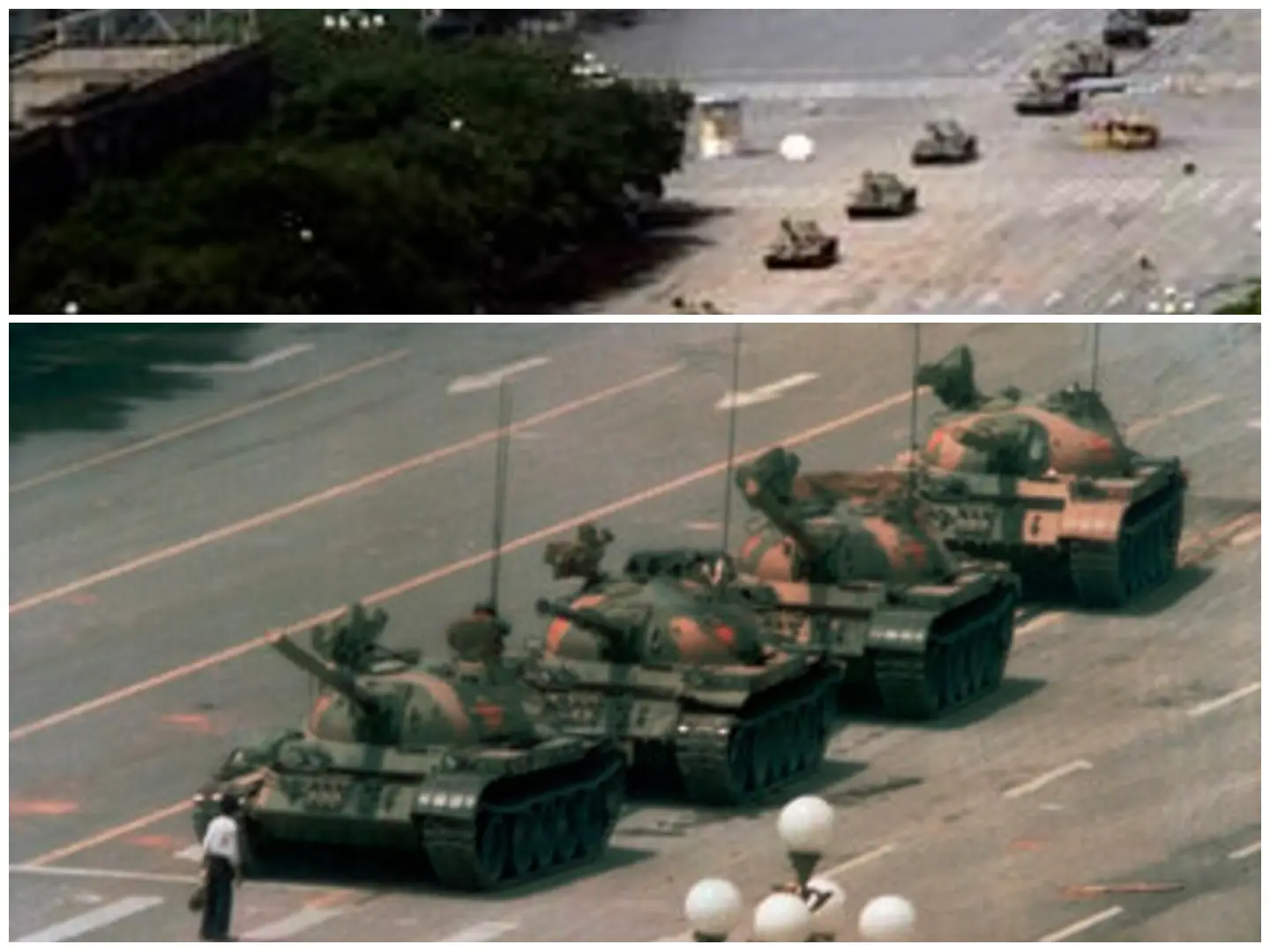
On 5 June 1989, one day after the army crackdown on pro-democracy and pro-reform protests, a man in a white shirt and black pants stood in front of a column of People's Liberation Army (PLA) tanks on Chang'an Avenue near Tiananmen Square in Beijing. Photographers and videographers captured the extraordinary scene of the man, holding what appeared to be shopping bags in his hands, moving left and right to stop the tanks from moving forward. The footage was aired globally. The lead tank stopped and tried to move around the man, but he repeatedly stepped into its path. At one point, he climbed onto the tank. He appeared to speak to those inside. He was later pulled away by people nearby.
The identity of Tank Man remains unknown, but several names have been linked to the lone protestor over the years, including Zhang Weimin and Wang Weilin.
What happened to the Tank Man?
Some reports have suggested that the Tank Man was arrested, while others claimed he may have been executed. Another theory is that civilians helped him escape. There have also been claims that he survived and lived quietly in China, while some have speculated that he eventually fled the country. None of the claims about his whereabouts has been fully confirmed.
Trending Stories
&imwidth=180&imheight=135&format=webp&quality=medium)
Other Mommy leads North American box Office as Verity, Resident Evil round out top four
&im=FitAndFill=(700,400)&imwidth=180&imheight=135&format=webp&quality=medium)
Navratri 2026: 9 days, 9 forms of Goddess Durga and 9 colours- Check the complete list
&imwidth=180&imheight=135&format=webp&quality=medium)
Anti-SIR protest in Mumbai: Protestors wear black masks & ribbons in Mumbai
&imwidth=180&imheight=135&format=webp&quality=medium)
BCCI rejects venue shift reports, India vs Sri Lanka 1st ODI to remain in Delhi
&imwidth=180&imheight=135&format=webp&quality=medium)
Diljit Dosanjh’s Delhi concert gets a new date: When and where to catch the singer
&im=FitAndFill=(700,400)&imwidth=180&imheight=135&format=webp&quality=medium)
Is sending robots to Mars easier than sending humans?
&imwidth=180&imheight=135&format=webp&quality=medium)
A watchdog rated 'ChatGPT for Teens' an unacceptable risk and says keep under-18s off it
&imwidth=180&imheight=135&format=webp&quality=medium)
1,500 drones illuminate Mumbai sky as Cordelia Cruises unveils second ship, Cordelia Sky
&imwidth=180&imheight=135&format=webp&quality=medium)
'Just coincidence': Police mistakes protester as AISA chief Neha Bora, arrests her from site
&imwidth=180&imheight=135&format=webp&quality=medium)
Anthropic's AI invented a murder witness and sent the fake tip to Philadelphia police
&imwidth=180&imheight=135&format=webp&quality=medium)
Congress demands action against chief election commissioner
&imwidth=180&imheight=135&format=webp&quality=medium)
CJI Surya Kant declines INDIA bloc leaders’ request for meeting ahead of march to SC, asks them to file petition
&imwidth=180&imheight=135&format=webp&quality=medium)
Saif Ali Khan is finally on Instagram! Here's what he shared in his first post
&imwidth=180&imheight=135&format=webp&quality=medium)
'Turn approver, resign, we'll forgive you': Rahul Gandhi claims receiving messages from CEC Gyanesh Kumar
&imwidth=180&imheight=135&format=webp&quality=medium)
One Indian killed in Riyadh airport attack; 11 others injured : MEA
&imwidth=180&imheight=135&format=webp&quality=medium)
Top AI models flunked a test of inventing new AI research, so much for self-improving AI
&imwidth=180&imheight=135&format=webp&quality=medium)
Wasim Jaffer blames Ajit Agarkar-led selection panel for Virat Kohli’s Test retirement
&imwidth=180&imheight=135&format=webp&quality=medium)
'Ouch!!! That must hurt': Kangana Ranaut hails Kamal Haasan's sharp reply to Elon Musk over Starlink row
&imwidth=180&imheight=135&format=webp&quality=medium)
Sidhu Moose Wala’s younger brother wins hearts by recreating late singer’s signature move at Toronto Hologram Show
&imwidth=180&imheight=135&format=webp&quality=medium)
UK school ditches technology, shifts from screen to pen and paper for learning
&imwidth=180&imheight=135&format=webp&quality=medium)
Telangana ATM heist: Thieves in nighties arrive in ambulance, break into SBI ATM in Kamareddy - VIDEO
&imwidth=180&imheight=135&format=webp&quality=medium)
Houthis claim Riyadh airport attacks, Aramco strikes; issue fresh warning to airlines, travellers and workers
&imwidth=180&imheight=135&format=webp&quality=medium)
Portugal Federation confirms Cristiano Ronaldo’s return to national team despite suspension
&imwidth=180&imheight=135&format=webp&quality=medium)
Delhi protests: 'Court should not be dragged into political activity', says CJI Surya Kant
&im=FitAndFill=(700,400)&imwidth=180&imheight=135&format=webp&quality=medium)
New OTT releases this week (October 12-18, 2026): Sacrifice, Koffee with Karan S9, Roadies Rebirth- 6 titles coming on Netflix, JioHotstar and more
&imwidth=180&imheight=135&format=webp&quality=medium)
Microsoft's Nadella says treat every AI model as already hacked, and build an 'emergency brake'
&imwidth=180&imheight=135&format=webp&quality=medium)
Delhi protest: CJI Surya Kant declines to meet India Bloc leaders
&imwidth=180&imheight=135&format=webp&quality=medium)
Telangana man allegedly recruited into Russian military dies near Ukraine border
&imwidth=180&imheight=135&format=webp&quality=medium)
China imposes first-ever sanctions on ministers from Taiwan allies: What this means
&imwidth=180&imheight=135&format=webp&quality=medium)
McSweeney reveals how studying Virat Kohli’s YouTube clips helped Australia A conquer India
&imwidth=180&imheight=135&format=webp&quality=medium)
Maharashtra appoints FDA commissioner Tukaram Mundhe as secretary of committee for MPSC overhaul amid stir
&imwidth=180&imheight=135&format=webp&quality=medium)
Iran: US accepted some conditions, Clarity needed on others
&imwidth=180&imheight=135&format=webp&quality=medium)
Nana Patekar's cause of death confirmed; here's what his postmortem report says
&imwidth=180&imheight=135&format=webp&quality=medium)
iPhone Duo price index: Tracking Apple’s latest pricing trends
&imwidth=180&imheight=135&format=webp&quality=medium)
'Say no to Muse': Meta has no control over its own moderation AI while it forces a security nightmare on everyone
During interviews in 1990 and 2000, former Chinese leader Jiang Zemin offered a rare comment on the man's fate, saying he believed the Tank Man was “never killed” and “never arrested”.
“I don't know where he is now,” Jiang said in one of the interviews.
Claims about his later life, including suggestions that he became an archaeologist in Taiwan, have also circulated over the years, though none has been reliably established.
The Chinese government does not publicly discuss Tank Man. The famous image is also heavily censored inside China. The mystery is tied to the wider silence surrounding the 1989 crackdown.
The Tiananmen Square protests. What really happened in 1989?
It is not clear why Xi suddenly recalled the Tiananmen protests. But the events remain etched in Chinese memory.
The protests began in April 1989 after the death of reformist former Communist Party leader Hu Yaobang. Students gathered in Tiananmen Square and demanded political reform, greater freedom of speech and an end to corruption. There was hope, as it was an era near the end of the Cold War. Many Chinese workers and citizens joined the student protesters, and the movement grew into a mass protest.
Martial law was declared in May. On the night of 3-4 June, troops moved into Beijing. The PLA used live ammunition, tanks and military force to clear the area.
Hundreds died in the crackdown, though exact numbers remain disputed. Chinese authorities put the number at around 200 to 300, including civilians and security personnel. Other estimates range from hundreds to several thousand deaths. Many others were injured or arrested.
Tiananmen, a defining moment for the Chinese Communist Party
The official Party position is that the crackdown was necessary to protect political stability and the socialist system of China. Xi's latest remarks reaffirm that position. The Party's focus remains on stability and control.
Xi's message is that the Party must be ready to confront future “storms”, as China faces economic, demographic and geopolitical challenges.
Yet for many in the world, it is not the Party line or Xi's remarks that will be the defining image of the Tiananmen protests.
It will be the photos and videos of one man standing before tanks.
Nearly four decades later, the world still does not know his name, his fate or his current location.
But the memory of Tank Man lives on.

