
&imwidth=800&imheight=600&format=webp&quality=medium "What is sideline diplomacy? How bilateral talks shape the G7 agenda | WION Decodes")
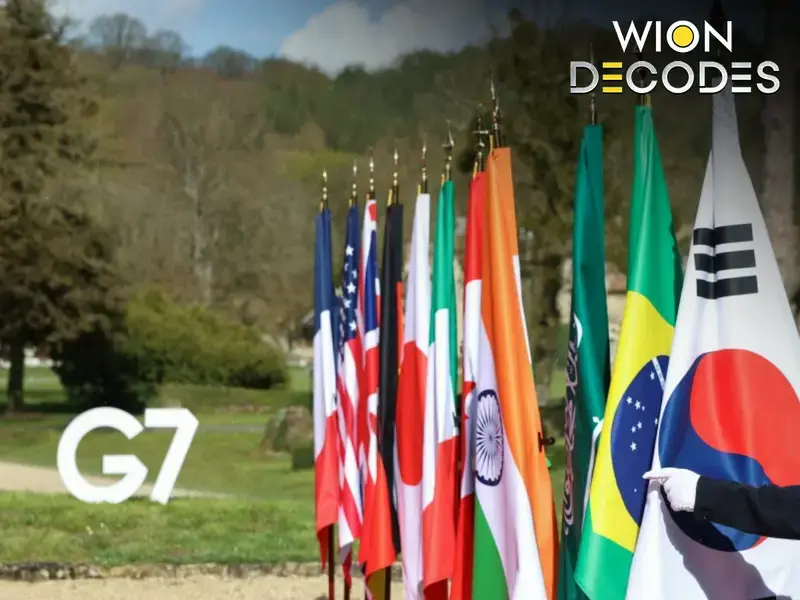
While the world’s focus is on the choreographed family photos and meticulously vetted final communiqués of the 52nd G7 Summit, the real geopolitical architecture of the event is being assembled away from the main plenary halls. In the quiet corridors and secure bilateral rooms of Évian-les-Bains, informal diplomacy and "sideline" negotiations are driving the summit’s most critical and binding outcomes.
Historically, the G7 forum was conceived not as a rigid legislative body but as an intimate gathering where heads of state could speak frankly without the constraints of official talking points. Decades later, even as the summit has expanded into a massive logistical apparatus, this core element of unscripted, face-to-face engagement remains its most potent tool. The true value of the modern G7 lies in its unique concentration of global power, creating a high-velocity environment for transactional, bilateral diplomacy.

Crucial India-US bilateral strategy
The power of sideline diplomacy is perfectly illustrated by the highly anticipated bilateral meeting scheduled between US President Donald Trump and Indian Prime Minister Narendra Modi. White House officials confirmed that the two leaders will hold direct, face-to-face talks on June 17, marking their first in-person interaction since Modi's visit to Washington in early 2025.
While the official G7 sessions focus on overarching themes like artificial intelligence regulation and global solidarity, the Modi-Trump bilateral will pivot to immediate, high-stakes trade friction. The leaders are set to take stock of an ambitious, months-long trade agreement currently under negotiation. Furthermore, the meeting takes place under a heavy geopolitical shadow following fatal US strikes against commercial oil tankers carrying Indian seafarers near the Strait of Hormuz. This tense backdrop elevates the sideline encounter from a routine diplomatic check-in to a critical conflict-resolution mechanism that simply could not occur within the broader G7 group format.
Trending Stories
)
Did India risk its US trade deal despite softer stance at BRICS?
&im=FitAndFill=(700,400))
How 2nm technology improves iPhone performance
&im=FitAndFill=(700,400))
Shahid Kapoor to Rajkummar Rao: Actors who rule both theatres and OTT
)
First naval drone battle? Ukraine says Sargan 3000 sank Russian unmanned boat
)
BRICS Summit 2026: Trump wants to weaken BRICS, but maybe doing the opposite
&im=FitAndFill=(700,400))
Meet top 5 batters fastest to 3000 runs in T20Is
)
Delhi’s balancing act: BRICS serves as a stage for West Asia diplomacy
&im=FitAndFill=(700,400))
Why European Meteor missiles use ramjet engines compared to standard US solid rockets
)
'He is popular...': Malaysian PM Anwar Ibrahim's praise for PM Modi during bilateral meeting | WATCH
)
Iran, India agree to deepen humanitarian and political ties, President Pezeshkian says
)
‘Want to reset ties with India, have engagement based on mutual interests,’ says Bangladesh minister
)
BRICS Summit 2026: PM Modi, Xi reach key consensus on ties, China to assume BRICS chairmanship in 2027
)
UK breakup on the cards? Scotland, Wales and Northern Ireland push for independence
)
Russia-Ukraine-US talks in October? Kremlin says not ruling out possibility of trilateral
)
Trump says Canada eager to reach a deal, it could come ‘fairly soon’ if Ottawa treats US farmers better
)
‘Partners, not rivals’: Xi outlines four point plan for stronger India-China ties
&im=FitAndFill=(700,400))
Why Chinese PL-15 air-to-air missiles use dual-pulse motors compared to European interceptors
)
NATO under Russian threat? Drone strikes just 2 km from Poland, narrow escape for former UK PM, CIA chief
)
Who is the smiling man beside Modi, Putin and Xi at BRICS Summit 2026?
)
BRICS Summit: New Delhi declaration adopted with full consensus, big diplomatic win for India
)
800 million years old - Scientists discover 'fingerprints' of supercontinent Gondwana in ancient rocks
)
Russian drone hits Warsaw-bound train near Polish border, Zelensky accuses Moscow of ‘deliberate’ targeting
)
War is making Russia stronger? How Ukraine is shaping Moscow’s next generation of weapons
)
Why Xi skipped PM Modi's gala dinner hosted for BRICS leaders
)
NEET-UG to move to computer-based test soon, NTA DG says ‘CBT is the future’
)
9-year-old Chennai prodigy clears Cambridge IGCSE grade 10 exams
)
Indian importers urge Bangladesh to lift export ban on 'Hilsa' fish ahead of Durga Puja
)
Baba Vanga's first prophecy for 2027 is out, and straight out of science fiction
)
Humans may lose control of AI: Anthropic CEO calls for slowdown, Altman, Musk back him
)
US diplomat accused of possessing child abuse images secretly flown out of UK by US Marines
)
BRICS Summit 2026: Modi-Xi moment highlights India-China thaw at BRICS
&im=FitAndFill=(700,400))
From Rinku Singh to Mayank Yadav, 5 players dropped from India’s squad for Afghanistan T20Is
)
PM Modi and China's Xi offered to help resolve Russia-Ukraine war: Kremlin
)
Akram, Afridi, Mushtaq tear into PCB after Pakistan’s Test series collapse in UK
Managing tensions and intentional exclusions
Sideline diplomacy is defined as much by who does not meet as who does. According to administration sources, while President Trump will participate in a G7 working session alongside Ukrainian President Volodymyr Zelenskyy to address European security, no separate, one-on-one bilateral meeting has been scheduled between the two leaders. Instead, the US delegation has heavily prioritised targeted sideline meetings with key Arab outreach partners, specifically the leaders of Qatar, the United Arab Emirates, and Egypt, to address volatile maritime security and West Asian trade routes.
These rapid-fire, closed-door huddles allow leaders to cut through bureaucratic red tape, float trial balloons, and test the limits of foreign policy compromises without public scrutiny. These interactions lack the rigid structure of formal treaties; world leaders can engage in candid, real-time bargaining on sensitive security issues that are far too delicate to be included in the public summit declaration.
Ultimately, the official G7 agenda provides the necessary framework for global cooperation, but it is the informal, parallel tracks that generate immediate momentum. As Prime Minister Modi transitions from a state visit in Slovakia directly into the Évian outreach tracks, the dense web of sideline meetings reinforces a fundamental truth of modern statecraft: in an increasingly fragmented, multipolar world order, the formal speeches lay the groundwork, but it is the shadow diplomacy on the margins that settles the score.

