

&imwidth=800&imheight=600&format=webp&quality=medium "Virginia redistricting: Voters approve new electoral map in major win for Democrats ahead of midterm elections")
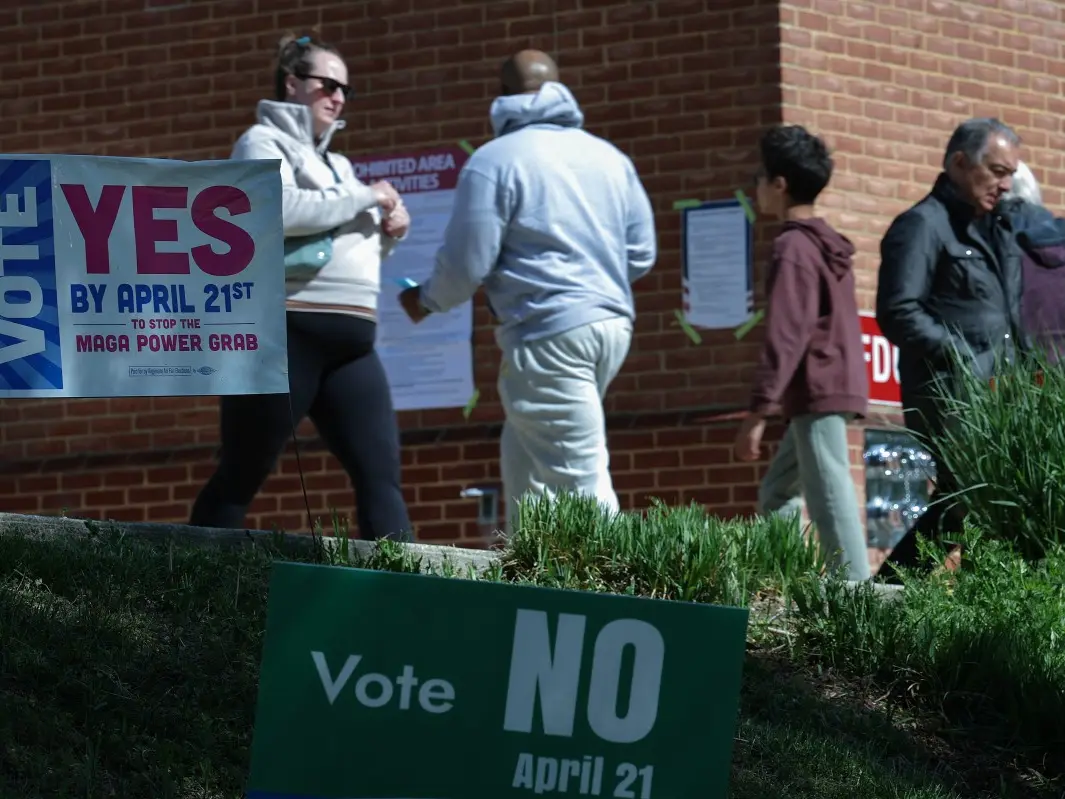
Voters in Virginia backed a new electoral map on Tuesday (April 21) in a referendum that could significantly shift the balance of power in the US House of Representatives, potentially giving Democrats up to four additional seats. The vote centers on the contentious issue of “gerrymandering”, the long-standing practice of redrawing electoral boundaries to favor a political party, which has become a key battleground ahead of the upcoming midterm elections.
Under the approved plan, Democrats could gain a strong advantage in 10 of Virginia’s 11 congressional districts, compared to their previous 6-5 edge. With control of the House narrowly divided, the outcome raises the likelihood that President Donald Trump may have to govern alongside a Democratic-controlled chamber capable of blocking his agenda and launching investigations. The result is seen as a setback for Trump, who had urged voters to reject the measure during a call with House Speaker Mike Johnson, warning: “The whole country is watching.”
Redistricting typically occurs every 10 years following the national census. However, Trump had encouraged Republican-led states to redraw maps ahead of schedule to protect their slim majority in the House. That push triggered a broader political battle, with states such as Texas moving to adopt maps that could add Republican seats, while California responded with measures aimed at boosting Democratic representation.
Virginia Governor Abigail Spanberger praised the referendum outcome, saying: “Virginia voters have spoken, and tonight they approved a temporary measure to push back against a President who claims he is 'entitled' to more Republican seats in Congress.” The referendum became one of the most expensive redistricting battles in US history, with both sides collectively raising nearly $100 million, much of it from undisclosed “dark money” sources.
The pro-redistricting campaign, Virginians for Fair Elections, raised nearly $65 million, according to The Hill. Former President Barack Obama also supported the initiative, urging voters to back it. "By voting yes, you can push back against the Republicans trying to give themselves an unfair advantage in the midterms...And we're counting on you," he said in a video message.
Republicans, however, criticized the move as a partisan power grab in a politically competitive state where Trump secured 46 percent of the vote in 2024. Larry Sabato warned that even with the new map, Democratic victories are not guaranteed. "Sometimes constituencies shock the map makers. You know, they don't vote the way the map makers thought they would vote. So you never know for sure, and the margins here aren't enormous," he said.
Some voters remained skeptical. Virginia resident Corey Crouch told CBS News: “I don't look at what other states and what everybody else is doing...I don't think we need to change maps around or anything.” The outcome is being closely watched nationwide as part of a broader struggle over congressional maps. Meanwhile, Trump ally Ron DeSantis are pushing efforts in Florida that could allow Republicans to gain additional seats, potentially offsetting Democratic gains in Virginia.
Trending Stories
&imwidth=180&imheight=135&format=webp&quality=medium)
Premier League: Haaland wants Manchester City to 'try to enjoy the situation and win the game'
&imwidth=180&imheight=135&format=webp&quality=medium)
'Nidal Hasan's firing-squad execution to be livestreamed', says Pentagon; first US military execution since 1961
&imwidth=180&imheight=135&format=webp&quality=medium)
Trump's naked 23-karat gold statue unveiled near European Parliament
&imwidth=180&imheight=135&format=webp&quality=medium)
‘Never-ending flow of cheap labour’: JD Vance hits back at Indian-origin Congresswoman over US green card curbs for major tech companies
&imwidth=180&imheight=135&format=webp&quality=medium)
Thai Actors Fourth Nattawat, Gemini Norawit face racism accusations from Indian fans over viral Bollywood act
&imwidth=180&imheight=135&format=webp&quality=medium)
Nigeria govt rolls out 30-day NNPC petrol discount, insists it is not a subsidy
&im=FitAndFill=(700,400)&imwidth=180&imheight=135&format=webp&quality=medium)
Fastest-growing Asian economies in 2026: Who tops the chart? Where does India rank?
&imwidth=180&imheight=135&format=webp&quality=medium)
A Love Other Than Yours: The temptation to cheat and what pushes people over the edge
&imwidth=180&imheight=135&format=webp&quality=medium)
Russia president Putin promises to 'do everything' to help settle Middle East conflict as US-Iran negotiations stall
&imwidth=180&imheight=135&format=webp&quality=medium)
‘Wait till you discover the other guy’: Rahul Gandhi takes a swipe as Musk's 'Ambani real boss of India' remark triggers X subscription cancellations
&imwidth=180&imheight=135&format=webp&quality=medium)
BTS agency HYBE announces first-ever Weverse Con Festival in India
&imwidth=180&imheight=135&format=webp&quality=medium)
Trump has a new 'enemy': Anyone who calls it 'artificial intelligence'. Here's what we wants instead
&imwidth=180&imheight=135&format=webp&quality=medium)
India at UN: Pak allows terror groups to operate from its soil
&imwidth=180&imheight=135&format=webp&quality=medium)
Air India, Air India Express increase fuel surcharge on domestic, international flights amid rising ATF costs
&imwidth=180&imheight=135&format=webp&quality=medium)
'Something truly catastrophic will happen': Former OpenAI researchers sound the alarm, claim they were fired for prioritising AI safety
&imwidth=180&imheight=135&format=webp&quality=medium)
Scientists find highly radioactive nuclear particles at Chernobyl 40 years after the disaster
&imwidth=180&imheight=135&format=webp&quality=medium)
Nana Patekar's #MeToo controversy: From Tanushree Dutta’s allegations to court ruling
&imwidth=180&imheight=135&format=webp&quality=medium)
Pakistan denies reports of PAF jets being used in attacks against Iran-backed Houthis in Yemen
&imwidth=180&imheight=135&format=webp&quality=medium)
New York ICE shooting sparks protests as Mamdani to call on Trump to halt ICE operations
&imwidth=180&imheight=135&format=webp&quality=medium)
Atlantic hurricane Isaias could make landfall as a strong Category 2 storm, tornado warnings issued
&im=FitAndFill=(700,400)&imwidth=180&imheight=135&format=webp&quality=medium)
From Kramatorsk buses to Yandex fire: Russia-Ukraine war in the last 48 hours
&imwidth=180&imheight=135&format=webp&quality=medium)
AUS vs SA: 'That's fine,' says Cummins on Khawaja's book contents about Sandpapergate
&imwidth=180&imheight=135&format=webp&quality=medium)
Who is Nana Patekar's wife Neelakanti? The bank officer who earned Rs 2,500 when he earned Rs 50
&imwidth=180&imheight=135&format=webp&quality=medium)
KATSEYE’s Sophia Laforteza to return in 2027 after hiatus, agency issues statement
&imwidth=180&imheight=135&format=webp&quality=medium)
French students light European bonfire, protests erupt in Belgium, Italy & Greece | Gravitas
&imwidth=180&imheight=135&format=webp&quality=medium)
France student protests: Over 500 arrested, govt promises 3,000 substitute teachers
&imwidth=180&imheight=135&format=webp&quality=medium)
Arizona congressional candidate claims she was sexually assaulted while repairing signs
&imwidth=180&imheight=135&format=webp&quality=medium)
New Cold War: Why is China buying more gold? Explained
&imwidth=180&imheight=135&format=webp&quality=medium)
OpenAI shuts down Russian, Iranian influence operations using ChatGPT to spread propaganda
&imwidth=180&imheight=135&format=webp&quality=medium)
'Understood consequences of a few mistakes': Ishan Kishan reflects on journey back to India team
&im=FitAndFill=(700,400)&imwidth=180&imheight=135&format=webp&quality=medium)
435 House seats, 35 Senate races: The numbers behind US midterms 2026
&imwidth=180&imheight=135&format=webp&quality=medium)
Bangladesh named as Pakistan’s replacement for Asian Hockey Champions Trophy
&imwidth=180&imheight=135&format=webp&quality=medium)
Zendaya gives The Odyssey white lace jacket a stylish twist at Paris Fashion Week 2026
&imwidth=180&imheight=135&format=webp&quality=medium)
SC asks Centre to frame mechanism against unethical pharma marketing practices
&imwidth=180&imheight=135&format=webp&quality=medium)
US suspends Microsoft, Infosys, Tata, Wipro from green card programme over alleged H-1B abuse
&imwidth=180&imheight=135&format=webp&quality=medium)
Trump honours Microsoft CEO Satya Nadella with top technology honour amid immigration scrutiny
&imwidth=180&imheight=135&format=webp&quality=medium)
Flydubai flight attack: Indian pilot Smit Machchhar to receive Israel's highest civilian bravery award for saving 174 lives

