

&imwidth=800&imheight=600&format=webp&quality=medium "Viola Fletcher death: Recalling Tulsa Massacre, a dark chapter of US racist history, as its longest survivor dies at 111")
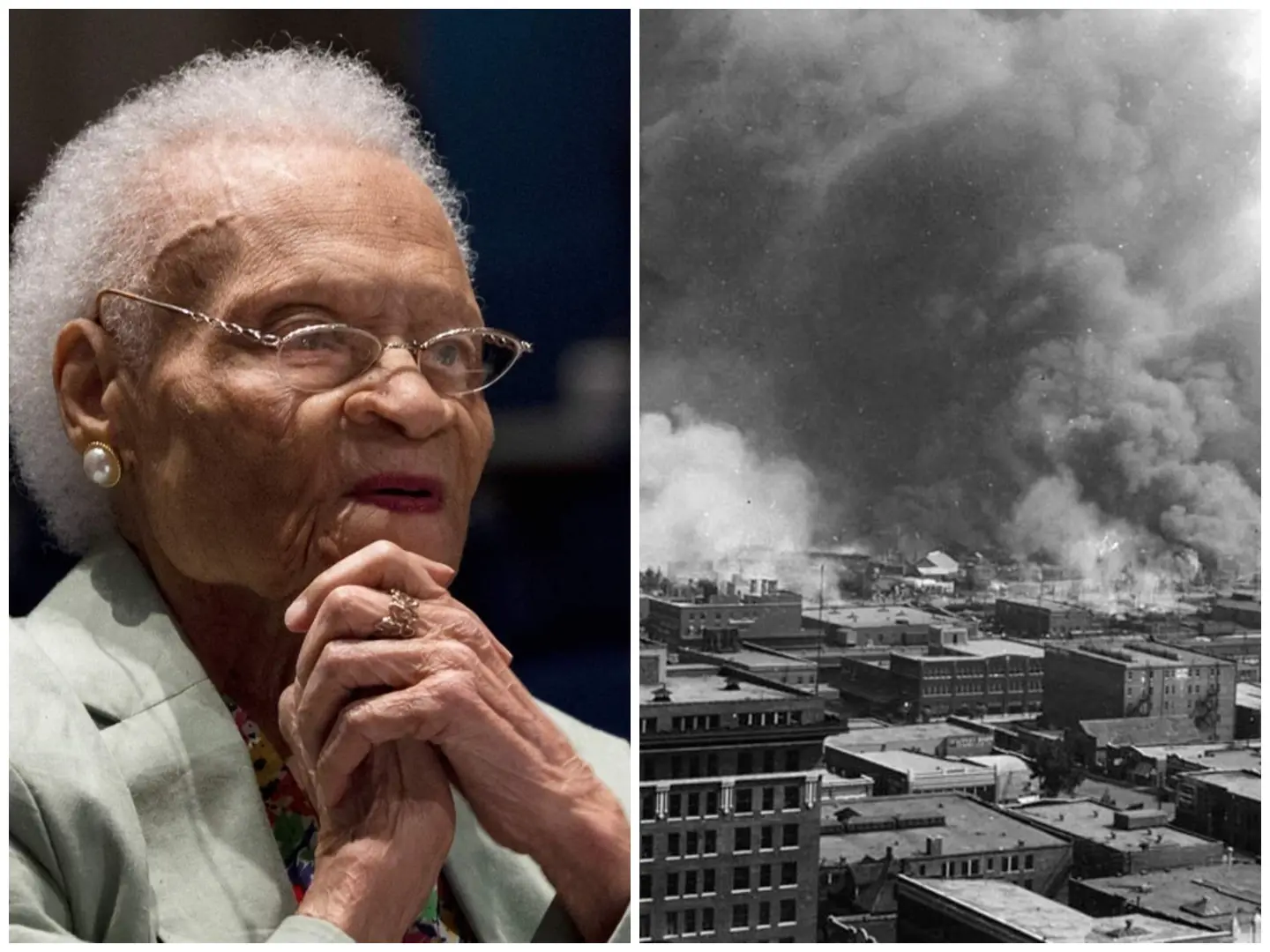
Viola Fletcher was a young Black girl in 1921 when she witnessed the Tulsa race massacre, one of the darkest chapters of America’s racist past. The longest survivor of the massacre, Fletcher died at the age of 111 on Monday (Nov 24). She spent the last years of her life advocating for racial justice and civil rights, often sharing her first-hand experience of racism at Tulsa in the southern state of Oklahoma, which had a past of Black slavery. Her death is a moment for America to recall the atrocities of Tulsa a century later, and do some soul-searching, particularly in the current context of racial tensions involving both Black Americans and immigrant communities, from Latin America to Asia.
Who was Viola Fletcher?
Viola Ford Fletcher was the oldest known survivor of the 1921 Tulsa Race Massacre. She was only seven years old when white mobs destroyed the Greenwood district, then the most prosperous Black community in the US, located in Oklahoma.
Born in 1914 in Oklahoma, Fletcher lived with her family in Greenwood. Unlike many other parts of the country, Greenwood at the time was known as Black Wall Street, due to the proliferation of Black-owned businesses, homes and institutions in the area.
Fletcher's memories of Tulsa and late-life activism
In her retelling, Fletcher often shared how she woke up to chaos on 31 May 1921, seeing armed white men advancing, buildings burning, and planes overhead dropping explosives. As gun violence spread, Fletcher’s family fled the area even as their home and community were burned down. The family survived, though they never recovered what was lost.
Trending Stories
&im=FitAndFill=(700,400)&imwidth=180&imheight=135&format=webp&quality=medium)
What is the real meaning behind Pete Hegseth's tattoos?
&imwidth=180&imheight=135&format=webp&quality=medium)
Kim Jong Un death rumours: State media shares photos to prove dictator is alive amid reports of brain haemorrhage
&imwidth=180&imheight=135&format=webp&quality=medium)
Two Indians among 28 arrested in California over alleged voter registration fraud, DOJ says
&imwidth=180&imheight=135&format=webp&quality=medium)
‘Nuclear-use decision should be taken by humans’: India flags AI risks at UN
&imwidth=180&imheight=135&format=webp&quality=medium)
Flying car race: Alef Aeronautics welcomes Tesla Roadster '11 years' later, but are the two models the same?
&imwidth=180&imheight=135&format=webp&quality=medium)
Dussehra 2025: Why is Ravana not burnt but worshipped in these places of India?
&imwidth=180&imheight=135&format=webp&quality=medium)
Shastri backs Shami comeback; lauds Bhuvi and warns Bumrah on format workload ahead of World Cup
&imwidth=180&imheight=135&format=webp&quality=medium)
Netanyahu rival Benny Gantz quits Israel election race, vows to push for unity government
&imwidth=180&imheight=135&format=webp&quality=medium)
US Midterm 2026: What do opinion polls and prediction markets say less than two weeks before voting
&imwidth=180&imheight=135&format=webp&quality=medium)
Mariah Carey wins $20 million legal battle over brother’s defamation lawsuit against her bestselling memoir
&imwidth=180&imheight=135&format=webp&quality=medium)
WATCH | Albania protesters set Supreme Court on fire as anti-Rama riots escalate
&imwidth=180&imheight=135&format=webp&quality=medium)
Indian Air Force turns to homegrown firefighting robot developed under iDEX programme
&imwidth=180&imheight=135&format=webp&quality=medium)
Pete Hegseth meets Benjamin Netanyahu during unannounced visit to Israel ahead of election
&im=FitAndFill=(700,400)&imwidth=180&imheight=135&format=webp&quality=medium)
Ghaziabad is world's fastest-growing city; Surat, Patna, Rajkot also feature on list
&imwidth=180&imheight=135&format=webp&quality=medium)
'It's a joy to see the makers bring it on such a grand scale': SS Rajamouli on Ramayana
&imwidth=180&imheight=135&format=webp&quality=medium)
Dark fantasy, violence, adult themes: BBFC data reveals animation's shift towards older audiences
&imwidth=180&imheight=135&format=webp&quality=medium)
WATCH | Japan launches historic mission to collect samples from Mars' moon Phobos
&imwidth=180&imheight=135&format=webp&quality=medium)
India begins National Red List Assessment of 1,211 bird species to boost conservation
&imwidth=180&imheight=135&format=webp&quality=medium)
PCB omits Atherton, Hussain from tri-series commentary panel over Imran Khan interview row
&imwidth=180&imheight=135&format=webp&quality=medium)
Trump calls on New Mexico to become 'New America', claims 'home values and incomes would rise'
&im=FitAndFill=(700,400)&imwidth=180&imheight=135&format=webp&quality=medium)
Priyanka Chopra to Shilpa Shetty: 6 Bollywood actresses and their fitness secrets
&imwidth=180&imheight=135&format=webp&quality=medium)
Pujara says 'Samson and Vaibhav cannot be in Playing XI' for India on NZ tour
&imwidth=180&imheight=135&format=webp&quality=medium)
US midterms 2026: From Pooja Sethi to Vivek Ramaswamy, here are Indian-origin candidates to watch out for
&im=FitAndFill=(700,400)&imwidth=180&imheight=135&format=webp&quality=medium)
New OTT releases this week (October 19-25, 2026): Gajab Raat to Chaar Yaar-8 titles to watch during Dussehra week on Netflix, Prime Video and more
&imwidth=180&imheight=135&format=webp&quality=medium)
Baby orangutan rescued in India returns to Indonesia
&imwidth=180&imheight=135&format=webp&quality=medium)
India moves to buy 10,000 more AI chips for a national compute pool open to startups
&imwidth=180&imheight=135&format=webp&quality=medium)
Prince Harry, Meghan Markle never accepted Queen Elizabeth’s terms for royal exit: Report
&imwidth=180&imheight=135&format=webp&quality=medium)
'Whatever I can do to end this war': Trump floats China Summit with Putin and Xi, questions Zelensky's role in peace talks
&imwidth=180&imheight=135&format=webp&quality=medium)
'We feel like Mr India': Gujarat’s undercover SHE team guard garba nights at Navratri
&imwidth=180&imheight=135&format=webp&quality=medium)
Cattle-feed bran in biscuits, detergent in milk: FSSAI acts against 3 companies
&imwidth=180&imheight=135&format=webp&quality=medium)
Feds obtain DNA evidence that could prove Ilhan Omar married her brother: Report
&imwidth=180&imheight=135&format=webp&quality=medium)
Ramayana advance booking: Ranbir Kapoor, Yash's film cross $500K ahead of Diwali release
&imwidth=180&imheight=135&format=webp&quality=medium)
AUS vs SA: Boland grabs opportunity with both ends to help Australia dominate
For decades, Fletcher lived quietly, working as a welder during World War II and later as a housekeeper. She did not speak much about Tulsa until much later.
But since her late 90s, Fletcher became a leading voice for Tulsa survivors. At the age of 107, Fletcher testified before Congress in 2021 on the need for justice and reparations for the massacre. She asked America to remember what happened in Tulsa, and to deliver justice to survivors and descendants. She described the fear, the destruction and the lifelong losses caused by the massacre, seeking acknowledgement of the event as a state-enabled attack on a Black community. She met and engaged with civil rights groups, spoke at commemorations, and challenged leaders to confront the legacy of racial violence.
She wrote a memoir titled Don’t Let Them Bury My Story to preserve her story and the memory of Tulsa, and joined a lawsuit seeking reparations. The case was dismissed by the courts, but Fletcher’s advocacy brought national attention to a suppressed chapter of America’s dark history.
What happened in Tulsa?
The trigger event happened on 30 May 1921, when Black teenager Dick Rowland was accused of assaulting a white elevator operator, which was later described as accidental and exaggerated. But the local newspapers, many of them owned by whites, inflamed the issue and even publicly urged a lynching of Blacks. During the hearing of the case, a white mob gathered at the courthouse, while armed Black residents arrived to defend Rowland. A confrontation broke out, and shots were fired.
At the end of it, an estimated 300 people were killed, mostly Black residents of Greenwood. Some 1,200 homes and mostly Black businesses were burned down, and nearly 10,000 Black residents were left homeless. Many Black residents were detained and held in makeshift camps.
The event shattered the success story and confidence of the Black community in the state.
What were the reasons for Tulsa massacre?
The Tulsa massacre was the culmination of years of deep resentment among whites about Greenwood’s success story and long-standing racial hostility in Oklahoma.
When Oklahoma became the 46th state of the US in the year 1907, it had racial segregation laws in place. This led to years of racial conflict and white vigilantism, mostly motivated by resentment at Black prosperity. This charged atmosphere eventually resulted in the Tulsa massacre.
The massacre was seen as the extent to which white authorities and mobs would go in order to suppress Black advancement in the US.
For many years, there was a state-led suppression of the real incidents, damage and cost of Tulsa.
The massacre is an example of historical neglect too, as many governments did not allow for a full report of the atrocities.
With Fletcher’s passing, the responsibility to protect that memory now rests entirely with the current and future governments.

