

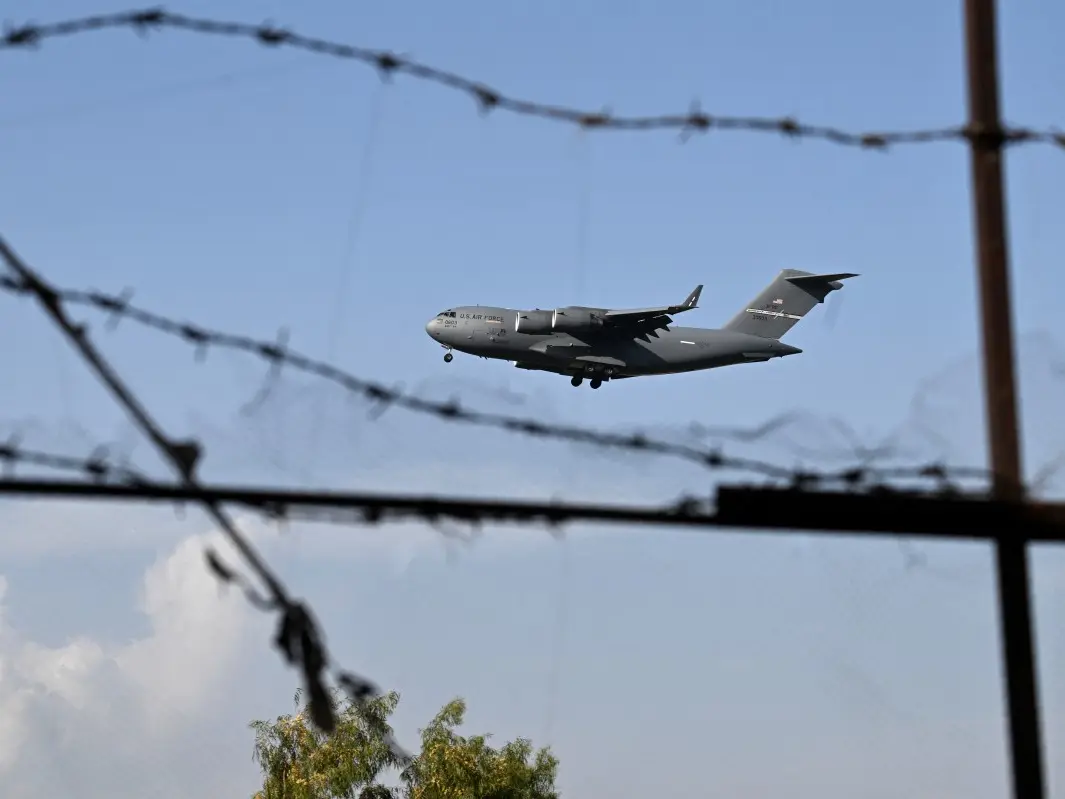
&imwidth=800&imheight=600&format=webp&quality=medium "US-Iran-Israel war: These are 10 frequently used words and their meanings")
As the war involving the US, Israel and Iran enters its second month, the language surrounding the conflict has taken on increasing significance, with several commonly used terms carrying deep historical, religious and political meanings.
The fighting has killed thousands and disrupted global energy flows, with tensions centred on the Strait of Hormuz, a vital chokepoint through which around 20 per cent of the world’s oil supply normally passes. According to analysts, restrictions and threats of closure in the strait have amplified its importance in global discourse.
Here are ten key terms shaping how the war is being described.
- Hormuz
The Strait of Hormuz, located between Iran and Oman, connects the Gulf to the Arabian Sea and remains one of the most strategically important maritime routes in the world. Its name is widely believed to be linked to “Ahura Mazda”, the supreme deity in Zoroastrianism, meaning “Wise Lord”, although alternative theories suggest Persian or Greek linguistic roots. Historically, the medieval Kingdom of Hormuz controlled trade routes in the region.
Trending Stories
&imwidth=180&imheight=135&format=webp&quality=medium)
Pakistan to head IMF, World Bank boards after 74 years amid persistent economic crisis
&imwidth=180&imheight=135&format=webp&quality=medium)
Group's fibre-optic drones pose new challenge for Israel
&imwidth=180&imheight=135&format=webp&quality=medium)
CJP's Tiranga march: People hit streets of Delhi again, reiterate call for Gyanesh Kumar's resignation
&imwidth=180&imheight=135&format=webp&quality=medium)
US midterms 2026: Ken Paxton may have Elon Musk to thank if he wins the Texas Senate race. Here's why
&imwidth=180&imheight=135&format=webp&quality=medium)
AI decodes Napoleon-era secret letter unsolved for more than 200 years. What was hidden in the ciphers?
&imwidth=180&imheight=135&format=webp&quality=medium)
Ankita Bhandari murder case: Parents meet CBI, seek impartial investigation
&imwidth=180&imheight=135&format=webp&quality=medium)
US budget deficit nears $2 trn as tariff refunds rise; debt crosses $40 trn
&imwidth=180&imheight=135&format=webp&quality=medium)
Gravitas | Iran threatens to hit key bridges in 7 countries if US resumes strikes
&imwidth=180&imheight=135&format=webp&quality=medium)
Ukraine drone strike disrupts 22 Russian airports, over 200 flights

Not Khan but Pal: Why did Imran Khan choose his mother's surname over his father's? Family tree explained
&imwidth=180&imheight=135&format=webp&quality=medium)
Iranian woman, 23, handed death sentence for ‘blasphemy’ in social media post; appeals for help
&imwidth=180&imheight=135&format=webp&quality=medium)
A secret code, a midnight escape and 300 deaths: The Russian officer who turned on Putin
&imwidth=180&imheight=135&format=webp&quality=medium)
'Turns out the future does have flying cars': Musk's Tesla unveils 'flying' sports car with SpaceX technology | Watch
&imwidth=180&imheight=135&format=webp&quality=medium)
Oregon school shooting: 16-year-old shooter identified, used shotgun bought by mother; Trump praises bystander who shot gunman as 'great hero'
&imwidth=180&imheight=135&format=webp&quality=medium)
After ODIs, T20Is and Tests, cricket set to introduce a new format: All you need to know
&imwidth=180&imheight=135&format=webp&quality=medium)
China tells Israel to stop West Bank settlements, calls Palestine issue ‘historic injustice’
&imwidth=180&imheight=135&format=webp&quality=medium)
‘My president, I mean my husband’: Trump's new press secretary Katie Zacharia's first briefing goes off the rails in 14 minutes
&imwidth=180&imheight=135&format=webp&quality=medium)
China responds to Trump's Press Secretary Katie Zacharia after toilet remark: 'Visit China more often'
&im=FitAndFill=(700,400)&imwidth=180&imheight=135&format=webp&quality=medium)
Who left the White House podium the fastest? Press secretaries with the shortest stints
&imwidth=180&imheight=135&format=webp&quality=medium)
Vijay Deverakonda and Rashmika Mandanna's Ranabaali X Review: Netizens call it history-rich but overstuffed
&imwidth=180&imheight=135&format=webp&quality=medium)
Israel examines Russia's Shahed-type drones sent by Ukraine to combat Iran | Gravitas
&imwidth=180&imheight=135&format=webp&quality=medium)
US midterms 2026: Alexandria Ocasio-Cortez donates $1 million to Abdul El-Sayed’s as Michigan race heats up
&imwidth=180&imheight=135&format=webp&quality=medium)
Here’s who is eyeing the White House press secretary role after Katie Zacharia’s exit
&imwidth=180&imheight=135&format=webp&quality=medium)
BCCI names India’s ODI squad for New Zealand tour, Gill and Iyer to share captaincy
&imwidth=180&imheight=135&format=webp&quality=medium)
Abhishek Sharma sets all-time record for most T20I sixes in a year
&imwidth=180&imheight=135&format=webp&quality=medium)
'I don’t trust anybody', says Trump when asked about Netanyahu
&im=FitAndFill=(700,400)&imwidth=180&imheight=135&format=webp&quality=medium)
Inside Tesla's Roadster: 10 features of Elon Musk's 'flying car' that push the limits of electric vehicles | In Pics
&imwidth=180&imheight=135&format=webp&quality=medium)
India’s naval priorities: Ex-Navy Chief calls for third aircraft carrier, more warships and submarines
&im=FitAndFill=(700,400)&imwidth=180&imheight=135&format=webp&quality=medium)
New Friday OTT releases (October 16, 2026): DC, Sacrifice, Aasha- 6 new movies and TV shows coming on Netflix, Zee 5, Prime Video and more
&imwidth=180&imheight=135&format=webp&quality=medium)
India's Gen Z rebellion: Can the 'Lehra Do Tiranga' movement reshape the political order? | The Verdict

US ends automatic work permit extensions; Indian workers lose 540-day safety net: What it means
&im=FitAndFill=(700,400)&imwidth=180&imheight=135&format=webp&quality=medium)
Salman Khan-Karisma Kapoor reunion at Koffee with Karan season 9 sparks nostalgia: A look at their most loved films
&imwidth=180&imheight=135&format=webp&quality=medium)
Did Trump just fire Katie Zacharia as his new press secretary? Here’s what he said
&imwidth=180&imheight=135&format=webp&quality=medium)
Iran rejects Saudi allegations of backing Houthi attacks, renews mediation offer
2. Shahed
Shahed drones, used extensively by Iran during the conflict, are low-cost loitering munitions often described as kamikaze drones. They are typically deployed in large numbers to overwhelm air defences. The word “Shahed”, of Arabic origin, means “witness”, and is also used in Persian with the same meaning.
3. Tomahawk
The term “tomahawk” originally referred to a hand-held axe used by Indigenous peoples of North America. According to the Online Etymology Dictionary, the word comes from an Algonquian language, meaning “a cutting tool”, reflecting its historical use before being adopted in modern military terminology.
4. Minab
Minab is known for its fertile agricultural landscape and is often described as an oasis. Located near the Strait of Hormuz, it is noted for citrus fruits and dates. The name is commonly believed to derive from Persian elements meaning “clear water”, though alternative theories link it to historical fortifications referenced in Encyclopaedia Iranica.
5. Bab al-Mandeb
The Bab al-Mandeb, meaning “Gate of Tears”, connects the Red Sea to the Gulf of Aden and serves as a critical passage for global trade between Asia and Europe via the Suez Canal. Since the start of the war, Iran-aligned Houthi forces in Yemen have threatened to disrupt shipping through the strait, underlining its strategic importance.
6. Epic Fury
“Operation Epic Fury” is the codename used by Washington for its joint military campaign with Tel Aviv against Iran, launched on February 28. The term combines the Greek-derived “epic”, meaning a grand or heroic story, with “fury”, from Latin, meaning rage. Together, it conveys the idea of “heroic rage” or large-scale force, as reflected in official White House statements.
7. Ayatollah
“Ayatollah” is a high-ranking title in Shia Islam, granted to senior clerics recognised for their expertise in theology and jurisprudence. Derived from Arabic, the term means “Sign of God”, combining “ayah” meaning sign and “Allah” meaning God.
8. Kharg
Kharg Island is Iran’s main oil export hub in the Gulf and has been described as a restricted or “forbidden” island due to its strategic importance. The origin of its name is uncertain, though some interpretations suggest links to older Iranian languages referring to heat or climate.
9. Kafir
The word “kafir” gained attention during the conflict after US Defence Secretary Pete Hegseth was seen with an Arabic tattoo. Often translated as “non-believer”, the term more literally means “one who conceals the truth”, derived from the Arabic root k-f-r, meaning to cover or hide. The word appears frequently in the Quran in various forms.
10. Khatam al-Anbiya
“Khatam al-Anbiya”, the name of the central headquarters of Iran’s Islamic Revolutionary Guard Corps, translates to “Seal of the Prophets”. The phrase originates from the Quran and refers to the Prophet Muhammad. The term combines “khatam”, meaning seal, and “al-anbiya”, meaning prophets. According to Iranian officials, including spokesperson Ebrahim Zolfaghari, the name reflects religious symbolism embedded in the country’s military structure.

