
&imwidth=800&imheight=600&format=webp&quality=medium "US introduced Iran with nuclear technology in 1960s — Then attacked it with B-2 bombers 65 years later | WION EXPLAINS")
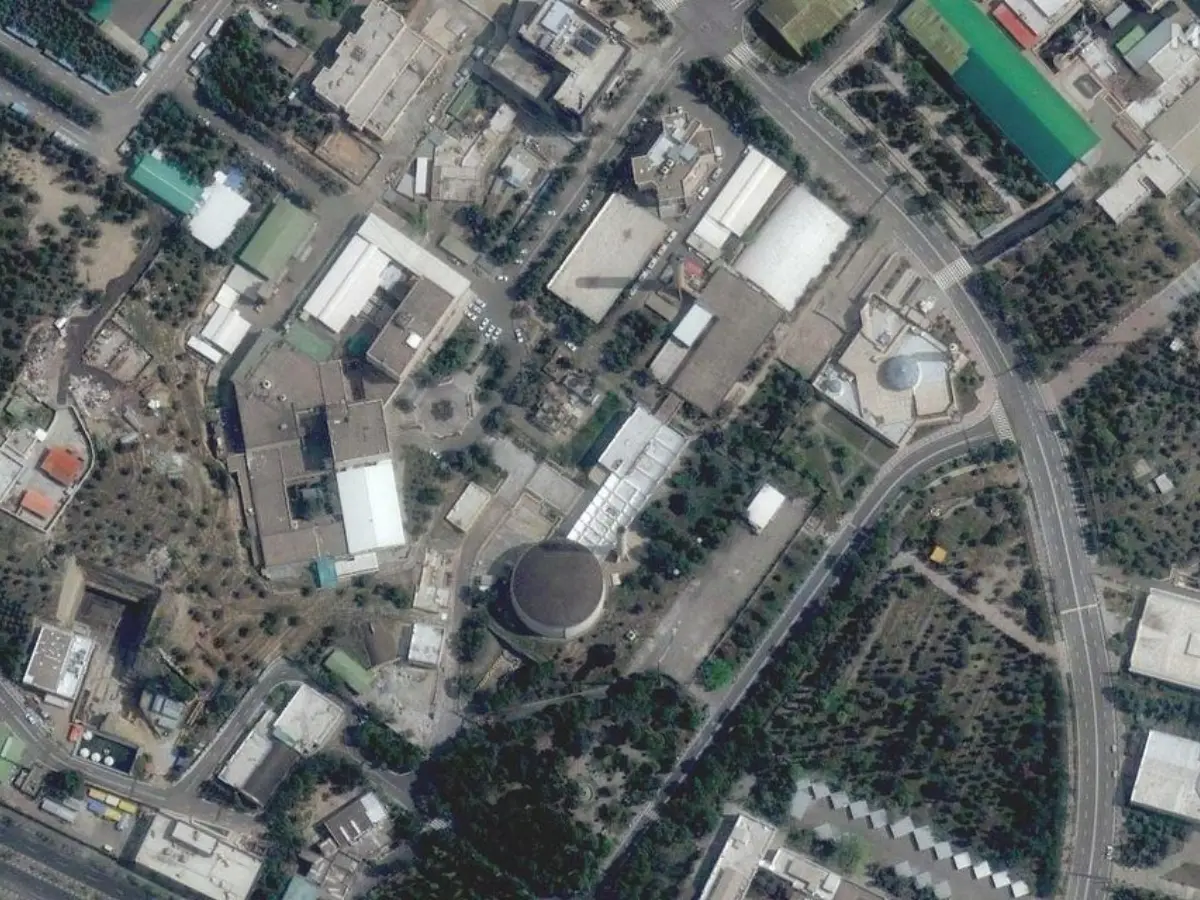
The US bunker-buster bombs deployed through B-2 stealth bombers attacked three Iranian nuclear facilities last weekend amid the Israel-Iran war, but shockingly, the United States was the one that provided Tehran with the seeds of nuclear technology. It all goes back to the 1960s, the US shipped the Tehran Research Reactor to Iran, as part of the “Atoms for Peace” program.
First, the US did this under the tag of "peace", but decades later, the US warplanes attacked Iran's nuclear sites, including Natanz, Isfahan, and Fordow as it sees it as a threat now.
Atoms of Peace

Then US President Dwight D Eisenhower launched the "Atoms of Peace" programme, to share civilian technology with allies. At that time, Iran was ruled by Shah Mohammad Reza Pahlavi. The country was a model Cold War partner, secular and eager to modernise.
The US introduced Iran with nuclear technology as it installed the Tehran Research Reactor, training Iranian scientists at elite institutions like MIT, and encouraging partnerships with European allies.
For the US, it was nothing more than a strategy to extend influence, contain Soviet power and show the "benevolent" use of atomic energy. But, little did it know, that it created an entire ecosystem of nuclear capacity inside Iran.
Trending Stories
)
Asian Games 2026: India face Afghanistan in quarterfinal on Sep 28; Pakistan clash with Hong Kong
)
Myanmar training camp case: US national, 6 Ukrainians allowed to meet their families abroad
)
Bigg Boss 20: Salman Khan schools Rhiti Tiwari over Qazi Touqeer clash, compares her to Dolly Bindra
)
Mushtaq Khan dies at 56: When Welcome actor opened up about his salary for iconic role Ballu
)
LPU students go on rampage, vandalise campus amid widespread protest: What's happening
)
'FIRST LOOK from inside Noah’s Ark': Researchers share video from inside mysterious mound in Turkey
)
‘Attack on Mecca a red line for Pakistan’: Shehbaz Sharif warns Houthis at UN
)
Pakistan deploys over 20,000 security personnel as PTI vows march for Imran Khan's release
)
OpenAI AI Agents hacked 4 websites before Hugging Face, researchers reveal
)
'A terrorist country is asking me that question?': Jaishankar hits back at Pakistani journalist at UN; flags attacks on commercial shipping
)
Trump-Xi summit wrap: Big pageantry, Iran talks, few major developments and more meetings planned
)
Did Hitler kill his niece Geli Raubal? Newly found records reopen a 95-year-old mystery
)
Hawaii braces for Hurricane Nolo: NOAA warns of flash flooding and mudslides
)
'What kind of confession is this?': Pakistan PM Shehbaz Sharif’s 'terrorists would be roaming New York' remark goes viral, raises alarm online. Watch
)
US-Iran war: Trump rejects Iran's Hormuz proposal, reports suggest talks expected next week
)
Bollywood x K-pop crossover! LE SSERAFIM’s Kazuha charms fans with Shah Rukh Khan’s ‘Chammak Challo’ steps
)
Gaza's war turned environmental damage into second crisis
)
‘Serial practitioner of terrorism’: Jaishankar calls out Pakistan’s ‘state-sponsored’ terror at UNGA
)
‘It is all possible’: Putin weighs next steps on Ukraine talks, rules out Europe conflict
)
Prince Harry offers rare glimpse into Archie and Lilibet’s life after UK move
)
Nigeria Navy moves to boost oil security, tackle crude theft and infrastructure threats
)
Donald Trump shares image of Xi's arrival in Washington, carries signs of AI
)
Pentagon quietly adds 37 wounded troops to Iran war tally without explaining when or how
)
US court backs Pentagon's decision to exclude Anthropic over Claude AI restrictions
)
US Supreme Court backs Trump administration's use of SAVE database to check voter citizenship
)
‘Could kill billions...’: Bill Gates backs calls to slow AI development amid fears of catastrophe
)
'Countries far from conflict are penalised': Jaishankar calls for Gulf peace, seafarer safety at UN
)
WATCH | As Shehbaz Sharif claims Pakistan’s ‘victory’ during 2025 conflict, Indian diplomat R Srinivas laughs at UN
)
Outrage erupts after 3-year-old is married to 60-year-old man in Pakistan, link to her sister's murder being probed
&im=FitAndFill=(700,400))
New Friday OTT releases (September 25, 2026): Don’t Be Shy, Hunkkaar: The Roar, Mango Pachcha- 6 movies and TV shows on Netflix, Prime Video and more
)
Global community 'absent' in Gulf crisis: Saudi at UN calls for freedom of navigation, pre war status for Hormuz
)
Farhan, who went viral for AK47 celebration vs India in Asia Cup, hopes to lead Pakistan beyond Asian Games
)
‘I rejected it’: Trump confirms turning down Iran’s proposal to reopen Hormuz, claims Tehran is losing ‘badly’
)
Russia will achieve Ukraine war aims; Europe doing everything to block peace talks: Lavrov at UN
Robert Einhorn, a former US arms control negotiator and now a senior fellow at the Brookings Institution, said, "We gave Iran its starter kit. We weren't terribly concerned about nuclear proliferation in those days, so we were pretty promiscuous about transferring nuclear technology."
However, the reactor does not contribute to Iran's enrichment of uranium, the arduous process that is a key process in making nuclear bombs. Moreover, it runs on nuclear fuel which is far too weak to even power a bomb.
Years later, it became an object of national pride for Iran and a potential source of military power.
But Iran which got the reactor in 1967 was very different from what it has become now. Then, it was led by a monarch, or shah, who was a Swiss-educated aristocrat. Pahlavi wanted to modernise his country and make it a world power but with America's support. He even banned the women's veil and promoted modern art.
But it didn't take much time for Shah to talk about Iran's "right" to produce nuclear fuel at home, something that can also be applied to nuclear weapons development.
But as the US showed concern and objected, Pahlavi turned to other nations for nuclear assistance, including Germany and South Africa.
US stopped delivering reactors
In 1978, the Carter administration raised concerns and insisted that an Iranian contract to purchase eight American reactors be amended. It then restricted Iran from reprocessing without permission. Then, the US never delivered reactors.
When the Islamic Revolution happened in 1979, it created hatred for America and support for the Shah. Iran’s new clerical rulers, led by Ayatollah Ruhollah Khomeini, initially showed little interest in continuing an expensive project associated with the Shah and Western powers.
But later in the 1980s after an eight-year war with Iraq, Ayatollah Khameini reconsidered how much nuclear technology is needed and it turned to Pakistan. The Pakistani scientist and nuclear black marketeer Abdul Qadeer Khan sold Iran centrifuges to enrich uranium to bomb-grade levels of purity.
The real reason
Gary Samore, the top White House nuclear official in the Clinton and Obama administrations said that Iran acquiring centrifuges was the main reason its nuclear program escalated into a global issue.
“Iran’s enrichment program is not the result of U.S. assistance,” Samore said. “The Iranians got their centrifuge technology from Pakistan, and they have developed their centrifuges based on that Pakistani technology — which itself was based on European designs.”
But even after years, the issue remains unsolved between Iran and the US. Today, Trump announced that the US will be holding fresh talks with Iran next week, with a possible nuclear agreement on the table. This comes a day after Israel-Iran agreed to a ceasefire after a 12-day war.
