US House votes 417-3 to pass Ratepayer Protection Act targeting AI data center electricity costs

&imwidth=600&imheight=450&format=webp&quality=medium "US House votes 417-3 to pass Ratepayer Protection Act targeting AI data center electricity costs")
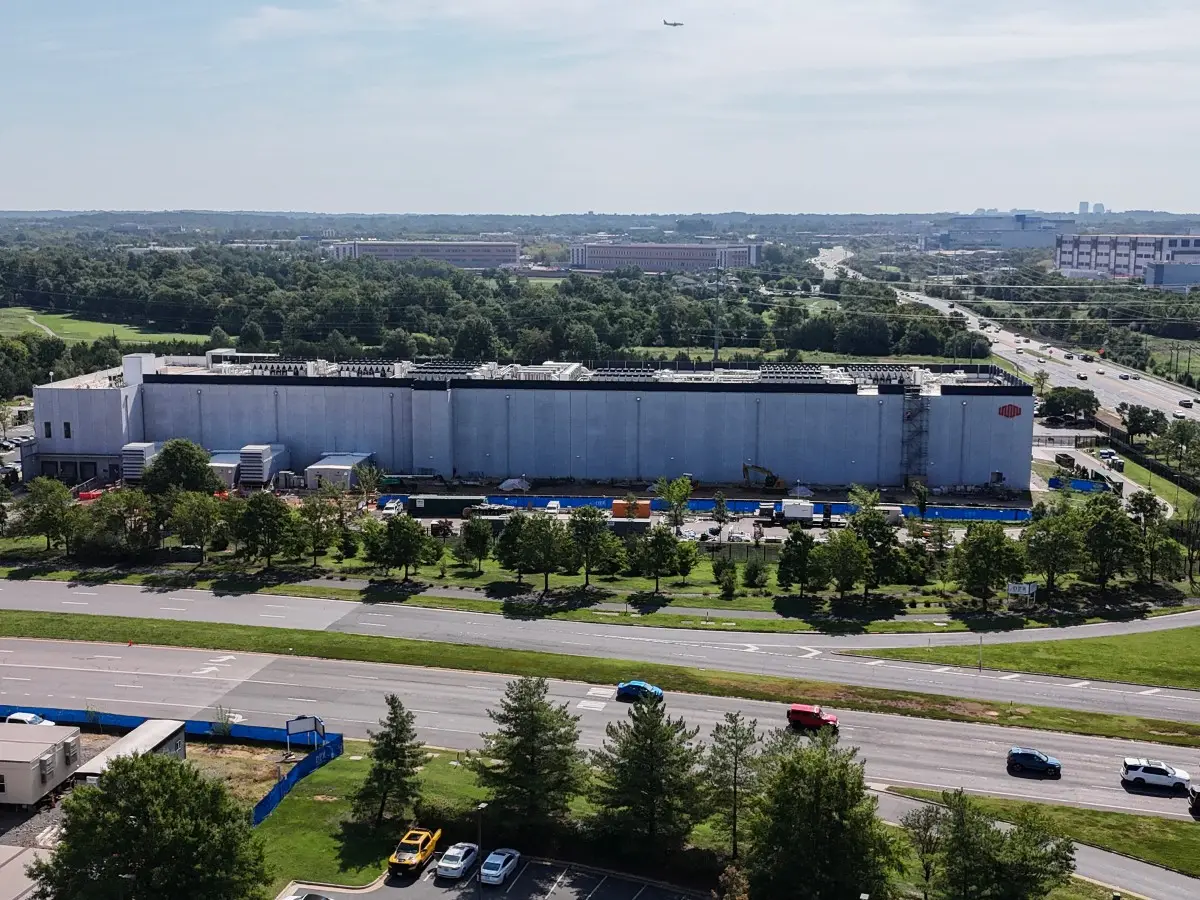
Equinix data center Photograph: (AFP)
House lawmakers passed a bipartisan data center ratepayer bill 417-3, seeking to shield consumers from infrastructure costs tied to AI power demand
The US House on Wednesday advanced a bipartisan bill aimed at protecting consumers from potential utility rate increases linked to the rapid expansion of data centers, passing the measure by an overwhelming 417-3 vote. The legislation, known as the Ratepayer Protection Act, would establish standards that state regulators could adopt for artificial intelligence data centers with electricity demand of 100 megawatts or more. Under the proposal, data center operators could be required to cover the costs associated with new power generation, transmission lines and other infrastructure needed to meet their energy demand, rather than shifting those expenses to consumers. The Senate has not yet taken action on the legislation.
“The principle is commonsense: Those creating the new demand should be responsible for the costs associated with meeting that demand,” the bill sponsor Rep. Gabe Evans, a Colorado Republican seeking reelection in one of the most tightly contested House seats this year, said in a Washington Reporter op-ed on Monday. House Speaker Mike Johnson brought the measure to the floor under the suspension of the rules, a procedure typically used to fast-track legislation considered broadly noncontroversial. Because the process requires a two-thirds majority, the bill's 417-3 passage demonstrated strong bipartisan support. Only three progressive Democrats Reps. Summer Lee of Pennsylvania, Delia Ramirez of Illinois and Rashida Tlaib of Michigan, voted against the measure.
Evans introduced the bill in June alongside Rep. Kathy Castor, a Florida Democrat facing a competitive reelection campaign after the state's legislature redrew her district earlier this year. The Cook Political Report with Amy Walter has classified both Evans' and Castor's races as “toss up.” The legislation comes as data centers have emerged as an increasingly prominent issue ahead of the 2026 midterm elections. Republicans are defending narrow majorities in both chambers of Congress, while a cross-partisan grassroots movement opposing data center development has gained momentum in communities across the country.
Also Read: Trump calls Canada-EU associate membership plan ‘laughable’ and threatens 'very serious tariffs'
Data centers support cloud computing, digital services and the growing artificial intelligence industry, but their substantial electricity requirements have raised concerns about the impact of new facilities on local power grids and household utility bills.
States and local governments retain primary authority over individual data center projects. The House legislation would instead establish federal guardrails that states could choose to adopt, particularly concerning the potential impact of data center-related infrastructure costs on electricity customers. The measure would codify portions of President Donald Trump's “Ratepayer Protection Pledge,” which the White House released in March.
Trending Stories
)
)
)
)
)
)
)
)
)
)
)
)
)
)
)
)
)
)
)
)
)
)
&im=FitAndFill=(700,400))
)
)
)
)
)
&im=FitAndFill=(700,400))
)
)
)
)
)
“My neighbors across Florida are grappling with skyrocketing electric bills. Ratepayers should not have to subsidize wealthy corporations’ growing energy demands, especially from AI data centers,” Castor said in a statement in June unveiling the proposal. However, some environmental organizations argue that the bill does not go far enough. “With only a weak directive to states to voluntarily consider adopting cost protections against the energy costs of data centers for ratepayers, state regulators could ultimately choose to ignore this bill,” Sara Chieffo, senior vice president of government affairs at LCV, said in a statement released ahead of the vote.
House Minority Leader Hakeem Jeffries, D-N.Y., said on Monday that he supports the bill while arguing that Congress needs to take further action. Jeffries also urged Republicans to keep the House in session beyond this week, before a seven-week recess ahead of the Nov. 3 election, to address wider concerns surrounding artificial intelligence. His comments came amid renewed debate over AI safety following a former Anthropic employee's social media post warning about the pace of AI development.
The Ratepayer Protection Act now moves to the Senate, where its future remains uncertain.

