US, Gulf states reject forced displacement from Gaza, demand Iran never get nuclear weapons

&imwidth=600&imheight=450&format=webp&quality=medium "US, Gulf states reject forced displacement from Gaza, demand Iran never get nuclear weapons")
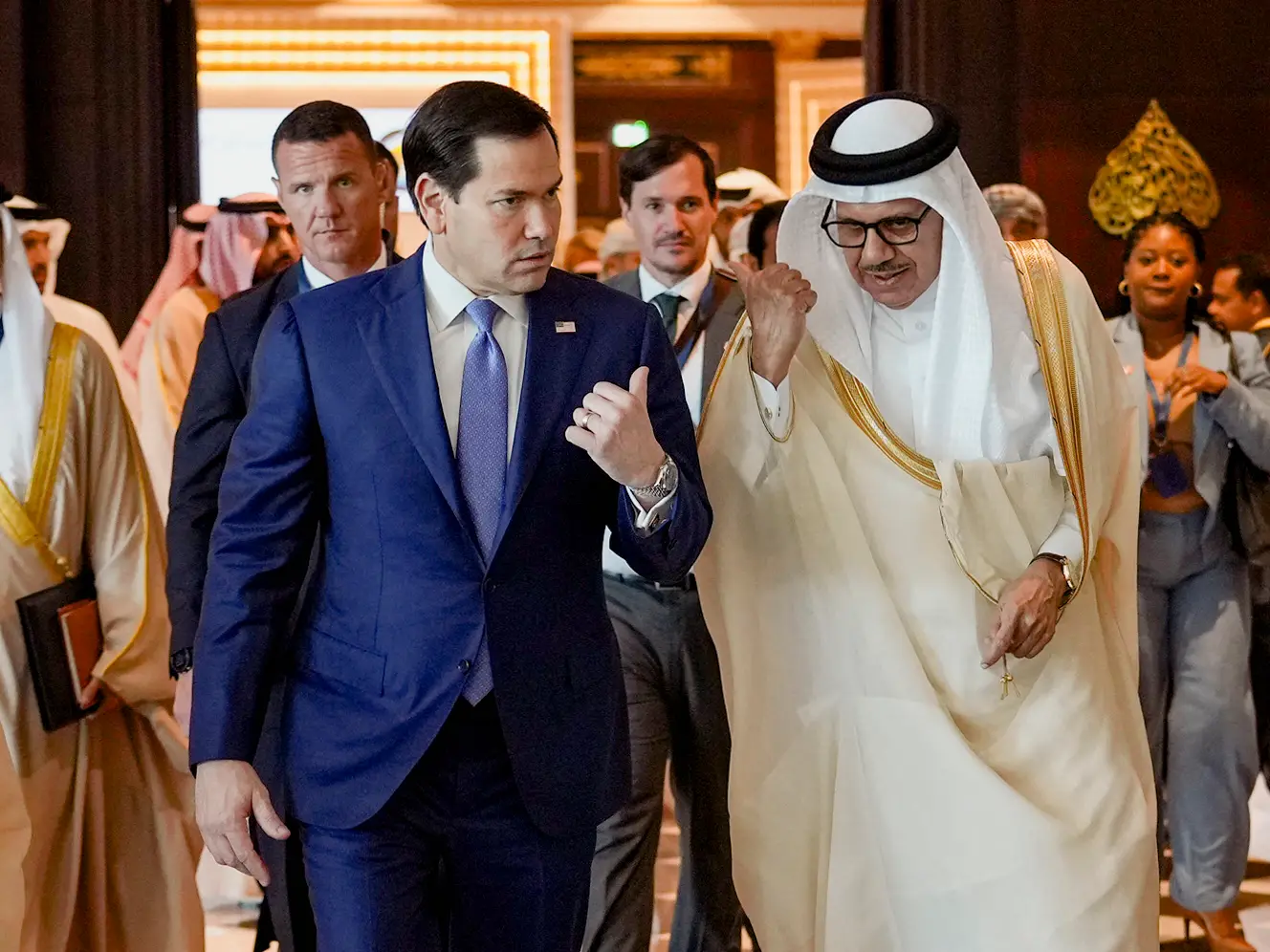
US Secretary of State Marco Rubio (L) walks along side Bahrain's Foreign Minister and Chairman of the GCC Ministerial Council session Abdullatif bin Rashid al-Zayani following a meeting with foreign ministers of the Gulf Cooperation Council Member States (GCC), in Manama on June 25, 2026. Photograph: (AFP)
In a wide-ranging joint statement, the US and Gulf states opposed any forced displacement of Palestinians from Gaza, supported reconstruction efforts, called for armed groups in Lebanon to be disarmed, and rejected any restrictions or fees on shipping through the Strait of Hormuz.
The United States and Gulf Cooperation Council states, in a joint statement on Thursday (Jun 25), said Palestinians must not be forced out of Gaza. In a joint statement following the Ministerial Meeting of the United States and the Gulf Cooperation Council (GCC), the nations laid out a broad regional position on Gaza, Lebanon, Iran and the Strait of Hormuz.
'No one will be forced to leave Gaza'
The ministers reaffirmed that no one should be compelled to leave Gaza, while those who choose to leave must be allowed to return. They also backed efforts to stabilise, rebuild and eventually hand over civilian administration in Gaza to an "independent, technocratic civil Palestinian committee".
The statement also reaffirmed support for President Donald Trump's plan to end the Gaza conflict, and welcomed GCC participation in a proposed Board of Peace linked to reconstruction and recovery efforts. It further said progress on Gaza redevelopment and reforms within the Palestinian Authority could eventually open a credible path toward Palestinian self-determination and statehood.
GCC statement on Lebanon
Trending Stories
)
)
)
)
)
)
)
)
)
)
)
)
)
)
)
)
)
)
)
)
)
)
)
)
)
)
)
)
)
)
)
)
)
)
&im=FitAndFill=(700,400))
)
)
)
)
On Lebanon, the ministers said "full Lebanese sovereignty" could not be achieved while armed non-state groups retained military capabilities outside state authority. They called for "the full disarmament of all such groups and the restoration of the Lebanese state's monopoly of force", while also backing continued US-facilitated talks between Israel and Lebanon.
Iran must never have a nuclear weapon
The joint statement also addressed Iran, saying Tehran must not acquire a nuclear weapon and that its ballistic missile programme, drone activity and regional network of armed allies must be dealt with. "The Ministers further emphasised that lasting regional peace and security requires addressing the full spectrum of Iran’s threats, including its ballistic missiles, drones, and support of proxies in the region."
Another key point was the Strait of Hormuz. The ministers rejected any attempt to impose tolls, fees or restrictions on shipping through the strategic waterway, which handles a major share of the world's oil and gas trade.
The statement comes after the US and Iran reached a ceasefire agreement last week. The two nations also held the first round of follow-up talks in Switzerland to address broader issues, including Iran’s nuclear programme, sanctions, and regional security.
Disclaimer: WION takes utmost care to accurately and responsibly report ongoing conflicts in West Asia involving Israel, Iran, US, Gulf nations and non-state actors like Hezbollah, Hamas, Houthis, Islamic State, and others. Claims and counterclaims, disinformation and misinformation are being made online and offline. Given this context, WION cannot independently verify the authenticity of all statements, social media posts, photos and videos.

