

&imwidth=800&imheight=600&format=webp&quality=medium "US caps foreign students' stay at 4 years under new visa rule; Over 3.31L Indian students could be affected")
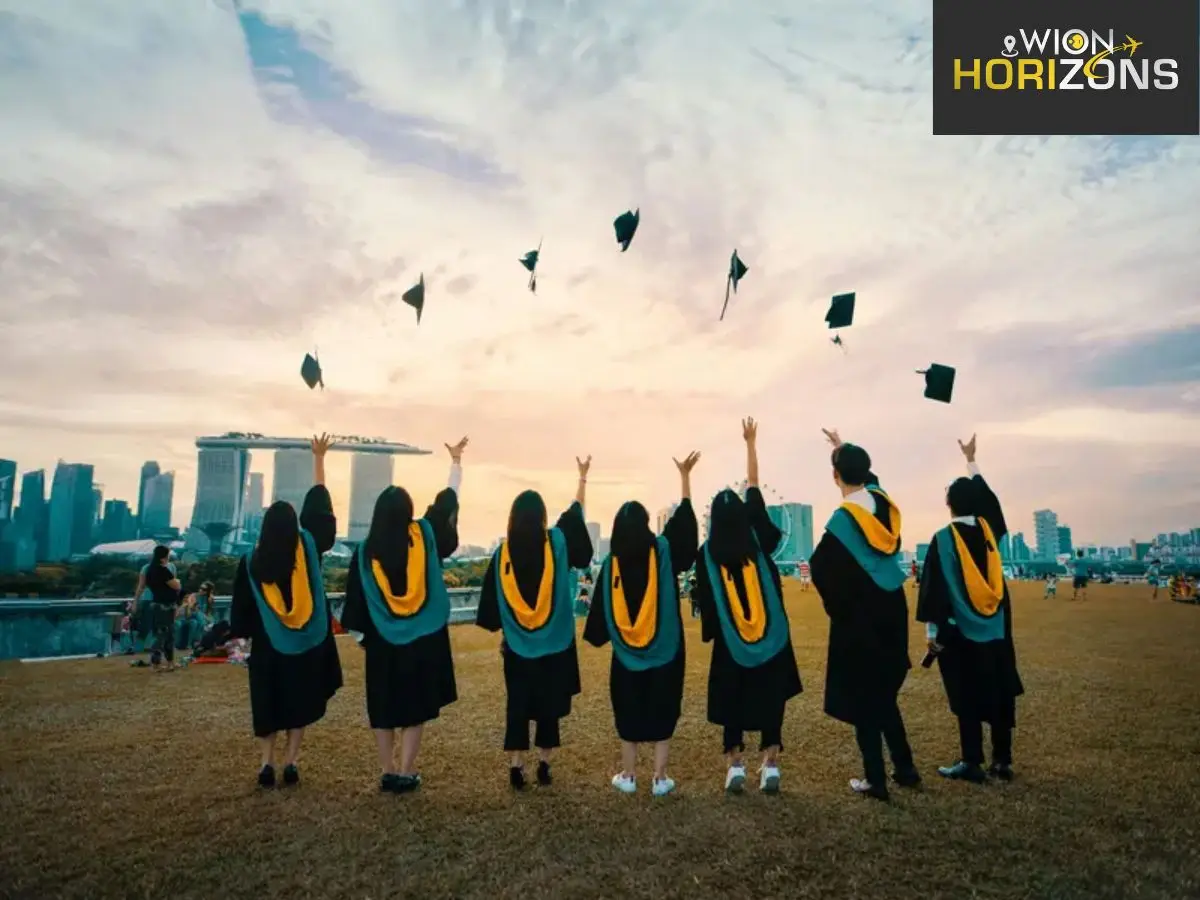
International students in the United States, including more than 3.31 lakh Indian students, could soon face stricter immigration rules after the US Department of Homeland Security (DHS) finalised a regulation replacing the long-standing ‘duration of status’ system with a fixed period of stay. According to Bloomberg, the regulation released on Thursday would generally allow students on F-1 visas to remain in the US for up to four years. Those requiring additional time to complete their academic programmes would need to apply to DHS for an extension before their authorised stay expires.
The new regulation also introduces fixed periods of stay for J-1 exchange visitors and I visas issued to foreign media representatives. Before taking effect, the rule must undergo congressional review. The Trump administration said the changes are intended to strengthen oversight of the visa system and enhance national security. However, universities and education groups have expressed concern that the policy could create uncertainty for thousands of international students enrolled in programmes lasting longer than four years.
End of the ‘duration of status’ system
For decades, international students holding F-1 visas entered the United States under the ‘duration of status’ framework. Instead of receiving a fixed expiration date, students were allowed to remain in the country as long as they maintained full-time enrolment and complied with all visa conditions.
The newly finalised DHS regulation brings that system to an end. Once the four-year authorised period expires, students will no longer be able to continue their studies automatically. Those pursuing degrees or research programmes beyond four years must obtain an extension from DHS to remain in legal status. The same requirement will apply to J-1 exchange visitors, including researchers and scholars at American universities, as well as journalists travelling on I visas. According to DHS, the rule aims to improve oversight of temporary visa holders while strengthening national security safeguards.
Trending Stories
&imwidth=180&imheight=135&format=webp&quality=medium)
Brendan Taylor overtakes Andy Flower to become Zimbabwe’s leading ODI run-scorer
&imwidth=180&imheight=135&format=webp&quality=medium)
Researchers name newly discovered Andean plant after Argentina legend Lionel Messi
&imwidth=180&imheight=135&format=webp&quality=medium)
Lawrence Bishnoi gang claims responsibility for firing at Tiger Shroff over ties to Salman Khan
&imwidth=180&imheight=135&format=webp&quality=medium)
Flying car race: Alef Aeronautics welcomes Tesla Roadster '11 years' later, but are the two models the same?
&imwidth=180&imheight=135&format=webp&quality=medium)
KATSEYE performs at Victoria’s Secret show, teases Sophia Laforteza’s return
&imwidth=180&imheight=135&format=webp&quality=medium)
Shastri backs Shami comeback; lauds Bhuvi and warns Bumrah on format workload ahead of World Cup
&imwidth=180&imheight=135&format=webp&quality=medium)
Saudi Arabia asks skyscraper employees to work from home amid Houthi threats
&imwidth=180&imheight=135&format=webp&quality=medium)
Tiger Shroff shows injuries after Juhu firing incident; Eknath Shinde says Mumbai won’t tolerate gang wars
&imwidth=180&imheight=135&format=webp&quality=medium)
NFl 2026/27 - Saints vs Steelers to go ahead in Paris next week despite protest
&imwidth=180&imheight=135&format=webp&quality=medium)
4 killed, 19 critically injured in grass fire at Canada's largest military base
&imwidth=180&imheight=135&format=webp&quality=medium)
Nobel laureate Machado, who dedicated prize to Trump, confirmed as Venezuela opposition leader
&imwidth=180&imheight=135&format=webp&quality=medium)
After Kennedy Center and reflecting pool disputes, Trump turns to Washington golf course plan amid legal battle
&imwidth=180&imheight=135&format=webp&quality=medium)
Why France looks the most fragile in the G7 amid protests and budget deadlock
&imwidth=180&imheight=135&format=webp&quality=medium)
Asian Para Games: Nishad Kumar clinches T47 long jump gold; Ravi Budigina bags swimming silver
&imwidth=180&imheight=135&format=webp&quality=medium)
China responds to Trump's Press Secretary Katie Zacharia after toilet remark: 'Visit China more often'
&imwidth=180&imheight=135&format=webp&quality=medium)
Cattle feed found in biscuits of Indian company, FSSAI sends legal notice
&imwidth=180&imheight=135&format=webp&quality=medium)
Anthropic’s public benefit plan: What its 5% share commitment means for AI’s future
&imwidth=180&imheight=135&format=webp&quality=medium)
Girl 'dead' for 8 hours wakes up at her own funeral, dad insists she wasn't breathing
&imwidth=180&imheight=135&format=webp&quality=medium)
MI5 is opening an AI threat centre, and OpenAI just told MPs the worst isn't over
&imwidth=180&imheight=135&format=webp&quality=medium)
Elon Musk features on Lucknow's 'anti-India' Ravan poster alongside Rahul Gandhi, Akhilesh
&im=FitAndFill=(700,400)&imwidth=180&imheight=135&format=webp&quality=medium)
New OTT releases this week (October 19-25, 2026): Gajab Raat to Chaar Yaar-8 titles to watch during Dussehra week on Netflix, Prime Video and more
&imwidth=180&imheight=135&format=webp&quality=medium)
Kylie Jenner makes Victoria’s Secret debut in $50 million diamond-encrusted design as Timothée Chalamet cheers
&imwidth=180&imheight=135&format=webp&quality=medium)
Putin wants joint meeting with Trump-Xi summit on Ukraine war, proposes talks alongside APEC: Report
&imwidth=180&imheight=135&format=webp&quality=medium)
No Ravindra Jadeja, Yashasvi Jaiswal in India’s 2027 ODI World Cup plans: Report
&imwidth=180&imheight=135&format=webp&quality=medium)
India moves to buy 10,000 more AI chips for a national compute pool open to startups
&imwidth=180&imheight=135&format=webp&quality=medium)
Tiger Shroff attacked by three gunmen in Mumbai, actor safe, two injured
&imwidth=180&imheight=135&format=webp&quality=medium)
Anirudh Ravichander-Kavya Maran wedding: Telangana CM reveals Chennai reception date
&im=FitAndFill=(700,400)&imwidth=180&imheight=135&format=webp&quality=medium)
Tesla Roadster engineering: The hidden hardware behind its flying demonstration
&imwidth=180&imheight=135&format=webp&quality=medium)
US to review Russia sanctions waiver within 60 days as Rubio cites India’s ‘substantial’ Russian energy imports
&imwidth=180&imheight=135&format=webp&quality=medium)
'Grassroots leagues help bridge the gap': India's ODI WC winner Suresh Raina lauds ISCL ahead of Season 2
&imwidth=180&imheight=135&format=webp&quality=medium)
'We feel like Mr India': Gujarat’s undercover SHE team guard garba nights at Navratri
&imwidth=180&imheight=135&format=webp&quality=medium)
Cattle-feed bran in biscuits, detergent in milk: FSSAI acts against 3 companies
&imwidth=180&imheight=135&format=webp&quality=medium)
'It's a joy to see the makers bring it on such a grand scale': SS Rajamouli on Ramayana
&imwidth=180&imheight=135&format=webp&quality=medium)
Priest dies after crucifix falls on his head during livestreamed Mass in Ecuador | VIDEO
Latest step in Trump's immigration agenda
The regulation marks the latest immigration measure introduced by the Trump administration affecting international students.
Over the past year, DHS has tightened enforcement of student visa rules through initiatives targeting alleged visa fraud and by terminating the legal status of thousands of students under its Student Criminal Alien Initiative.
The administration has also revised the H-1B visa lottery system, reducing selection opportunities for many international graduates seeking employment in the United States. The latest regulation adds further uncertainty for nearly 1.2 million international students currently studying across the country.
Impact on Indian students
The policy is expected to significantly affect Indian students, who now represent the largest international student community in the United States. According to the Open Doors 2024 report, more than 331,000 Indian students were enrolled at US colleges and universities during the 2023–24 academic year, accounting for nearly 30% of all international students.
Many Indian students pursue programmes that extend beyond four years, including doctoral degrees, research-based master's courses, medical education, engineering research and other specialised professional programmes. Under the proposed system, these students would need to secure a DHS extension before the end of their authorised stay to continue studying legally.
What happens if the stay expires?
One of the primary concerns surrounding the regulation is the consequence of failing to obtain an extension before the authorised stay ends. Unlike the current framework, students whose legal stay expires could immediately begin accumulating unlawful presence in the United States. This means administrative delays, processing backlogs or paperwork errors could temporarily place students out of legal status if their extension is not approved before the deadline.
Although DHS has finalised the regulation, it will not come into force immediately. The rule must first complete congressional review before an official implementation date is announced. Until then, the existing "duration of status" system remains in effect.

