Trump’s ‘TACO strategy’ in Iran war: Threat, Panic, Ceasefire, Repeat

&imwidth=600&imheight=450&format=webp&quality=medium "Trump’s ‘TACO strategy’ in Iran war: Threat, Panic, Ceasefire, Repeat")
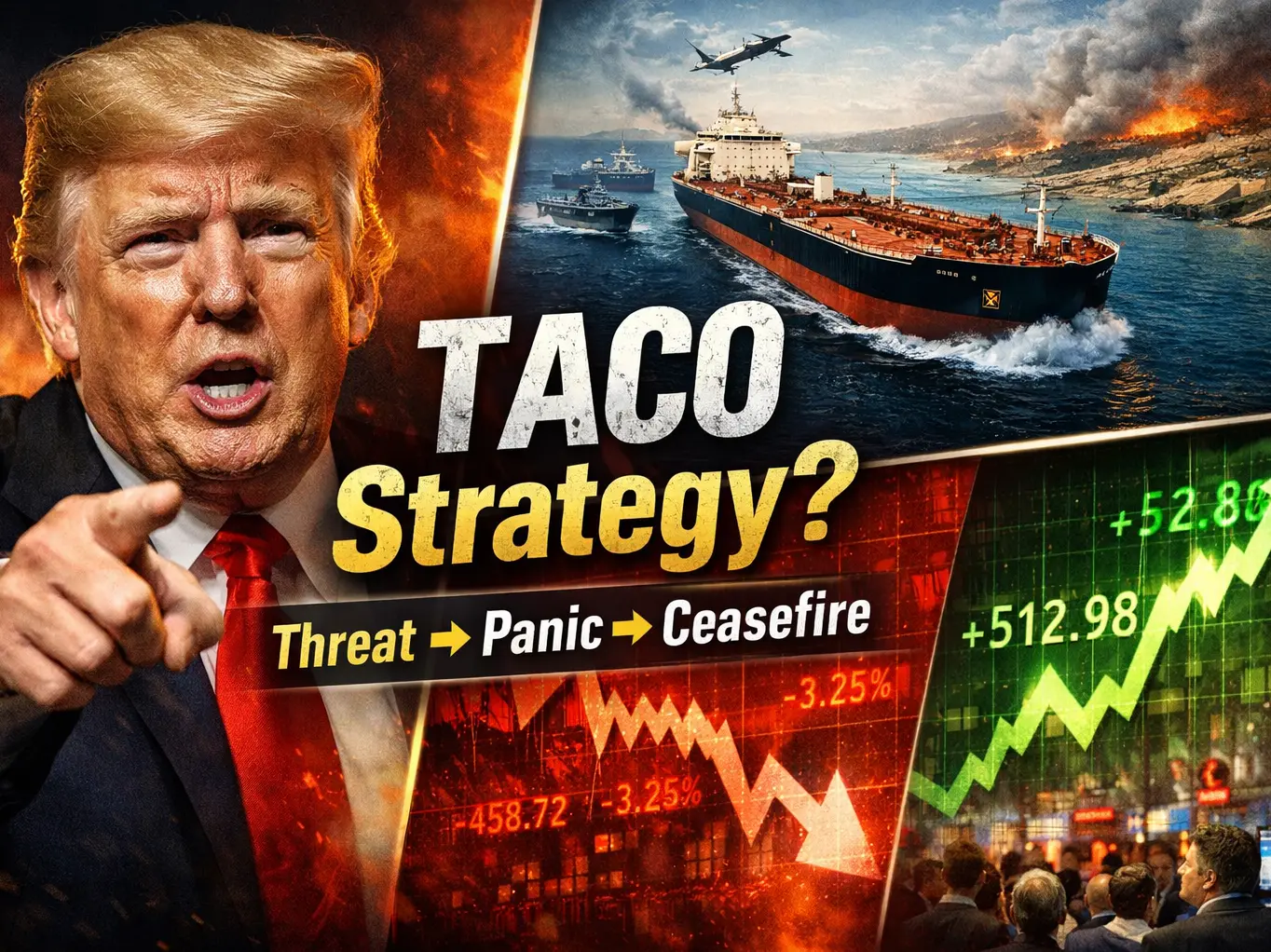
For representative purpose only Photograph: (AI-Generated image)
The Iran war narrative is following a cycle: threats, panic, ceasefire. Analysts are calling it Donald Trump’s ‘TACO method.’ Let's find out what it is
A new phrase is beginning to circulate in geopolitical and financial circles, the ‘TACO method’. It describes a pattern that appears increasingly visible in US President Donald Trump’s handling of the Iran crisis: Threat, Anxiety, Chaos… and then an off-ramp. The latest episode unfolded just hours before what was expected to be a major escalation. Trump had warned that if Iran failed to reopen the Strait of Hormuz by 8 pm Eastern Time, the United States would launch devastating attacks, rhetoric that included threats of wiping out ‘an entire civilization’.
Markets reacted immediately. Oil prices surged, equities wobbled, and global uncertainty spiked. And then, just as the world braced for impact, Trump stepped back. Instead of military action, he announced a two-week suspension of bombing, effectively pausing the crisis and reopening the door for negotiations.
A cycle of threats that moves markets
What makes this moment significant is not just the escalation, but the pattern. Each cycle appears to begin with a dramatic threat. Trump’s language, often maximalist and urgent, injects immediate uncertainty into global systems. In the Iran case, the stakes are especially high due to the Strait of Hormuz, a critical artery through which nearly 20% of the world’s oil supply flows.
The reaction is almost instant and predictable:
Trending Stories
&im=FitAndFill=(700,400)&imwidth=280&imheight=210&format=webp&quality=medium)
&imwidth=280&imheight=210&format=webp&quality=medium)
&imwidth=280&imheight=210&format=webp&quality=medium)
&imwidth=280&imheight=210&format=webp&quality=medium)
&imwidth=280&imheight=210&format=webp&quality=medium)
&imwidth=280&imheight=210&format=webp&quality=medium)
&imwidth=280&imheight=210&format=webp&quality=medium)
&imwidth=280&imheight=210&format=webp&quality=medium)
&imwidth=280&imheight=210&format=webp&quality=medium)
&imwidth=280&imheight=210&format=webp&quality=medium)
&imwidth=280&imheight=210&format=webp&quality=medium)
&imwidth=280&imheight=210&format=webp&quality=medium)
&imwidth=280&imheight=210&format=webp&quality=medium)
&imwidth=280&imheight=210&format=webp&quality=medium)
&imwidth=280&imheight=210&format=webp&quality=medium)
&imwidth=280&imheight=210&format=webp&quality=medium)
&imwidth=280&imheight=210&format=webp&quality=medium)
&imwidth=280&imheight=210&format=webp&quality=medium)
&im=FitAndFill=(700,400)&imwidth=280&imheight=210&format=webp&quality=medium)
&imwidth=280&imheight=210&format=webp&quality=medium)
&imwidth=280&imheight=210&format=webp&quality=medium)
&imwidth=280&imheight=210&format=webp&quality=medium)
&imwidth=280&imheight=210&format=webp&quality=medium)
&imwidth=280&imheight=210&format=webp&quality=medium)
&imwidth=280&imheight=210&format=webp&quality=medium)
&imwidth=280&imheight=210&format=webp&quality=medium)
&imwidth=280&imheight=210&format=webp&quality=medium)
&im=FitAndFill=(700,400)&imwidth=280&imheight=210&format=webp&quality=medium)
&imwidth=280&imheight=210&format=webp&quality=medium)
&imwidth=280&imheight=210&format=webp&quality=medium)
&imwidth=280&imheight=210&format=webp&quality=medium)
&imwidth=280&imheight=210&format=webp&quality=medium)
- Oil prices spike on fears of supply disruption
- Stock markets fall amid rising geopolitical risk
- Investors shift toward safe-haven assets like gold
- Governments and allies push for restraint
This phase creates a wave of pressure, economic, political, and diplomatic. As tensions escalate, the cost of following through on threats rises, not just for adversaries, but for the global economy and domestic stability as well.
The sudden pivot: From chaos to calm
Then comes the reversal. At the peak of uncertainty, the strategy appears to pivot toward de-escalation, a ceasefire, a delay, or a conditional negotiation. In this case, the condition was clear: Iran reopening the Strait of Hormuz in exchange for a halt in US military action.
The shift is immediate:
- Oil prices cool as supply fears ease
- Stock markets rebound, often sharply
- Risk sentiment returns across global markets
- Diplomatic channels take center stage
This pattern, threat followed by retreat, is what analysts are increasingly labeling as the “TACO method.” Supporters argue it is a form of calculated brinkmanship: apply maximum pressure to force concessions, then offer an off-ramp to avoid full-scale conflict. Critics, however, warn that such cycles create unnecessary volatility and carry serious risks of miscalculation. Because in geopolitics, timing is everything. If a threat is taken too seriously or a retreat comes too late, the consequences may no longer be reversible.
Trump’s handling of the Iran crisis is beginning to look less like unpredictability and more like a structured cycle of pressure and release. Threaten hard. Let the world react. Then step back. For now, markets seem to be learning the rhythm, falling on escalation, rising on relief. But the real danger lies in assuming the cycle will always reset. Because one day, it might not.
Disclaimer: WION takes utmost care to accurately and responsibly report ongoing conflicts in West Asia involving Israel, Iran, the US, Gulf nations, and non-state actors like Hezbollah, Hamas, Houthis, Islamic State, and others. Claims and counterclaims, disinformation and misinformation are being made online and offline. Given this context, WION cannot independently verify the authenticity of all statements, social media posts, photos, and videos.

