
&imwidth=800&imheight=600&format=webp&quality=medium "Trump and Xi, three meetings, 11 months: What changed from Busan to Beijing to Washington")
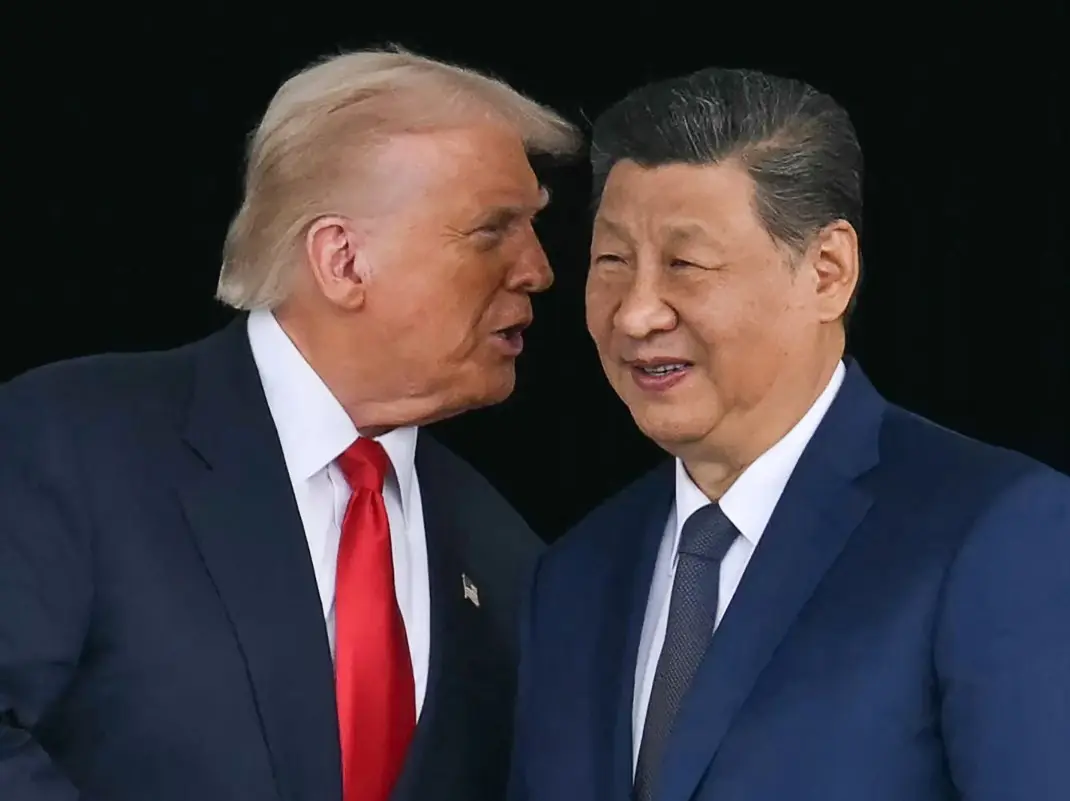
From a trade-war ceasefire in South Korea to new economic mechanisms in Beijing, Donald Trump and Xi Jinping have spent the past 11 months trying to manage one of the world's most consequential rivalries. Now, their Washington meeting puts that fragile arrangement to another test. When Donald Trump and Xi Jinping sit down in Washington on September 24, their meeting will mark the latest chapter in an 11-month cycle of negotiations between the leaders of the world's two largest economies.
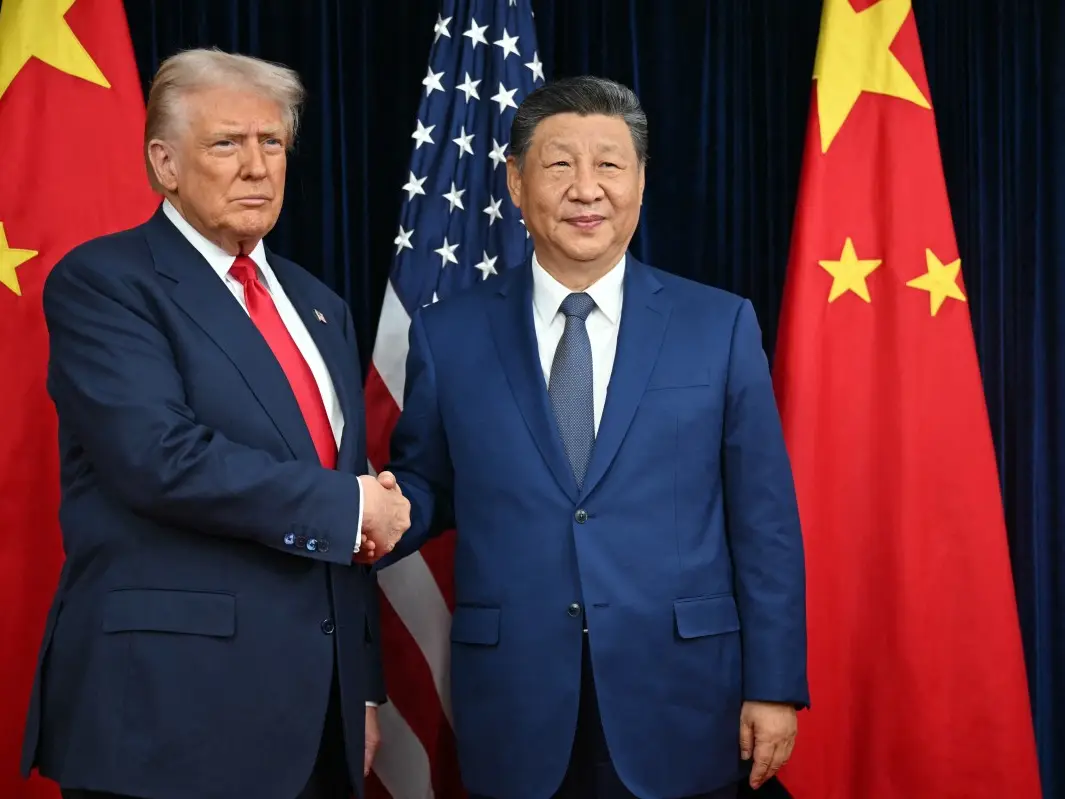
Xi Jinping arrives in the United States on September 23 for a state visit, with Trump expected to personally welcome him at Joint Base Andrews. The leaders' principal talks are scheduled for September 24, with tariffs, rare earths, artificial intelligence and the future of the US-China trade truce among the issues on the table. The encounter comes nearly a year after their meeting in Busan, South Korea, and four months after Trump's visit to Beijing. Across the three meetings, the pattern has been broadly consistent: de-escalation, new economic commitments and continued negotiations, but few signs that the fundamental US-China rivalry has been resolved.
October 30, 2025: Busan, South Korea

The trade-war truce
Trump and Xi's Busan meeting came after months of escalating tariffs and retaliatory measures. Their encounter produced a one-year trade truce aimed at pulling the world's two largest economies back from a deeper confrontation. Under the arrangement, Washington reduced some tariffs on Chinese goods, including the fentanyl-related tariff, while Beijing agreed to resume major purchases of US agricultural products, including soybeans, strengthen measures against fentanyl-related chemicals and pause or ease some new restrictions on rare-earth exports. The agreement also included a suspension of several Chinese retaliatory measures against US products and companies.
What was achieved?
Trending Stories
)
AI kill switch explained: Why shutting down a dangerous AI may not be as simple as pressing a button
)
US ships in Indian Ocean ‘will be attacked’ if war resumes, warns Iran
)
SNL UK takes aim at Ed Sheeran with AI Princess Diana sketch
)
Trump says he'll build an 'AI Force' and appoint a czar, for 'high IQ' people only
)
‘0% chance’: Nvidia CEO Jensen Huang dismisses AI extinction fears by 2030
&im=FitAndFill=(700,400))
What TSMC's 2nm technology means for Apple
)
'Were you here to sell chickpeas?': Wasim Akram criticises Babar Azam's captaincy
)
Mark Carney mimics Trump in hilarious moment over C$70 billion clean-energy investment; room erupts in laughter
&im=FitAndFill=(700,400))
Top 10 countries in mathematics: See the world’s best performers in 2026
)
Apple reportedly building AI server with M8 Ultra chips, may use Nvidia technology
)
TIFF 2026: Theja Rio’s Angh wins Platform Prize, puts Nagaland story on global stage
)
BTS' fans question iHeartRadio’s treatment of group after brief festival set
)
Samsung raises Galaxy S26 prices by Rs 20,000: Here’s what each model now costs
)
Operation Sindoor’s hidden naval dimension | MoD reveals Indian Navy Special Forces joined May 7 strikes
)
Trump-Xi summit: US Treasury Secretary holds meeting with Chinese Vice Premier
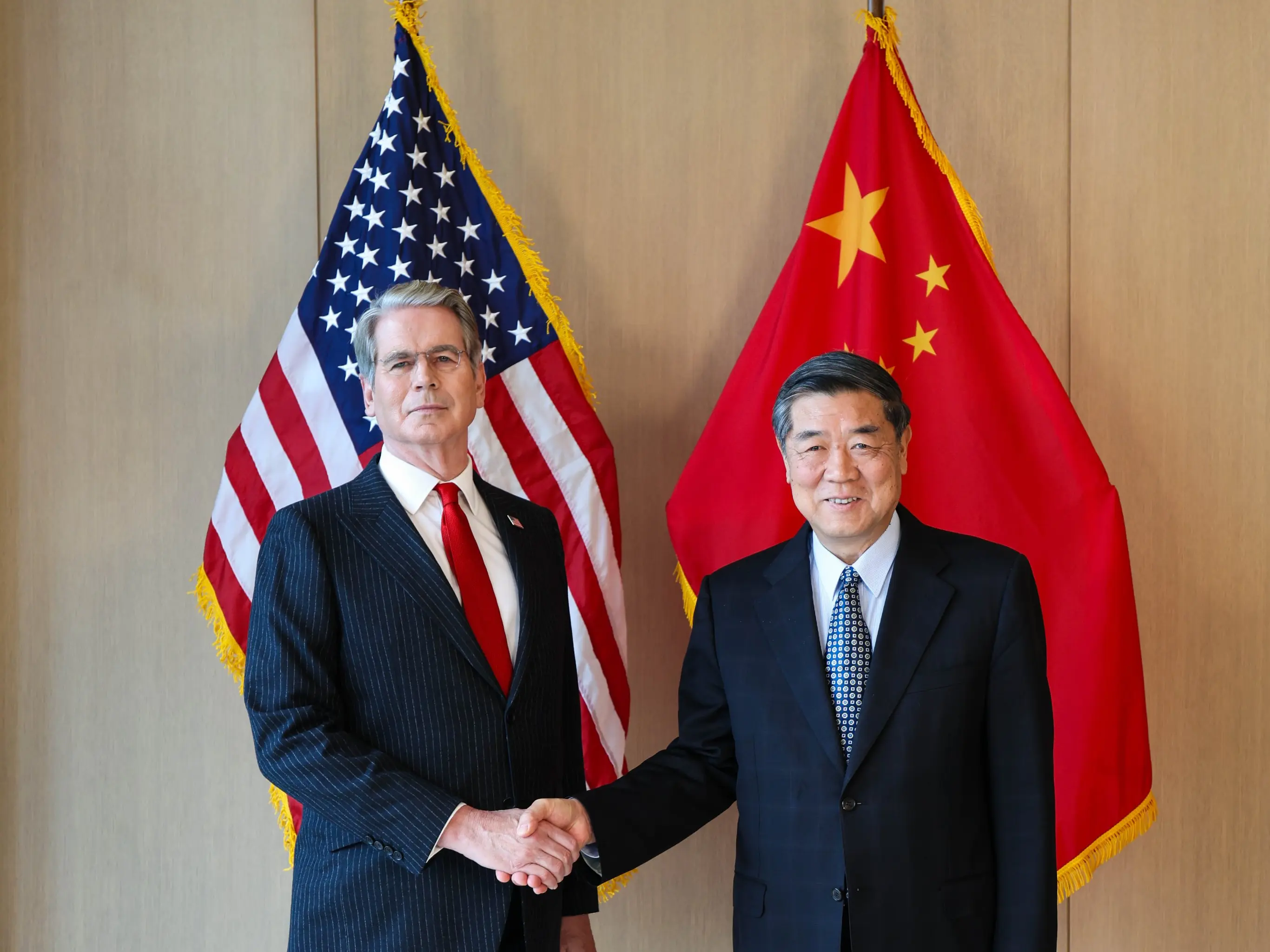)
Bessent meets China’s He Lifeng to prepare for Trump-Xi summit
)
S Jaishankar, former Army chief among high-profile names issued Delhi SIR notices
)
CDU suffers historic defeat in eastern Germany as AfD surges, Merz vows to stay on
)
Iran sets 7 conditions to end war with US: What are Tehran’s demands?
)
Trump announces ‘AI Force’ as debate grows over AI risks and regulation
)
Arvind Kejriwal, family members, Delhi CM Rekha Gupta get SIR notices
)
AI actress Tilly Norwood glitches mid-interview, switches from English to Chinese | Watch
)
Saudi vs Houthis: Houthis claim missiles & drones used in attack on key Saudi sites
)
Ed Sheeran addresses Macklemore's removal, Gaza conflict during Philadelphia concert: 'I cannot hide how I feel'
)
Saudi Arabia exits China-led mBridge digital currency platform amid Saudi-Houthi conflict
)
Punjab man consumes poison outside DC office; Congress, BJP target AAP government
)
ICE shooting in Texas leaves man seriously injured; officials demand independent investigation and transparency
)
'Lot of things to learn from experienced players': Jayasuriya backs Rohit, Virat for 2027 ODI World Cup
)
Chancellor Friedrich Merz vows to stay on as exit polls signal major poll setback
)
North Korea's nuclear tests triggered 1,399 earthquakes: Earth is still shaking | Gravitas
)
Several petrol pumps, other businesses to refuse UPI payments above Rs 2,000 from Oct 16: Is it legal?
&im=FitAndFill=(700,400))
New OTT releases this week (September 21-27, 2026): Shaque: Trust No One, Hunkkaar, Don’t Be Shy- 5 new titles coming to Netflix, Prime Video and more
&im=FitAndFill=(700,400))
Gulshan Grover turns 70: Ram Lakhan, Gangster, Hera Pheri- Must-watch movies of the actor on OTT platforms
)
Noel Tata challenges Chandrasekaran’s reappointment as Tata Sons chairman. What happened at the board meeting
)
West Indies Squad for India Series: Hetmyer included for T20Is, Holder rested
&im=FitAndFill=(700,400))
Kareena Kapoor birthday special: Inside her net worth, best movies, luxurious lifestyle and love story with Saif Ali Khan
)
China now makes advanced memory chips without the machines it was banned from buying
)
Trump in ‘deciding mode’ on Iran, says ‘very big things’ going to happen soon
)
Jailer 2: Vidya Balan joins Rajinikanth's upcoming film as Kantha | Watch
)
Microsoft executive called AI training the ‘largest theft of labour in human history’
)
Italy moves to ban face veils in schools as Meloni pushes new integration measures
The immediate escalation was halted. The agreement prevented the trade war from moving towards another major tariff escalation and gave businesses in both countries a period of greater predictability. But Busan did not produce a comprehensive settlement. The agreement was structured as a temporary truce, with several contentious issues left for further negotiations.
Busan's legacy: Stop the escalation, buy time and reopen negotiations.
May 14-15, 2026: Beijing, China
From truce to economic mechanisms
Seven months later, Trump travelled to Beijing for talks with Xi, the first visit by a sitting US president to China since 2017.
The Beijing summit sought to build on the Busan understanding and move the relationship towards a more structured economic framework. The two governments agreed to establish a US-China Board of Trade to address trade in non-sensitive goods and a US-China Board of Investment to provide a government-to-government channel for investment-related issues.
There were also commitments involving critical minerals, US agricultural exports and Boeing aircraft. According to the White House, China committed to an initial purchase of 200 Boeing aircraft, while also agreeing to purchase at least $17 billion a year of US agricultural products in 2026, 2027 and 2028, alongside earlier soybean commitments. China also agreed to address US concerns over rare earths and other critical minerals.
What was achieved?
The Beijing meeting produced a broader economic framework than the Busan truce, particularly through the creation of new trade and investment mechanisms. But the summit did not eliminate the central sources of friction between Washington and Beijing. Questions remained over tariffs, technology, rare-earth controls, market access and the longer-term structure of the relationship. Beijing's legacy: Create mechanisms to manage economic competition while keeping the broader relationship stable.
Also Read: WATCH | Mysterious lights over Tehran caught on video. Drone, aircraft or something else?
September 23-25, 2026: Washington
The test of the truce
Now Xi is heading to Washington. His September 23 arrival will be followed by the main Trump-Xi talks on September 24. Trump is expected to host a formal state ceremony and discussions with Xi, with economic and strategic issues dominating the agenda.
The timing matters. The trade truce reached in Busan is approaching its November deadline, while Washington and Beijing are still negotiating its extension. US officials have also raised concerns about China's implementation of commitments involving rare-earth exports.
What is on the table?
Trade and tariffs: Both sides are discussing the possibility of reducing tariffs on selected non-sensitive goods, while seeking to preserve the broader trade relationship. Rare earths: China's control over critical minerals remains a major issue for Washington, particularly because rare earths are crucial to advanced manufacturing and technology supply chains.
Artificial intelligence: The two countries have agreed to establish an AI dialogue mechanism covering issues including safety and national-security risks. A proposed notification mechanism for serious AI incidents is also being discussed. Agriculture and trade: Previous commitments on US agricultural purchases and broader market access remain part of the economic negotiations. Taiwan and strategic tensions: While economic issues are expected to dominate, Taiwan remains one of the most sensitive issues in the wider US-China relationship.
What has Washington achieved, so far?
Unlike Busan and Beijing, the Washington meeting has not happened yet. The key question is therefore not what Trump and Xi have already agreed to, but whether the two leaders can turn the arrangements of the previous 11 months into a longer-lasting framework. Recent negotiations have produced a Board of Trade and an AI dialogue mechanism, while discussions continue over tariffs, rare earths and the duration of the trade truce.
From trade wars to managed competition?
The trajectory of the three meetings tells a story of crisis management rather than a final settlement. Busan stopped the immediate escalation. Beijing attempted to put economic relations on a more structured footing. Washington now comes with the truce nearing a deadline and new areas of cooperation, particularly AI, entering the conversation.
The relationship remains defined by a combination of cooperation and competition. The two governments have continued to negotiate even as disagreements persist over trade, technology, critical minerals and strategic issues.

