The struggle to save Cuban sugar from a bitter end

Cuban
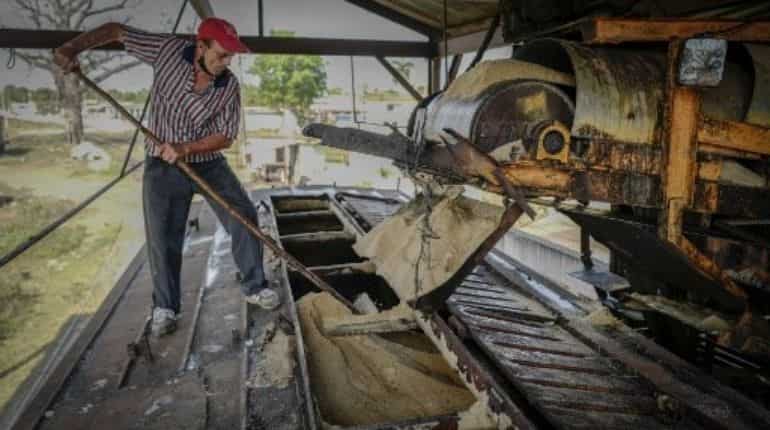
A whistle reverberates through asugarfactory in central Cuba to signal the resumption of milling at midday after an hours-long halt when the raw cane ran out.
It is cane harvest time in Cuba -- once the world's topsugarexporter but now reliant on imports.
A critical shortage of harvesters and trucks to deliver the cane to factories has hamstrung production even as the government scrambles to revive the once-vibrant industry.

Also read |Pandemic, sanctions, and long lines for fuel; Cuba battles concerns over supply and rationing
Cuba's 2020-21 harvest yielded 800,000 tons of the sweet stuff, according to official figures.
This was just 10 percent of peak production some three decades ago and the worst outcome in 130 years for an industry that was once Cuba's economic motor and a huge source of national pride.
)
Beijing to Washington! Ivanka Trump makes a style statement in Chinese designer Guo Pei for President Xi Jinping’s White House welcome
)
New wellness trend focuses on a natural inner glow
)
Outrage erupts after 3-year-old is married to 60-year-old man in Pakistan, link to her sister's murder being probed
)
Trump gifts Xi a bald eagle sculpture at White House dinner: Here’s what it symbolises
)
‘Not just a local tragedy’: Nepal PM Shah warns UN of growing climate threat, says Nepal floods were 'a warning to the world'
)
India-New Zealand FTA is ‘an expression of trust’, NZ High Commissioner Patrick John Rata says
&im=FitAndFill=(700,400))
New Friday OTT releases (September 25, 2026): Don’t Be Shy, Hunkkaar: The Roar, Mango Pachcha- 6 movies and TV shows on Netflix, Prime Video and more
)
Watch: PM Modi joins Bhajan Clubbing event in Delhi on Deendayal Upadhyaya's birth anniversary
)
‘Attack on Mecca a red line for Pakistan’: Shehbaz Sharif warns Houthis at UN
)
Tesla is preparing something big for Optimus: new Gen 3 models surface in app
)
Bias or safety concerns? Bengaluru CEO says firm will not hire men from UP, Bihar, Rajasthan, MP. Here's why
)
Double shock for Israel: Furious Trump refuses to meet humiliated Netanyahu | Gravitas
)
Trump's welcome to Xi demonstrates 'attraction' to dictators: Chuck Schumer
)
Scientists detect first radio signals directly from faraway planet
)
A seven-day roadmap? Iran proposes plan to end war, reopen Strait of Hormuz and resume nuclear talks
)
Xi Jinping's 'special plane' vs Trump's Air Force One: What's the difference?
)
‘It is all possible’: Putin weighs next steps on Ukraine talks, rules out Europe conflict
)
Saudi Arabia, Turkey and Pakistan to hold urgent military talks amid intensifying Houthi attacks
)
Ex-Liverpool forward Mohamed Salah banned from driving in United Kingdom for six months
)
‘We’ve never gotten along better’: Trump praises Xi, jokes about White House ballroom at high-stakes state dinner
)
Meet Adrian Abraham: 9-year-old Indian-origin guitar prodigy aiming for a Guinness World Record
)
Red Sea crisis: Houthis promise not to target European ships; UNSC condemns Saudi attacks
)
'Blockbuster' nor'easter develops an eye similar to hurricanes as warnings are issued
)
'Making history': Xi Jinping praises Trump as US-China leaders dine at White House
)
'We do not wish to continue. It's America that must choose': Iran president Pezeshkian calls on US to end war
)
Exclusive | 'We always want to improve': Suruchi, Kamaljeet after winning Asian Games gold
)
Bollywood mourns Mushtaq Khan: Sunny Deol, Rajpal Yadav and others pay tribute
)
Myanmar training camp case: US national, 6 Ukrainians allowed to meet their families abroad
)
'FIRST LOOK from inside Noah’s Ark': Researchers share video from inside mysterious mound in Turkey
)
99.9% more powerful - Scientists find boy who can recall memories from just 3 months of age
)
Trump made 'final decision' to give Ukraine Patriot missile production license: Zelensky
)
WATCH | As Shehbaz Sharif claims Pakistan’s ‘victory’ during 2025 conflict, Indian diplomat R Srinivas laughs at UN
)
'Fund people, not bombs': Hundreds take to New York streets as Netanyahu delivers speech at UN; dozens arrested
)
'A terrorist country is asking me that question?': Jaishankar hits back at Pakistani journalist at UN; flags attacks on commercial shipping
)
Army chief reviews operational preparedness along LoC, visits mega eye camp in Tangdhar
&im=FitAndFill=(700,400))
‘Absolutely savage, sickening’: Zelensky slams Russia as daytime strikes kill 5 in Kyiv
)
‘Totally unacceptable’: Trump warns Xi over China’s support for Iran
"This is a war withoutend," Lazaro Manuel Torres, boss of the Antonio Sanchez mill in Cuba's central Cienfuegos province, told AFP.
"Fromthe moment you wake up, you run into a mountain" of problems, said Torres, watching with obvious relief as a column of white smoke billowedfromthe chimney after the restart.
Just 56 mills left
Until 1989, Cuba was the world's biggestsugarexporter.
The United States was its major client until 1960 -- two years before Washington imposed crippling sanctions on the communist island nation.
The Soviet Union, a political ally, then became an important buyer and was given preferential rates.
Sugarwas at the heart of Cuba's plans for a prosperous future, with Fidel Castro leading a drive in the 1970s -- complete with propaganda photos of him wielding a machete in thesugarplantations -- to push the country's output to 10 million tons per year.
Watch |Cuban city sees thousands of red, yellow & black crabs
The goal was never achieved.
The fall of the communist bloc in 1991 marked the beginning of theendfor Cuba'ssugarindustry -- exacerbated by sanctions, a steep drop in prices and a lack of investment that saw 100 mills disappear.
Just 56 are left today.
Cuba now needs to importsugarto meet local demand and its export commitments.
"We have been in decline since 2017," Noel Casanas, vice director of state-ownedsugarproducer AZCUBA, told AFP.
"If the situation continues, it is true that (the industry) will disappear."
Sugaris still an important income generator for 50 of Cuba's 169 municipalities, or some 1.2 million of the country's 11.2 million inhabitants, he said.
Practically a corpse
In December, the government approved dozens of measures in a bid to resuscitatesugar.
It doubled the price paid to cane producers, authorized the free hiring and firing of labor, and gave factories more decision-making autonomy in a country where just about everything is state-run.
Also read |1962 Cuban missile crisis: When world was on brink of nuclear war, like it is now over Ukraine
"I don't think these measures can revive an industry that is already practically a corpse," said economist Emilio Morales of the Miami-based Havana Consulting Group.
Casanas conceded production faces "limitations of all kinds" -- critically a lack of foreign investment due to the strengthening of US sanctions since the presidency of Donald Trump.
Since the cane harvest opened in December, Antonio Sanchez has not managed to exceed 65 percent of milling capacity, set at 20,000 tons for this year's harvest.
The problem has not been a lack of fuel or raw product, this time, but a shortage of harvesters and delivery trucks.
There are not enough spare parts, even tires, for vehicles in Cuba and producers such as Torres cannot afford to buy the limited components that are available.
"If you don't have harvesters, if you do not have trucks, you cannot mill," he lamented.
Sugarproducers in Cuba are also hard hit by a lack of fertilizers and pesticides.
For now, the government's measures have managed to slow an exodus ofsugarworkers, industry bosses told AFP.
"We cannot complain, we are doing quite well -- up to 700 pesos (about $29) a day," said farmer Livan Hernandez.
Also read |February 16 in History: Castro becomes Premier of Cuba, Kyoto Protocol is put into action, and more!
The average monthlyCubansalary is about $162.
Casanas said what is needed is foreign investment and expanding the industry into highly lucrativesugarderivatives such as bioethanol.
Sugar"is no longer the locomotive (of theCubaneconomy) nor will it be," he said.
But "it continues to be a strategic sector... that must be developed."

