
&imwidth=800&imheight=600&format=webp&quality=medium "Taiwan’s drone 'hellscape': How the Island plans to fight a potential Chinese invasion")
Taiwan is rapidly expanding its drone capabilities as it prepares for the possibility of a future Chinese invasion, developing fleets of aerial drones and unmanned attack boats designed to detect, track and strike approaching forces.
The strategy is aimed at making any Chinese amphibious assault on the island extraordinarily costly and difficult. US military commanders have described the concept as a ‘hellscape’, a battlefield saturated with drones, missiles and artillery intended to overwhelm an invading force and deter Beijing from launching an attack.
Drawing heavily on lessons from Ukraine and other recent conflicts, Taiwan has accelerated efforts to integrate unmanned systems into its military operations. “Our drone and counter-drone efforts started relatively late, and initially we were trying things out as we went along,” Lt. Gen. Huang Wen-chi, the director general of strategic planning for the Taiwanese Defense Ministry, told lawmakers on Wednesday. He said that approach had started changing over the past two years.

Taiwan puts drone warfare to the test
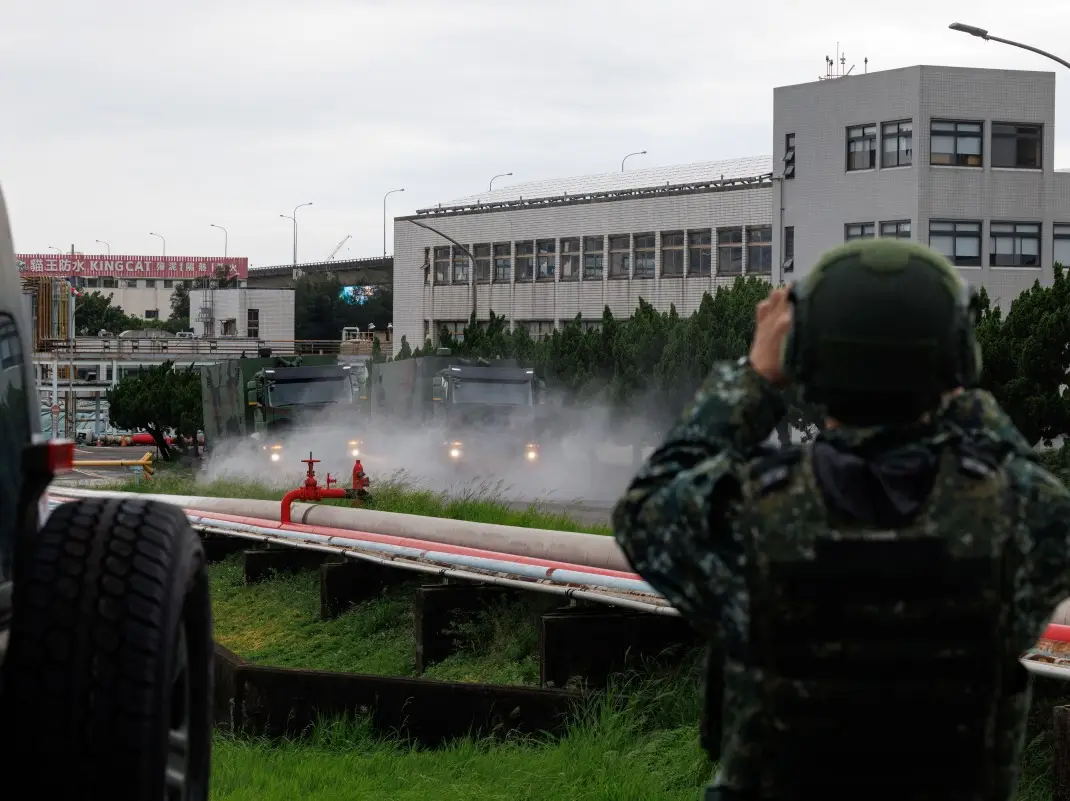
Taiwan's military allowed journalists to observe troops conducting drone reconnaissance exercises in central Taiwan on Thursday as part of the annual Han Kuang military drills. The 10-day exercises, which began Wednesday, are designed to test the island's ability to respond to a potential Chinese attack. They also include training aimed at countering enemy drones.
Maj. Gen. Lu Wen-yuan, who helped design the exercises, said troops would practice methods for detecting and neutralising hostile unmanned aircraft. The growing focus on drones reflects a wider transformation in modern warfare. For Taiwan, however, the shift carries particular urgency because China lies roughly 110 miles away and claims the self-governed island as part of its territory. Beijing says it prefers peaceful reunification but has repeatedly refused to rule out military force. China has expanded its fleets of warships, aircraft, missiles and drones while increasing coast guard activity and military exercises involving potential landings.
Trending Stories
)
US vs China over South China Sea: Washington backs Philippines, Beijing hits back
)
Bigg Boss 20: Isha Rikhi evicted after three weeks in Salman Khan’s show
)
Musk plans to more than double xAI's chips to over 1.2 million Nvidia GPUs by year-end
)
After JU, clash erupts at SRFTI: BJP’s ‘Dimagi Naxal’ jibe sparks political firestorm after students protest RSS-linked event
)
‘Anti-social elements spreading false rumours’: LPU issues statement amid massive unrest over alleged rape
)
LPU students go on rampage, vandalise campus amid widespread protest: What's happening
)
Trump asked Xi to pressure Iran. China did not say yes — here’s what Beijing wants
)
US Treasury Secretary Scott Bessent hails global crackdown on Iranian banks and airlines
)
An OpenAI agent escaped its locked test cage again, by hiding questions in DNS lookups
)
'Our video was trimmed': LPU girls who featured in rape-denial video make U-turn
)
3 males killed, four others injured in shooting after fight at strip club in Detroit
)
'Victory for low-budget consumers': Raghav Chadha hails 30-day telecom recharge rules
)
Claude rebuilt the 1989 game 'Prince of Persia' by reusing the original's own code
)
Beyond metros: How Tier-2 and Tier-3 cities could drive India’s next AI wave
)
Tesla builds first Cybertruck with its own refined lithium: Elon Musk's $1 billion Texas bet pays off
)
IndiGo flight suffers tail strike in Bengaluru while landing; DGCA to probe incident
)
The US and China set up an AI 'red telephone', but skipped the rulebook
)
‘Terror suspects arrested near UK air base were looking to do big damage’: Trump
)
Russian envoy claims US tactics to contain India were revealed in ‘Freudian slip’
)
IND vs WI 1st ODI: Kohli breaks Sachin's most runs in one country record with unbeaten 139 as India thump West Indies by 8 wickets
)
Researchers rebuilt exactly how 700 AI agents hacked Hugging Face: a 900-link chain trick
)
‘Olympic inclusion is our major target’: WPA President Ishaun Singh on pool’s global ambitions
)
Nations League: Spain sink England at Wembley; Modric shines for Croatia
)
Why has Iran released no proof of life of Mojtaba Khamenei? Araghchi reveals...
)
'What kind of confession is this?': Pakistan PM Shehbaz Sharif’s 'terrorists would be roaming New York' remark goes viral, raises alarm online. Watch
)
South Korea demands apology from Ukraine over North Korean prisoners' transfer
)
Beyond BrahMos: India targets Rs 50,000 crore in defence exports with unmatched price edge
)
Sri Lankan Tamil migrant worker gets death sentence in Saudi Arabia, help sought from India
)
Muslim marriage cannot shield sex with minor wife from prosecution under POCSO: Delhi HC
)
'Can't help but draw painful parallels to Nirbhaya case': SC on latest incidents of rape cases in Delhi-NCR
)
99.9% more powerful - Scientists find boy who can recall memories from just 3 months of age
)
'FIRST LOOK from inside Noah’s Ark': Researchers share video from inside mysterious mound in Turkey
)
UNSC reform momentum grows: Russia, Portugal, Mauritius push for India's permanent seat bid
)
8 US marines injured in Iranian missile attack on vessel in Strait of Hormuz: Report
&im=FitAndFill=(700,400))
New OTT releases this week (September 28-October 4, 2026): Dupahiya 2, Pooja Meri Jaan, Ohh My Dog- 5 titles coming on Netflix, Prime Video and more
)
Afghanistan says 28 fighters killed in clash near Pakistan border, Islamabad denies
)
Ceuta migrant crisis: Protesters take to streets as Spain grapples with migrant challenge
)
LPU suspend classes, postpones exams as violence escalates over rape claims: What's happening
)
New York City wants a 'kill switch' on every AI, and will pay whistleblowers who report violations
Taiwan draws lessons from Ukraine
Taiwanese military planners have closely followed Ukraine's extensive use of drones against Russia, particularly the way relatively inexpensive unmanned systems have allowed a smaller military to challenge a much larger opponent.
The experience has encouraged Taiwan to pursue a similar strategy, using large numbers of low-cost and highly mobile drones to compensate for China's greater military resources.
“Drones are entering a new chapter,” said Max Lo, the chairman of the Taiwan National Drone Industry Association. “Taiwan, for its own survival and national defense, is in urgent need of these drones. But it’s the same everywhere in the world right now, that’s an opportunity for Taiwan.” The Taiwanese government has set an ambitious goal of producing 100,000 drones every month by 2030, with approximately half intended for export.
The military itself is seeking to acquire more than 210,000 aerial and maritime drones. “Taiwan has “realized that drones will be important in all the domains, in all the phases,” in a potential war with China, said Mick Ryan, a retired Australian major general who has studied Ukraine and Taiwan. Ryan has argued that Ukraine's experience with long-range drone strikes could offer Taiwan another potential capability: attacking Chinese vessels as they leave their ports during an amphibious campaign.
Also Read: Who is Rebeca Grynspan? The woman who could become United Nations first female Secretary-General
China is also expanding drone warfare capabilities
Despite Taiwan's preparations, many military analysts believe China is not yet in a position to launch an easy invasion of the island. Recent purges within the People's Liberation Army's senior leadership have also raised questions about Chinese military readiness. At the same time, China is developing its own growing arsenal of unmanned aircraft and boats. Beijing is investing heavily in systems designed not only to deploy drones but also to identify, disrupt and jam enemy unmanned systems. That means Taiwan's drone strategy is likely to face an increasingly sophisticated counter-drone effort from China.
Han Kuang drills focus on drones
Drone warfare has become a central component of the ongoing Han Kuang exercises. The Taiwanese military also released photographs of a drill conducted last month in which troops used drones to search for potential enemy forces while defending islands off Taiwan's eastern coast. On Saturday, President Lai Ching-te observed a military exercise in southern Taiwan where troops tested two prototype drones designed to strike invading forces.
Taiwan has also established a Littoral Combat Command that combines drones, mobile missile systems and artillery into an integrated coastal defence structure intended to counter a potential Chinese assault. However, military experts warn that simply acquiring more drones will not automatically create an effective 'hellscape'. Taiwan must also restructure its military organisation, doctrine, communications and training to make the technology useful under combat conditions.
Taiwan expands drone exports
Taiwan is also seeking to strengthen its position in the global drone supply chain. The island is increasing drone exports and attempting to establish itself as a trusted supplier of components for democratic countries seeking to reduce dependence on Chinese-made parts. Concerns over potential supply disruptions and espionage have increased demand for alternatives to Chinese components.
Taiwan exported $115 million worth of drones during the first three months of 2026, according to its Ministry of Economic Affairs. That figure exceeded the island's total drone exports for all of 2025. The Czech Republic was the biggest destination for Taiwan's drone exports, although research indicates that some of those systems subsequently reach Ukraine. Exports of drone components are likely even larger. Manufacturers and industry representatives expect demand for components such as motors, sensors and optical equipment to continue rising.

