

&imwidth=800&imheight=600&format=webp&quality=medium "Strategic silence? Why are GCC countries staying out of the Iran war: Key details inside")
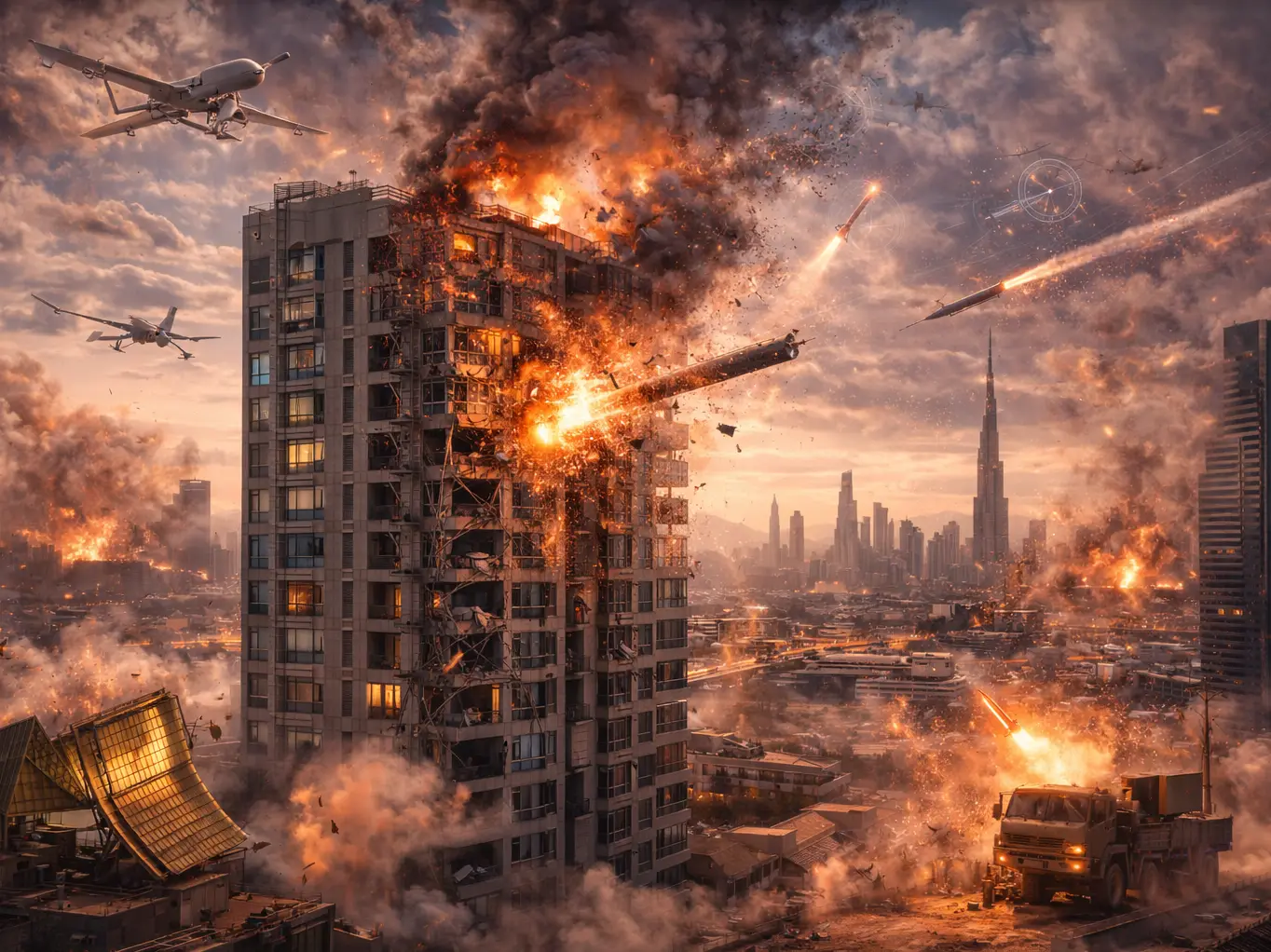
After several drones and missiles streak across the Middle East sky amid the ongoing war between Iran and the US-Israel, the Gulf Cooperation Council (GCC) countries remain silent. The six-nation bloc is also quite despite sustaining direct hits on civilian infrastructure, ranging from Dubai’s luxury districts to Saudi oil refineries.
For this silent, the world is still wondering for the answer that why some of the most well-funded militaries in the region aren't joining the fray. The answer lies in a complex mix of economic survival, historical lessons, and a desperate attempt to protect their "Post-Oil" futures.
Abdullah Baabood, an Oman-based political analyst and visiting scholar at the University of Cambridge, told The i Paper that these nations are stepping back due to the economic and reputational damage that has defined themselves as safe havens in a troubled region. “Iran is trying to hit each country where it hurts most,” he said. “So for Dubai, it’s hotels and tourism, in Qatar, they attacked [LNG facility] Ras Laffan.”
Baabood also indicated that the pain has remained in the tolerable range for Gulf countries. The vast majority of incoming drones and missiles were also shot down by the Air defences. He said the priority for the Gulf is “to avoid being dragged into this war at all costs”.
A Middle East analyst at the US Baker Institute, Kristian Ulrichsen, said that the leaders in the region are worried about all those things that could further escalate tension from an increasingly aggressive Iran. “An Iranian regime fighting for survival, feeling it has nothing left to lose, could target desalination facilities in the Gulf that people rely on for water, or go all out in attacking energy infrastructure,” he told The i Paper.
“There is a feeling that if Donald Trump were to decide he’s had enough and declare victory, and the Gulf states were involved, they would be left alone to face any backlash,” Ulrichsen added.
Trending Stories
&imwidth=180&imheight=135&format=webp&quality=medium)
Rahul Gandhi's plea against Election Commission delayed as Supreme Court registry flags 14 ‘defects’
&im=FitAndFill=(700,400)&imwidth=180&imheight=135&format=webp&quality=medium)
Navratri 2026: 9 days, 9 forms of Goddess Durga and 9 colours- Check the complete list
&imwidth=180&imheight=135&format=webp&quality=medium)
Korean peninsula tensions escalate as North Korea launches multiple ballistic missiles, PACOM says 'no threat to US personnel'
&imwidth=180&imheight=135&format=webp&quality=medium)
Trump weighs firing Kimberly Guilfoyle as US ambassador to Greece amid misconduct allegations: Report
&imwidth=180&imheight=135&format=webp&quality=medium)
Anti-SIR protest in Mumbai: Protestors wear black masks & ribbons in Mumbai
&imwidth=180&imheight=135&format=webp&quality=medium)
UK PM Andy Birnham renews claims of Russian meddling in Brexit vote
&imwidth=180&imheight=135&format=webp&quality=medium)
BCCI rejects venue shift reports, India vs Sri Lanka 1st ODI to remain in Delhi
&imwidth=180&imheight=135&format=webp&quality=medium)
'Absolutely disgusting': Australia slams US plan to livestream Nidal Hasan's execution; Mike Johnson raises concerns, warns of terrorist propaganda
&imwidth=180&imheight=135&format=webp&quality=medium)
1,500 drones illuminate Mumbai sky as Cordelia Cruises unveils second ship, Cordelia Sky
&imwidth=180&imheight=135&format=webp&quality=medium)
Houthis warns US of 'painful response' if Washington joins Saudi war in Yemen as airlines suspend flights to Saudi Arabia
&imwidth=180&imheight=135&format=webp&quality=medium)
Congress demands action against chief election commissioner
&imwidth=180&imheight=135&format=webp&quality=medium)
'Turn approver, resign, we'll forgive you': Rahul Gandhi claims receiving messages from CEC Gyanesh Kumar
&imwidth=180&imheight=135&format=webp&quality=medium)
'I will not be silenced': Ilhan Omar alleges political intimidation after federal officers search her Washington home
&imwidth=180&imheight=135&format=webp&quality=medium)
Robotic surgery, advanced treatment: What is coming to this small Gujarat town?
&imwidth=180&imheight=135&format=webp&quality=medium)
Pakistan's government blames PTI for rise of terrorism in Khyber Pakhtunkhwa
&imwidth=180&imheight=135&format=webp&quality=medium)
‘This is just the start’: Maaya Rajeshwaran on historic ITF title, confidence boost and future goals
&im=FitAndFill=(700,400)&imwidth=180&imheight=135&format=webp&quality=medium)
How does a robot decide what to do next?
&imwidth=180&imheight=135&format=webp&quality=medium)
Trump says he 'may' meet North Korean leader Kim Jong Un during upcoming Asia trip
&imwidth=180&imheight=135&format=webp&quality=medium)
'Ouch!!! That must hurt': Kangana Ranaut hails Kamal Haasan's sharp reply to Elon Musk over Starlink row
&imwidth=180&imheight=135&format=webp&quality=medium)
Sidhu Moose Wala’s younger brother wins hearts by recreating late singer’s signature move at Toronto Hologram Show
&imwidth=180&imheight=135&format=webp&quality=medium)
Girl 'dead' for 8 hours wakes up at her own funeral, dad insists she wasn't breathing
&imwidth=180&imheight=135&format=webp&quality=medium)
UK school ditches technology, shifts from screen to pen and paper for learning
&imwidth=180&imheight=135&format=webp&quality=medium)
Opposition’s 10 demands in Supreme Court petition range from stay on SIR to audit of voter rolls
&imwidth=180&imheight=135&format=webp&quality=medium)
'I am thoroughly unamused': Judge slams Trump administration after 400 trees cut at Washington golf course
&im=FitAndFill=(700,400)&imwidth=180&imheight=135&format=webp&quality=medium)
New OTT releases this week (October 12-18, 2026): Sacrifice, Koffee with Karan S9, Roadies Rebirth- 6 titles coming on Netflix, JioHotstar and more
&imwidth=180&imheight=135&format=webp&quality=medium)
Delhi protest: CJI Surya Kant declines to meet India Bloc leaders
&imwidth=180&imheight=135&format=webp&quality=medium)
China’s gold rush puts billion in focus
&imwidth=180&imheight=135&format=webp&quality=medium)
India's Ajit Doval, Iran's Mohsen Rezaei hold talks amid escalating West Asia tensions, discuss 'issues of mutual interest'
&imwidth=180&imheight=135&format=webp&quality=medium)
'Almost certainly': UK Prime Minister Andy Burnham says Iran's IRGC behind RAF Fairford threat
&imwidth=180&imheight=135&format=webp&quality=medium)
Elon Musk pumps $276 million into Republican campaigns ahead of US midterm elections
&imwidth=180&imheight=135&format=webp&quality=medium)
'Never met' him: Melbourne Imam denies links to Flydubai co-pilot Hamam al-Hammami
Gulf region had a lot to lose if further drawn into conflict
Andreas Krieg, a Gulf security expert at the War Studies Department of King’s College London, said countries in the region stand to lose significantly if they become more deeply involved in the ongoing conflict. “Iran’s retaliation options against Gulf targets are broad, scalable and politically painful,” he said. “If a Gulf state crosses the line into overt participation in a US-Israeli campaign, it makes itself a standing target not just during the war but afterwards as well.”
He noted that the main priority for governments within the Gulf Cooperation Council is to limit the duration of the war and prevent it from spreading geographically, particularly to avoid their cities, airports and oil facilities turning into frontline targets. Krieg also raised doubts about whether Gulf states could offer more than limited support to the military campaign led by the United States and Israel, which has already carried out thousands of airstrikes on sites across Iran.
He also said that Arab governments could face significant political consequences if they were seen as joining a US-Israeli war against a Muslim-majority country. In Bahrain, authorities have recently increased security deployments as the Sunni-led government monitors the largely Shia population amid public expressions of support for people in Iran.
What is GCC?
The GCC (Gulf Cooperation Council) countries are a political and economic union of six Arab nations bordering the Persian Gulf: Saudi Arabia, United Arab Emirates (UAE), Qatar, Kuwait, Oman, and Bahrain. Established in 1981, this alliance aims to promote regional cooperation, security, and economic integration, with a strong focus on shared cultural and Islamic values.

