&imwidth=800&imheight=600&format=webp&quality=medium "SpaceX revenue jumps 92%, but shares tumble 9% after first earnings report")
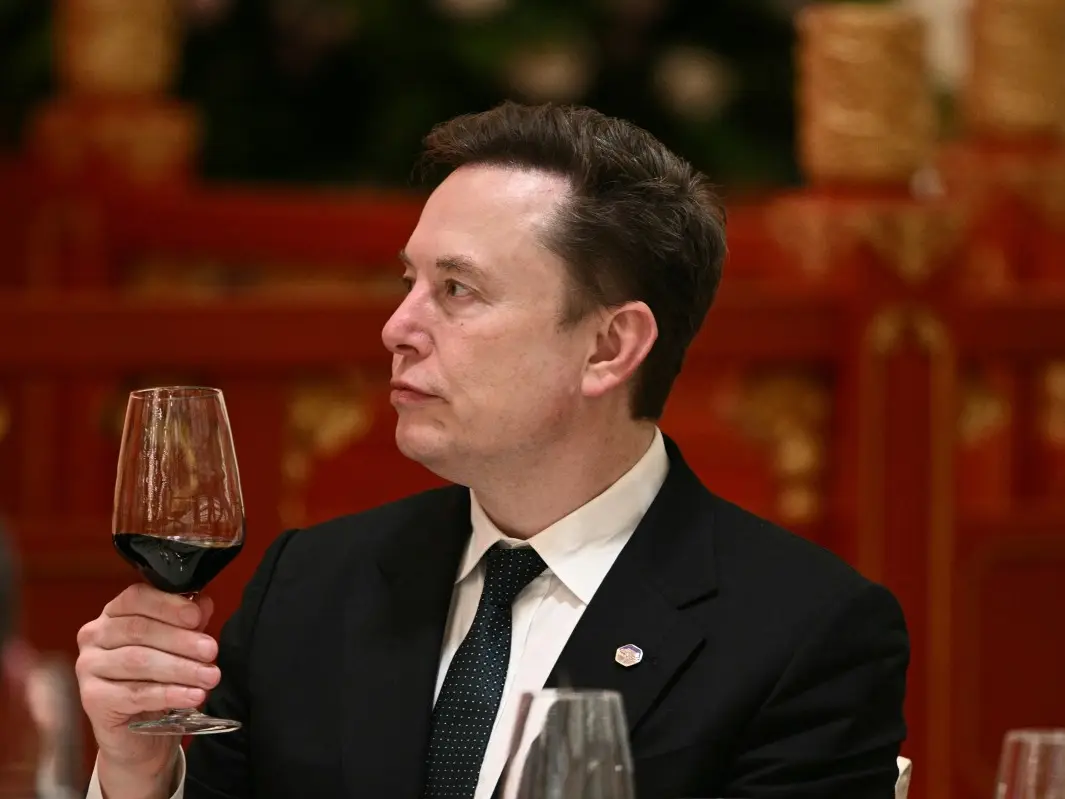
SpaceX, in its first-ever earnings report, showed a 92 per cent year-on-year increase in revenue to $7.8 billion, clearing the $6.83 billion forecasted by Wall Street analysts. The massive revenue drivers were Starlink Satellite with $4.29 billion, and the AI business with $2.18 billion. Overall, SpaceX made a net loss of $143 million in the three months to June, and a loss of $2 billion during the first six months of the year. But despite almost doubling the revenue, the SpaceX share fell by nearly 9 per cent in after-hours trading.
CEO Elon Musk projected that SpaceX will reach a $100 billion annualised revenue run rate by December 2026 and hit $1trillion in revenue by 2030. Musk was extremely optimistic about further revenue growth from the Starlink Satellite business, suggesting that it would grow exponentially over the years and would operate most of the world's internet. This is the main engine of the company, and the total subscribers have roughly doubled to 12 million. "It's not out of the question that, at some point, Starlink will operate most of the world's internet," said Musk.

Shift towards an AI neo-cloud profit model
The AI-driven revenue recorded a $1.2 billion loss, as the company have already spent $15.3 billion on infrastructure development. Most of SpaceXAI's $4.29 billion revenue came from renting out computing power, also known as the neo-cloud business, as the native AI model Grok lags.
At the same time, its Capex spending also grew exponentially to $18.3 billion, increasing from $2.83 billion a year earlier. Bret Johnson, the Financial head of the company, said that this is likely to continue.
Trending Stories
)
Nigeria: Protesters take to the streets, police fire shots
)
US-Iran war: Tehran draws red lines — seven demands before any peace talks
)
Russia-Europe tensions: Polish PM warns Russian attacks could test NATO's unity
&im=FitAndFill=(700,400))
‘Not the US or China’: These are the countries leading the world in arable land
)
Mark Carney mimics Trump in hilarious moment over C$70 billion clean-energy investment; room erupts in laughter
)
Pentagon revives mandatory testosterone testing for male troops aged 30 and above
)
‘End of my career...’: NSA Doval recalls tense Sikkim mission when China captured Indian intelligence team
)
Trump defends AI amid growing alarm, announces new 'AI force' and promises an 'AI czar'
)
Iran sets 7 conditions to end war with US: What are Tehran’s demands?
)
Trump announces ‘AI Force’ as debate grows over AI risks and regulation
)
China may have gained access to US's classified F-35 jets; parts meant for repairs diverted to Hong Kong, sparking Pentagon inquiry
)
Gaza under attack: Health chief's son killed in IDF strikes
)
Arvind Kejriwal, family members, Delhi CM Rekha Gupta get SIR notices
)
Cochin shipyard starts building Indian Navy's next-gen missile vessels
)
Saudi vs Houthis: Houthis claim missiles & drones used in attack on key Saudi sites
)
Russia extends ban on Western food imports for two more years in extended sanctions countermeasure
)
Ed Sheeran addresses Macklemore's removal, Gaza conflict during Philadelphia concert: 'I cannot hide how I feel'
)
Brigitte Bardot’s private collection set for Paris auction; key items and prices revealed
)
How did an Australian river with 500 crocodiles pass the Olympic test? Here's how
)
‘Will go to any extent’: Pakistan vows to defend Saudi Arabia amid Houthi attacks
66 years of the Indus Waters Treaty: How India and Pakistan settled a bitter river dispute
)
The Verdict | When precision fails: US commits war crime in Minab school strike, UN finds
)
9 women found dead near Johannesburg: South Africans rally, demand 'enough' to femicide
)
Trump wants to rename ‘Artificial Intelligence’, gives 3 options: Which one would you pick?
)
US-Iran war: Tehran sets seven conditions to re-engage in talks with US
)
Reacher star Alan Ritchson opens up about alleged blackmail, suicide attempt during difficult period
)
Africa is splitting, and a lot sooner than estimated, giving way to a new ocean
)
Flying cars in UAE: Ras Al Khaimah signs deal with Chinese company to test new transport
)
Trump bans CNN, MS NOW and Politico from White House over ‘FAKE NEWS’
)
Trump 2.0: Dark days ahead for America’s ‘imperial presidency’
&im=FitAndFill=(700,400))
How many F-35s does Britain, Japan and Israel have?
)
Harry Brook targets long reign at top of T20I rankings after Sri Lanka sweep
)
Russia's deadly Ukraine strikes kill 2 in Sumy, hit Dnipro mall
)
Russia holds first parliamentary elections since the beginning of the Ukraine war
&im=FitAndFill=(700,400))
Meet top 5 Indian batters with fastest T20I centuries
)
Raphinha hat-trick powers Barcelona to 3-1 win over Sevilla in La Liga
)
Analysts suggest that Musk is going all in on AI data centres; in a few years, the company will resemble less like an AI innovation company and more like an AI infrastructure company with a satellite business along with it. Anthropic pays SpaceX $1.25 billion monthly for compute access to the Colossus data centre infrastructure; similarly, Google has signed a $920 million deal monthly starting in October 2026 to bridge its immediate GPU capacity shortfalls, which amounts to $30 billion through June 2029.
"SpaceX expects to have built more than two gigawatts of computing capacity this year and by the end of next year will have close to 10 gigawatts of computing," Musk said.
After the fall in SpaceX share prices, Elon Musk said that the investors are underestimating the firm. Musk is moving all in towards AI-infrastructure build-out. The only profitable part remains Starlink satellite, so calling the lack of investor confidence amounts to underestimating the firm will "be a stretch". Since its first trade, SpaceX has lost over $500 billion in market capitalisation and is down over 50 per cent from its intraday high, with shares trading around $109.80, well below both the first-trade price of $160.95 and the IPO price of $135. A lockup expiration on August 6 will free up more than $100 billion in shares for trading, an overhang that analysts say could weigh further on the stock. Insiders may sell up to the first 20 per cent of eligible shares.