Russia expresses concerns over escalation of tensions in Middle East, urges restraint

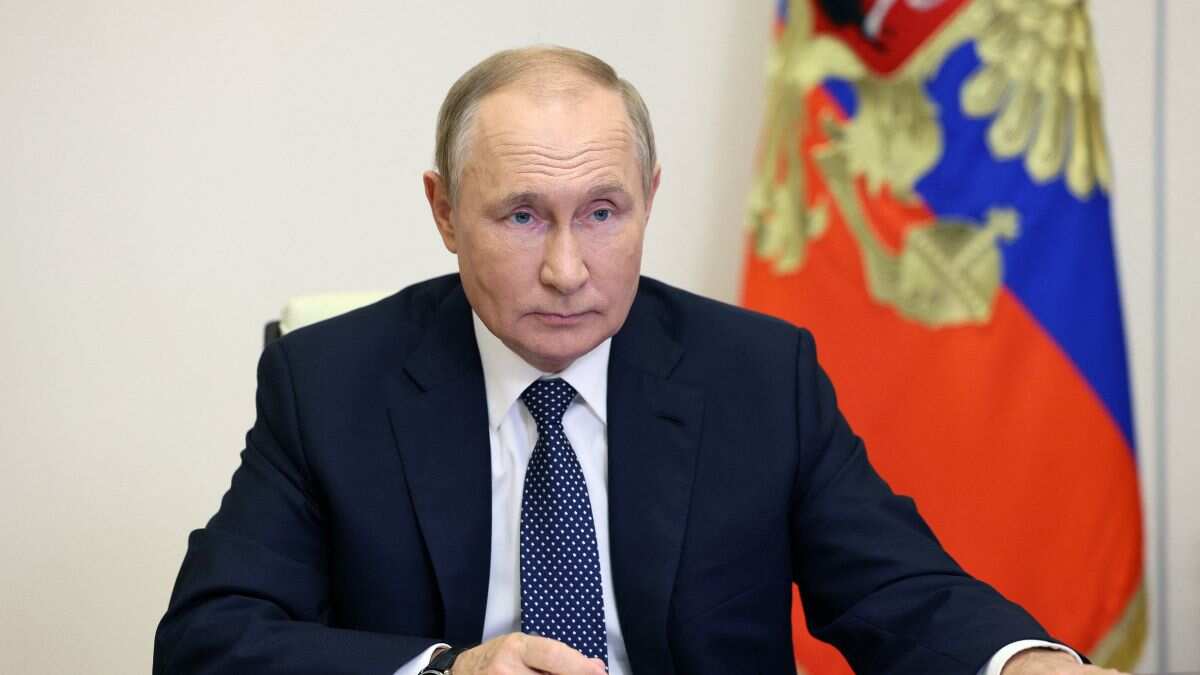
Russian President Vladimir Putin
Russia on Monday (Apr 15) raised concerns over the escalation of tensions in the Middle East after Iran launched an unprecedented attack against Israel on Saturday (Apr 13).
"We express our extreme concern at yet another dangerous escalation in the region. We have repeatedly warned that the numerous unresolved crises in the Middle East, primarily in the area of the Palestinian-Israeli conflict, which are often fuelled by irresponsible provocative actions, will exacerbate tensions," the foreign ministry said in a statement.
"We call on all parties involved in the conflict to exercise restraint. We believe it is important for the constructively-minded international players to contribute to this effort," the statement added.

Kremlin spokesman Dmitry Peskov calling for restraint said that further rise in the conflict was in no one'sinterest and that the countries should resolve conflict via political and diplomatic methods.
"Further escalation is in no one's interests. Therefore, of course, we advocate that all disagreements be resolved exclusively by political and diplomatic methods," Peskov said.
Iran on Saturday (Apr 13) launched a drone and missile strike against Israel in retaliation for an Israeli attack on its Damascus consulate on April 1 that claimed the lives of seven officers, including a senior commander of the IRGC.
&imwidth=180&imheight=135&format=webp&quality=medium)
Pakistan to head IMF, World Bank boards after 74 years amid persistent economic crisis
&imwidth=180&imheight=135&format=webp&quality=medium)
'We are not sitting in ivory towers, we are aware': SC issues notice to Rahul Gandhi, Akhilesh Yadav
&imwidth=180&imheight=135&format=webp&quality=medium)
6-year-old among 2 killed as vehicle crashes into youth soccer game in US
&imwidth=180&imheight=135&format=webp&quality=medium)
‘I have very severe problems’: Trump fuels health speculation during address to firefighters
&imwidth=180&imheight=135&format=webp&quality=medium)
Lizard people? Ex-US Army sniper claims soldier killed by 'reptilian beings' in battle near Area 51
&imwidth=180&imheight=135&format=webp&quality=medium)
Ankita Bhandari murder case: Parents meet CBI, seek impartial investigation
&imwidth=180&imheight=135&format=webp&quality=medium)
Bangladesh resort fire kills 10 tourists, including a 5-year-old child
&imwidth=180&imheight=135&format=webp&quality=medium)
At least 19 killed in stampede-like situation after part of Kolkata Durga Puja pandal collapses
&imwidth=180&imheight=135&format=webp&quality=medium)
Rajinikanth remembers late composer Deva, recalls his kindness and musical legacy
&imwidth=180&imheight=135&format=webp&quality=medium)
Rain washes out 5th T20I as India-West Indies share honours 2-2
&imwidth=180&imheight=135&format=webp&quality=medium)
'Reason UN has lost credibility': Amid SIR protests India hits out at report alleging 'youth repression'
&imwidth=180&imheight=135&format=webp&quality=medium)
‘My president, I mean my husband’: Trump's new press secretary Katie Zacharia's first briefing goes off the rails in 14 minutes
&imwidth=180&imheight=135&format=webp&quality=medium)
China responds to Trump's Press Secretary Katie Zacharia after toilet remark: 'Visit China more often'
&imwidth=180&imheight=135&format=webp&quality=medium)
UAE agrees with Saudi Arabia to rejoin Yemen fight as Houthi strikes rattle Riyadh
&imwidth=180&imheight=135&format=webp&quality=medium)
COVID-19 pandemic led to increase in divorce cases, observes Madras High Court
&imwidth=180&imheight=135&format=webp&quality=medium)
At least 400 arrested as protests turn violent in France; PM blames far left
&imwidth=180&imheight=135&format=webp&quality=medium)
Explosion and fire at military base in Canada's Alberta, casualties feared
&imwidth=180&imheight=135&format=webp&quality=medium)
Israel examines Russia's Shahed-type drones sent by Ukraine to combat Iran | Gravitas
&imwidth=180&imheight=135&format=webp&quality=medium)
WATCH | iPhones, luxury perfumes floating in Hormuz? Iranian fishermen make bizarre discovery
&imwidth=180&imheight=135&format=webp&quality=medium)
Two students die, 14 injured at Dandiya event in Hyderabad: Know what happened? VIDEO
&imwidth=180&imheight=135&format=webp&quality=medium)
China’s ‘dark tourism’ boom: Why are young travelers paying to experience simulated disasters?
&imwidth=180&imheight=135&format=webp&quality=medium)
WATCH | Zelensky gives cheeky response when asked if Trump is making him a scapegoat ahead of US midterms
&im=FitAndFill=(700,400)&imwidth=180&imheight=135&format=webp&quality=medium)
Durga Puja 2026: Ranbir Kapoor, Kajol, Jaya Bachchan, and other celebs bring festive glam to pandals
&imwidth=180&imheight=135&format=webp&quality=medium)
No Ravindra Jadeja, Yashasvi Jaiswal in India’s 2027 ODI World Cup plans: Report
&imwidth=180&imheight=135&format=webp&quality=medium)
Kolkata Durga Puja stampede: PM Modi announces Rs 2 lakh ex-gratia for kin of dead, Amit Shah to visit injured
&im=FitAndFill=(700,400)&imwidth=180&imheight=135&format=webp&quality=medium)
Inside Tesla's Roadster: 10 features of Elon Musk's 'flying car' that push the limits of electric vehicles | In Pics
&imwidth=180&imheight=135&format=webp&quality=medium)
Anirudh Ravichander-Kavya Maran wedding: Telangana CM reveals Chennai reception date
&imwidth=180&imheight=135&format=webp&quality=medium)
Ranbir Kapoor visits North Bombay Durga Puja pandal, offers prayers
&imwidth=180&imheight=135&format=webp&quality=medium)
One species, two lineages: Why Sri Lanka’s spectacled cobra differs genetically from Indian variant
&imwidth=180&imheight=135&format=webp&quality=medium)
Oil tanker carrying over 2M barrels of crude hits mine in Strait of Hormuz, catches fire, says Iran
&imwidth=180&imheight=135&format=webp&quality=medium)
2 injured in plane crash on busy California highway

US ends automatic work permit extensions; Indian workers lose 540-day safety net: What it means
&imwidth=180&imheight=135&format=webp&quality=medium)
'It's a joy to see the makers bring it on such a grand scale': SS Rajamouli on Ramayana
&imwidth=180&imheight=135&format=webp&quality=medium)
13 dead after truck mows down devotees, crashes into temple gate in Madhya Pradesh's Gwalior
&imwidth=180&imheight=135&format=webp&quality=medium)
IND-W vs ZIM-W, 2nd T20I: When and where to watch live streaming in India?
&imwidth=180&imheight=135&format=webp&quality=medium)
US lawmaker Pramila Jaypal writes to Rubio, urges to raise handling of CJP protest with India
&imwidth=180&imheight=135&format=webp&quality=medium)
Kolkata puja pandal stampede: 7 arrested, section 163 restrictions imposed in north Kolkata
UK rebuffs Iran claimthat it gave advance notice before attacking Israel
The United Kingdom rebuffed Iran's claims that Tehran notified in advance before launching missile and drone attacks against Israel.
"I would reject that characterisation," a spokesman for British Prime Minister Rishi Sunak said on Monday (Apr 15). "And more broadly, we condemn in the strongest possible terms their direct attack against Israel."
Iran's Foreign Minister Hossein Amirabdollahian on Sunday said that Tehran had informed its neighbouring countries about its retaliatory strikes on Israel almost 72 hours in advance.
“About 72 hours prior to our operations, we informed our friends and neighbours in the region that Iran’s response against Israel was certain, legitimate, and irrevocable,” Amirabdollahian said at a press briefing.
Meanwhile, British Foreign Secretary David Cameron urged Israel not to launch any retaliatory offensive against Iran stating that Tel Aviv should "think with head as well as heart" as Tehran's strike was a near-total failure.
Iran on Saturday night had launched over 300 missiles and drones that reportedly caused moderate damage in Israel as most of them were shot down by its Iron Dome defence system and with help from the US, Britain, France and Jordan.
"I think they're perfectly justified to think they should respond because they have been attacked, but we are urging them as friends to think with the head as well as heart, to be smart as well as tough," Cameron said.
He said that he was urging Israel not to escalate the conflict in the Middle East.
"In many ways, this has been a double defeat for Iran. The attack was an almost total failure, and they revealed to the world that they were the malign influence in the region prepared to do this. So our hope is that there won't be a retaliatory response," he added.
Macron urges Israel to avoid escalation
French President Emmanuel Macron on Monday said that he has urged Israel to avoid further escalation in the Middle East.
"We will do all we can to avoid things flaring up, escalating," Macron said, urging Israel to aim to isolate Iran rather than escalate the situation.
"We are all worried about a possible escalation," Macron told BFM TV and RMC radio. "The situation is very unstable today."
(With inputs from agencies)