

&imwidth=800&imheight=600&format=webp&quality=medium "Palantir's manifesto calls for AI militarisation critics call it dystopian and 'technofascism’")
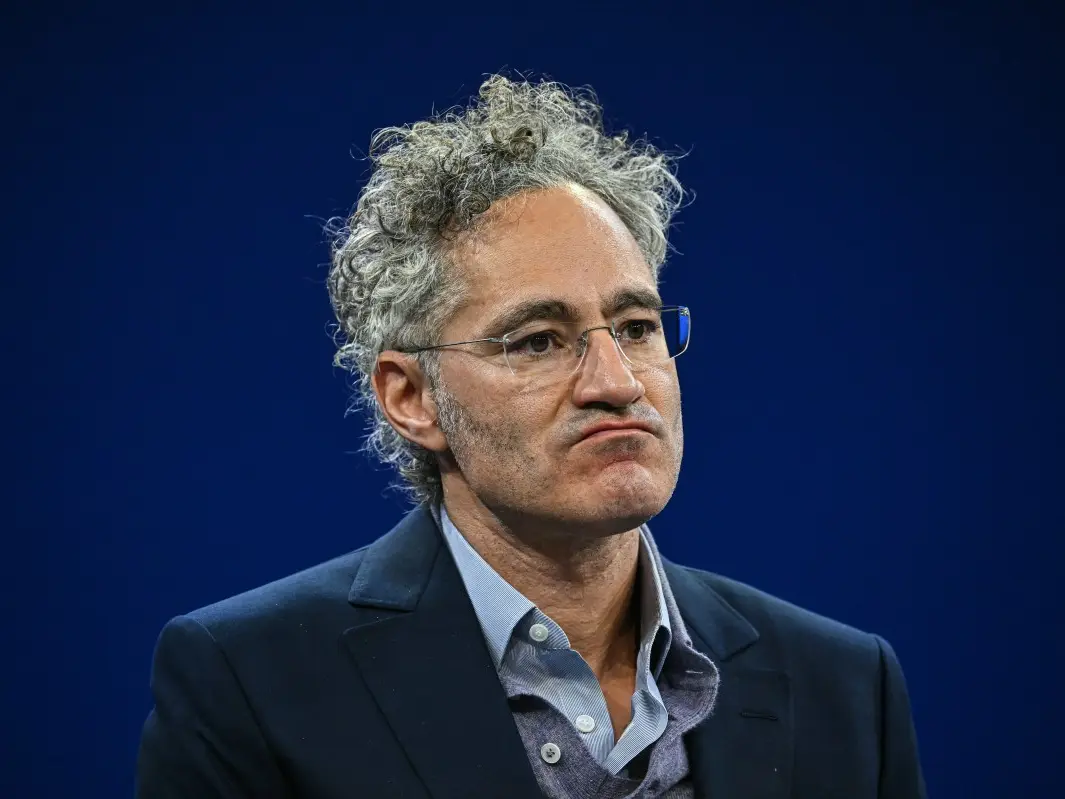
How often does a tech company have a manifesto, one that is not only pro-Western but also challenges the modern liberal and inclusive values and calls for brute force? Palantir Technologies the silicon valley based software compnay which is deeply integrated into Israeli Defence Sector and employs former members of Unit 8200, Israel's elite cyber intelligence agency has released 22 point mini-manifesto a short summary of CEO Alex Karp's book "The Technological Republic" which critics argue that intends to establish a controversial dystopian society and “technofascist” merger of unchecked corporate power and military statecraft.
What is Palantir's mini manifesto? Why is it controversial?
The mini manifesto argues that Silicon Valley “owes a moral debt” or has an “affirmative obligation” to participate in the nation's defence. It urges hard power to uphold the ideas of modernism, such as free and democratic societies, but discards the moral and ethical values of modernity, such as pluralism and inclusivity.
“The question is not whether AI weapons will be built; it is who will build them and for what purpose.” This is a maximalist argument based on the premise of technological determinism, one that is built on a false binary; if we don't do it, the enemy will. These are at the root of an arms race, one that resembles the Cold War. “Our adversaries will not pause to indulge in theatrical debates about the merits of developing technologies with critical military and national security applications. They will proceed.”
It argues that the age of nuclear deterrence is over and a new era of dominance is set to begin based on AI. Former Greek Finance Minister Yanis Varoufakis argues that this means they proudly announce the arrival of AI-driven nuclear armageddon. It argues for the remilitarisation of Japan and Germany. “The postwar neutering of Germany and Japan must be undone. The defanging of Germany was an overcorrection for which Europe is now paying a heavy price.” Mark Coeckelbergh, a Belgian philosopher of technology at the University of Vienna, has argued that this kind of messaging, a merger of corporation and military, is a hallmark of fascism.
Trending Stories
&imwidth=180&imheight=135&format=webp&quality=medium)
Will the US attack Iran this weekend? Trump's envoy says, 'absolutely'
&imwidth=180&imheight=135&format=webp&quality=medium)
Bigg Boss 20: Panchayat's Aasif Khan had a massive heart attack at 34, wife reveals why he lied and called it acid reflux
&im=FitAndFill=(700,400)&imwidth=180&imheight=135&format=webp&quality=medium)
New Friday OTT releases (October 23, 2026): Gajab Raat, Dorothy, Chaar Yaar- Watch these 6 new movies and TV shows on Netflix, Prime Video and more
&imwidth=180&imheight=135&format=webp&quality=medium)
First Lady Melania Trump secures ceasefire between Russia, Ukraine in Oleshky: White House
&imwidth=180&imheight=135&format=webp&quality=medium)
'Completely insane, never happened': Trump's son-in-law denies allegations of secret dealings with Saudi, UAE
&imwidth=180&imheight=135&format=webp&quality=medium)
Did Neha Bora call for Bangladesh-like GenZ protest, 'anarchy' in India? WION Fact-checks viral claim
&imwidth=180&imheight=135&format=webp&quality=medium)
Tu Hai Meri Kiran film review: Sonakshi Sinha and Zaheer Iqbal's thriller gets tangled in its own twists
&im=FitAndFill=(700,400)&imwidth=180&imheight=135&format=webp&quality=medium)
Why do army tanks have different types of armour?
&imwidth=180&imheight=135&format=webp&quality=medium)
Nairobi building collapse: Several feared trapped after 16-storey structure crumbles; rescue operation underway
&imwidth=180&imheight=135&format=webp&quality=medium)
IND vs NZ: Kumar Kushagra named as cover for Ishan Kishan in India’s T20I squad
&imwidth=180&imheight=135&format=webp&quality=medium)
China's dancing robot turns violent bodyguard, lifts cars and fights intruders - Watch
&im=FitAndFill=(700,400)&imwidth=180&imheight=135&format=webp&quality=medium)
What is the real meaning behind Pete Hegseth's tattoos?
&imwidth=180&imheight=135&format=webp&quality=medium)
Gravitas | US attack could trigger WW III: Russian planes in Tehran, Israeli jets, US warships in action
&imwidth=180&imheight=135&format=webp&quality=medium)
Pakistan airline PIA unveils new crew uniforms, faces online criticism
&imwidth=180&imheight=135&format=webp&quality=medium)
Jenna Ortega plans TV break after Wednesday: ‘I want to leave time for new things’
&imwidth=180&imheight=135&format=webp&quality=medium)
US midterms 2026: Trump administration sues to block Alaska Senate election certification if Republican Dan Sullivan loses. What's happening?
&imwidth=180&imheight=135&format=webp&quality=medium)
Horrific video shows the moment 18-year-old fell to her death from Mexico amusement park ride
&imwidth=180&imheight=135&format=webp&quality=medium)
Viral video shows cross falling on Colombia priest, no official confirmation | WATCH
&imwidth=180&imheight=135&format=webp&quality=medium)
India-China face-off continues near Arunachal’s Taksing, reveals ITBP chief in first official confirmation of tensions
&imwidth=180&imheight=135&format=webp&quality=medium)
India’s 2022 CWG silver medallist Sabbhineni Meghana announces international retirement
&imwidth=180&imheight=135&format=webp&quality=medium)
IND-W vs ZIM-W, 1st ODI: Rawal, Charani star in India’s nine-wicket win over Zimbabwe
&imwidth=180&imheight=135&format=webp&quality=medium)
Meghan Markle ‘deeply distressed’ by allegations against estranged father, says she was aware since 2018
&imwidth=180&imheight=135&format=webp&quality=medium)
Emmanuel Macron calls Paris suburb shooting a 'racist terrorist attack' after one killed, several injured
&imwidth=180&imheight=135&format=webp&quality=medium)
US midterms 2026: Viral video claims Lindsey Graham paid underage men for sex; clip released weeks before his sister's Senate race
&imwidth=180&imheight=135&format=webp&quality=medium)
US Navy, Marine Corps boards defy Trump's transgender military ban, vote to retain troops
&imwidth=180&imheight=135&format=webp&quality=medium)
US start-up claims it turned Mercury into Gold, beats CERN’s 2025 record
&imwidth=180&imheight=135&format=webp&quality=medium)
One man, 8 months of work, and a river dirty again: Why Bittu Tabahi may quit
&imwidth=180&imheight=135&format=webp&quality=medium)
Om Prakash Mathur sworn in as 29th Governor of Keralam, sparks row over vegetarian-only kitchen at Lok Bhavan
&imwidth=180&imheight=135&format=webp&quality=medium)
Delhi High Court rejects AISA chief Neha Bora’s plea against peace bond notice
&imwidth=180&imheight=135&format=webp&quality=medium)
'This is humiliation': Vijay Deverakonda under fire over controversial marriage proposal remark on Koffee With Karan 9
Palantir is already facing severe criticism over its role in US President Donald Trump's controversial immigration crackdown and for helping in facilitating severe crimes of the Israeli military in Gaza and the West Bank. Many critics have argued that the book “The Technological Republic” advocates for a kind of cultural supremacy and ethonationalism, labelling other cultures as "dysfunctional" or "regressive", a trend noticed in 20th-century manifestos such as “Mein Kampf” by Adolf Hitler. It dehumanises soft values such as empathy and inclusivity as “hollow” and leaps towards might-is-right philosophy.

