Why China blocked Nvidia H200 AI chip sales despite US approval and Trump’s push

&imwidth=600&imheight=450&format=webp&quality=medium "Why China blocked Nvidia H200 AI chip sales despite US approval and Trump’s push")
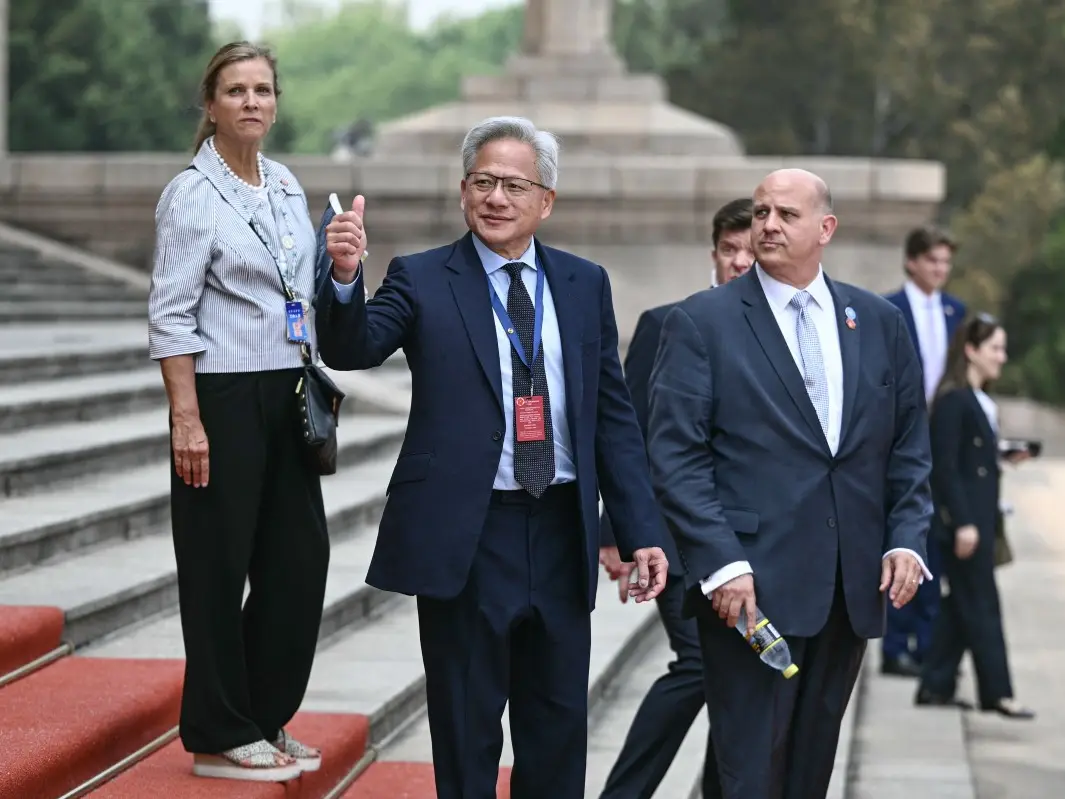
Nvidia founder and CEO Jensen Huang (C) gestures after a welcome ceremony for US President Donald Trump at the Great Hall of the People in Beijing on May 14, 2026. Photograph: (AFP)
China has reportedly halted Nvidia H200 AI chip purchases despite US approval for sales to Alibaba, Tencent and ByteDance. Here’s why Beijing is resisting the deal amid security fears, Huawei competition and the US-China AI race.
The US government has cleared the sale of Nvidia Corp's powerful H200 Tensor Core GPU AI chips to 10 Chinese tech giants, including Alibaba Group Holding, ByteDance, JD.com Inc and Tencent Holdings ADR through intermediaries like Lenovo and Foxconn, but after weeks of US clearance, the deal has not been completed, due to regulatory standoffs and resistance from Beijing.
NVIDIA CEO Jensen Huang, who was initially not in the list of delegates, was later picked up by Trump from Alaska, en route to China, as he seeks a breakthrough in China this week. Lenovo confirmed it "is one of several companies approved to sell H200 in China as part of Nvidia‘s export license." Each approved customer can buy up to 75000 chips. The US requirements made clear that the chips could not be used for military purposes. The government wants 25 per cent of the revenue for the export, and to legally collect the export fee, the arrangement requires the hardware to physically pass through US territory for testing before shipment to China.
Why was there no sale?
However, according to a Reuters report, not a single delivery has been made, and Chinese firms pulled back following the direction from the government. China seeks to promote its domestic alternatives, such as Huawei, to avoid foreign tech dependencies. It is a strategic calculation of Beijing that imports could weaken a push to develop homegrown AI chips. Further, Beijing has security concerns; the requirement to route hardware through US soil has fueled anxieties in Beijing over potential tampering or hidden system vulnerabilities
US Commerce Secretary Howard Lutnick said that “the Chinese central government has not let them, as of yet, buy the chips, because they’re trying to keep their investment focused on their own domestic industry.”
Trending Stories
)
)
)
)
)
)
)
)
)
)
)
)
)
)
)
)
)
)
)
)
)
)
)
)
)
)
)
)
)
)
)
)
)
)
&im=FitAndFill=(700,400))
)
)
)
)
NVIDIA accounted for 95 per cent of China’s advanced chip market, and China accounted for over 13 per cent of NVIDIA's revenue. Huang estimated that China's chip market is likely to account for $50 billion this year. Huang has warned that US export controls are eroding the company’s foothold in the market, and he said that its share of the AI accelerator has effectively fallen to zero.