‘Nuclear weapons are absolute evil’: Nagasaki warns world on 81st bombing anniversary

&imwidth=600&imheight=450&format=webp&quality=medium "‘Nuclear weapons are absolute evil’: Nagasaki warns world on 81st bombing anniversary")
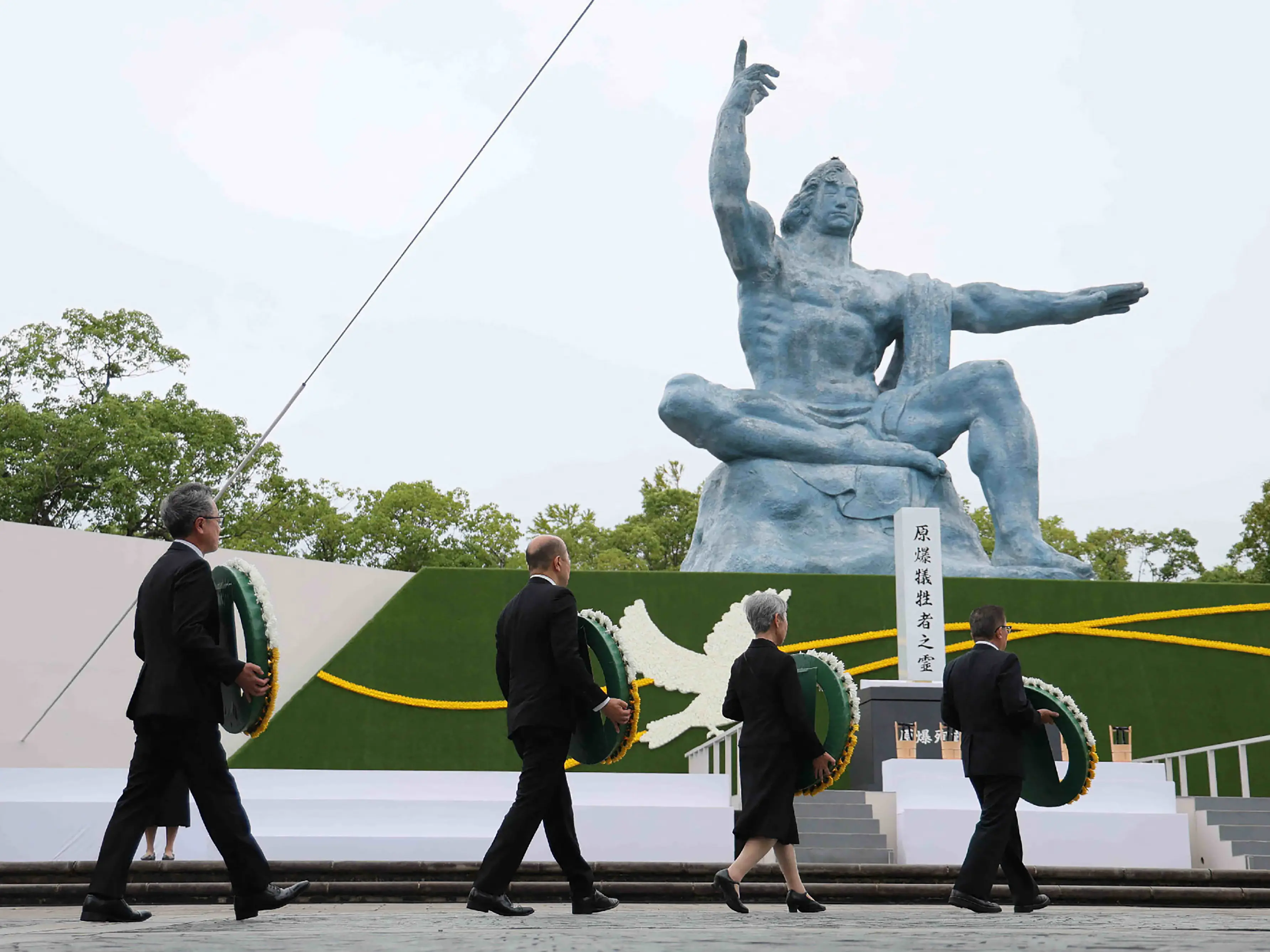
Attendees prepare to offer flowers at the Peace Memorial on August 9, 2026 in Nagasaki, marking the 81st anniversary of the atomic bombing. Photograph: (AFP)
Nagasaki marked the 81st anniversary of the atomic bombing, with Mayor Shiro Suzuki calling nuclear weapons “absolute evil” and warning that reliance on nuclear deterrence increases the risk of war.
Nagasaki marked the 81st anniversary of the US atomic bombing on Sunday (Aug 9) with a renewed appeal for nuclear disarmament, as Mayor Shiro Suzuki warned that growing reliance on nuclear deterrence was increasing, not reducing, the risk of war. Speaking at the annual memorial ceremony in Nagasaki Peace Park, Suzuki described nuclear weapons as “absolute evil” and urged world leaders to confront the dangers of expanding nuclear arsenals.
“The theory of nuclear deterrence is extremely dangerous and fragile. Nuclear weapons are not a ‘necessary evil’ but an ‘absolute evil,’ and can never coexist with humanity,” Suzuki said. “To all leaders of the nuclear states and nations relying on nuclear deterrence, you must face the reality that the more you rely on nuclear deterrence, the more you increase the risk of a nuclear war.”
The ceremony was attended by representatives from more than 90 countries, who observed a minute of silence at 11:02 am, the moment the US military dropped the plutonium bomb known as “Fat Man” over the city on August 9, 1945.
The attack killed around 70,000 people by the end of that year, three days after the atomic bombing of Hiroshima. Japan surrendered on August 15, bringing World War II to an end.
Suzuki also directed his remarks at the Japanese government, calling on it to uphold the country’s three non-nuclear principles and participate in the upcoming review conference of the Treaty on the Prohibition of Nuclear Weapons.
The anniversary came as Prime Minister Sanae Takaichi’s government pushes a stronger defence posture and expands Japan’s military capabilities. Takaichi has supported nuclear deterrence, prompting debate over whether Japan could eventually ease restrictions related to nuclear weapons.
Trending Stories
)
)
)
)
)
)
)
)
)
)
)
&im=FitAndFill=(700,400))
)
)
)
)
)
)
)
)
)
)
)
)
)
)
)
)
)
)
)
)
)
)
)
)
)
)
Addressing the ceremony, Takaichi said her government would pursue “a realistic and pragmatic approach” toward a world without nuclear weapons. She did not mention the UN treaty banning nuclear weapons, which Japan has not signed because it remains under the protection of the US nuclear umbrella.
Survivors of the bombings, known as hibakusha, have increasingly criticised Japan’s reliance on nuclear deterrence. With the number of survivors falling to just over 91,000 and their average age now above 86, many fear their testimony may fade with time.

