National interest cannot be compromised for protests: Delhi Court on AI Summit protest

&imwidth=600&imheight=450&format=webp&quality=medium "National interest cannot be compromised for protests: Delhi Court on AI Summit protest")
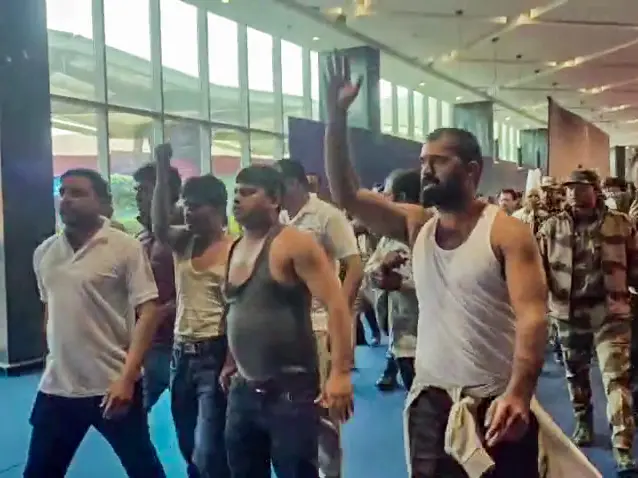
Indian Youth Congress workers stage a protest at Bharat Mandapam during the India AI Impact Summit 2026, in New Delhi Photograph: (ANI (File Photo)
The Court underlined that while democratic dissent is protected, any conduct affecting security arrangements or India's standing before foreign delegates assumes greater gravity.
A Delhi court underlined that national interests and the country's international image cannot be compromised under the guise of protest. It asserted that acts capable of disrupting globally significant events require serious scrutiny and effective investigation.
A Judicial Magistrate First Class at Patiala House court made these observations while allowing a five-day police custody of four accused arrested in connection with an incident that took place at Bharat Mandapam during the AI Summit 2026 in New Delhi.
While granting police custody, the Court held that investigation at this stage required custodial interrogation to analyse electronic devices, examine communication links, trace possible funding sources, and identify other persons allegedly involved.
The Court noted that international summits hosted by India involve the participation of foreign dignitaries and represent the nation at a global stage. Any disruption at such venues, it is observed, may have implications extending beyond a local law-and-order issue and could impact diplomatic engagements and national prestige.
It underlined that while democratic dissent is protected, any conduct affecting security arrangements or India's standing before foreign delegates assumes greater gravity.
Trending Stories
&imwidth=280&imheight=210&format=webp&quality=medium)
&imwidth=280&imheight=210&format=webp&quality=medium)
&imwidth=280&imheight=210&format=webp&quality=medium)
&imwidth=280&imheight=210&format=webp&quality=medium)
&im=FitAndFill=(700,400)&imwidth=280&imheight=210&format=webp&quality=medium)
&imwidth=280&imheight=210&format=webp&quality=medium)
&imwidth=280&imheight=210&format=webp&quality=medium)
&im=FitAndFill=(700,400)&imwidth=280&imheight=210&format=webp&quality=medium)
&imwidth=280&imheight=210&format=webp&quality=medium)
&imwidth=280&imheight=210&format=webp&quality=medium)
&imwidth=280&imheight=210&format=webp&quality=medium)
&imwidth=280&imheight=210&format=webp&quality=medium)
&imwidth=280&imheight=210&format=webp&quality=medium)
&imwidth=280&imheight=210&format=webp&quality=medium)
&imwidth=280&imheight=210&format=webp&quality=medium)
&imwidth=280&imheight=210&format=webp&quality=medium)
&imwidth=280&imheight=210&format=webp&quality=medium)
&imwidth=280&imheight=210&format=webp&quality=medium)
&imwidth=280&imheight=210&format=webp&quality=medium)
&imwidth=280&imheight=210&format=webp&quality=medium)
&imwidth=280&imheight=210&format=webp&quality=medium)
&imwidth=280&imheight=210&format=webp&quality=medium)
&imwidth=280&imheight=210&format=webp&quality=medium)
&imwidth=280&imheight=210&format=webp&quality=medium)
&imwidth=280&imheight=210&format=webp&quality=medium)
&im=FitAndFill=(700,400)&imwidth=280&imheight=210&format=webp&quality=medium)
&imwidth=280&imheight=210&format=webp&quality=medium)
&imwidth=280&imheight=210&format=webp&quality=medium)
&imwidth=280&imheight=210&format=webp&quality=medium)
&imwidth=280&imheight=210&format=webp&quality=medium)
&imwidth=280&imheight=210&format=webp&quality=medium)
These remarks come after around 10 IYC workers entered Hall Number 5 of Bharat Mandapam on the fifth day of the India AI Impact summit 2026. They had pre-registered online and entered using QR codes. Once inside, they removed their shirts to reveal or hold up T-shirts with images of PM Modi and US President Trump and raised controversial slogans.
It further observed that although citizens possess the constitutional right to freedom of speech and peaceful protest, such rights are subject to reasonable restrictions in the interest of sovereignty, public order, and security of the State.
Protest, the Court said, cannot be permitted in a manner that interferes with official duties or jeopardises security arrangements during sensitive international events.