
&imwidth=800&imheight=600&format=webp&quality=medium "Meta's ex-AI chief warned Alexandr Wang is incompetent! Users are now facing the wrath")
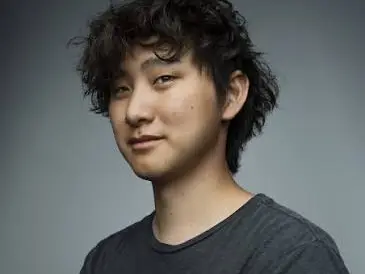
In June 2025, Meta paid $14.3 billion for a 49% stake in Scale AI, a deal that valued the data-labeling startup at $29 billion and came with a prize far more important to Mark Zuckerberg than the equity: Scale AI's 28-year-old founder, Alexandr Wang, who stepped down from his own company to lead Meta's new Superintelligence Labs.
A year later, the case that this was Meta's worst-ever hire is being made by Meta's own former chief AI scientist.
‘Inexperienced’ — From The Man Who Used To Have The Job

Yann LeCun, the Turing Award-winning researcher known as one of AI's ‘godfathers’ and Meta's chief AI scientist until his own exit, told the Financial Times that Wang was ‘young’ and ‘inexperienced,’ adding bluntly that Wang had ‘no experience with research or how you practice research, how you do it.’ LeCun made his own abrupt exit from Meta in November 2025 after being placed in a reporting line under Wang.
LeCun didn't stop at a personal critique of Wang. He dismissed the technical direction of Wang's new hires as ‘completely LLM-pilled,’ arguing that large language models are ‘a dead end when it comes to superintelligence’ — a direct challenge to the entire premise Meta is spending tens of billions of dollars on. He also predicted the departures wouldn't stop: ‘A lot of people have left, a lot of people who haven’t yet left will leave.'
The Exodus LeCun Predicted
Trending Stories
)
Why asking questions could be more important than memorising answers
)
Did Iran President Pezeshkian touch feet of Hindu spiritual leader at Delhi event as shown in viral video?
&im=FitAndFill=(700,400))
Meet top 5 batters fastest to 3000 runs in T20Is
)
BRICS Summit 2026: PM Modi addresses Day 2 of 18th BRICS summit
)
9-year-old Chennai prodigy clears Cambridge IGCSE grade 10 exams
)
PM Modi and China's Xi offered to help resolve Russia-Ukraine war: Kremlin
)
BRICS Summit 2026: Consensus on joint declaration, diplomatic win for India
)
Why does your skin need protection from UV rays?
&im=FitAndFill=(700,400))
Why do air defence missiles explode near their target instead of hitting it?
)
Celine Dion makes emotional stage comeback after six years: 'I'm so delighted to see you'
)
War is making Russia stronger? How Ukraine is shaping Moscow’s next generation of weapons
)
Could staying indoors all day affect your health?
)
BRICS Summit day 1: New Delhi declaration adopted with full consensus, big diplomatic win for India
)
Why do wild animals need quiet places to survive?
)
BRICS Summit 2026: Chinese president Xi Jinping departs from New Delhi after attending BRICS summit
)
Russian drone hits Warsaw-bound train near Polish border, Zelensky accuses Moscow of ‘deliberate’ targeting
)
'Iran won't surrender': Pezeshkian sends blunt message to US while attending BRICS Summit in India
)
BRICS Summit 2026: PM Modi to hold bilateral with leaders of seven countries
)
‘Partners, not rivals’: Xi outlines four point plan for stronger India-China ties
&im=FitAndFill=(700,400))
Why Chinese PL-15 air-to-air missiles use dual-pulse motors compared to European interceptors
)
Why does your body need time to adjust after a long journey?
)
Why going digital does not always mean becoming more efficient
)
'He is popular...': Malaysian PM Anwar Ibrahim's praise for PM Modi during bilateral meeting | WATCH
)
Who is the smiling man beside Modi, Putin and Xi at BRICS Summit 2026?
)
Migration protests return to Portsmouth as rival demonstrations face off
)
Osama Bin Laden ‘planned’ to target India, CIA reveals dozens of declassified documents
)
BRICS Summit 2026: PM Modi, Xi reach key consensus on ties, China to assume BRICS chairmanship in 2027
)
BRICS Summit 2026: Global leaders of BRICS nations attend main open session
)
From severe mobility problems to recovery: Madhuri the elephant’s journey of wildlife care
)
Bigg Boss 20: Qazi Touqeer gets a special ‘rockstar’ moment from Salman Khan
)
Ramanathaswamy temple takes centre stage as PM Modi welcomes world leaders at BRICS
)
IND vs AFG, 1st T20I: When and where to watch live streaming in India?
)
Top 5 places to visit in Goa beyond its famous beaches
)
Trump says Canada eager to reach a deal, it could come ‘fairly soon’ if Ottawa treats US farmers better
)
Humans may lose control of AI: Anthropic CEO calls for slowdown, Altman, Musk back him
)
800 million years old - Scientists discover 'fingerprints' of supercontinent Gondwana in ancient rocks
)
How does the loss of forests affect the way wildlife lives and moves?
)
Why dehydration is the hidden cause of travel fatigue on long flights
)
Houthis launch cross-border strike on Saudi Arabia as Yemen war escalates
That prediction has been borne out. Joelle Pineau, vice president of Meta's AI research group, announced her own departure. Three high-profile researchers — Avi Verma, Ethan Knight, and Rishabh Agarwal — left within months of joining, with some never formally starting. In the weeks immediately following the Superintelligence Labs announcement, at least eight researchers, engineers, and product leaders associated with Meta's AI operation departed altogether, headed variously to OpenAI, Anthropic, and AI materials-science startup Periodic Labs.
Meta's public position has been to describe this turnover as normal for an organisation of its size, and the company has since pushed back on separate reports that Zuckerberg had sidelined Wang, calling those reports false. Meta has also reportedly frozen its aggressive AI hiring push after a summer recruitment spree.
Zuckerberg's Own Leaked Admission
Underneath the personnel turmoil, leaked internal audio has surfaced twice this year, and neither instance flatters the state of Meta's AI push under Wang's leadership.
The first, a recording from an April 2026 town hall reported on by The Register and Common Dreams, captured Zuckerberg defending a program called the Model Capability Initiative — software installed on employees' work laptops that logged keystrokes, clicks, and periodic screenshots specifically to feed employee work patterns into Meta's AI training data, with no opt-out for staff on company-issued devices. More than 1,600 employees signed an internal petition against it, and staff in the UK launched a unionisation drive. Meta paused the programme on June 22 after an internal security review found the collected material — including private conversations — sitting exposed and accessible across roughly 45,000 internal database tables.
The second leak, from a closed-door town hall on July 2, has Zuckerberg telling employees directly that Meta's AI push ‘hasn’t really accelerated in the way that we expected' over the preceding four months — an admission, in his own words, that the initiative he restructured his entire AI division and paid $14.3 billion to accelerate isn't moving at the pace he promised investors.
Why This Matters Beyond The Org Chart
This is the same leadership and the same AI division now asking small businesses to hand over customer service and sales conversations to Meta's AI Business Agent, and the same company whose AI systems have separately been documented wrongly banning business accounts with no meaningful appeal and generating basic errors in ad creative.
A company can survive losing individual researchers. What's harder to shake off is a founder-CEO's own leaked admission that the AI strategy he bet the company's next decade on hasn't accelerated as promised — delivered by the person he chose to run it, a year after his own former chief scientist called that choice inexperienced and predicted the exodus that followed.
