Mauritius Minister Jeetun: India-Mauritius treaty gives investors ‘greater confidence’

&imwidth=600&imheight=450&format=webp&quality=medium "Mauritius Minister Jeetun: India-Mauritius treaty gives investors ‘greater confidence’")
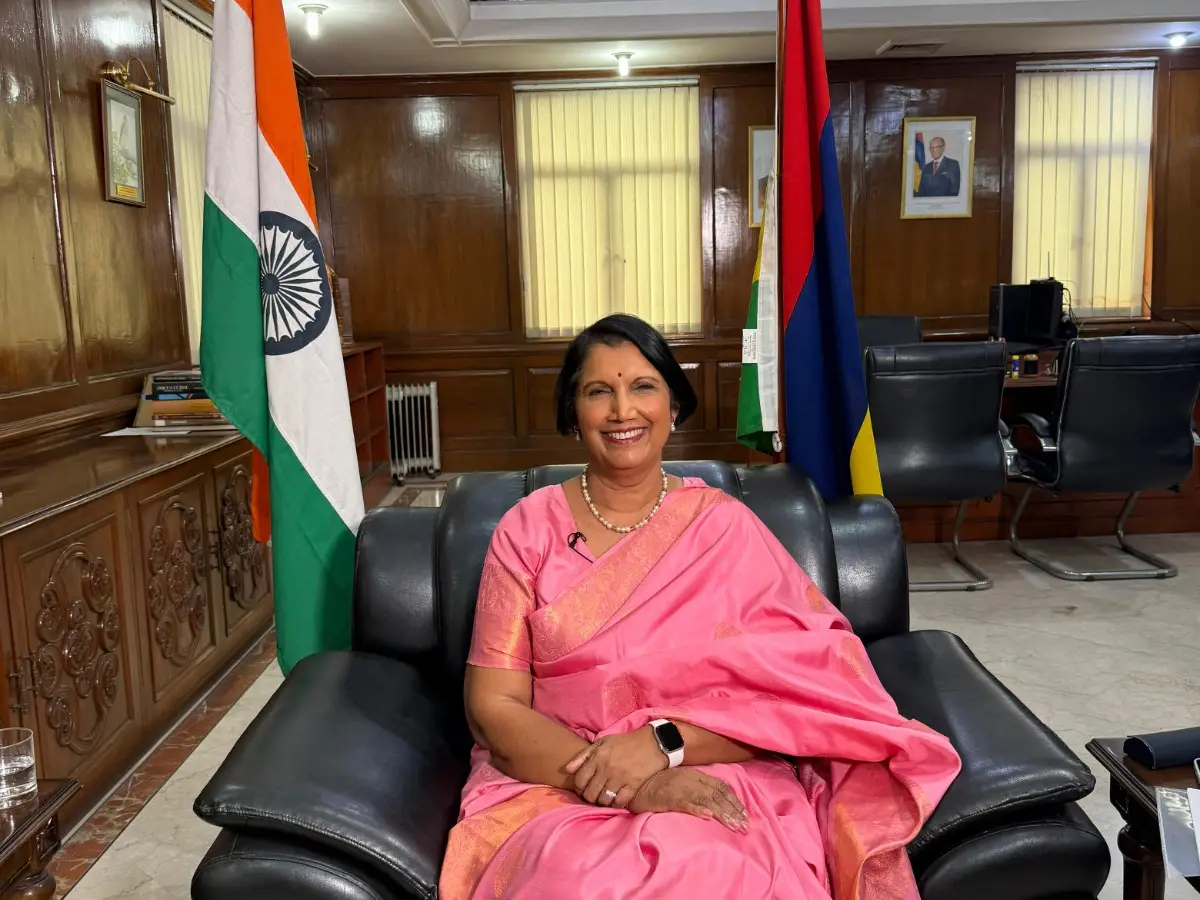
Jyoti Jeetun, Mauritius Minister of Financial Services and Economic Planning
The ratification, approved by the Mauritius Cabinet and completed on 17 July 2026, modernises the decades-old treaty that has channelled more than $170 billion in investments into India and helped establish Mauritius as an international financial centre.
Mauritius has ratified a key protocol to its double taxation avoidance agreement (DTAA) with India, aiming to restore confidence among investors after earlier uncertainty rattled markets. Jyoti Jeetun, Mauritius Minister of Financial Services and Economic Planning, said the move strengthens the “strategic economic partnership by providing a modern, transparent and internationally compliant treaty framework.”
“By ratifying the Protocol following the clarifications, we show our commitment to implementing internationally accepted tax standards while preserving the treaty’s role as a facilitator of genuine cross-border investment,” she told WION's Sidhant Sibal in an interview.
The ratification, approved by the Mauritius Cabinet and completed on 17 July 2026, modernises the decades-old treaty that has channelled more than $170 billion in investments into India and helped establish Mauritius as an international financial centre. Investors had voiced concerns after the protocol was signed in 2024, particularly over the principal purpose test (PPT) and potential impacts on existing investments.
India’s Central Board of Direct Taxes confirmed the PPT will apply only prospectively and that investments made before 1 April 2017 remain grandfathered and outside the scope of general anti-avoidance rules. “There is now more clarity and certainty that existing capital invested into India through Mauritius is less likely to experience disruption,” Jeetun said.
The minister stressed that legitimate investors with demonstrable economic substance will continue to benefit from a stable tax environment.
Full interview:
Trending Stories
)
)
)
)
)
)
)
)
)
)
)
)
)
)
)
)
)
)
)
)
)
)
)
)
)
)
)
)
)
)
)
)
)
)
&im=FitAndFill=(700,400))
)
)
)
)
Sidhant Sibal: How does Mauritius’s ratification of the India-Mauritius DTAA Protocol on 17 July 2026 strengthen long-term economic ties between India and Mauritius by providing greater certainty to Indian investors?
Jyoti Jeetun: Let me put this in its context. The Mauritius India DTAA has been an important foundation of our economic relationship with India for more than four decades. It has supported investments to the tune of more than $170billion in India and contributed significantly to Mauritius becoming an international financial centre. Amendments were brought to the treaty in 2017 and in 2024. When we took office in November 2024, a new Protocol had been signed but there were concerns in the industry both in India and in Mauritius. We engaged with the stakeholders and with the Indian authorities. After prolonged discussions and clarifications, the Mauritius Cabinet approved the ratification of the Protocol. This ratification strengthens the India–Mauritius strategic economic partnership by providing a modern, transparent and internationally compliant treaty framework. By ratifying the Protocol following the clarifications, we show our commitment to implementing internationally accepted tax standards while preserving the treaty's role as a facilitator of genuine cross-border investment. For investors, it offers greater confidence that legitimate commercial investments structured through Mauritius will continue to benefit from a stable and predictable tax environment, while ensuring that the treaty cannot be misused for abusive tax avoidance.
This balance between investment certainty and tax integrity is essential to sustaining long-term bilateral investment flows and reinforcing Mauritius' role as a trusted international financial centre.
Sidhant Sibal: In what ways will the prospective application of the Principal Purpose Test (PPT) and the preservation of grandfathering for pre-1 April 2017 investments affect trading ties and capital flows from Mauritius into India?
Jyoti Jeetun: These are key clarifications received, namely the prospective application and the grandfathering.One may recall that when news about the Protocol signature broke out in 2024, it rattled the markets due to the uncertainty. Investors were concerned over fear of increased scrutiny, the retrospectivity of application, whether the amendment of the preamble would impact the economic relationship between the two nations and whether investments made prior to 1 April 2017 would continue to receive grandfathering protection.There were also fear that Mauritius will be disadvantaged compared to other countries like Netherlands. There is now more clarity and certainty that existing capital invested into India through Mauritius is less likely to experience disruption. Our discussions and economic diplomacy at the highest level has resulted in clarifications on these important issues.
Sidhant Sibal: How might the additional clarity provided by India’s CBDT circular in January 2025, the Income Tax (Amendment) Rules of March 2026 and high-level diplomatic engagements between Prime Ministers Modi and Ramgoolam enhance trading ties and investor confidence for Indian entities routing investments through Mauritius?
Jyoti Jeetun: Firstly, the Circular issued on 21 January 2025 by Central Bureau of Direct Taxes in India provided clarity and certainty to investors by guaranteeing the protection of the grandfathered investments and excluding them from the application of the Principal Purpose Test, confirming that the Protocol of 2024 will only apply prospectively. Moreover, the CBDT issued the Income Tax (Amendment) Rules 2026 on 31 March 2026, providing further clarification that the application of the Global Anti Avoidance Rules (GAAR) shall apply to arrangements made on or after 1 April 2017. Accordingly, investments undertaken before 1 April 2017 will remain outside outside the scope of GAAR, thereby providing clarity on the treatment of legacy investments. The Circular and the Rule issued by CBDT provide legal and tax certainty for investors. The diplomatic engagements at the highest level between our Prime Minister Dr Navinchandra Ramgoolam and Prime Minister Narendra Modi are clear demonstration of the strong ties between our two nations.
Sidhant Sibal: In what manner does the ratification reinforce Mauritius as a trusted, substance-based international financial centre, thereby improving access for India to quality inbound investment built on transparency and long-term partnership?
Jyoti Jeetun: As I said earlier, the India-Mauritius DTAA has been an important foundation of economic relationship between both our countries for more than four decades. It has supported investment in India, strengthened business cooperation and contributed significantly to Mauritius becoming a trusted international financial centre. The Protocol protects legitimate investments while ensuring that Mauritius continues to maintain its reputation as a credible jurisdiction aligned with international standards. It is also important to highlight that it also provides the opportunity for greater collaboration between Mauritius and GIFT City as regards to inbound investment and to position Mauritius as the ideal strategic partner for India for outbound investment into Africa.
Sidhant Sibal: What opportunities does the Protocol create for further strengthening trading and economic ties between India and Mauritius while ensuring that Indian investors with demonstrable economic substance continue to benefit from a stable and well-regulated investment jurisdiction?
Jyoti Jeetun: The ratification of the Protocol reinforced with the clarifications pave the way for sustainable and substance-driven investment relationship. The preservation of grandfathering protects the legitimate expectations of legacy investors, while the prospective application of the PPT provides a clear framework for future investment. Furthermore, the Protocol creates an opportunity to reposition the Mauritius–India economic relationship around greater certainty, stronger economic substance, and long-term investment cooperation.
- Opportunities for strengthening Mauritius–India economic ties
The DTAA has historically played a major role in facilitating investment flows into India through Mauritius since the agreement was signed in 1982. The Protocol, together with the clarifications, provides an opportunity to rebuild Mauritius as a trusted and competitive platform for Indian-bound investment, particularly for institutional investors, private equity and other long-term investors.
- Moving from treaty shopping towards substance-based investment
The PPT provides an opportunity for Mauritius to reinforce the message that its value proposition is not based merely on treaty access. Investors with genuine economic substance, commercial rationale and legitimate investment objectives can continue to use Mauritius as a stable investment jurisdiction. Going forward we are looking to support a higher-quality investment model consistent with international tax standards.
- Creating a platform for deeper India–Mauritius investment partnerships
With greater certainty around the treaty framework, the relationship can move beyond traditional FDI structuring and more towards private equity, infrastructure, financial services, sustainable finance, fintech, investment funds and Africa-focused investment vehicles. This would support a broader economic partnership between the two countries.
- Enhancing Mauritius's role as a bridge between India and Africa
This is particularly significant. Mauritius is an African nation, member of the African Union, SADC and COMESA. Africa has some of the fastest growing economies in the world. Indian companies and financial institutions increasingly have interests across Africa. Mauritius offers an established financial ecosystem, investment structures and connectivity with African markets. A stable India–Mauritius framework can therefore support Mauritius strategic partner to channel Indian capital into Africa, creating a three-way economic relationship: India–Mauritius–Africa and reinforcing Global South ties.