Liz Truss becomes new UK prime minister. What are the challenges in store for her?

Liz Truss
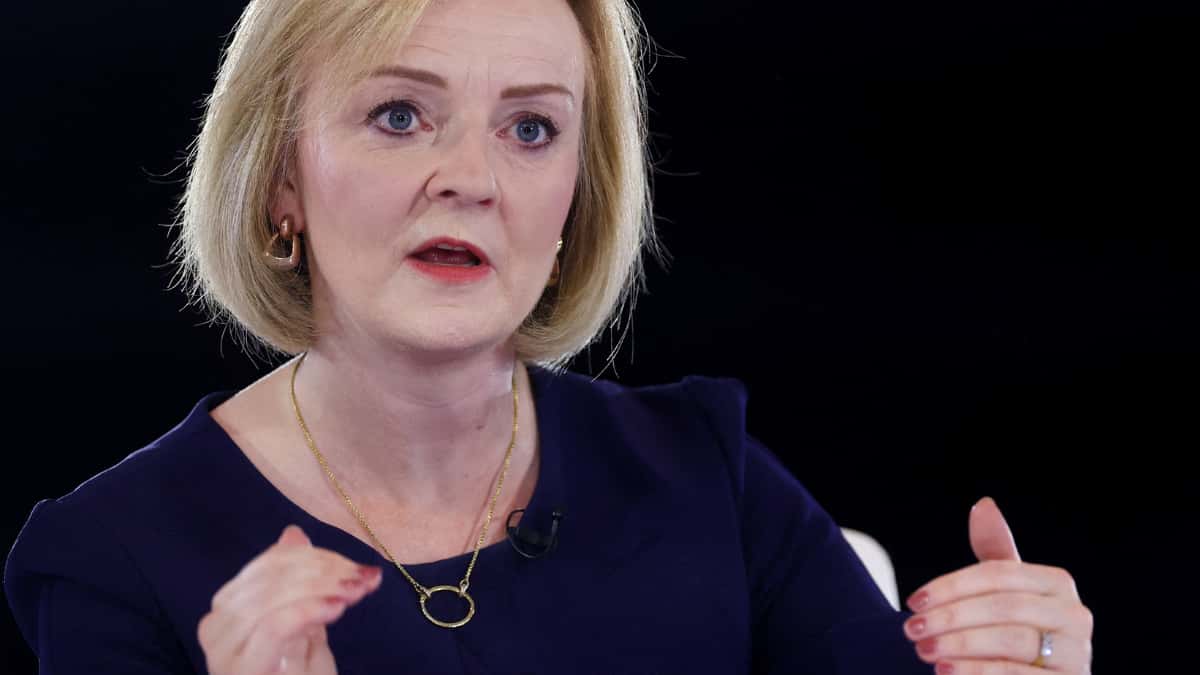
The United Kingdom Foreign Secretary Liz Truss defeated rival Rishi Sunak to be named the new British prime minister on Monday (September 5). She succeedsBoris Johnson who was forced out following a string of controversies.
After the result was announced, Truss said, "We need to show that we will deliver over the next two years. I will deliver a bold plan to cut taxes and grow our economy."

"I will deliver on the energy crisis, dealing with people's energy bills, but also dealing with the long-term issues we have on energy supply," she added.
Truss is Britain's third female prime minister afterMargaret Thatcher (Conservative, 1979-90) andTheresa May (Conservative, 2016-19).But the road ahead is not going to be easy as she has a mammoth task to address multiple crises that the nation is facing on different fronts.
Surging energy prices
&im=FitAndFill=(700,400)&imwidth=180&imheight=135&format=webp&quality=medium)
What is the real meaning behind Pete Hegseth's tattoos?
&imwidth=180&imheight=135&format=webp&quality=medium)
UK navy hit by espionage scandal: Sailor accused of spying for Russia | Gravitas
&imwidth=180&imheight=135&format=webp&quality=medium)
Katie Zacharia likely to succeed Karoline Leavitt as Trump's White House press secretary
&imwidth=180&imheight=135&format=webp&quality=medium)
‘Never-ending flow of cheap labour’: JD Vance hits back at Indian-origin Congresswoman over US green card curbs for major tech companies
&imwidth=180&imheight=135&format=webp&quality=medium)
Trump's naked 23-karat gold statue unveiled near European Parliament
&imwidth=180&imheight=135&format=webp&quality=medium)
‘Ruh Roh’: Top US official mocks ‘Indian market collapse’ claim after Trump’s IT curbs. But did it? | FACT CHECK
&imwidth=180&imheight=135&format=webp&quality=medium)
Can you be mean to AI? Anthropic’s new rules explicitly ban cruelty to Claude
&im=FitAndFill=(700,400)&imwidth=180&imheight=135&format=webp&quality=medium)
Fastest-growing Asian economies in 2026: Who tops the chart? Where does India rank?
&imwidth=180&imheight=135&format=webp&quality=medium)
Houthis continue direct hits on Saudi targets, Türkiye and Pakistan missing in action | Gravitas
&imwidth=180&imheight=135&format=webp&quality=medium)
'Do not stop it altogether': SC asks Centre to review Delhi Metro curbs ahead of Oct 10 protests
&imwidth=180&imheight=135&format=webp&quality=medium)
Jewar airport in Noida to be renamed Narendra Modi International Airport: CM Yogi
&imwidth=180&imheight=135&format=webp&quality=medium)
Russia president Putin promises to 'do everything' to help settle Middle East conflict as US-Iran negotiations stall
&imwidth=180&imheight=135&format=webp&quality=medium)
Powerful 7.7 magnitude earthquake strikes Panama, tsunami warning issued
&imwidth=180&imheight=135&format=webp&quality=medium)
BTS agency HYBE announces first-ever Weverse Con Festival in India
&imwidth=180&imheight=135&format=webp&quality=medium)
Trump has a new 'enemy': Anyone who calls it 'artificial intelligence'. Here's what we wants instead
&im=FitAndFill=(700,400)&imwidth=180&imheight=135&format=webp&quality=medium)
New Friday OTT releases (October 9, 2026): Reporting Live, Animals, Take Charge of My Heart- 6 new titles coming on Netflix, JioHotstar and more
&imwidth=180&imheight=135&format=webp&quality=medium)
BTS' RM urges Peru fans not to gather outside hotel: 'We can't sleep', It's becoming a nuisance'
&imwidth=180&imheight=135&format=webp&quality=medium)
Is Trump playing a double game with Iran?
&imwidth=180&imheight=135&format=webp&quality=medium)
Trump announces Russian diesel deal as Zelensky criticises move
&imwidth=180&imheight=135&format=webp&quality=medium)
Pakistan denies reports of PAF jets being used in attacks against Iran-backed Houthis in Yemen
&imwidth=180&imheight=135&format=webp&quality=medium)
New York ICE shooting sparks protests as Mamdani to call on Trump to halt ICE operations
&imwidth=180&imheight=135&format=webp&quality=medium)
IND vs WI: West Indies set record for highest successful run chase in T20Is against India
&imwidth=180&imheight=135&format=webp&quality=medium)
French students light European bonfire, protests erupt in Belgium, Italy & Greece | Gravitas
&im=FitAndFill=(700,400)&imwidth=180&imheight=135&format=webp&quality=medium)
Food shortages, suicide attempts and more: USS Abraham Lincoln returns to US after 321 day deployment amid Iran war — The whole row explained
&imwidth=180&imheight=135&format=webp&quality=medium)
OpenAI shuts down Russian, Iranian influence operations using ChatGPT to spread propaganda
&imwidth=180&imheight=135&format=webp&quality=medium)
SC questions closure of 57 Delhi Metro stations, asks Centre to resume services in regulated manner
&imwidth=180&imheight=135&format=webp&quality=medium)
Bangladesh named as Pakistan’s replacement for Asian Hockey Champions Trophy
&imwidth=180&imheight=135&format=webp&quality=medium)
‘We will end ICC’: US sanctions International court, threatens to cripple hours after Navi Pillay wins Nobel Peace Prize
&imwidth=180&imheight=135&format=webp&quality=medium)
US midterm elections 2026: What a blue wave or blue tsunami could mean for Trump
&imwidth=180&imheight=135&format=webp&quality=medium)
SC asks Centre to frame mechanism against unethical pharma marketing practices
&imwidth=180&imheight=135&format=webp&quality=medium)
Man prays to Satan at an Iowa city council, pastor rushes to 'reverse the curse'
&imwidth=180&imheight=135&format=webp&quality=medium)
Trump honours Microsoft CEO Satya Nadella with top technology honour amid immigration scrutiny
&imwidth=180&imheight=135&format=webp&quality=medium)
Sri Lankan Tamil worker gets death sentence in Saudi Arabia over blasphemy, calls for pardon intensify
&imwidth=180&imheight=135&format=webp&quality=medium)
‘Real boss of India’: Elon Musk escalates attack over Starlink’s India entry
At the moment, the UK is facing multiple crises. The economy is forecast to go into a long recession later this year with inflation at a 40-year high.
The new PM will have to tackle the energy crisis and a productivity crisis as both have affected people's living standards.
Britain's energy regulator announced that the power bills will jump 80 per cent to an average of 3,549 pounds ($4,188) a year from October. This will send millions of households into fuel poverty. Businesses are also at risk unless the government intervene and comes up with a solution.
ALSO READ |Liz Truss elected new UK Prime Minister, beats Rishi Sunak in leadership race
Amid the Russia-Ukraine war, supplies are down nearly 50 per centthis year. There are chances that Moscow will cut off all gas supplies this winter. Just like Germany, France and Spain, the UK also needs an urgent crisis plan.
In a research note, Goldman economists said, "In a scenario where gas prices remain elevated at current levels, we would expect the price cap to increase by over 80 per cent in January (vs 19 per cent assumed in our baseline). (This) would imply headline inflation peaking at 22.4 per cent, well above our baseline forecast of 14.8 per cent."
Inflation
The Bank of England has anticipated that as the energy crisis intensifies, inflation will jump to 13 per cent. According to Citigroup, the nation could peak at 18 per centin early 2023. Meanwhile, Goldman Sachs warned that it could reach 22 per centif the natural gas prices "remain elevated at current levels".
At 10.1 per centin July, Britain had the highest rate of annual inflation among Group of Seven advanced economies. High dependency on imported gas and a fast-weakening currency are some of the reasons for British inflation.
In the last three months alone, the pound fell to almost 8 per centagainst the dollar. This performance is worse than the euro or even the Japanese yen. If this scenario continues to worsen, it will make the imports of energy priced in dollars even more expensive.
ALSO READ |What does Liz Truss's victory mean for UK-India ties?
Brexit
The new UK PM backed remaining in the European Union before the 2016 referendum on membership of the bloc, but she had switched sides after the public voted to leave.
Now, she has spearheaded proposed legislation to override parts of the Northern Ireland Protocol the UK signed with the EU governing current trade in the province.
She has promised to take all EU laws off the UK statute book to help "turbocharge" growth. Truss has made no proposals to address chronic post-Brexit labour shortages in the UK, particularly of seasonal workers.
Defence
Truss plans todesignate China as a threat to national security, but looking at other issues, this shouldn't be the priority for the UK right now.
While campaigning, she had said that as PM, she would increase defence spending to 3 per centof GDP by 2030 from 2.3 per centof GDP projected this year.
WATCH WION LIVE HERE
You can now write for wionews.com and be a part of the community. Share your stories and opinions with us here.