
&imwidth=800&imheight=600&format=webp&quality=medium "ISRO's launch of America's Bluebird satellite delayed by a year?")
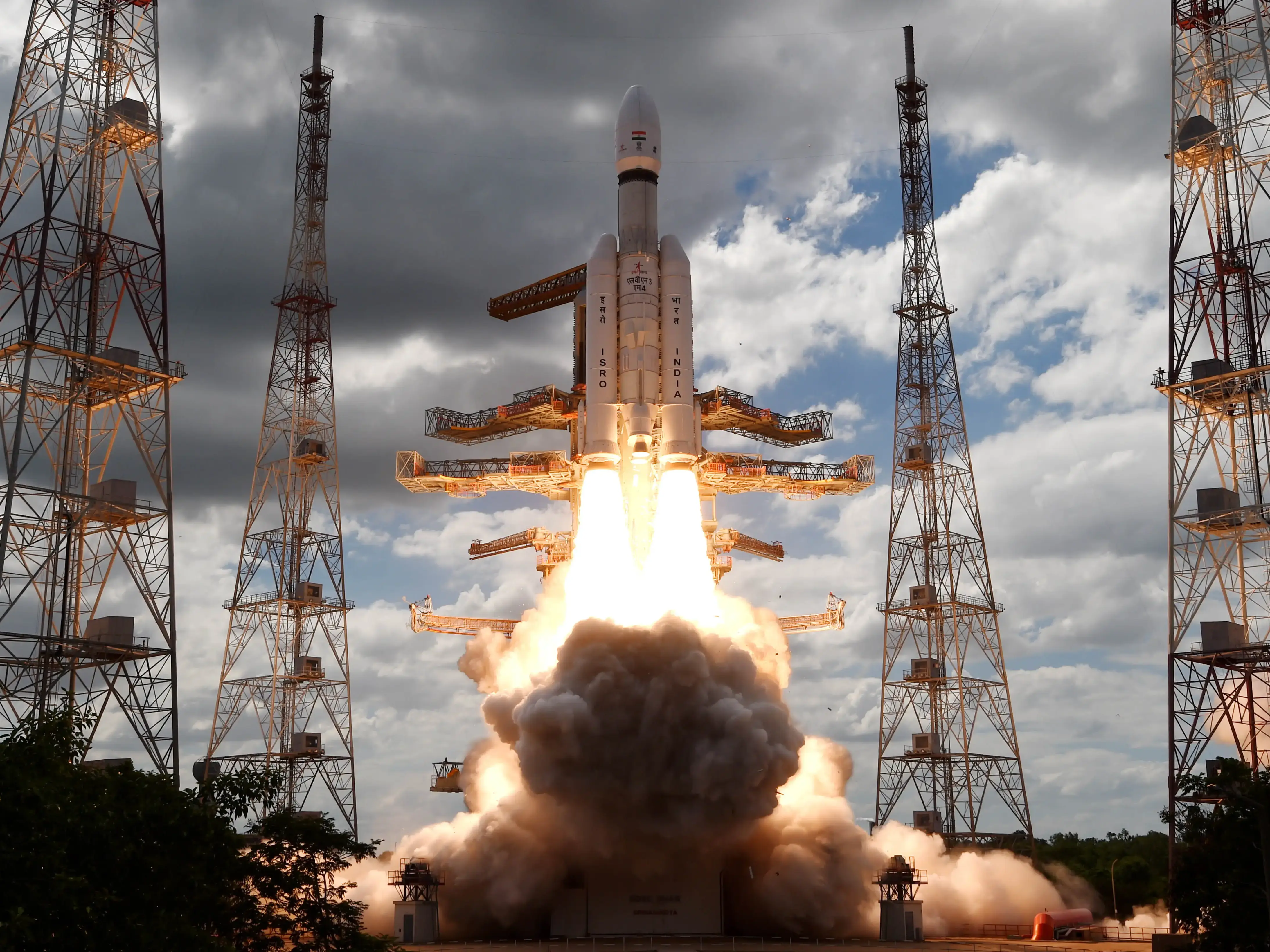
The high-profile commercial launch of an American communication satellite aboard an Indian Government rocket is facing serious delays. As per the original timeline announced by the Indian Government, the BlueBird Block-2 satellite belonging to American private firm AST SpaceMobile was to be launched by Indian space agency ISRO's largest rocket LVM3(also known as GSLV Mk3) by March 2025. However, ISRO Chief Dr. V. Narayanan has now revealed that the launch is now pushed to January-March 2026, indicating a one year delay.
AST SpaceMobile is a Texas-based telecom company that aims to build and launch a fleet of satellites that can directly provide internet connectivity to mobile phones. As per reports, the firm presently has a fleet of five first-generation (Block-1) satellites in orbit. The firm plans to launch a fleet of 45-60 second-generation (Block-2)satellites to offer services in major global regions, it is said.

As a launch services provider(rocket builder and operator), the Indian Space agency launches foreign-origin satellites to space on a commercial basis. These commercial space missions(like a taxi ferrying a passenger) are handled by ISRO's commercial arm NSIL, which earns revenue for the Indian government.
LVM3 is India's biggest and heaviest rocket and has been successful in all its seven missions to date. Of these seven, LVM3 has done two commercial launches for European satellite communcations firm Eutelsat OneWeb. Estimates say that NSIL earned around $114mn(Rs.1000cr) from each of these two commercial launches. As per the ISRO launch calendar, AST SpaceMobile's BlueBird Block-2 has been slated as the third commercial mission by LVM3 and the ninth overall launch by LVM3.
As per ISRO's launch caledar, AST SpaceMobile's BlueBird is the only foreign customer satellite slated to be flying on an ISRO rocket, either in all of 2025 or in the first three months of 2026.
Trending Stories
)
'Lot of things to learn from experienced players': Jayasuriya backs Rohit, Virat for 2027 ODI World Cup
&im=FitAndFill=(700,400))
Kareena Kapoor birthday special: Inside her net worth, best movies, luxurious lifestyle and love story with Saif Ali Khan
)
Trump says he'll build an 'AI Force' and appoint a czar, for 'high IQ' people only
)
Punjab man consumes poison outside DC office; Congress, BJP target AAP government
)
SNL UK takes aim at Ed Sheeran with AI Princess Diana sketch
)
Iran sets 7 conditions to end war with US: What are Tehran’s demands?
)
AI actress Tilly Norwood glitches mid-interview, switches from English to Chinese | Watch
)
Mahabharat actor Saurav Gurjar arrested in Hyderabad, sent to 14-day judicial custody in sexual exploitation case
)
Chancellor Friedrich Merz vows to stay on as exit polls signal major poll setback
)
J&K Assembly Session begins amid chaos: BJP, ruling alliance clash as statehood demand dominates
)
Taylor Swift has a 'proud wife' moment as Travis Kelce scores first touchdown of season: 'That’s my husband!'
)
'Were you here to sell chickpeas?': Wasim Akram criticises Babar Azam's captaincy
&im=FitAndFill=(700,400))
New OTT releases this week (September 21-27, 2026): Shaque: Trust No One, Hunkkaar, Don’t Be Shy- 5 new titles coming to Netflix, Prime Video and more
)
Noel Tata challenges Chandrasekaran’s reappointment as Tata Sons chairman. What happened at the board meeting
)
Italy moves to ban face veils in schools as Meloni pushes new integration measures
)
TIFF 2026: Theja Rio’s Angh wins Platform Prize, puts Nagaland story on global stage
)
Delhi: Flagged voters remain on the draft roll but face hearings
)
Saudi Arabia exits China-led mBridge digital currency platform amid Saudi-Houthi conflict
)
40-foot waves crash into cruise ship in dangerous stretch near Antarctica. Watch
)
Jailer 2: Vidya Balan joins Rajinikanth's upcoming film as Kantha | Watch
)
‘0% chance’: Nvidia CEO Jensen Huang dismisses AI extinction fears by 2030
)
Samsung raises Galaxy S26 prices by Rs 20,000: Here’s what each model now costs
)
Bessent meets China’s He Lifeng to prepare for Trump-Xi summit
)
CDU suffers historic defeat in eastern Germany as AfD surges, Merz vows to stay on
)
China now makes advanced memory chips without the machines it was banned from buying
)
Arvind Kejriwal, family members, Delhi CM Rekha Gupta get SIR notices
)
Trump-Xi summit: US Treasury Secretary holds meeting with Chinese Vice Premier
)
Fleming's aspirations as England Test coach include WTC, top ranking and Ashes
)
Saudi vs Houthis: Houthis claim missiles & drones used in attack on key Saudi sites
)
Delhi Air pollution: Strict crackdown on waste burning
)
Apple reportedly building AI server with M8 Ultra chips, may use Nvidia technology
&im=FitAndFill=(700,400))
What TSMC's 2nm technology means for Apple
)
Glitch in the matrix caught on camera: Woman vanishes after talking to reporter
)
Several petrol pumps, other businesses to refuse UPI payments above Rs 2,000 from Oct 16: Is it legal?
)
AI kill switch explained: Why shutting down a dangerous AI may not be as simple as pressing a button
)
Microsoft executive called AI training the ‘largest theft of labour in human history’
)
Pilot recreates Mona Lisa in sky over Oklahoma and Arkansas in four-hour flight: VIDEO
)
US ships in Indian Ocean ‘will be attacked’ if war resumes, warns Iran
)
Samay Raina-Mukesh Chhabra controversy explained: What happened over girlfriend joke on India's Got Latent?
)
Putin's United Russia party wins 355 seats in Duma election; 4 other parties cross threshold to enter parliament
)
S Jaishankar, former Army chief among high-profile names issued Delhi SIR notices
Repeated delays in BlueBird mission
As per the January 2025 announcement by the Indian Government, the American satellite was to be launched by India's LVM3-M5 rocket in March 2025. In April, the Indian Government said that the BlueBird launch would take place aboard the LVM3-M5 rocket in July 2025.
In July 2025, following the successful launch of the Indo-US NISAR satellite, ISRO Chief Dr. V. Narayanan said that ISRO would be launching a CMS-02 satellite aboard the LVM3-M5 rocket. This meant that the rocket allocated for BlueBird is being reallocated to a different satellite known as CMS-02. Reasons for this reallocation were not revealed.
This week, in the run up to the National Space Day celebrations, ISRO Chief Dr. V. Narayanan shared an ISRO launch schedule which said that the BlueBird mission would be launched by the LVM3-M6 rocket between January and March 2026.
Unconfirmed reports say that the US firm has been facing delays at their end, which has been delaying their planned Block-2 satellites launches from India and abroad.
What does AST SpaceMobile have to say about the delays?
In light of the repeated postponements, in July 2025, WION E-mailed AST Spacemobile to seek their comments on the delays, the reasons behind the delays, when the satellite would reach the Indian spaceport etc. It has been more than a month since the queries were sent, but there has been no response from the American satellite communictions firm. The report will be updated if and when the firm responds.
ISRO's two costly failures in 2025
As of August 2025, ISRO has failed two of three missions executed from home soil. Both failed missions were satellites meant for national security and strategic purposes.
In January 2025, ISRO launched the GSLV-F15 rocket carrying the NVS-02 navigation satellite, which was meant to serve as India's homegrown version of GPS. After being successfully placed it its initial orbit, the satellite could not be moved to its final orbit, due its onboard engine failing to fire.
In May 2025, ISRO launched the PSLV-C61 rocket carrying an advanced Earth-imaging satellite EOS-09. In a rare occurrence, ISRO's workhorse PSLV rocket failed mid-flight, which led to the loss of rocket and satellite, making it the second setback for ISRO in a row. Both setbacks means that ISRO would have to reallocate its resources to re-do these missions, which involves building the respective rockets and satellites once again.
As a taxpayer-funded space agency, ISRO has had the culture of publicly releasing its Failure Analysis Committee(FAC) reports following mission failures. When the strategic satellite GISAT-1 failed in the year 2021, ISRO publicly released an FAC report. However, for both failures this year, the FAC reports have not been made public. Space industry veterans say that the FAC reports not being publicly shared affects the image of the space agency, as several foreign entities entrust ISRO to launch their satellites and expect a high level of accountability and transparency from the launching agency.
ISRO's sluggish rate of launches and related concerns
In the eight months of 2025, ISRO has done only three launches from home soil. The only successful outcome in these three was the NASA-ISRO NISAR satellite that was launched in July.
Last year, the Indian Government announced that there would be a total of 30 space launches from India in 15 months(between January 2024 and March 2025). In the said 15 months, only 7 launches were executed. This means that only 23% of the launch target is being met.
While India has executed three space launches in the eight months of 2025, US has executed 120 launches, China has executed 49, and Russia has executed 11. While India's launch activity cannot directly be compared with that of global space powers, it must be noted that India's launch pace is sluggish by even its own standards.
Simply put, global commercial space launch industry is quite like the airline industry- the ones that operate more flights get more bookings from customers, the ones that barely/rarely fly don't get bookings easily. Let's say that a satellite firm is looking for a rocket to ferry their craft to space, they would primarily look at rocket availability, reliability, and the most affordable one. Therefore, only those who launch rockets frequently can attract customers.
A satellite-maker is like a business traveller- one must travel within the deadline to meet their objective and cannot wait endlessly for a ride. Keeping a satellite waiting for any reason would cause significant financial and operational capability losses to the satellite-maker.
