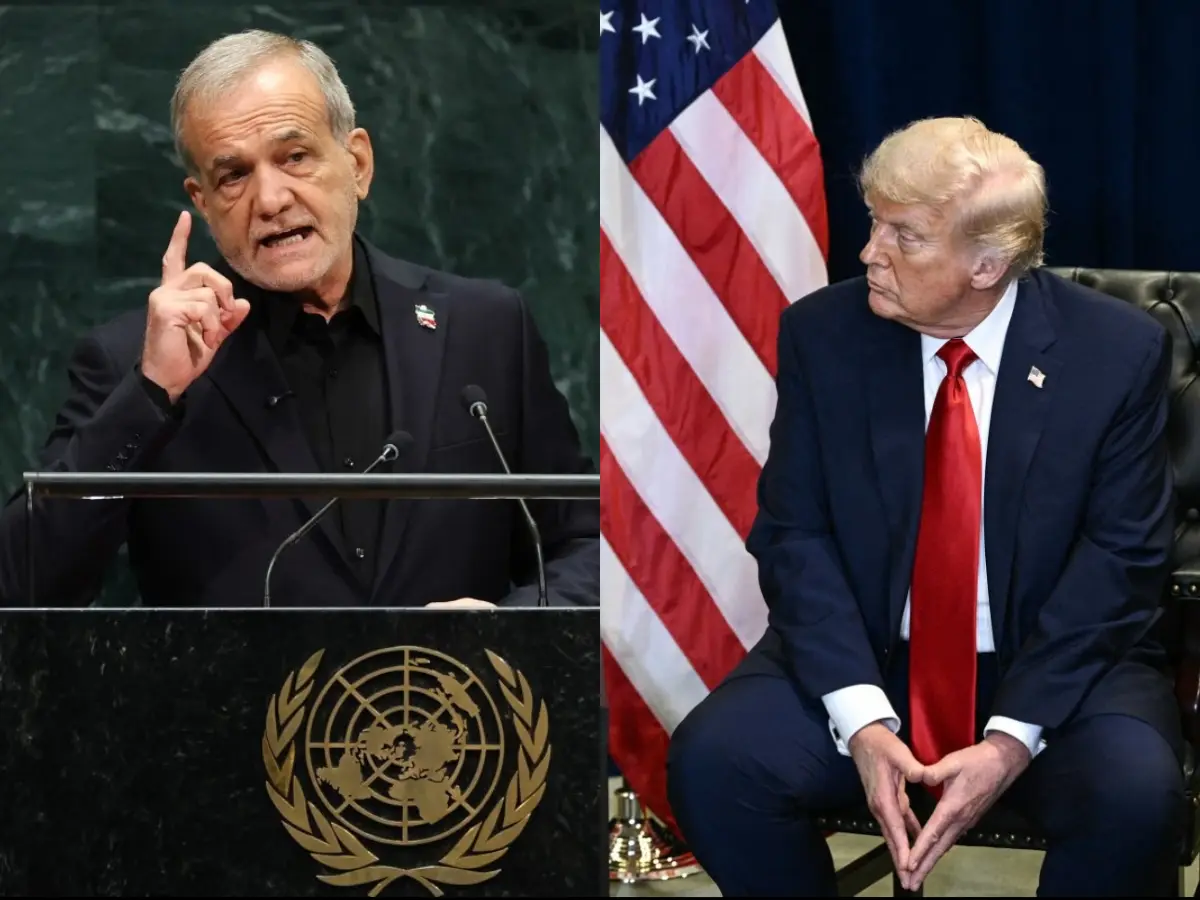
‘Iran will never bend at the knee’: Pezeshkian hits back at Trump at UNGA

&imwidth=600&imheight=450&format=webp&quality=medium "‘Iran will never bend at the knee’: Pezeshkian hits back at Trump at UNGA")
‘Iran will never bend at the knee’: Pezeshkian hits back at Trump at UNGA Photograph: (Credit: AFP)
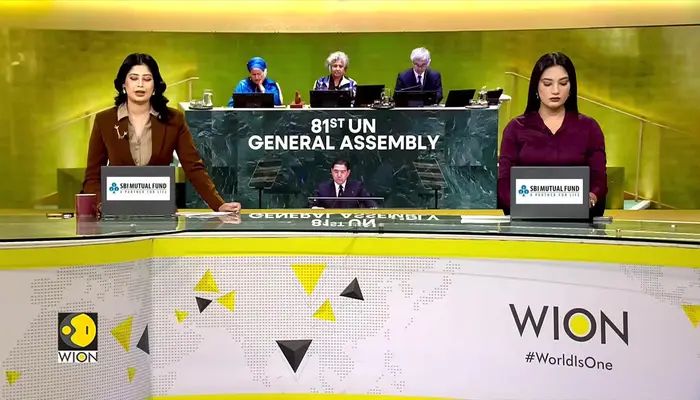
Addressing the UN General Assembly, Iranian President Masoud Pezeshkian delivered a defiant message to US President Donald Trump, declaring that Iran will never "bend at the knee" or yield to force.
Iran's president adopted a defiant stance at the United Nations on Wednesday, delivering his first address since the outbreak of full-scale war with the United States and Israel, and declaring that Tehran would never “bend at the knee.” Masoud Pezeshkian charged Washington with committing "terrorism" over the assassination of former Supreme Leader Ayatollah Ali Khamenei at the war's outset. During his remarks, he held aloft a photograph of the slain leader while maintaining that Iran had never been the aggressor in the conflict.
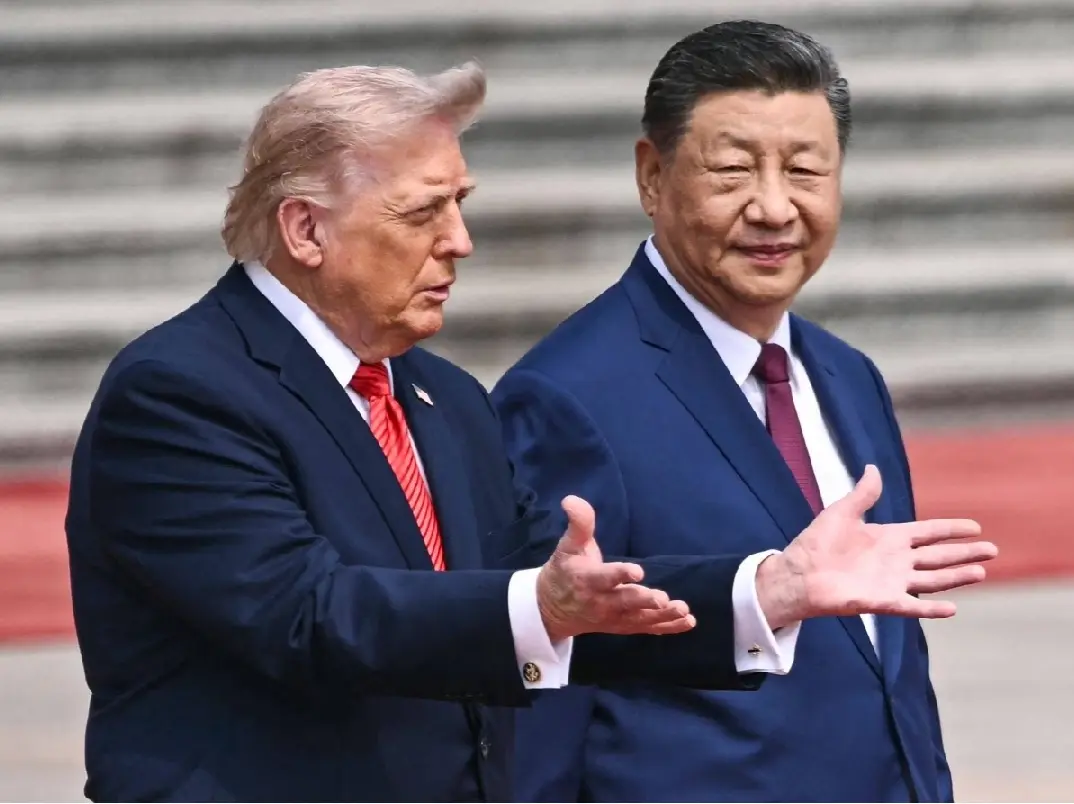
The speech came a day after President Donald Trump told the UN he was considering whether to "annihilate" Iran, though Trump also praised the resumption of negotiations between Tehran and US representatives. Notably, Pezeshkian made no mention of these ongoing talks aimed at ending the stalled conflict, keeping his tone firm throughout.
"He must know that the resistance of the Iranian people will only increase in the face of sanctions, increased pressure, increased bullying. We will never bow our head or bend at the knee," Pezeshkian declared.
The Iranian leader also addressed the Strait of Hormuz, which Iran has intermittently blockaded since the war began, a move that has driven global energy prices sharply higher. He asserted that Tehran would not permit the waterway to be exploited for use against Iranian interests. "We cannot let some have free access and bolster their interests from the waterway, while at the same time using that waterway to impose their aggression upon us," he said.
Trending Stories
)
)
)
)
)
)
)
)
)
)
)
)
)
)
)
)
)
)
)
)
&im=FitAndFill=(700,400))
)
)
)
)
)
)
&im=FitAndFill=(700,400))
)
)
)
)
)
)
)
)
The surge in fuel prices carries political risk for Trump, with rising costs threatening to undermine Republican control of Congress ahead of November's midterm elections.
Uncertainty had surrounded whether Pezeshkian would even attend the UN gathering in Manhattan, as it remained unclear for some time whether the US would grant him a visa. Washington ultimately approved his entry, though several members of his delegation were denied visas.

