Iran floats offer on nuclear inspections; US sceptical


Iran's Foreign Minister Mohammad Javad Zarif
Iranon Thursday signalled a willingness to engage in diplomacy to defuse tensions with the United States with a modest offer on its nuclear programme that met immediate scepticism in Washington.
Iran's foreign minister told reporters in New York thatIrancould immediately ratify a document prescribing more intrusive inspections of its nuclear programme if the United States abandoned its economic sanctions, media organizations reported.
The document, known as the Additional Protocol, gives UN inspectors from the International Atomic Energy Agency (IAEA) more tools to verify that a nuclear programme is peaceful.

Watch:Iran FM at UN accuses US of ‘economic terrorism’
While US officials suggested they viewed the idea as a non-starter, analysts said it could provide an opening for US President Donald Trump's administration to pursue diplomacy.
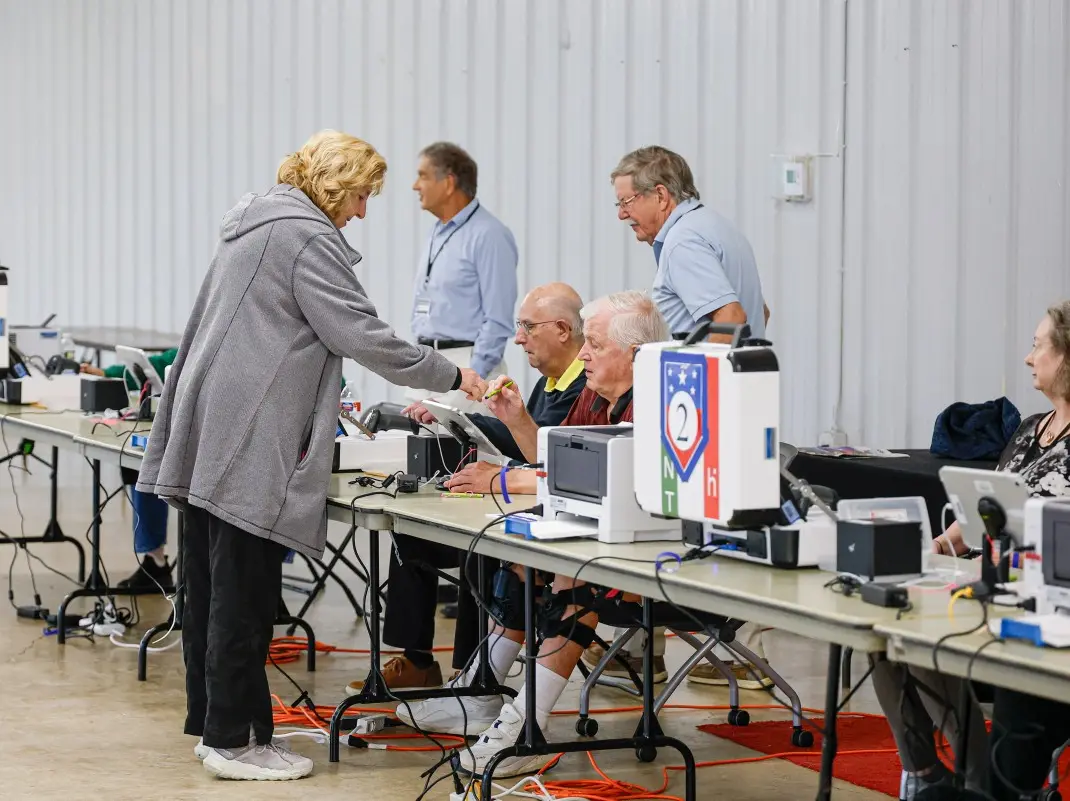)
US Supreme Court backs Trump administration's use of SAVE database to check voter citizenship
)
‘Could kill billions...’: Bill Gates backs calls to slow AI development amid fears of catastrophe
)
OpenAI AI Agents hacked 4 websites before Hugging Face, researchers reveal
)
Ceuta migrant crisis: Protesters take to streets as Spain grapples with migrant challenge
)
‘Anti-social elements spreading false rumours’: LPU issues statement amid massive unrest over alleged rape
)
Bollywood x K-pop crossover! LE SSERAFIM’s Kazuha charms fans with Shah Rukh Khan’s ‘Chammak Challo’ steps
)
US vs China over South China Sea: Washington backs Philippines, Beijing hits back
)
Nations League: Spain sink England at Wembley; Modric shines for Croatia
)
Bigg Boss 20: Salman Khan schools Rhiti Tiwari over Qazi Touqeer clash, compares her to Dolly Bindra
)
'A terrorist country is asking me that question?': Jaishankar hits back at Pakistani journalist at UN; flags attacks on commercial shipping
)
Sri Lankan Tamil migrant worker gets death sentence in Saudi Arabia, help sought from India
)
Jaishankar at UNGA: Goodwill and friendship can't coexist with terrorism
)
‘Attack on Mecca a red line for Pakistan’: Shehbaz Sharif warns Houthis at UN
)
LPU students go on rampage, vandalise campus amid widespread protest: What's happening
)
WATCH | As Shehbaz Sharif claims Pakistan’s ‘victory’ during 2025 conflict, Indian diplomat R Srinivas laughs at UN
&im=FitAndFill=(700,400))
New Friday OTT releases (September 25, 2026): Don’t Be Shy, Hunkkaar: The Roar, Mango Pachcha- 6 movies and TV shows on Netflix, Prime Video and more
)
Outrage erupts after 3-year-old is married to 60-year-old man in Pakistan, link to her sister's murder being probed
)
Gaza's war turned environmental damage into second crisis
)
'Countries far from conflict are penalised': Jaishankar calls for Gulf peace, seafarer safety at UN
)
Asian Games 2026: India face Afghanistan in quarterfinal on Sep 28; Pakistan clash with Hong Kong
)
'FIRST LOOK from inside Noah’s Ark': Researchers share video from inside mysterious mound in Turkey
)
US-Iran war: Trump rejects Iran's Hormuz proposal, reports suggest talks expected next week
)
'What kind of confession is this?': Pakistan PM Shehbaz Sharif’s 'terrorists would be roaming New York' remark goes viral, raises alarm online. Watch
)
Russia will achieve Ukraine war aims; Europe doing everything to block peace talks: Lavrov at UN
)
Trump-Xi summit wrap: Big pageantry, Iran talks, few major developments and more meetings planned
)
Two men die of suspected chemical exposure inside public toilet in Mumbai
)
Ramayana: Yash’s Ravana gets first official poster from Nitesh Tiwari’s epic
)
UNSC reform momentum grows: Russia, Portugal, Mauritius push for India's permanent seat bid
&im=FitAndFill=(700,400))
Humanoid robots to virtual worlds! Korean sci-fi dramas to watch: Are You Human Too?, Memories of the Alhambra and more
)
US Treasury Secretary Scott Bessent hails global crackdown on Iranian banks and airlines
"If Trump wants more for more, we can ratify the Additional Protocol and he can lift the sanctions he set," the Guardian newspaper quotedIranian Foreign Minister Mohammad Javad Zarif as telling reporters.
However, sinceIranis already implementing the protocol and has often offered in the past to ratify it, it was not clear that Zarif's proposal constituted much of a concession.
Under the 2015 nuclear deal agreed to by Tehran,Iranmust seek ratification of the protocol eight years after the deal was adopted. That would be the same time that the United States must seek permanent termination of many of its sanctions onIran.
US officials responded sceptically, suggesting it was a disingenuous effort to get sanctions relief.
"Their whole game is to try to get any sanctions relief they can while maintaining the ability to get a nuclear weapon in the future," said an official on condition of anonymity, sayingIran was "trying to spin a small action into" something bigger.
The official noted that under the offer,Iranwould keep enriching uranium, a process that can produce fissile material for nuclear weapons, and would do nothing to rein in its support for regional proxies in Yemen, Iraq, Syria and Lebanon.
A second US official was also dismissive.
"IfIranwants to make a serious gesture, it should start by ending uranium enrichment immediately and having an actual decision-maker attempt to negotiate a deal that includes a permanent end toIran’s malign nuclear ambitions, including its development of nuclear-capable missiles," said the official.
US-Iranian tensions have increased since Trump's decision last year to abandon the nuclear deal thatIranstruck with six major powers in 2015 under which it agreed to rein in its atomic programme in return for broad relief from economic sanctions.
Relations have deteriorated since May when Trump tightened US sanctions onIranto try to choke off its oil exports, the main source of foreign exchange and government revenues for the Islamic Republic.
Washington is trying to force Tehran to agree to stricter limits on its nuclear capacity, curb its ballistic missile programme and end support for proxy forces in a regional power struggle with US-backed Gulf Arab states.
Fears of direct US-Iranian conflict have risen since May with several attacks on oil tankers in the Gulf,Iran's downing of a US surveillance drone and a plan for US airstrikes onIranlast month that Trump called off at the last minute.