'India won't change security policy under pressure': India's Parliamentary IT Panel chief slams Elon Musk over Starlink row

&imwidth=600&imheight=450&format=webp&quality=medium "'India won't change security policy under pressure': India's Parliamentary IT Panel chief slams Elon Musk over Starlink row")
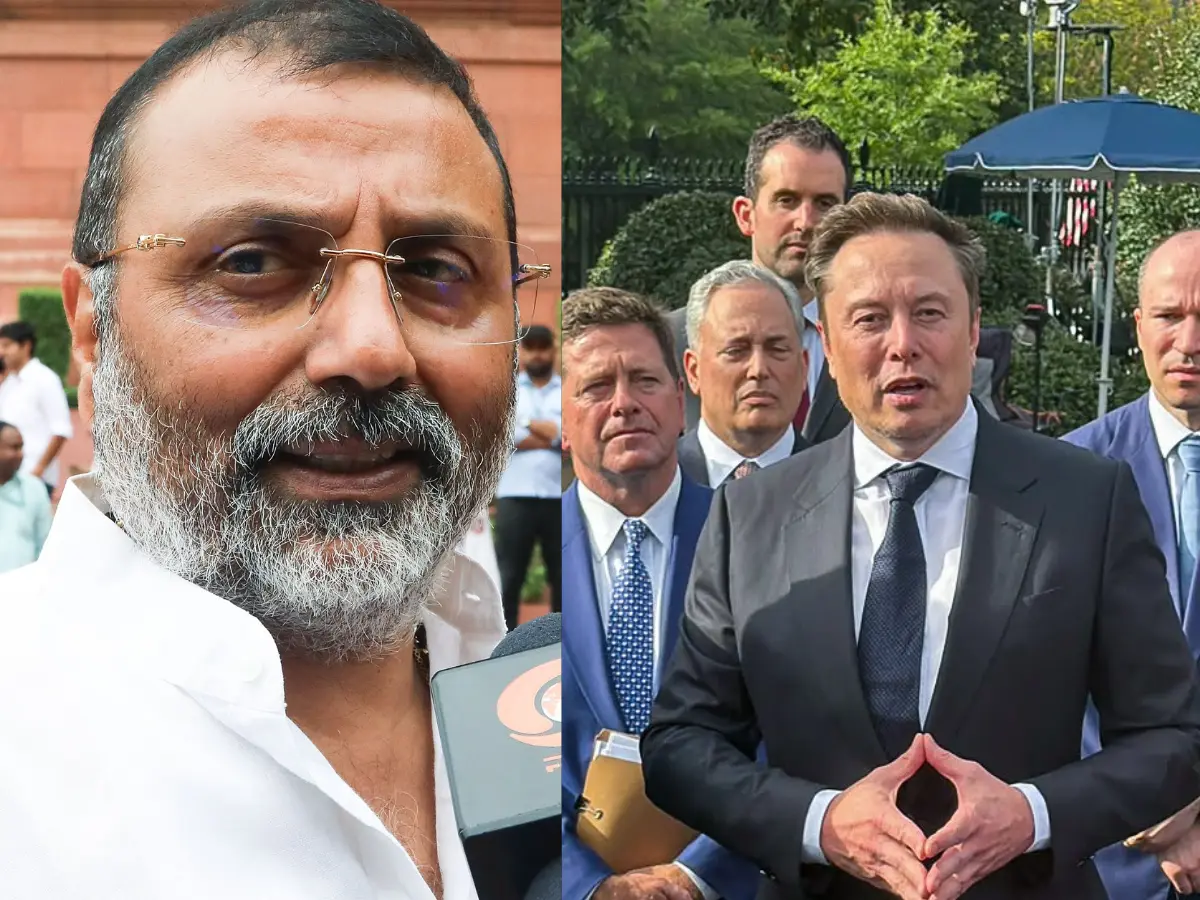
BJP MP Nishikant Dubey and SpaceX CEO Elon Musk Photograph: (X)
BJP MP Nishikant Dubey has criticised Elon Musk over Starlink's proposed entry into India, citing concerns raised by security agencies. His remarks came after Musk accused unnamed business interests of blocking Starlink, while the government rejected claims of discriminatory regulations.
BJP MP Nishikant Dubey on Sunday (Oct 11) slammed SpaceX CEO Elon Musk over Starlink's proposed entry into India's satellite communications market. In a post on X, Dubey said the Parliamentary Committee had understood the challenges faced by the country's security agencies through Starlink, adding that the Ministry of Defence, the Ministry of Home Affairs and investigative agencies were concerned with the "threats" posed by such developments.
In a reply to Elon Musk's tweet, Dubey wrote, "As the Chairman of the Parliamentary Committee, our committee has understood the challenges facing the country's security agencies through @elonmusk's Starlink. The Ministry of Defence, the Ministry of Home Affairs, and our investigation agencies are being affected by the dangerous games of these threats." Referring to the previous government, he wrote, "In 2013-14, the government of Manmohan Singh ji had informed @TRAI about these threats."
Dubey further said India was a sovereign and democratic country that would not alter its security policy under pressure. "First, provide connections to the poor in your own country, America, at affordable rates, and then level accusations; India is a healthy democratic, sovereign nation; it does not change its security policy under pressure or social media," he added. “If our policy were driven by money, we would have rolled out the red-carpet welcome for you despite opposition from the security agencies. Don't you provide even more support to political parties from America to Britain?” he further added.
Also Read: Elon Musk under scrutiny again as US judge upholds Twitter investor fraud verdict
Indian government's statement
Earlier, the Ministry of Communications unequivocally stated its position on the regulatory framework for satellite communication services. The Ministry said that India's policies in this sphere are “fair and non-discriminatory.” The statement issued by the Press Information Bureau (PIB) and the Ministry of Communications, stated that the "government has put in place a fair and non-discriminatory authorisation framework for all telecommunication services, including satellite communication services. Under this, telecom licences have been granted to three Global Mobile Personal Communication by Satellite services based on non-geosynchronous satellite orbit based satellite communications, as part of its commitment to enable provision of satellite communication services in India. Under the terms and conditions of license, every such licensee is required to demonstrate compliance with security conditions. This is aimed at ensuring that services provided meet various security requirements to ensure safety of all users and their data. Security assessment as part of this process is currently under way in respect of all the three licensees. As and when this process is completed for a licensed entity, it may proceed to the next step of seeking assignment of spectrum." "At present, all the three entities are at broadly the same regulatory stage. As such, the suggestion that the framework or its application is unfair or discriminatory is baseless and misconceived," the statement added.
Also Read: Elon Musk back in Trump admin, will help Pentagon map 'future of warfare, autonomous weapons'
Trending Stories
&imwidth=280&imheight=210&format=webp&quality=medium)
&imwidth=280&imheight=210&format=webp&quality=medium)
&imwidth=280&imheight=210&format=webp&quality=medium)
&imwidth=280&imheight=210&format=webp&quality=medium)
&imwidth=280&imheight=210&format=webp&quality=medium)
&imwidth=280&imheight=210&format=webp&quality=medium)
&imwidth=280&imheight=210&format=webp&quality=medium)
&imwidth=280&imheight=210&format=webp&quality=medium)
&imwidth=280&imheight=210&format=webp&quality=medium)
&imwidth=280&imheight=210&format=webp&quality=medium)
&imwidth=280&imheight=210&format=webp&quality=medium)
&imwidth=280&imheight=210&format=webp&quality=medium)
&imwidth=280&imheight=210&format=webp&quality=medium)
&imwidth=280&imheight=210&format=webp&quality=medium)
&imwidth=280&imheight=210&format=webp&quality=medium)
&imwidth=280&imheight=210&format=webp&quality=medium)
&imwidth=280&imheight=210&format=webp&quality=medium)
&imwidth=280&imheight=210&format=webp&quality=medium)
&imwidth=280&imheight=210&format=webp&quality=medium)
&imwidth=280&imheight=210&format=webp&quality=medium)
&imwidth=280&imheight=210&format=webp&quality=medium)
&imwidth=280&imheight=210&format=webp&quality=medium)
&imwidth=280&imheight=210&format=webp&quality=medium)
&imwidth=280&imheight=210&format=webp&quality=medium)
&imwidth=280&imheight=210&format=webp&quality=medium)
&im=FitAndFill=(700,400)&imwidth=280&imheight=210&format=webp&quality=medium)
&imwidth=280&imheight=210&format=webp&quality=medium)
&imwidth=280&imheight=210&format=webp&quality=medium)
&im=FitAndFill=(700,400)&imwidth=280&imheight=210&format=webp&quality=medium)
&imwidth=280&imheight=210&format=webp&quality=medium)
&imwidth=280&imheight=210&format=webp&quality=medium)
&imwidth=280&imheight=210&format=webp&quality=medium)
&imwidth=280&imheight=210&format=webp&quality=medium)
&imwidth=280&imheight=210&format=webp&quality=medium)
&im=FitAndFill=(700,400)&imwidth=280&imheight=210&format=webp&quality=medium)
What Elon Musk said?
In a post on X on Oct 7, Elon Musk accused certain unnamed ‘oligarchs’ of blocking Starlink’s entry into India, alleging that they are trying to protect their “monopolistic chokehold” over the country’s people. Musk made the remarks while responding to a post citing government data that 11,256 listed villages lacked 4G coverage as of May 2026. He has previously said Starlink could help connect rural and underserved parts of India. “Unfortunately, we are being blocked by certain oligarchs to maintain their monopolistic chokehold on the Indian people. You can guess who they are …,” Musk said in the post.
Musk has since then targeted the Ambanis and shared several other posts slamming the Indian government's policies. In his latest post on X, Musk said, “The ridiculous arguments by Ambani’s army of Internet shills make no sense. On the one hand, they say Starlink couldn’t possibly compete with the amazing low prices offered by Ambani’s de facto monopoly in India and then, in the same breath, they essentially claim that Starlink would be too strong of a competitor! This is absurd hypocrisy and hyperbole.” He acknowledged that greater competition could reduce the profits of existing players but said it would not necessarily threaten their business. “Obviously, if Starlink is too expensive in India, no one will buy it, so SpaceX will need to make pricing affordable,” Musk added.

