
&imwidth=800&imheight=600&format=webp&quality=medium "Gravitas| Maharashtra scam endangers children: 2.3 crore litres of milk adulterated with detergent")
Synthetic additives are increasingly seeping into our daily diet. Even milk, one of the most widely consumed food items, is not immune to adulteration. A massive milk adulteration scam has left people in shock. This unfolded in Maharashtra's Dharashiv district, where police, along with Food and Drug Administration (FDA) officials, raided a synthetic milk manufacturing unit three days ago.
Officials suspect that more than 2.3 crore litres of adulterated milk may have entered the market over the last six months. While nine people have been arrested so far, the manufacturing network, distribution chain and buyers are now under scrutiny.
In a separate crackdown on July 4 and 5, simultaneous raids were conducted across five districts of Maharashtra, including Thane, Ahilyanagar and Solapur. Authorities seized adulterated milk, chemicals and machinery, and are probing the interstate supply chain.

Officials alleged that synthetic milk was manufactured using detergent, shampoo, palm oil and other chemicals before being mixed with genuine milk. Cases have been registered against 26 people, while 13 have been arrested so far. Authorities are now examining whether the two adulteration networks are connected. It is also suspected that inferior-quality milk powder and Nirma detergent were used to maintain the appearance and consistency of milk.
According to medical experts, consuming such milk can have serious consequences for the kidneys, liver and digestive system.
This issue is not restricted to the hinterland alone. A day earlier, the Crime Branch seized 558 litres of fake milk in Mumbai, preventing it from reaching consumers. Investigations revealed that milk packets of two dairy brands were allegedly tampered with using contaminated water before being supplied to residents.
Trending Stories
&im=FitAndFill=(700,400))
National Handloom Day 2026: From Alia Bhatt to Samantha Ruth Prabhu; Actresses who celebrated India's textile heritage as brides
)
The Royals enter the Doctor Who universe: King Charles and Queen Camilla beam into Commonwealth Games in TARDIS
)
No connection between Jantar Mantar protesters and Pakistan-based ISI terror module, Punjab Police clarify
)
'Massive attack coming... wait, never mind': Iran mocks US 'theatre diplomacy,' rejects Trump's claim of Hormuz progress
)
Reels vs Results: Why political messaging alone won't win over India's young voters
)
Major relief for TN CM Vijay as wife Sangeetha withdraws infidelity and divorce petition
)
France offers deal for 114 Rafale fighter jets, with 94 to be made in India
)
Ukrainian astronomers see gargantuan objects dashing at 39,600 kmph on the Moon - 'They can reach Earth in 20 minutes'
)
Drug-resistant fungus that hides in hair and enters bloodstream reported in 23 US states
)
India avoids higher US tariff, secures lower 10% rate. Here's how
)
Explained | Can India reach WTC final with a series win in Sri Lanka?
)
'Security can't be bought with Pakistan, Turkey deal': Iran tells Saudi Arabia
)
Primetime trailer: Robert Pattinson channels Chris Hansen in A24's dark crime thriller
)
Zendaya and Tom Holland celebrate their marriage with private reception in England
)
Vishal Bhardwaj to develop film on Tarun Tejpal case after latest court verdict: Report
&im=FitAndFill=(700,400))
Can an S-400 operate in the desert?
)
Lightning bolt strikes football field in Thailand, killing a player during a match
)
Thailand teen killed grandparents before shooting teachers at school – What we know about suspect
&im=FitAndFill=(700,400))
New Friday OTT releases (August 7, 2026): Operation Safed Sagar, Vadhandhi, Main Vaapis Aaunga- 6 movies and TV shows on Netflix, Prime Video and more
)
The genetic roots of Tamils: 75,000 DNA markers decoded in latest study of Sangam-era settlement
)
NZ female politician joins meeting from bathroom with underwear hanging - 'You can see my washing, you can see me'
)
‘We are ready to talk’: Jharkhand CM Hemant Soren reaches out to protesting students
)
Squadron Leader Bhawana Kanth scripts history as Indian Air Force gets its first woman ‘Top Gun’ pilot
)
Trump says Iranian school bombing photos could be AI-generated - 'I don’t think...'
)
Bluefly: Priyanka Chopra joins Russell Crowe for new sci-fi action thriller
)
'Dhoni Made Fleming Great': Panesar says ECB made the wrong choice for England Test coach
&im=FitAndFill=(700,400))
Why the Su-30MKI doesn't need external fuel tanks to fly vast distances
)
Born in the USA? Trump targets 'birth tourism' with new birthright citizenship executive order
)
Michael 2 plans revealed: Makers to start filming soon with THIS release window
)
OpenAI reportedly building donut-shaped ChatGPT smart speaker for homes
)
‘Certain munitions are unlimited, others...’: Did Trump admit some US weapons supplies were limited?
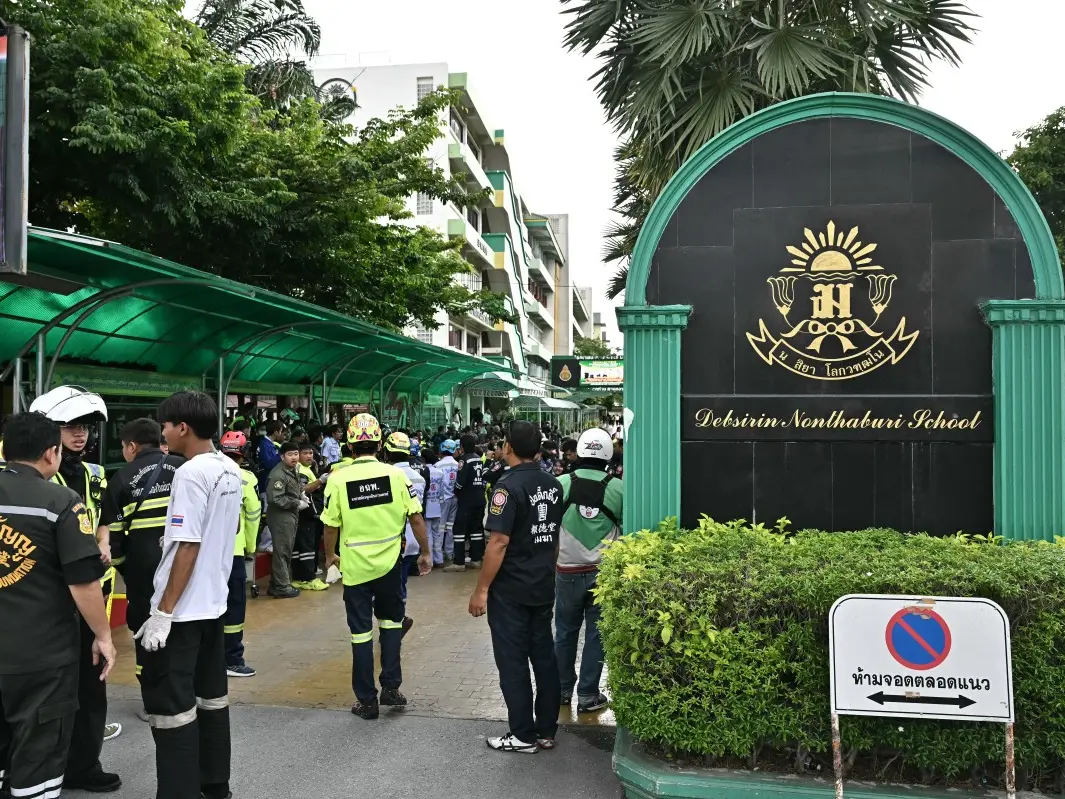)
At least 4 killed 15 injured in shooting at school near Bangkok
)
US may force more visa applicants to make social media accounts public under Trump's new plan
&im=FitAndFill=(700,400))
Why the Su-30MKI is one of the heaviest fighters ever built
In February this year, another milk adulteration case came to light in Andhra Pradesh. Suspicion arose after multiple elderly people were admitted to a hospital in East Godavari district with severe symptoms such as vomiting and acute renal dysfunction. Clinical findings suggested toxic exposure, which was subsequently traced to the consumption of milk from a local dairy. Sixteen people lost their lives in the incident.
Later, Andhra Pradesh Chief Minister N. Chandrababu Naidu announced financial compensation of ₹10 lakh for the families of the victims.
This raises a key question: What is the legal framework to deal with this menace? India's Food Safety and Standards Act, 2006, provides penalties, including imprisonment of up to six months and fines of up to ₹10 lakh for selling unsafe food. The Bharatiya Nyaya Sanhita also contains provisions under which those responsible for causing harm through adulterated food may face criminal prosecution. In addition, the Consumer Protection Act allows citizens to seek compensation for harm caused by adulterated food products.
In December last year, the Food Safety and Standards Authority of India (FSSAI) directed all states and Union Territories to launch a special enforcement drive against adulteration and misbranding of milk and milk products, including paneer. As part of this crackdown, state food safety authorities were instructed to regularly inspect both licensed and unlicensed dairy units and trace the sources of adulteration. In cases of violations, strict action—including licence cancellation and the closure of illegal units—can be taken.
States were also directed to submit fortnightly enforcement reports detailing the action taken. However, implementation remains uneven across states. Considering that this crisis directly threatens children's growth and the long-term health of millions of people, stronger enforcement, enhanced consumer awareness and stricter punishment are the need of the hour.