

&imwidth=800&imheight=600&format=webp&quality=medium "Humans are coming: Arctic resource race to intensify with first US icebreaker in 25 years - Why this scramble?")
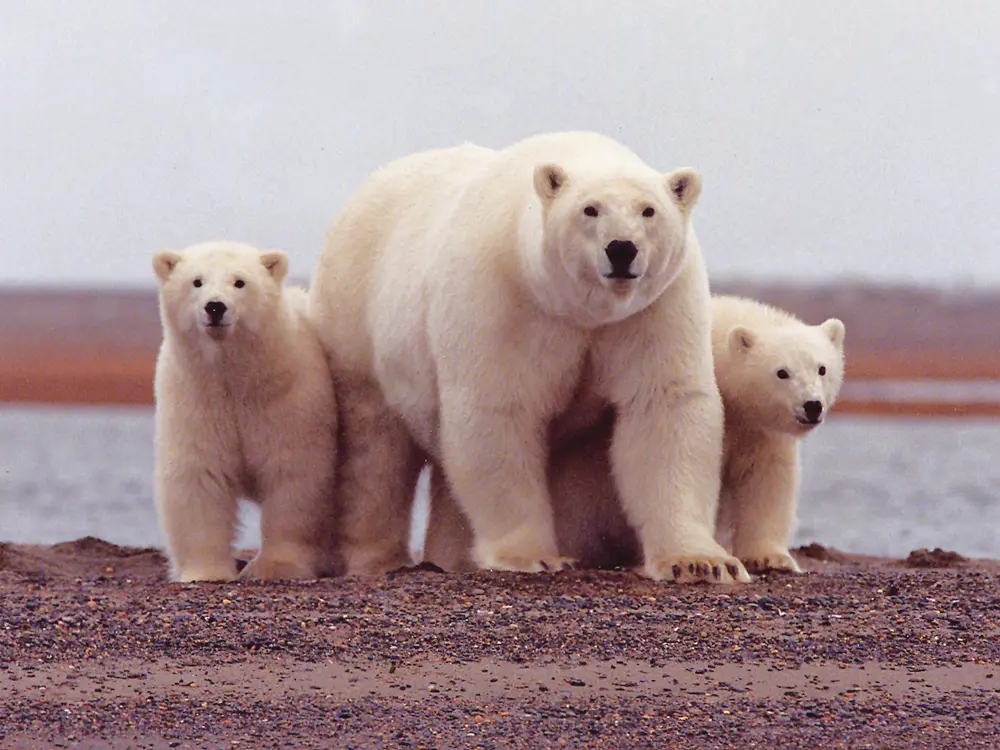
The Arctic Ocean's ice is melting faster than ever due to global warming, opening up more areas in the huge area to global competition for its untapped resources, including an estimated 13 per cent of the world's oil. The US Coast Guard commissioned its first new polar icebreaker ship in over 25 years this August, as part of an $8.6 billion push to expand its Arctic capabilities, with key rivals Russia and China in mind. In this context, here is a look at the Arctic region's resources, the contentious control of its territory, and the countries engaged in the scramble.
What are the resources of the Arctic?
The Arctic possibly contains up to 13 per cent of the world's undiscovered oil and roughly 30 per cent of global natural gas deposits.
It is also home to mineral deposits, including rare earth elements critical for green tech and electric vehicles.
Greenland and northern Scandinavia offer mining opportunities for iron ore and other strategic minerals.
Trending Stories
&imwidth=180&imheight=135&format=webp&quality=medium)
Other Mommy leads North American box Office as Verity, Resident Evil round out top four
&im=FitAndFill=(700,400)&imwidth=180&imheight=135&format=webp&quality=medium)
Navratri 2026: 9 days, 9 forms of Goddess Durga and 9 colours- Check the complete list
&imwidth=180&imheight=135&format=webp&quality=medium)
Anti-SIR protest in Mumbai: Protestors wear black masks & ribbons in Mumbai
&imwidth=180&imheight=135&format=webp&quality=medium)
BCCI rejects venue shift reports, India vs Sri Lanka 1st ODI to remain in Delhi
&imwidth=180&imheight=135&format=webp&quality=medium)
Diljit Dosanjh’s Delhi concert gets a new date: When and where to catch the singer
&im=FitAndFill=(700,400)&imwidth=180&imheight=135&format=webp&quality=medium)
Is sending robots to Mars easier than sending humans?
&imwidth=180&imheight=135&format=webp&quality=medium)
A watchdog rated 'ChatGPT for Teens' an unacceptable risk and says keep under-18s off it
&imwidth=180&imheight=135&format=webp&quality=medium)
1,500 drones illuminate Mumbai sky as Cordelia Cruises unveils second ship, Cordelia Sky
&imwidth=180&imheight=135&format=webp&quality=medium)
'Just coincidence': Police mistakes protester as AISA chief Neha Bora, arrests her from site
&imwidth=180&imheight=135&format=webp&quality=medium)
Anthropic's AI invented a murder witness and sent the fake tip to Philadelphia police
&imwidth=180&imheight=135&format=webp&quality=medium)
Congress demands action against chief election commissioner
&imwidth=180&imheight=135&format=webp&quality=medium)
CJI Surya Kant declines INDIA bloc leaders’ request for meeting ahead of march to SC, asks them to file petition
&imwidth=180&imheight=135&format=webp&quality=medium)
Saif Ali Khan is finally on Instagram! Here's what he shared in his first post
&imwidth=180&imheight=135&format=webp&quality=medium)
'Turn approver, resign, we'll forgive you': Rahul Gandhi claims receiving messages from CEC Gyanesh Kumar
&imwidth=180&imheight=135&format=webp&quality=medium)
One Indian killed in Riyadh airport attack; 11 others injured : MEA
&imwidth=180&imheight=135&format=webp&quality=medium)
Top AI models flunked a test of inventing new AI research, so much for self-improving AI
&imwidth=180&imheight=135&format=webp&quality=medium)
Wasim Jaffer blames Ajit Agarkar-led selection panel for Virat Kohli’s Test retirement
&imwidth=180&imheight=135&format=webp&quality=medium)
'Ouch!!! That must hurt': Kangana Ranaut hails Kamal Haasan's sharp reply to Elon Musk over Starlink row
&imwidth=180&imheight=135&format=webp&quality=medium)
Sidhu Moose Wala’s younger brother wins hearts by recreating late singer’s signature move at Toronto Hologram Show
&imwidth=180&imheight=135&format=webp&quality=medium)
UK school ditches technology, shifts from screen to pen and paper for learning
&imwidth=180&imheight=135&format=webp&quality=medium)
Telangana ATM heist: Thieves in nighties arrive in ambulance, break into SBI ATM in Kamareddy - VIDEO
&imwidth=180&imheight=135&format=webp&quality=medium)
Houthis claim Riyadh airport attacks, Aramco strikes; issue fresh warning to airlines, travellers and workers
&imwidth=180&imheight=135&format=webp&quality=medium)
Portugal Federation confirms Cristiano Ronaldo’s return to national team despite suspension
&imwidth=180&imheight=135&format=webp&quality=medium)
Delhi protests: 'Court should not be dragged into political activity', says CJI Surya Kant
&im=FitAndFill=(700,400)&imwidth=180&imheight=135&format=webp&quality=medium)
New OTT releases this week (October 12-18, 2026): Sacrifice, Koffee with Karan S9, Roadies Rebirth- 6 titles coming on Netflix, JioHotstar and more
&imwidth=180&imheight=135&format=webp&quality=medium)
Microsoft's Nadella says treat every AI model as already hacked, and build an 'emergency brake'
&imwidth=180&imheight=135&format=webp&quality=medium)
Delhi protest: CJI Surya Kant declines to meet India Bloc leaders
&imwidth=180&imheight=135&format=webp&quality=medium)
Telangana man allegedly recruited into Russian military dies near Ukraine border
&imwidth=180&imheight=135&format=webp&quality=medium)
China imposes first-ever sanctions on ministers from Taiwan allies: What this means
&imwidth=180&imheight=135&format=webp&quality=medium)
McSweeney reveals how studying Virat Kohli’s YouTube clips helped Australia A conquer India
&imwidth=180&imheight=135&format=webp&quality=medium)
Maharashtra appoints FDA commissioner Tukaram Mundhe as secretary of committee for MPSC overhaul amid stir
&imwidth=180&imheight=135&format=webp&quality=medium)
Iran: US accepted some conditions, Clarity needed on others
&imwidth=180&imheight=135&format=webp&quality=medium)
Nana Patekar's cause of death confirmed; here's what his postmortem report says
&imwidth=180&imheight=135&format=webp&quality=medium)
iPhone Duo price index: Tracking Apple’s latest pricing trends
&imwidth=180&imheight=135&format=webp&quality=medium)
'Say no to Muse': Meta has no control over its own moderation AI while it forces a security nightmare on everyone
New shipping routes can drastically reduce global maritime trade costs
Besides the Arctic's abundant and critical natural resources, the thawing of ice is slowly opening up more shipping routes, such as the Northern Sea Route along Russia’s Arctic coast and the Northwest Passage through Canada. When fully operational and commercialised, these routes can reduce transit times between Asia and Europe by up to 40 per cent and lower shipping costs by roughly 30 per cent.
Also read: Why?? Scientists revive 40,000-year-old ancient virus with 'pandemic potential' from Arctic ice
Who controls the Arctic?
The Arctic Ocean region, spanning approximately 14.5 million square kilometres, is loosely governed through a combination of national jurisdiction, international law, and cooperative bodies like the Arctic Council. Eight countries have coastlines along the Arctic Ocean: Canada, Denmark (via Greenland), Finland, Iceland, Norway, Russia, Sweden, and the US (via Alaska). These countries are part of the Arctic Council, which focuses on non-security issues and environmental protection. China also claims to be a “near-Arctic state,” becoming an active new entrant in the race for the region's resources.
The coastal states control their land, internal waters, and exclusive economic zones (EEZs) spanning 200 nautical miles.
Race for more control of the Arctic via UN laws
The scramble for the Arctic is evident from new claims by some countries to expand their rights over the continental shelf beyond the EEZ. They have filed petitions under the United Nations Convention on the Law of the Sea (UNCLOS), with Russia and Norway receiving partial approvals. Canada, Denmark, and some others have their claims pending. The US has not ratified UNCLOS, but generally observes its provisions.
The central Arctic Ocean remains international waters, open for navigation and fishing under UNCLOS.
Which countries are interested in the Arctic?
While Arctic coastal states naturally have the strongest claims and interests in resource development, shipping, and security, countries like the US, Russia, and China are competing to gain an upper hand. US President Donald Trump's remarks about wanting to buy Greenland should be seen in this context.
China: A non-Arctic power operating in the waters
Calling itself a “near-Arctic state,” China has expanded its research and commercial shipping activity in the region. The Asian power is testing new maritime routes and building icebreaker capacity in the Arctic.
Countries and entities with observer status in the Arctic Council, including India, Japan, South Korea, Germany, and the European Union, have invested in scientific research, mining projects, and shipping infrastructure to gain a foothold in the region.
Militarising the Arctic
De facto enforcement of the Arctic Ocean is carried out by countries like the US using Coast Guard patrols to maintain presence and monitor foreign vessels. Russia maintains the largest military presence and extensive Arctic bases, asserting control over roughly half of the Arctic coastline.
Canada and Norway also regulate shipping in their waters while pursuing resource extraction.
In this context, the US commissioning of new icebreakers and plans to acquire more gain significance. The aim is to secure strategic influence, protect shipping routes, and gain access to mineral resources, particularly in Greenland.
The days when the Arctic could become a conflict zone are not far away, given the current level of intensifying activity around the slowly unfreezing ocean.

