How the India–EU deal will impact Indian consumers and exporters: Know key benefits

&imwidth=600&imheight=450&format=webp&quality=medium "How the India–EU deal will impact Indian consumers and exporters: Know key benefits")
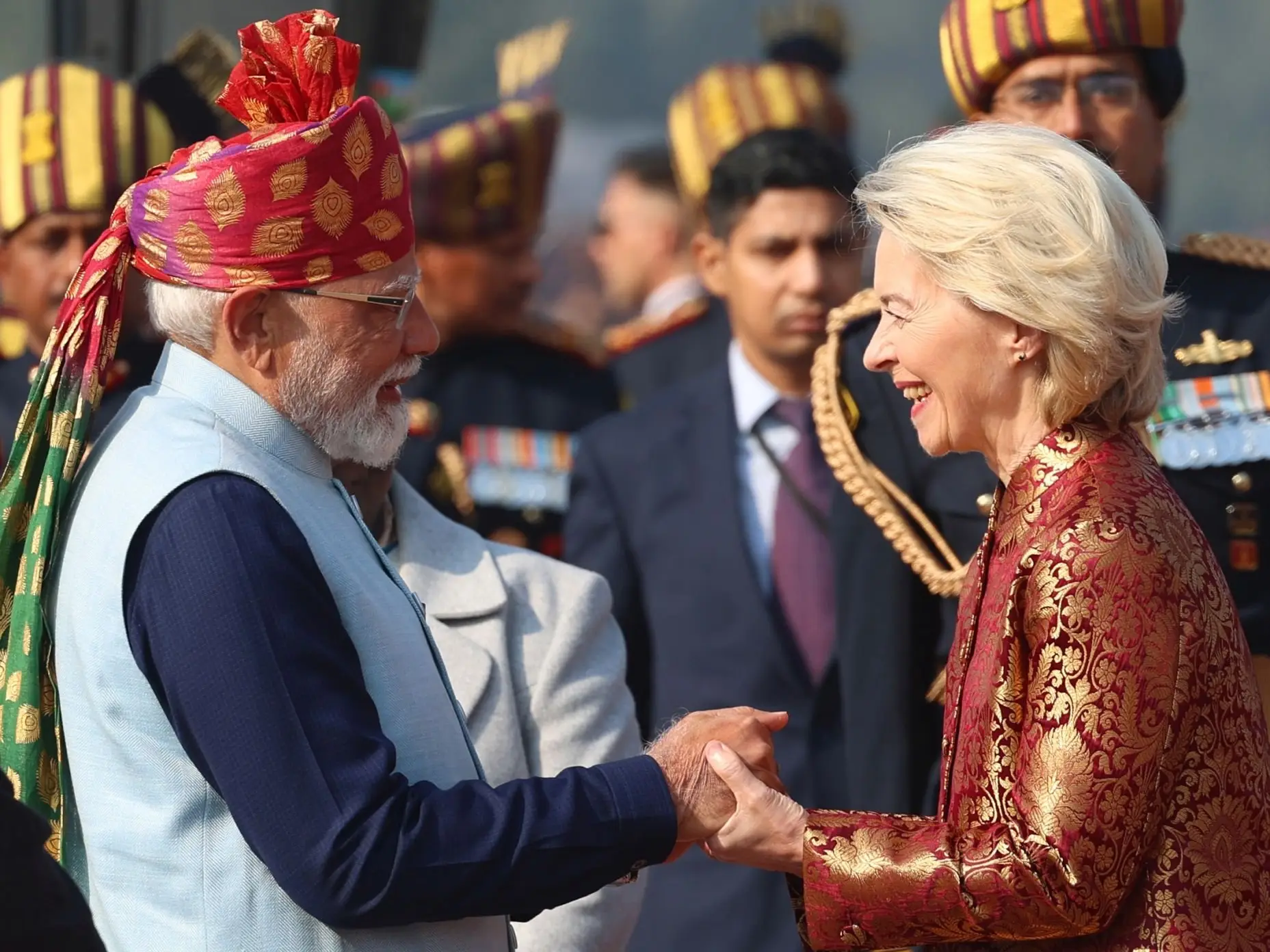
File photo of PM Modi with President of the European Commission, Ursula Von Der Leyen. Photograph: (X/@financebyanmol)
Prime Minister Narendra Modi said on Tuesday that India and the European Union have finalised a free trade agreement, highlighting that both sides together constitute around 25 per cent of global GDP and around one-third of world trade.
India and the European Union on Tuesday finalised the ‘mother of all’ trade deals in a landmark development. In response to the agreement, President of the European Commission, Ursula Von Der Leyen, said on social media platform X (formerly Twitter) that ]Europe and India are making history today'.
“Europe and India are making history today. We have concluded the mother of all deals. We have created a free trade zone of two billion people, with both sides set to benefit. This is only the beginning. We will grow our strategic relationship to be even stronger,” Ursula Von Der Leyen said on X.
Prime Minister Narendra Modi also said on Tuesday that India and the European Union have finalised a free trade agreement, highlighting that both sides together constitute around 25 per cent of global GDP and around one-third of world trade. While speaking virtually at Indian Energy Week, he called the deal the “mother of all deals” and stated that it opens up key opportunities for 140 crore Indians as well as millions of Europeans.
How the India–EU deal will benefit Indians
The India-EU Free Trade Agreement or FTA, which is also called the ‘mother of all deals’, aims to provide extensive economic benefits to both countries. Following the agreement, Indians European cars, beer, and several food items are likely to get cheaper.
The European Union said duties on 96.6% of its goods exports to India will be either eliminated or reduced, resulting in annual savings of up to €4 billion for European exporters. At the India-EU Summit, both sides also launched an EU-India Security and Defence Partnership and announced key breakthroughs under the trade agreement.
Trending Stories
)
)
&im=FitAndFill=(700,400))
&im=FitAndFill=(700,400))
)
)
)
&im=FitAndFill=(700,400))
&im=FitAndFill=(700,400))
&im=FitAndFill=(700,400))
)
)
)
)
&im=FitAndFill=(700,400))
)
&im=FitAndFill=(700,400))
)
)
)
&im=FitAndFill=(700,400))
)
)
&im=FitAndFill=(700,400))
)
&im=FitAndFill=(700,400))
&im=FitAndFill=(700,400))
)
&im=FitAndFill=(700,400))
)
&im=FitAndFill=(700,400))
)
)
)
)
Under the deal, tariffs will be scrapped on EU exports such as fruit juices and processed foods, while duties on olive oil, margarine and other vegetable oils will be reduced or removed. Tariffs on spirits will be lowered to 40 per cent.
The EU also plans to provide 500 million euros in support over the next two years to help India cut greenhouse gas emissions, highlighting the pact’s economic as well as climate focus. In the meantime, India has decided to substantially lower import duties on several European products, and the EU will provide full market access covering a wide range of Indian exports across manufacturing, chemicals, textiles and electronics.
In addition, 90 per cent tariffs on European optical, medical and surgical equipment will be removed. Duties on most of the EU aircraft and spacecraft exports to India will also be removed, the European Union added. The deal will also remove tariffs of up to 44 per cent on machinery, 22 per cent on chemicals and 11 per cent on pharmaceuticals, a development that the EU expects to strengthen the market access and double the exports from the EU to India by 2032.
Two-way trade in goods between India and the European Union is estimated at $136 billion. Under the agreement, India is expected to gain duty-free access for key exports such as textiles, leather and marine products, while offering tariff reductions in sectors including automobiles, wines and spirits.
Also read: ‘Financing war against itself’: US slams Europe over Russian oil as India-EU trade deal nears

