
&imwidth=800&imheight=600&format=webp&quality=medium "How Democrats lost 2024 elections: DNC draft reveals Kamala Harris failed to define herself against Joe Biden and Donald Trump")
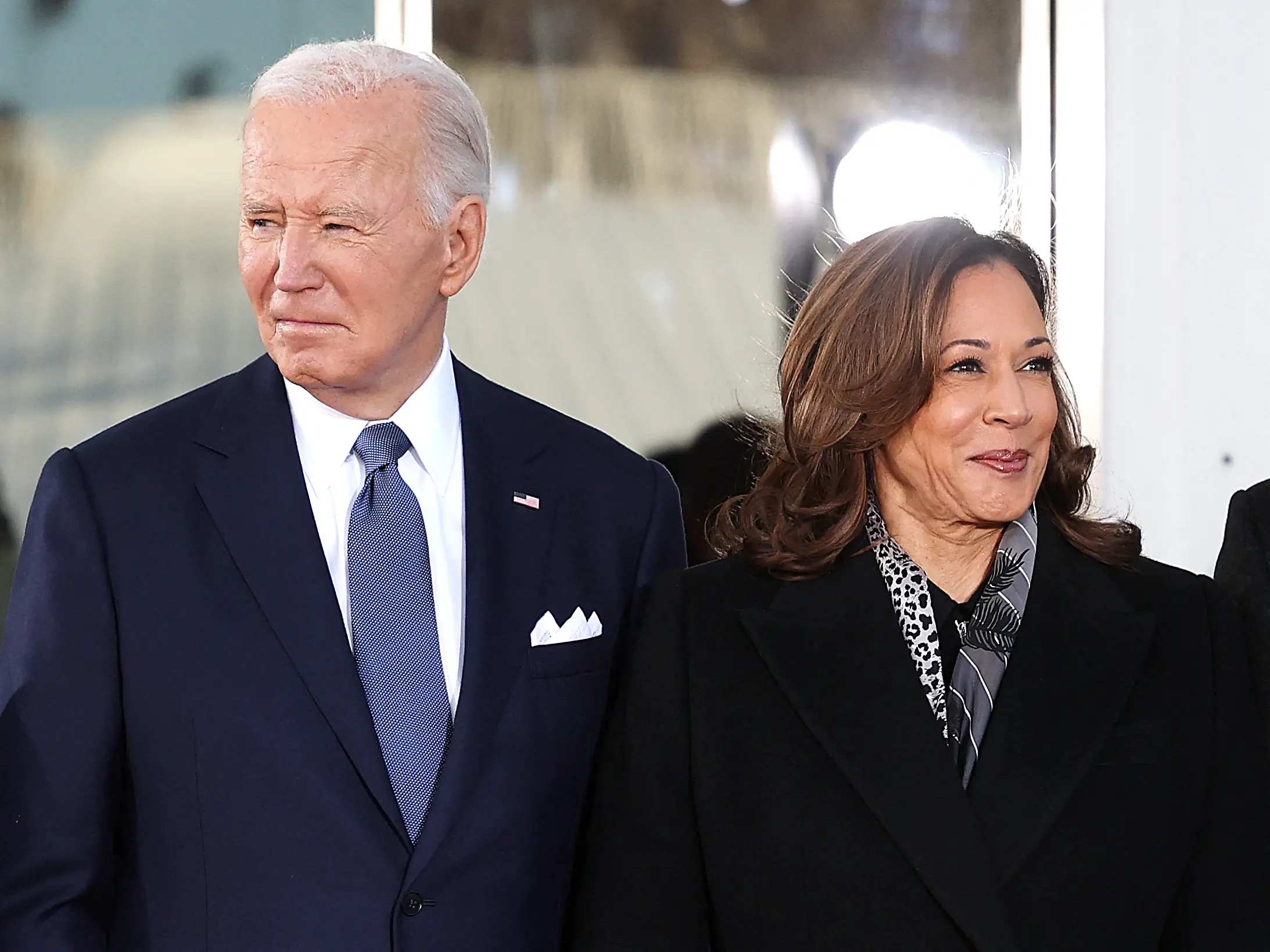
The Democratic Party’s long-awaited internal review of the 2024 presidential election defeat offers a strikingly blunt assessment of what went wrong for former Vice President Kamala Harris and the broader Democratic campaign against Donald Trump. The draft report, released on Thursday (May 21) by the Democratic National Committee, argues that Harris failed to make a compelling independent case to voters, remained too politically tied to former President Joe Biden, and struggled to effectively counter Republican attacks that shaped public perception during the race.
The report, still incomplete and filled with annotations questioning parts of its methodology, nevertheless paints a picture of a Democratic campaign that relied too heavily on anti-Trump sentiment while failing to give voters a strong enough reason to support Harris herself. “Base voters needed reasons to vote FOR Harris as well as against Trump,” the report said. “Without an effective contrast with a difficult (and unaffordable) status quo, the obvious contrast with Trump was not a sufficient motivator.” That conclusion lies at the center of the DNC’s post-election reckoning.
According to the report, Harris entered the race carrying the political burdens of the Biden administration without sufficiently separating herself from unpopular aspects of the White House agenda. While trying to demonstrate loyalty to Biden after becoming the Democratic nominee, Harris missed critical opportunities to signal policy differences that could have reassured skeptical voters. The report says it was ‘necessary to find ways to demonstrate how a Harris-Walz administration would be more effective in addressing American needs’. Instead, Democrats struggled to define Harris outside the framework of the Biden presidency, especially during a compressed 107-day campaign after Biden withdrew from the race.

The report also argues that the Harris campaign fundamentally miscalculated how voters viewed Trump. Democratic strategists assumed many Americans had already formed fixed opinions about the former president and believed his legal controversies and political baggage would naturally damage him with voters. But the report says that assumption proved deeply flawed. The Harris campaign’s inability to shape public perception of Trump was described as a ‘major failure’. “Given the ability of right-wing entities to slash and smear the vice president, it was essential to prosecute a more effective case as to why Trump should have been disqualified from ever again taking office,” the report said. “The grounds were there, but the messaging did not make the case.”
The document criticises Democrats for failing to consistently remind voters about what it described as Trump’s ‘incompetence’, arguing that the campaign never developed a ‘defined or consistent’ strategy to weaken his standing with the public. The report further says Democrats wrongly believed negative views of Trump were already 'baked in', calling that assumption a ‘major failure of analysis and reality’.
Trending Stories
)
Why asking questions could be more important than memorising answers
)
Osama Bin Laden ‘planned’ to target India, CIA reveals dozens of declassified documents
)
'Iran won't surrender': Pezeshkian sends blunt message to US while attending BRICS Summit in India
)
BRICS Summit 2026: Global leaders of BRICS nations attend main open session
)
Celine Dion makes emotional stage comeback after six years: 'I'm so delighted to see you'
)
PM Modi and China's Xi offered to help resolve Russia-Ukraine war: Kremlin
)
Why dehydration is the hidden cause of travel fatigue on long flights
&im=FitAndFill=(700,400))
Meet top 5 batters fastest to 3000 runs in T20Is
)
Top 5 places to visit in Goa beyond its famous beaches
)
'He is popular...': Malaysian PM Anwar Ibrahim's praise for PM Modi during bilateral meeting | WATCH
)
BRICS Summit 2026: PM Modi, Xi reach key consensus on ties, China to assume BRICS chairmanship in 2027
)
BRICS Summit 2026: Consensus on joint declaration, diplomatic win for India
)
Trump says Canada eager to reach a deal, it could come ‘fairly soon’ if Ottawa treats US farmers better
)
‘Partners, not rivals’: Xi outlines four point plan for stronger India-China ties
&im=FitAndFill=(700,400))
Why Chinese PL-15 air-to-air missiles use dual-pulse motors compared to European interceptors
)
Could staying indoors all day affect your health?
)
BRICS Summit 2026: PM Modi addresses Day 2 of 18th BRICS summit
)
Who is the smiling man beside Modi, Putin and Xi at BRICS Summit 2026?
)
800 million years old - Scientists discover 'fingerprints' of supercontinent Gondwana in ancient rocks
)
Why going digital does not always mean becoming more efficient
&im=FitAndFill=(700,400))
Why do air defence missiles explode near their target instead of hitting it?
)
Russian drone hits Warsaw-bound train near Polish border, Zelensky accuses Moscow of ‘deliberate’ targeting
)
War is making Russia stronger? How Ukraine is shaping Moscow’s next generation of weapons
)
Migration protests return to Portsmouth as rival demonstrations face off
)
From severe mobility problems to recovery: Madhuri the elephant’s journey of wildlife care
)
BRICS Summit day 1: New Delhi declaration adopted with full consensus, big diplomatic win for India
)
Did Iran President Pezeshkian touch feet of Hindu spiritual leader at Delhi event as shown in viral video?
)
9-year-old Chennai prodigy clears Cambridge IGCSE grade 10 exams
)
Why does your body need time to adjust after a long journey?
)
BRICS Summit 2026: PM Modi to hold bilateral with leaders of seven countries
)
Ramanathaswamy temple takes centre stage as PM Modi welcomes world leaders at BRICS
)
Houthis launch cross-border strike on Saudi Arabia as Yemen war escalates
)
BRICS Summit 2026: Chinese president Xi Jinping departs from New Delhi after attending BRICS summit
)
Why does your skin need protection from UV rays?
)
How does the loss of forests affect the way wildlife lives and moves?
)
IND vs AFG, 1st T20I: When and where to watch live streaming in India?
)
Why do wild animals need quiet places to survive?
)
Bigg Boss 20: Qazi Touqeer gets a special ‘rockstar’ moment from Salman Khan
)
Humans may lose control of AI: Anthropic CEO calls for slowdown, Altman, Musk back him
Ironically, the report notes that Trump’s favourability ratings have declined since returning to the office for a second term, something Democrats failed to capitalise on during the campaign. Even while criticizing the Harris campaign, the report argues that Biden’s eventual withdrawal from the race ultimately benefited Democrats running in congressional and state-level contests. Although Harris lost the presidency, the report says Democrats in down-ballot races performed better than they likely would have if Biden had remained the nominee.
“Having Kamala Harris on the ballot actually helped down-ballot Democrats maintain part of their base support,” the report said. That finding reflects a growing belief inside Democratic circles that Biden’s declining political standing had become a serious electoral liability before he exited the race. Still, the report suggests the transition came too late to rebuild the party’s national campaign infrastructure around Harris fully. One of the report’s most politically sensitive sections focuses on a Trump campaign advertisement that attacked Harris for supporting taxpayer-funded surgeries for transgender inmates.
The ad featured Harris discussing the issue and ended with the line: “Kamala is for they/them. President Trump is for you.” According to the report, Democratic pollsters widely agreed that the attack resonated strongly with voters. Pollsters analysing the race all recognized the attack as very effective, and felt the campaign was boxed, the ad was a video of her saying what she said, and it was framed as an attack on her economic priorities.”
The report says Harris had little room to effectively counter the attack because changing her position would have created additional political complications during the closing stages of the race. “If the vice president would not change her position, and she did not, then there was nothing that would have worked as a response,” the report said. “The pollsters generally concurred with the opinions shared by campaign leadership, given the stakes and timing, the focus needed to be on attacking Trump.” The report also revisits long-running frustrations inside Democratic circles over how the Biden White House handled Harris during the administration.
According to the document, the administration displayed a ‘significant failure of imagination’ in how it positioned the vice president politically. The report points to internal polling conducted before the 2022 midterm elections that examined how first lady Jill Biden could best help the president politically. But it says no comparable effort was undertaken to strengthen Harris’ standing with voters. “The White House did not position or prepare the vice president,” the document said. “Had the White House explored and evaluated ways to leverage Kamala Harris earlier in the administration, perhaps it would have improved the president’s standing, and it certainly could have helped prepare her to lead the ticket.”
The report particularly criticizes the decision to make Harris a leading face of the administration’s immigration strategy at a time when border security had become one of Democrats’ biggest political vulnerabilities. The decision to give Harris a ‘controversial issue brief’ was described as a ‘massive missed opportunity’. At the same time, the report argues that Harris demonstrated political resilience and capability during the extraordinary circumstances surrounding her candidacy. It says any ‘fair critic’ would need to ‘acknowledge the strength and ability she demonstrated as the nominee’.
The release of the report has already triggered debate within the Democratic Party, not only because of its conclusions but also because of its unfinished nature. Large sections remain incomplete, and annotations throughout the draft openly challenge aspects of the report’s assumptions and methodology. Even so, the document represents one of the clearest acknowledgments yet from within Democratic leadership that the party’s defeat in 2024 was not caused by a single mistake, but by a series of interconnected strategic failures.
The report suggests Democrats struggled to define Harris independently, failed to aggressively reshape voter perceptions of Trump, underestimated the effectiveness of Republican messaging, and entered the campaign transition from Biden too late to fully recover politically. More broadly, the draft autopsy reflects a party still trying to understand how it lost an election it once believed it was structurally positioned to win. For Democrats, the report is more than a review of the past. It is an early warning about the political and strategic questions that could shape the party’s future heading into 2028.

