Golan Heights ‘will remain Syrian,’ says al-Sharaa: Why the plateau matters

&imwidth=600&imheight=450&format=webp&quality=medium "Golan Heights ‘will remain Syrian,’ says al-Sharaa: Why the plateau matters")
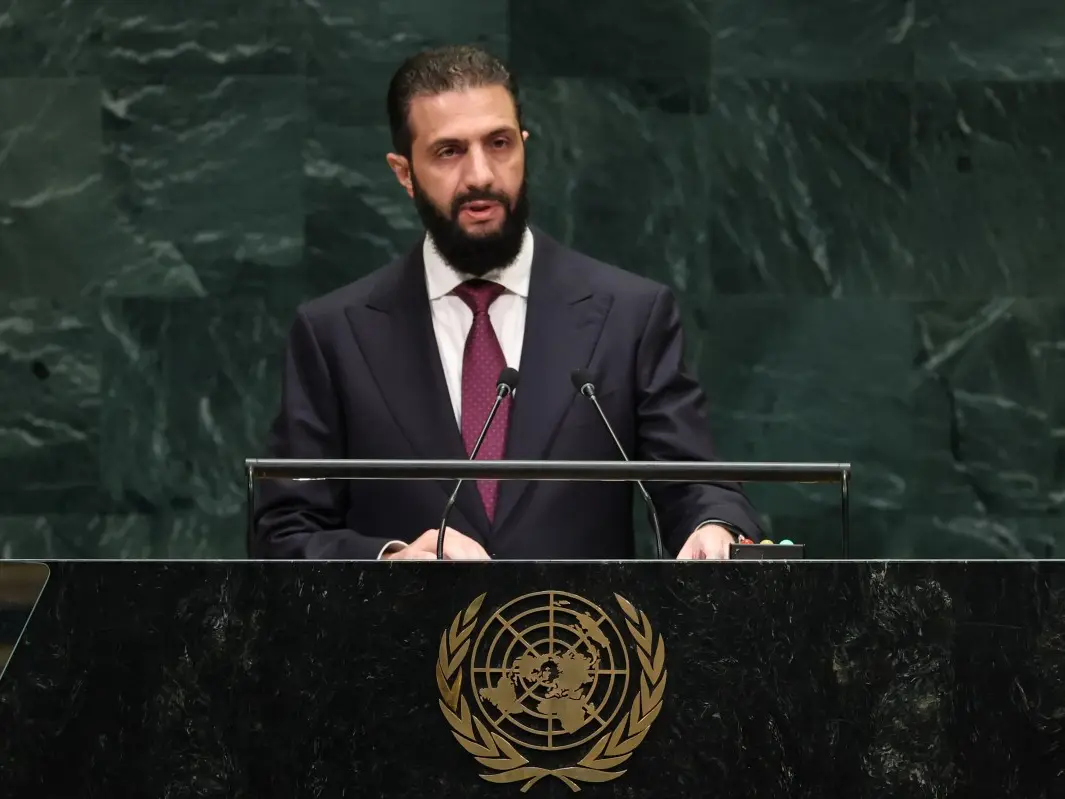
Syria's President Ahmed al-Sharaa speaks during the 81st United Nations General Assembly Photograph: (Credit: AFP)
Syrian President Ahmed al-Sharaa declared at the UN General Assembly that the Golan Heights "will remain Syrian." Here is a breakdown of his claims, the Trump exchange, and why the disputed plateau matters.
Syrian President Ahmed al-Sharaa told the UN General Assembly on Wednesday (Sep 23) that the Golan Heights will remain Syrian despite Israel's claims over the strategically important territory. He demanded that Israeli forces withdraw and warned that attempts to violate Syrian sovereignty would be stopped. Israeli Defence Minister Israel Katz rejected the remarks, saying the Golan under Israeli sovereignty is an inseparable part of the State of Israel forever.
Israel captured the Golan Heights from Syria in 1967 and annexed it in 1981. Al-Sharaa invoked UN Security Council Resolution 497, which declares Israel's 1981 decision to impose its laws and administration on the territory "null and void". The UN maintains that the plateau is Syrian territory under Israeli military occupation.
Recognition of Israel's claim remains rare. The US was the only country to recognise the annexation until Colombia's new government did so in August. Trump formally recognised Israeli sovereignty in 2019. Al-Sharaa said he told Trump directly that he had no right to do so. He also noted that 123 countries backed a UN General Assembly resolution on the occupied Syrian Golan in December 2025.
The plateau is small but strategic. Its elevation gives whoever holds it a commanding view over northern Israel and the road to Damascus, which lies roughly 60 km away. Mount Hermon at its northern edge offers valuable surveillance. The Golan also feeds water sources, including the Jordan River and the Sea of Galilee, and it supports agriculture and settlements. Israel says giving it up would leave its north exposed, while Syria sees its return as a matter of sovereignty and national pride.
Trending Stories
)
&im=FitAndFill=(700,400))
)
)
)
)
)
)
)
)
)
)
&im=FitAndFill=(700,400))
)
)
)
)
)
)
)
)
)
)
)
)
)
)
)
)
)
)
&im=FitAndFill=(700,400))
)
)
)
)
)
)
)
)
)
Also read: 'This is great': Trump hails Syria's push for alternative to Strait of Hormuz amid US-Iran war
Al-Sharaa said Israel has carried out around 500 air strikes, more than 1,200 incursions and 300 detentions in Syria since Bashar al-Assad's fall. He said Syria and Israel had held several rounds of direct talks, some facilitated by the US, and reached "almost 90% of agreements" before Israel pulled back or added new conditions. He said an opportunity for a just peace remains available. With Israel firm on sovereignty and Damascus refusing to concede, the Golan remains a central obstacle to any Syria-Israel settlement.

