

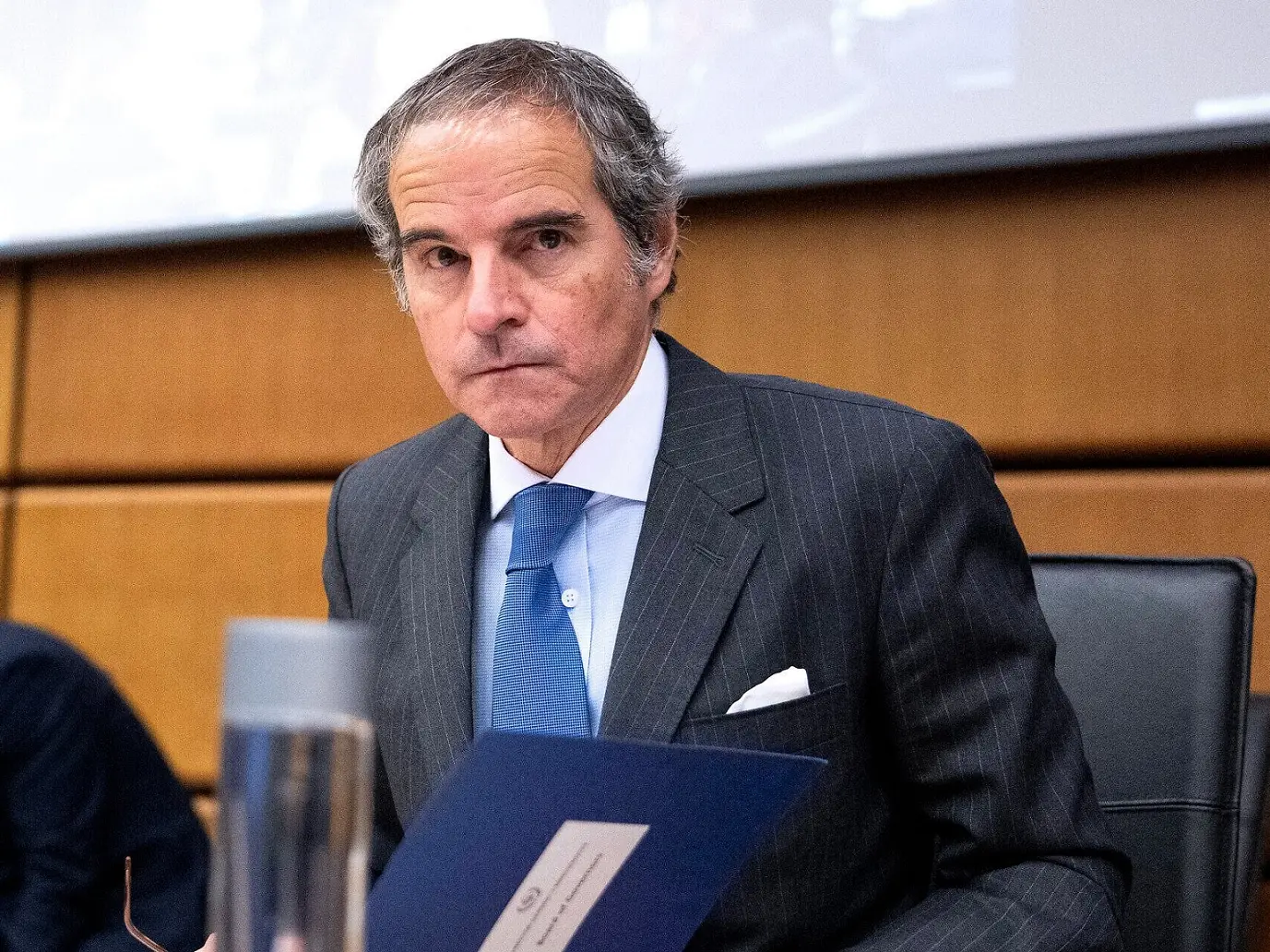
&imwidth=800&imheight=600&format=webp&quality=medium "‘Secret reactor in Syria could have been used for nuclear weapons,’ says IAEA after finding 73 tonnes of natural uranium")
A nuclear reactor built secretly during the rule of the toppled leader Bashar al-Assad in Syria would have been able to produce the needed fissile material for possible use in nuclear weapons, the chief of the UN nuclear watchdog has revealed.
Last month, inspectors from the International Atomic Energy Agency (IAEA) visited two sites, one in Deir ez-Zor and a second in an undisclosed location identified to them by Syrian authorities.
IAEA chief Rafael Grossi said on Monday it was “obvious that the previous government was pursuing a number of clandestine” activities. “They didn’t want the world to know what they were doing,” Grossi told reporters after opening the Vienna-based agency’s quarterly board of governors meeting.
“Given the configuration, the technical features of that type of reactor, this is a reactor that is very efficient in the production of fissile material that could be used directly for the fabrication of nuclear weapons,” he said, adding that building the reactor was a “very important step”.
Syria was running an undeclared nuclear programme under Assad
Trending Stories
&imwidth=180&imheight=135&format=webp&quality=medium)
Viral video shows cross falling on Colombia priest, no official confirmation | WATCH
&imwidth=180&imheight=135&format=webp&quality=medium)
Shikhar Mohan earns maiden India A call-up, replaces KL Rahul
&imwidth=180&imheight=135&format=webp&quality=medium)
AI slop or smart strategy? South African author Coral Hart defends Her 370 AI- assisted books in 20 months
&imwidth=180&imheight=135&format=webp&quality=medium)
Two BrahMos missiles on Tejas, triple the range and 100% indigenisation, says former BrahMos CEO
&imwidth=180&imheight=135&format=webp&quality=medium)
India-China face-off continues near Arunachal’s Taksing, reveals ITBP chief in first official confirmation of tensions
&imwidth=180&imheight=135&format=webp&quality=medium)
Ilhan Omar breaks silence over alleged marriage to her brother; Trump thinks it's 'really good answer'
&imwidth=180&imheight=135&format=webp&quality=medium)
WATCH: Trump demands Ilhan Omar removal from Congress for 'using fake name to be sworn in'. So what is her real name?
&imwidth=180&imheight=135&format=webp&quality=medium)
Netanyahu dials PM Modi, invites him and Capt Smit Machchhar to light torch on Israel’s Independence Day
&imwidth=180&imheight=135&format=webp&quality=medium)
Christa Pike's failed execution: Tennessee team struggled to insert IV lines, lawyer says
&imwidth=180&imheight=135&format=webp&quality=medium)
Did Neha Bora call for Bangladesh-like GenZ protest, 'anarchy' in India? WION Fact-checks viral claim
&imwidth=180&imheight=135&format=webp&quality=medium)
US midterms 2026: US Supreme Court allows New Hampshire to restrict student IDs for voting
&imwidth=180&imheight=135&format=webp&quality=medium)
A secret code, a midnight escape and 300 deaths: The Russian officer who turned on Putin
&imwidth=180&imheight=135&format=webp&quality=medium)
'Completely insane, never happened': Trump's son-in-law denies allegations of secret dealings with Saudi, UAE
&imwidth=180&imheight=135&format=webp&quality=medium)
Trump ordered to answer questions under oath in BBC defamation lawsuit by December 11
&imwidth=180&imheight=135&format=webp&quality=medium)
Putin says Russia is ready to resume Ukraine-US peace talks but rejects 'short ceasefire' amid deadly attacks
&imwidth=180&imheight=135&format=webp&quality=medium)
Horrific video shows the moment 18-year-old fell to her death from Mexico amusement park ride
&imwidth=180&imheight=135&format=webp&quality=medium)
From Agni-V to Project Kusha: How are India’s indigenous missile systems and defence shield reshaping modern warfare
&imwidth=180&imheight=135&format=webp&quality=medium)
'It's a crime not to see this scene': Tehran puts Trump 'behind bars'
&imwidth=180&imheight=135&format=webp&quality=medium)
Meghan Markle’s father Thomas under investigation over alleged child abuse images: Report
&imwidth=180&imheight=135&format=webp&quality=medium)
US midterms 2026: Viral video claims Lindsey Graham paid underage men for sex; clip released weeks before his sister's Senate race
&imwidth=180&imheight=135&format=webp&quality=medium)
SA vs AUS 2nd Test: Temba Bavuma reveals 'Tendulkar inspiration' behind career-best 179
&imwidth=180&imheight=135&format=webp&quality=medium)
China's dancing robot turns violent bodyguard, lifts cars and fights intruders - Watch
&imwidth=180&imheight=135&format=webp&quality=medium)
Watch: India rejects ‘imprecise and unsupported’ references in UN migrant rights report
&imwidth=180&imheight=135&format=webp&quality=medium)
US to get 850 F-35 stealth fighter jets under 10-year Pentagon-Lockheed deal
&imwidth=180&imheight=135&format=webp&quality=medium)
GRAVITAS | Putin fires nuclear-capable hypersonic missiles, Zelensky ready to surrender 25% territory
&im=FitAndFill=(700,400)&imwidth=180&imheight=135&format=webp&quality=medium)
New Friday OTT releases (October 23, 2026): Gajab Raat, Dorothy, Chaar Yaar- Watch these 6 new movies and TV shows on Netflix, Prime Video and more
&im=FitAndFill=(700,400)&imwidth=180&imheight=135&format=webp&quality=medium)
Serbia elections: Nearly 150,000 people take to streets in massive rally against Aleksandar Vucic | In pics
&imwidth=180&imheight=135&format=webp&quality=medium)
BCCI’s CoE cautious over Hardik Pandya’s fitness, sets expected comeback timeline
&imwidth=180&imheight=135&format=webp&quality=medium)
'This is despicable': Amy Acton hits back at Vivek Ramaswamy over Ohio campaign ad featuring her estranged mother
&imwidth=180&imheight=135&format=webp&quality=medium)
First Lady Melania Trump secures ceasefire between Russia, Ukraine in Oleshky: White House
&imwidth=180&imheight=135&format=webp&quality=medium)
Finance influencer dies by suicide in Chennai; father accuses tech CEO, who denies charge
&imwidth=180&imheight=135&format=webp&quality=medium)
'Vivek should keep it up': Trump defends Ramaswamy's controversial campaign ad targeting Amy Acton
&imwidth=180&imheight=135&format=webp&quality=medium)
One man, 8 months of work, and a river dirty again: Why Bittu Tabahi may quit
&imwidth=180&imheight=135&format=webp&quality=medium)
450 villagers in UP rush to take anti-rabies shots after consuming 'charnamrit'
&imwidth=180&imheight=135&format=webp&quality=medium)
US midterms 2026: Elon Musk’s political spending hits $445 million as Republicans battle to retain Senate control
&imwidth=180&imheight=135&format=webp&quality=medium)
ENG vs SL: Harry Brook breaks Shubman Gill’s record for fastest ODI double century
&imwidth=180&imheight=135&format=webp&quality=medium)
Jenna Ortega plans TV break after Wednesday: ‘I want to leave time for new things’
The revelation proves that Syria was running an extensive undeclared nuclear programme under Assad that included a nuclear reactor built by North Korea in the eastern Deir ez-Zor province.
After Assad was ousted in December 2024, the new government agreed to give IAEA inspectors access to suspected former nuclear sites.
During a visit to Syria in August, IAEA inspectors confirmed that “the cooling infrastructure which has now been uncovered is consistent with that of a nuclear reactor”.
Grossi and a team of senior inspectors also visited a previously undeclared site in the country.
‘IAEA finds 73 tonnes of natural uranium metal at site’
In 2018, Israel admitted carrying out a top-secret air raid on the site 11 years earlier.
Much earlier, in 2008, less than a year after the Israeli strike, US officials had accused Syria of having sought to build a secret nuclear reactor and acknowledged that Israel had destroyed it in the raid.
Syria notified the agency of the site’s existence in a 17 July letter and invited the IAEA “to cooperate with the Syrian authorities in the inspection and verification of the site and of any nuclear material to be potentially found”.
In its confidential report circulated to member states last Tuesday, the IAEA said that this new site contained “natural uranium metal in the form of fuel rods with cladding”. The agency verified the material and confirmed “the presence of around 73 tonnes of natural uranium metal”.
Grossi said that when the inspectors visited the site in August, they had to “tear down walls” and go through “very difficult and narrow passages” to reach the nuclear material that had been hidden. The site had boxes scattered all over the place, he said.
Syrian govt to decide whether to retain nuclear mterial
“The important thing is that this material now is under safeguards” of the IAEA, Grossi said, adding that agency inspectors had managed to install cameras at the location.
Asked if the nuclear material would remain in Syria or be removed, Grossi said this was “a matter that the Syrian government will have to decide”.
“We are not requesting them to do this or to do that. For us what’s important is that we know all the time where this [material] is until the last gram,” he added.
Also Read: Energy and food security: Biggest combined population and GDP, and the two big challenges for BRICS
Logan Mintz, a director for nuclear materials security at the Washington-based Nuclear Threat Initiative, said once deemed safe to move, the material could be “transported in certified containers” to a third country that could “safely and securely disposition it into a more chemically stable and more widely used form” for possible use in nuclear power plants.

