

&imwidth=800&imheight=600&format=webp&quality=medium "'This is great': Trump hails Syria's push for alternative to Strait of Hormuz amid US-Iran war")
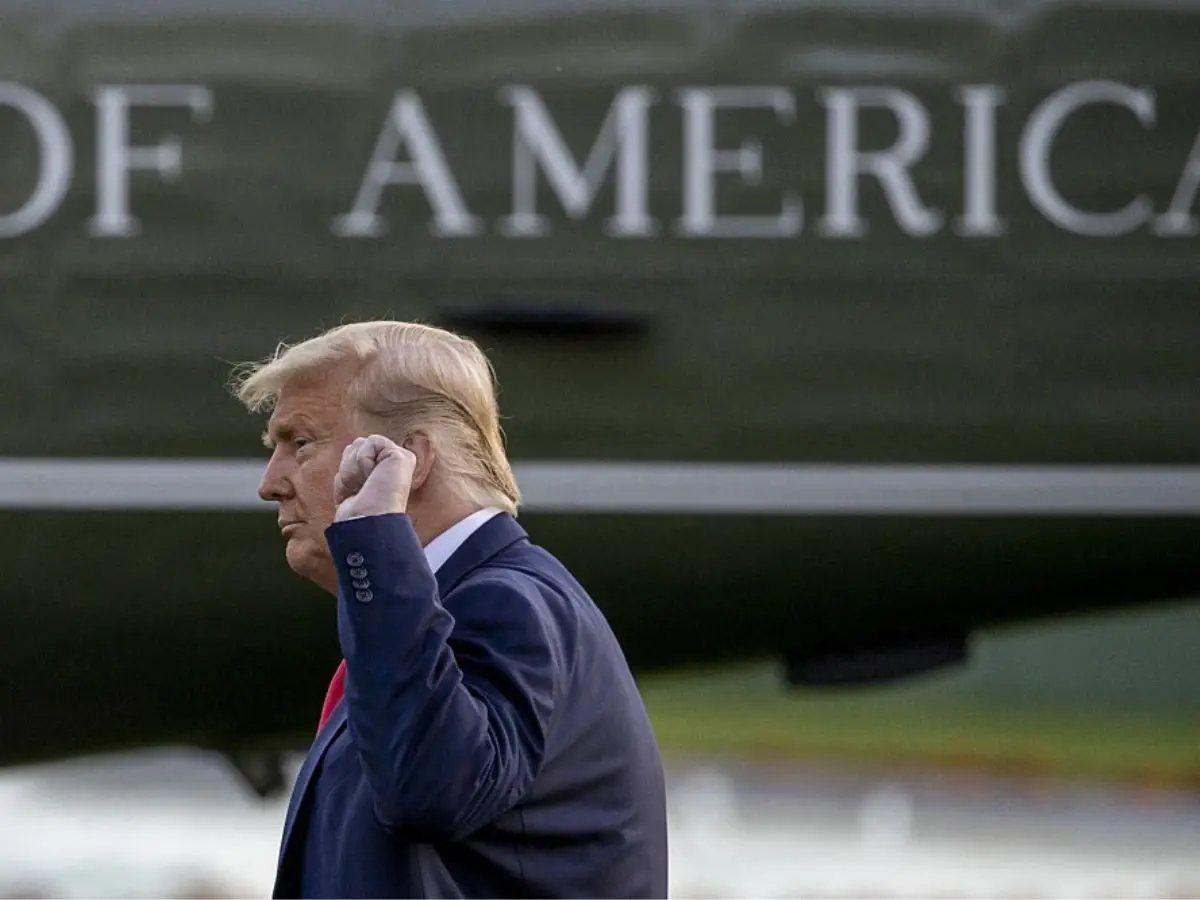
US President Donald Trump has backed Syria’s proposal to emerge as an alternative transit corridor to the strategically vital Strait of Hormuz amid the ongoing US-Iran war, calling the idea “GREAT!” Trump’s response came after a recent media report highlighted Syria’s efforts to position itself as a new overland route for the movement of oil and other goods, potentially reducing dependence on the Strait of Hormuz. The development comes as tensions surrounding the key maritime chokepoint continue to escalate. The Strait of Hormuz is one of the world’s most important energy corridors, and the ongoing conflict between Washington and Tehran has intensified concerns over the security and continuity of maritime shipments through the waterway.
Syria’s overland route
According to a report by The Washington Post, Syria’s push began in April with a trial run involving trucks transporting supplies between refineries in southern Iraq and the Syrian port of Baniyas on the Mediterranean coast. The overland route gained momentum following the joint US-Israeli strikes on Iran on February 28, which triggered a conflict that has now entered its sixth month. As the war intensified, Tehran tightened its control over maritime traffic through the Strait of Hormuz.
Syria, under President Ahmed al-Sharaa, is now seeking to use its Mediterranean coastline and links to European markets to establish itself as an alternative route for energy and commercial shipments. The proposal would effectively position Baniyas as a gateway connecting Iraq’s oil-producing regions with Mediterranean shipping routes and, ultimately, European markets.
Also Read: Nobel laureate Machado says Venezuela’s ‘illegitimate’ regime has no right to strike US oil deal
Pipeline plans gain momentum
The Syrian proposal is not limited to trucking. The Trump administration has also endorsed a Chevron-led pipeline project aimed at creating a major alternative energy route between Iraq and Syria. The proposed pipeline would transport up to 2 million barrels of crude oil per day between Basra in Iraq and Baniyas on Syria’s Mediterranean coast.
The planned infrastructure, however, will not be available immediately. The project is expected to take at least two and a half years to complete.
With an estimated cost of $5.7 billion and a length of around 1,000 miles, the pipeline would represent a major investment in regional energy infrastructure. While the proposed route would not have the capacity to completely replace tanker traffic through the Strait of Hormuz, it could provide another option for moving crude and diversify energy supply routes.
Why the Strait of Hormuz matters
The Strait of Hormuz remains a critical artery for global energy markets, linking the Persian Gulf with the Gulf of Oman and the Arabian Sea. Any prolonged disruption to the waterway could have significant consequences for oil supplies, shipping costs and global energy prices. Against that backdrop, Syria’s push to establish an alternative corridor has attracted interest from foreign governments and major energy companies.
Trending Stories
&imwidth=180&imheight=135&format=webp&quality=medium)
Brendan Taylor overtakes Andy Flower to become Zimbabwe’s leading ODI run-scorer
&imwidth=180&imheight=135&format=webp&quality=medium)
No Kings' Instagram suspended during early-voting campaign
&imwidth=180&imheight=135&format=webp&quality=medium)
'Those who have destroyed must pay': Macron says France feels 'anger and shame' over protest violence
&imwidth=180&imheight=135&format=webp&quality=medium)
Researchers name newly discovered Andean plant after Argentina legend Lionel Messi
&imwidth=180&imheight=135&format=webp&quality=medium)
Lawrence Bishnoi gang claims responsibility for firing at Tiger Shroff over ties to Salman Khan
&imwidth=180&imheight=135&format=webp&quality=medium)
Flying car race: Alef Aeronautics welcomes Tesla Roadster '11 years' later, but are the two models the same?
&imwidth=180&imheight=135&format=webp&quality=medium)
Tiger Shroff shows injuries after Juhu firing incident; Eknath Shinde says Mumbai won’t tolerate gang wars
&imwidth=180&imheight=135&format=webp&quality=medium)
Saudi Arabia asks skyscraper employees to work from home amid Houthi threats
&imwidth=180&imheight=135&format=webp&quality=medium)
Lizard people? Ex-US Army sniper claims soldier killed by 'reptilian beings' in battle near Area 51
&imwidth=180&imheight=135&format=webp&quality=medium)
NFl 2026/27 - Saints vs Steelers to go ahead in Paris next week despite protest
&imwidth=180&imheight=135&format=webp&quality=medium)
4 killed, 19 critically injured in grass fire at Canada's largest military base
&imwidth=180&imheight=135&format=webp&quality=medium)
Nobel laureate Machado, who dedicated prize to Trump, confirmed as Venezuela opposition leader
&imwidth=180&imheight=135&format=webp&quality=medium)
After Kennedy Center and reflecting pool disputes, Trump turns to Washington golf course plan amid legal battle
&imwidth=180&imheight=135&format=webp&quality=medium)
Why France looks the most fragile in the G7 amid protests and budget deadlock
&imwidth=180&imheight=135&format=webp&quality=medium)
China responds to Trump's Press Secretary Katie Zacharia after toilet remark: 'Visit China more often'
&imwidth=180&imheight=135&format=webp&quality=medium)
Cattle feed found in biscuits of Indian company, FSSAI sends legal notice
&imwidth=180&imheight=135&format=webp&quality=medium)
Anthropic’s public benefit plan: What its 5% share commitment means for AI’s future
&imwidth=180&imheight=135&format=webp&quality=medium)
Pujara says 'Samson and Vaibhav cannot be in Playing XI' for India on NZ tour
&imwidth=180&imheight=135&format=webp&quality=medium)
MI5 is opening an AI threat centre, and OpenAI just told MPs the worst isn't over
&imwidth=180&imheight=135&format=webp&quality=medium)
WATCH | iPhones, luxury perfumes floating in Hormuz? Iranian fishermen make bizarre discovery
&imwidth=180&imheight=135&format=webp&quality=medium)
Elon Musk features on Lucknow's 'anti-India' Ravan poster alongside Rahul Gandhi, Akhilesh
&im=FitAndFill=(700,400)&imwidth=180&imheight=135&format=webp&quality=medium)
New OTT releases this week (October 19-25, 2026): Gajab Raat to Chaar Yaar-8 titles to watch during Dussehra week on Netflix, Prime Video and more
&imwidth=180&imheight=135&format=webp&quality=medium)
Kylie Jenner makes Victoria’s Secret debut in $50 million diamond-encrusted design as Timothée Chalamet cheers
&imwidth=180&imheight=135&format=webp&quality=medium)
Putin wants joint meeting with Trump-Xi summit on Ukraine war, proposes talks alongside APEC: Report
&imwidth=180&imheight=135&format=webp&quality=medium)
No Ravindra Jadeja, Yashasvi Jaiswal in India’s 2027 ODI World Cup plans: Report
&imwidth=180&imheight=135&format=webp&quality=medium)
India moves to buy 10,000 more AI chips for a national compute pool open to startups
&imwidth=180&imheight=135&format=webp&quality=medium)
Tiger Shroff attacked by three gunmen in Mumbai, actor safe, two injured
&imwidth=180&imheight=135&format=webp&quality=medium)
Anirudh Ravichander-Kavya Maran wedding: Telangana CM reveals Chennai reception date
&im=FitAndFill=(700,400)&imwidth=180&imheight=135&format=webp&quality=medium)
Tesla Roadster engineering: The hidden hardware behind its flying demonstration
&imwidth=180&imheight=135&format=webp&quality=medium)
US to review Russia sanctions waiver within 60 days as Rubio cites India’s ‘substantial’ Russian energy imports
&imwidth=180&imheight=135&format=webp&quality=medium)
'We feel like Mr India': Gujarat’s undercover SHE team guard garba nights at Navratri
&imwidth=180&imheight=135&format=webp&quality=medium)
Cattle-feed bran in biscuits, detergent in milk: FSSAI acts against 3 companies
&im=FitAndFill=(700,400)&imwidth=180&imheight=135&format=webp&quality=medium)
5 technologies that could make the Tesla Roadster one of the most unusual cars ever built
&imwidth=180&imheight=135&format=webp&quality=medium)
'It's a joy to see the makers bring it on such a grand scale': SS Rajamouli on Ramayana
&imwidth=180&imheight=135&format=webp&quality=medium)
Priest dies after crucifix falls on his head during livestreamed Mass in Ecuador | VIDEO
If the proposed pipeline and associated infrastructure are completed, Baniyas could gain greater importance as a Mediterranean energy hub, giving Iraq an additional export route and potentially reducing the region’s reliance on maritime traffic through Hormuz. For Washington, the project could also support a broader effort to diversify energy transit routes amid heightened tensions with Tehran.

