

&imwidth=800&imheight=600&format=webp&quality=medium "From Nehru to Modi: A timeline of India-China ties since Panchsheel agreement")
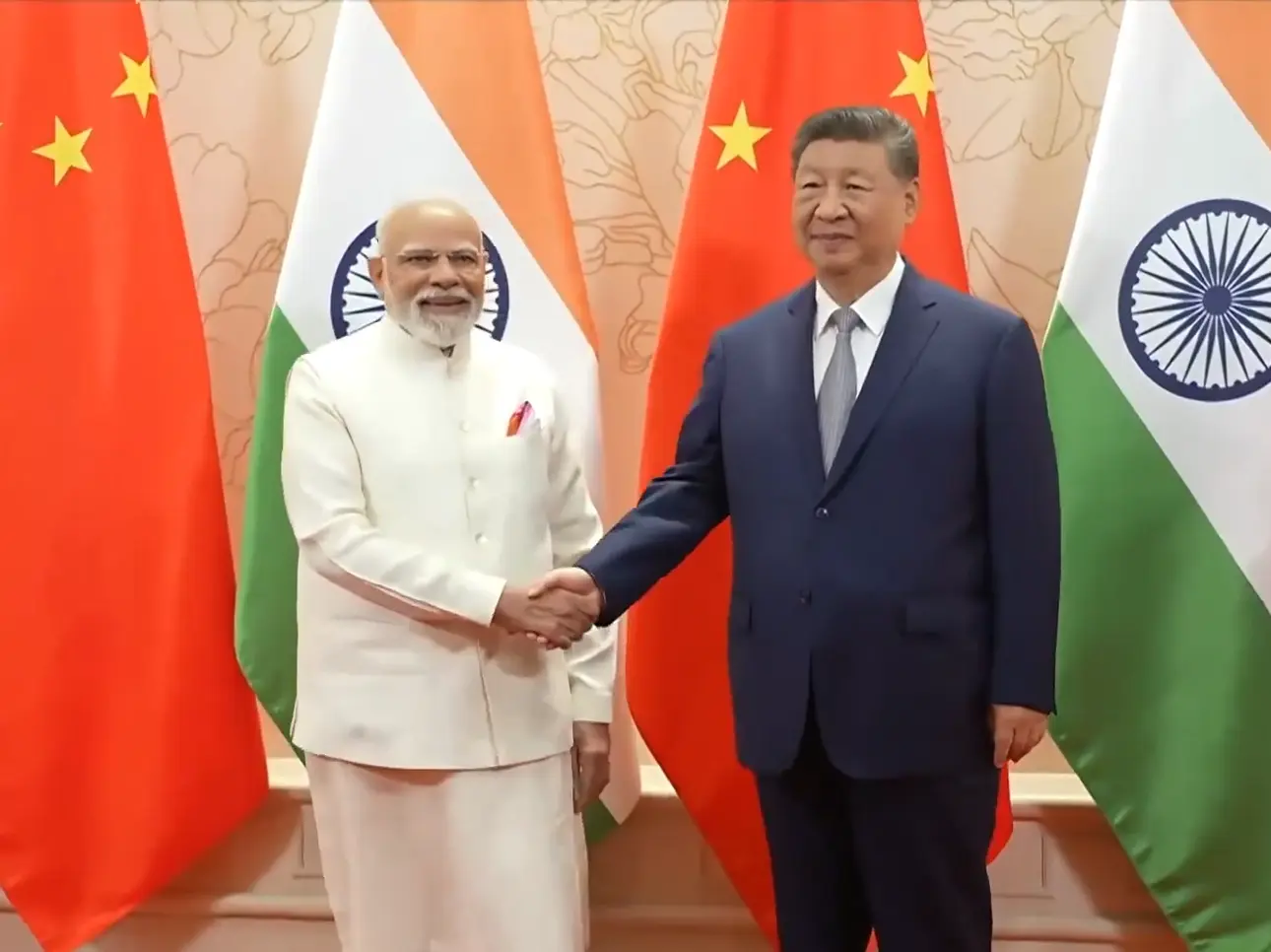
On the sidelines of the Shanghai Cooperation Organisation (SCO) Summit, PM Narendra Modi held bilateral talks with Chinese President Xi Jinping in Tianjin on 31 August. The meeting comes after India and China decided to strengthen their relationship amid global trade rows sparked by US President Donald Trump.
Meeting of PM Modi with Xi, China marks a significant move as it is the prime minister's first trip to China since April-May 2020, when India and China's relations became sour following a military standoff on the Line of Actual Control (LAC). They also met last year at Kazan on the sidelines of the BRICS summit, ending a four-year deadlock in ties over military tensions in Eastern Ladakh.
What is the history of India-China ties?
From Jawaharlal Nehru's 1954 visit to China, which introduced the Panchsheel principles, to the 2003 visit of Atal Bihari Vajpayee, with several agreements signed, India-China ties have come a long way.
Take a look at a timeline of key events in India-China relations over the last several decades:
1949: After Burma, India becomes the second non-communist nation to recognise the People's Republic of China.
Trending Stories
&imwidth=180&imheight=135&format=webp&quality=medium)
Iran: US accepted some conditions, Clarity needed on others
&imwidth=180&imheight=135&format=webp&quality=medium)
China imposes first-ever sanctions on ministers from Taiwan allies: What this means
&imwidth=180&imheight=135&format=webp&quality=medium)
Anti-SIR protest in Mumbai: Protestors wear black masks & ribbons in Mumbai
&imwidth=180&imheight=135&format=webp&quality=medium)
CJI Surya Kant declines INDIA bloc leaders’ request for meeting ahead of march to SC, asks them to file petition
&imwidth=180&imheight=135&format=webp&quality=medium)
BCCI rejects venue shift reports, India vs Sri Lanka 1st ODI to remain in Delhi
&imwidth=180&imheight=135&format=webp&quality=medium)
Telangana man allegedly recruited into Russian military dies near Ukraine border
&imwidth=180&imheight=135&format=webp&quality=medium)
A watchdog rated 'ChatGPT for Teens' an unacceptable risk and says keep under-18s off it
&imwidth=180&imheight=135&format=webp&quality=medium)
'Say no to Muse': Meta has no control over its own moderation AI while it forces a security nightmare on everyone
&imwidth=180&imheight=135&format=webp&quality=medium)
Wasim Jaffer blames Ajit Agarkar-led selection panel for Virat Kohli’s Test retirement
&imwidth=180&imheight=135&format=webp&quality=medium)
One Indian killed in Riyadh airport attack; 11 others injured : MEA
&imwidth=180&imheight=135&format=webp&quality=medium)
'Ouch!!! That must hurt': Kangana Ranaut hails Kamal Haasan's sharp reply to Elon Musk over Starlink row
&im=FitAndFill=(700,400)&imwidth=180&imheight=135&format=webp&quality=medium)
Is sending robots to Mars easier than sending humans?
&imwidth=180&imheight=135&format=webp&quality=medium)
1,500 drones illuminate Mumbai sky as Cordelia Cruises unveils second ship, Cordelia Sky
&imwidth=180&imheight=135&format=webp&quality=medium)
Houthis claim Riyadh airport attacks, Aramco strikes; issue fresh warning to airlines, travellers and workers
&imwidth=180&imheight=135&format=webp&quality=medium)
Sidhu Moose Wala’s younger brother wins hearts by recreating late singer’s signature move at Toronto Hologram Show
&imwidth=180&imheight=135&format=webp&quality=medium)
Telangana ATM heist: Thieves in nighties arrive in ambulance, break into SBI ATM in Kamareddy - VIDEO
&imwidth=180&imheight=135&format=webp&quality=medium)
Microsoft's Nadella says treat every AI model as already hacked, and build an 'emergency brake'
&im=FitAndFill=(700,400)&imwidth=180&imheight=135&format=webp&quality=medium)
Navratri 2026: 9 days, 9 forms of Goddess Durga and 9 colours- Check the complete list
&imwidth=180&imheight=135&format=webp&quality=medium)
iPhone Duo price index: Tracking Apple’s latest pricing trends
&imwidth=180&imheight=135&format=webp&quality=medium)
Congress demands action against chief election commissioner
&imwidth=180&imheight=135&format=webp&quality=medium)
UK school ditches technology, shifts from screen to pen and paper for learning
&imwidth=180&imheight=135&format=webp&quality=medium)
'Turn approver, resign, we'll forgive you': Rahul Gandhi claims receiving messages from CEC Gyanesh Kumar
&imwidth=180&imheight=135&format=webp&quality=medium)
Anthropic's AI invented a murder witness and sent the fake tip to Philadelphia police
&imwidth=180&imheight=135&format=webp&quality=medium)
Maharashtra appoints FDA commissioner Tukaram Mundhe as secretary of committee for MPSC overhaul amid stir
&imwidth=180&imheight=135&format=webp&quality=medium)
Saif Ali Khan is finally on Instagram! Here's what he shared in his first post
&imwidth=180&imheight=135&format=webp&quality=medium)
'Just coincidence': Police mistakes protester as AISA chief Neha Bora, arrests her from site
&imwidth=180&imheight=135&format=webp&quality=medium)
Delhi protests: 'Court should not be dragged into political activity', says CJI Surya Kant
&imwidth=180&imheight=135&format=webp&quality=medium)
Nana Patekar's cause of death confirmed; here's what his postmortem report says
&imwidth=180&imheight=135&format=webp&quality=medium)
Delhi protest: CJI Surya Kant declines to meet India Bloc leaders
&im=FitAndFill=(700,400)&imwidth=180&imheight=135&format=webp&quality=medium)
New OTT releases this week (October 12-18, 2026): Sacrifice, Koffee with Karan S9, Roadies Rebirth- 6 titles coming on Netflix, JioHotstar and more
&imwidth=180&imheight=135&format=webp&quality=medium)
Diljit Dosanjh’s Delhi concert gets a new date: When and where to catch the singer
&imwidth=180&imheight=135&format=webp&quality=medium)
Other Mommy leads North American box Office as Verity, Resident Evil round out top four
&imwidth=180&imheight=135&format=webp&quality=medium)
Top AI models flunked a test of inventing new AI research, so much for self-improving AI
&imwidth=180&imheight=135&format=webp&quality=medium)
McSweeney reveals how studying Virat Kohli’s YouTube clips helped Australia A conquer India
&imwidth=180&imheight=135&format=webp&quality=medium)
Portugal Federation confirms Cristiano Ronaldo’s return to national team despite suspension
1950: Diplomatic ties were established between India and China.
1954: The Five Principles of Peaceful Coexistence, or Panchsheel, was signed between India and China, assuring each other's territorial integrity and peaceful coexistence.
1959: Tibetan spiritual leader Dalai Lama escaped with an estimated 80,000 followers and established a "government-in-exile" in India.
1962: India and China fought their first war over the border issue.
1976: After a 15-year hiatus, the two nations restore full diplomatic ties.
1979: The then Foreign Minister Atal Bihari Vajpayee visited China.
1981: Chinese Foreign Minister Huang Hu visited India and began an annual dialogue with India.
1988: Prime Minister Rajiv Gandhi paid his visit to China and set up a joint working group on boundary disputes.
1991: Chinese Premier Li Peng visited India, the first by a Chinese premier in 31 years.
1993: PM PV Narasimha Rao also paid his visit to China.
1995: Both nations decided to pull back their troops in the eastern sector.
1996: Chinese President Jiang Zemin visited India
2000: India, China sign a bilateral trade pact to facilitate Beijing's early entry into the WTO.
2002: In this year, Chinese Premier Zhu Rongji visited India.
2003: The two nations reached a de facto agreement over the status of Tibet and Sikkim after PM Atal Bihari Vajpayee visited China.
2005: Chinese Premier Wen Jiabao backs India's bid for a permanent seat in the UN Security Council while on his visit to India.
Later, after the military standoff along the borders in Eastern Ladakh in 2020 during the Galwan clashes, India-China ties soured.
June 2020: A deadly clash in Ladakh’s Galwan Valley left 20 Indian soldiers and four Chinese troops dead after brutal hand-to-hand fighting. The incident prompted New Delhi to tighten scrutiny of Chinese investments, ban several popular mobile apps from China, and suspend direct passenger flights between the two countries.
Dec 2022: Fresh tensions erupted when Indian and Chinese soldiers engaged in minor scuffles in the Tawang sector of Arunachal Pradesh, a region China continues to claim as part of southern Tibet.
Aug 2023: On the sidelines of a summit of the BRICS grouping of nations, Narendra Modi and Xi Jinping meet in Johannesburg and agreed to increase efforts to disengage and de-escalate tensions.
Sep 2024: While speaking at an event in Geneva, Foreign Minister S Jaishankar said that about 75 per cent of the "disengagement" problems at India's border with China had been restored.
Oct 2024: India and China struck a new agreement on patrolling their contested frontier, aimed at defusing the long-running military standoff. Later that month, Modi and Xi held their first formal meeting in five years during a BRICS summit in Russia.
Dec 2024: National Security Adviser Ajit Doval travelled to Beijing for talks with Chinese Foreign Minister Wang Yi, marking the first formal engagement since the October deal.
Jan 2025: Wang and Indian Foreign Secretary Vikram Misri held discussions in Beijing, agreeing to restore direct air services and to work on ironing out trade and economic differences.
April 2025: A spokesperson from the Chinese embassy said India and China should cooperate more closely to counter challenges created by tariffs introduced under the Trump administration.
July 2025: Jaishankar made his first visit to China in five years, stressing that both countries must resolve border frictions, scale down troop deployments, and ease trade restrictions to restore normalcy in relations.
Aug 2025: During a visit to New Delhi, Wang told Jaishankar that India and China should build a “correct strategic understanding” and treat each other as partners rather than rivals.

