
&imwidth=800&imheight=600&format=webp&quality=medium "Faking the front line: How artificial intelligence is overriding war perceptions")
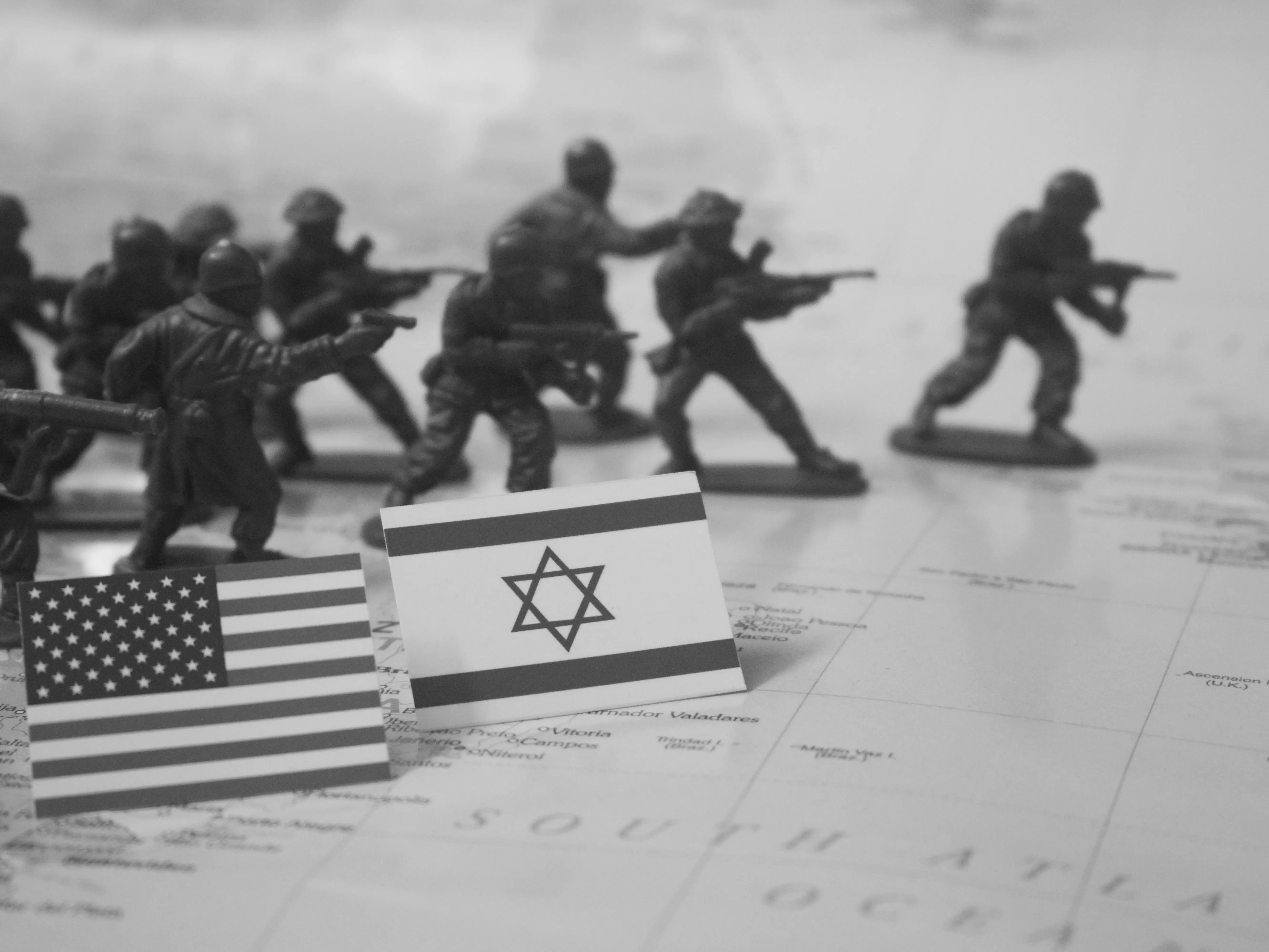
The video was ten seconds long. It showed Tel Aviv's skyline convulsing under missile fire, towers disappearing into smoke, sirens tearing across a city already half-destroyed. The captions said Iranian ballistic missiles had overwhelmed Israel’s air defences. Within hours, it had millions of views. One major Indian newspaper published it as fact. It was entirely fabricated. That was March 2026. But the machinery behind it had been running for over a year. A review of documented cases by several international news agencies and a range of fact-checking organisations across three war zones has identified more than twelve incidents between January 2025 and March 2026 in which AI-generated video was used to reshape public understanding of active conflicts, in Gaza, Ukraine and the Iran-Israel theatre.
The same playbook, three war zones
The method is consistent. A synthetic clip, often posted openly on a TikTok or Instagram account that labels its content as AI-generated, gets stripped of that label, fitted with a breaking-news caption timed to a real event, and released. By the time a fact-checker responds, the damage is done.

Gaza
In Gaza, a dramatic explosion video captioned as an Israeli air strike on civilians was traced by The Real Fact Hunter to a TikTok account called @everythingai97, which had clearly marked the clip as AI-generated. An October 2025 video of a so-called Gaza Martyrs Museum, complete with statues of well-known victims, was tracked by Misbar to an Instagram account that openly identifies as an AI content creator. In December, two separate clips of children and tents submerged in floodwater went viral as humanitarian evidence. AFP Fact Check found one scored 99.9 percent on AI-detection platform Hive Moderation.
Ukraine-Russia
Trending Stories
)
‘We’ve never gotten along better’: Trump praises Xi, jokes about White House ballroom at high-stakes state dinner
)
Park Ji Hyun makes history as first Korean actress nominated for International Emmy
)
Myanmar training camp case: US national, 6 Ukrainians allowed to meet their families abroad
)
What’s in a name? Trump’s 'Lake America' move gets a tit-for-tat response from Canada
)
Bias or safety concerns? Bengaluru CEO says firm will not hire men from UP, Bihar, Rajasthan, MP. Here's why
)
Israeli envoy to US Yechiel Leiter’s son critically injured in West Bank ramming attack
Don't Be Shy movie review: A frothy coming-of-age tale that is too shy to experiment
)
'FIRST LOOK from inside Noah’s Ark': Researchers share video from inside mysterious mound in Turkey
)
OpenAI is building AI to fight cyber threats: What GPT-6 Cyber means for security
)
CNN, Politico and MS NOW back in White House after judge blocks Trump’s media ban
)
UNGA 2026: Israeli PM attacks Britain, France for past colonialism
)
Susan Sarandon and Hannah Einbinder detained by NYPD outside UN Headquarters
)
Yemen called Trump for US military support in fight against Houthis: Official
)
‘Not just a local tragedy’: Nepal PM Shah warns UN of growing climate threat, says Nepal floods were 'a warning to the world'
)
Air India pilot suspended after failing pre-flight alcohol test on Zurich-Delhi route
)
WION Iconic Tourism Summit 2026: Union Minister Shekhawat on 'experiential travel', peace diplomacy
)
Outrage erupts after 3-year-old is married to 60-year-old man in Pakistan, link to her sister's murder being probed
)
WATCH: Pak PM Shehbaz Sharif refuses to answer on Hafeez Sayeed, walks away
)
China to test supersonic jet that moves at Mach 2, double the speed of sound
)
'What kind of confession is this?': Pakistan PM Shehbaz Sharif’s 'terrorists would be roaming New York' remark goes viral, raises alarm online. Watch
&im=FitAndFill=(700,400))
Netanyahu at UN: Mass walkout, attack on Mamdani and Iran threats | In Pics
)
'Blockbuster' nor'easter develops an eye similar to hurricanes as warnings are issued
)
West Indies coach Sammy looking at India series as opportunity to finetune ahead of ODI World Cup 2027 qualifiers
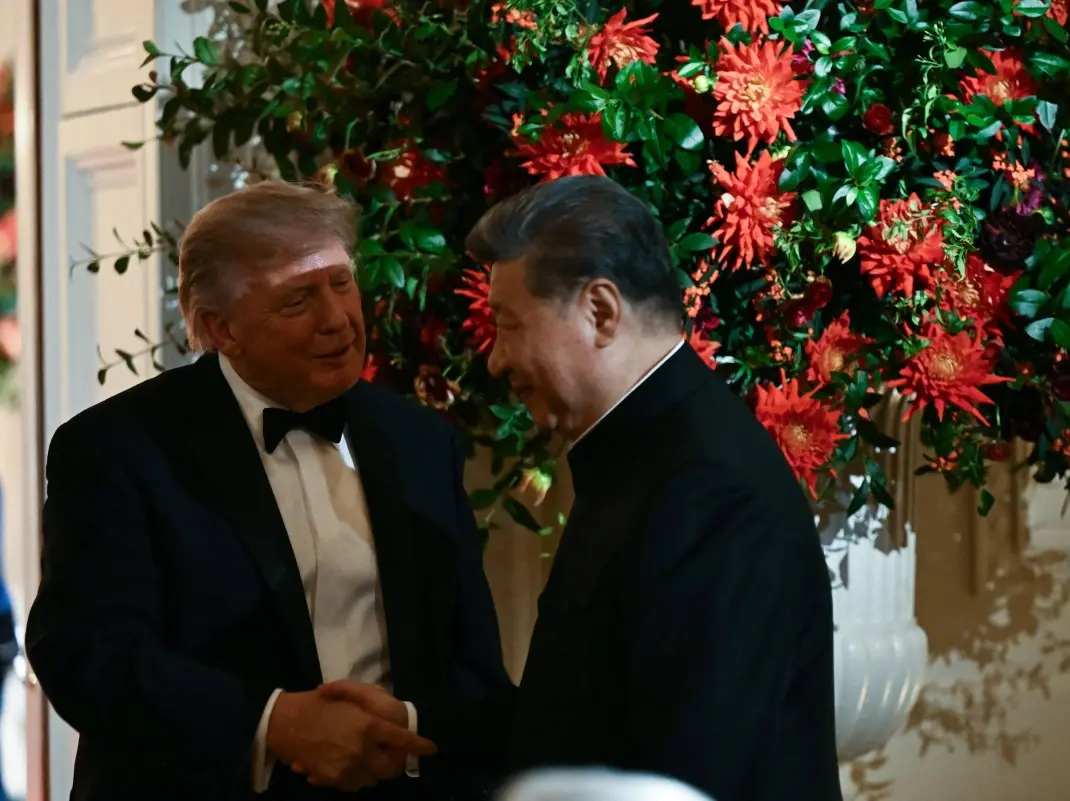)
'Making history': Xi Jinping praises Trump as US-China leaders dine at White House
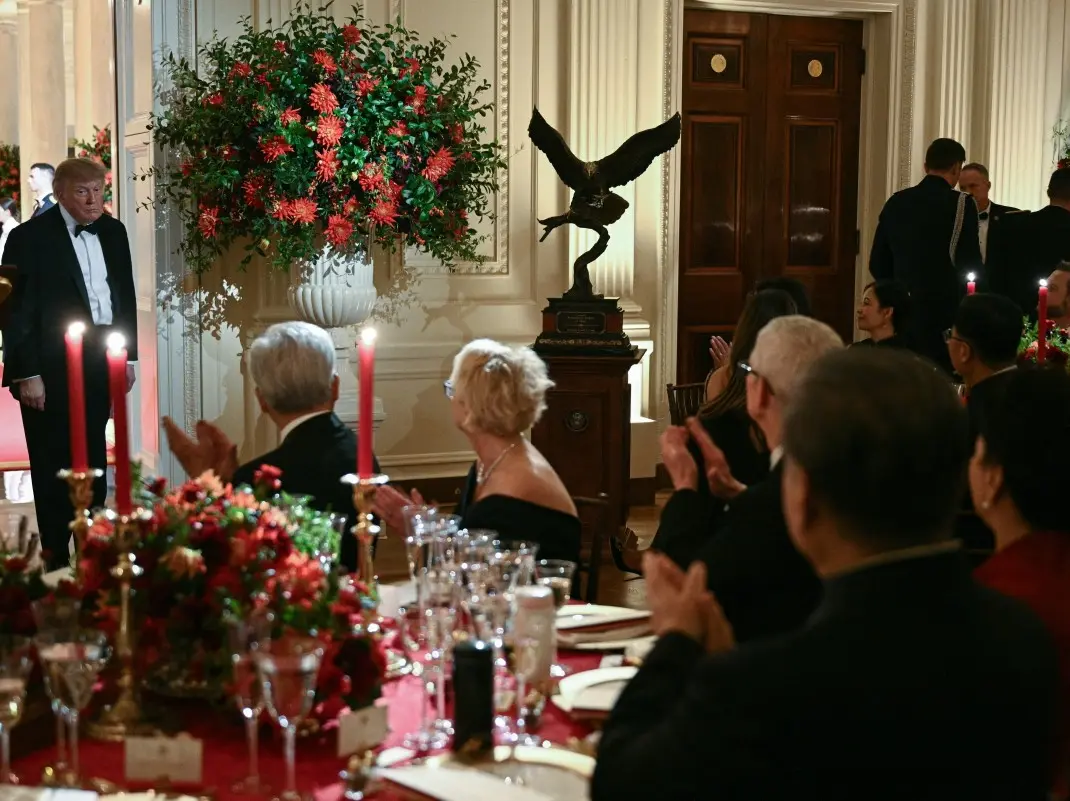)
Trump gifts Xi a bald eagle sculpture at White House dinner: Here’s what it symbolises
)
Xi Jinping's 'special plane' vs Trump's Air Force One: What's the difference?
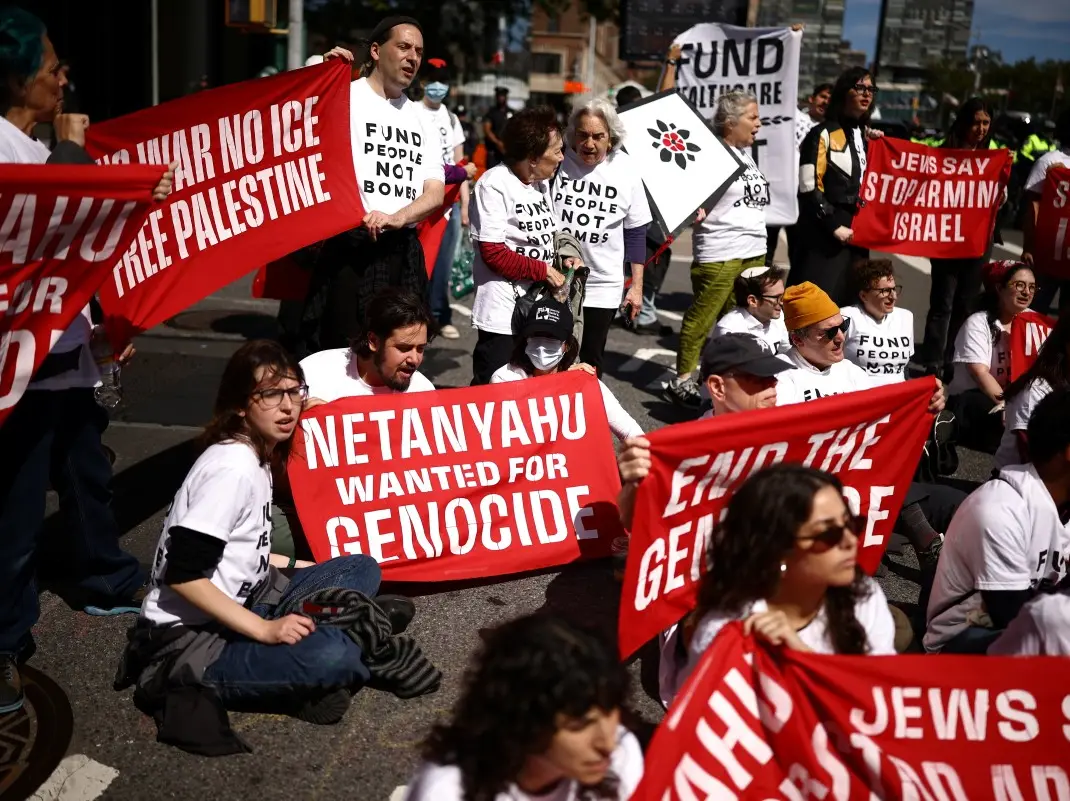)
'Fund people, not bombs': Hundreds take to New York streets as Netanyahu delivers speech at UN; dozens arrested
)
US faces fresh cost crunch as mortgage rates hit 7%, oil tops $107 and gas prices surge
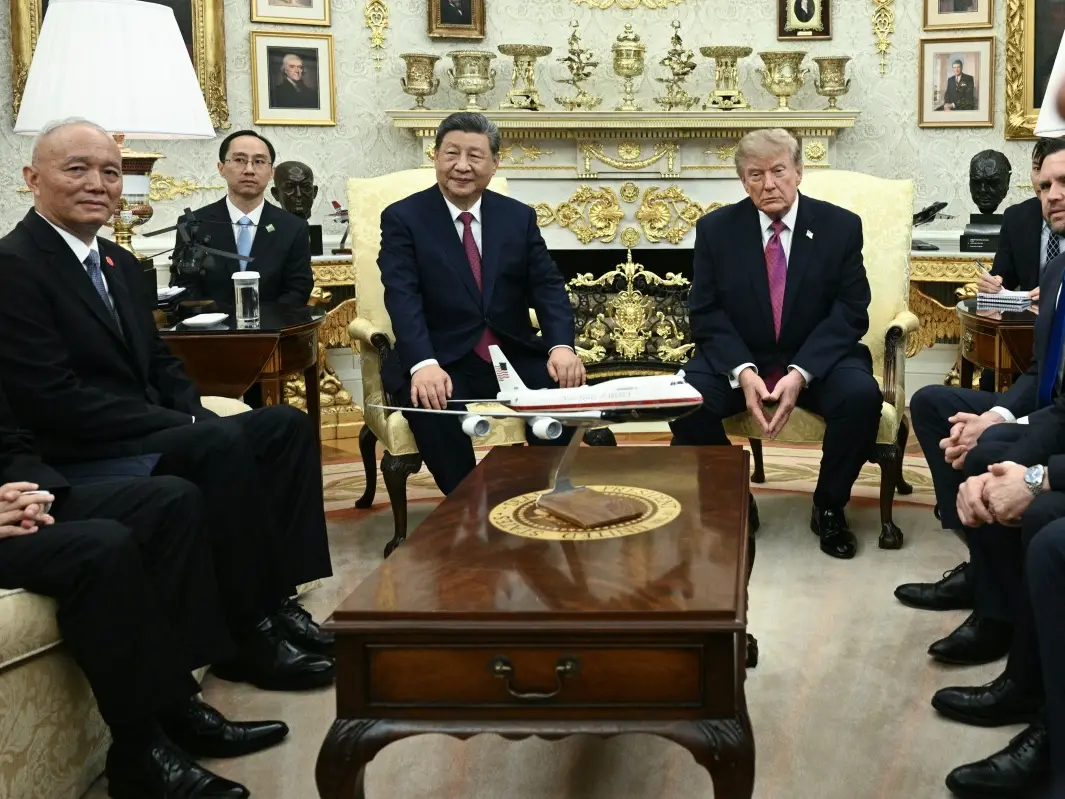)
Trump's welcome to Xi demonstrates 'attraction' to dictators: Chuck Schumer
)
The Vvaan Review: This Ekta Kapoor's Tulsi Virani-coded world can't be saved by Sidharth Malhotra and Tamannaah Bhatia
)
Nations League: Germany draw on Klopp debut; Portugal, Norway win
)
Bollywood mourns Mushtaq Khan: Sunny Deol, Rajpal Yadav and others pay tribute
)
A seven-day roadmap? Iran proposes plan to end war, reopen Strait of Hormuz and resume nuclear talks
)
Meet Adrian Abraham: 9-year-old Indian-origin guitar prodigy aiming for a Guinness World Record
)
Tesla is preparing something big for Optimus: new Gen 3 models surface in app
)
Ruckus in J&K Assembly over statehood resolution; BJP leaders enter well of house
)
Scientists detect first radio signals directly from faraway planet
)
Farhan, who went viral for AK47 celebration vs India in Asia Cup, hopes to lead Pakistan beyond Asian Games
)
'We do not wish to continue. It's America that must choose': Iran president Pezeshkian calls on US to end war
)
Ukraine saw a different operation. In November 2025, DW Fact Check identified a wave of videos showing tearful young men in Ukrainian uniforms pleading not to be sent to the front, shared by pro-Russian accounts as proof of forced conscription. Several carried visible Sora watermarks, the logo of OpenA’s video tool. Around the same time, dozens of clips claimed to show mass Ukrainian surrenders near Pokrovsk. Ukraine’s Center for Countering Disinformation issued a formal warning, calling it a coordinated information attack. Independent fact-checkers found faceless soldiers, fused fingers and no corroborating battlefield evidence.
Iran war
The Iran-Israel escalation produced the most extreme material. Reuters Fact Check consulted three forensics experts on the March 2026 Tel Aviv footage, all confirmed AI origin, citing warped solar panels, a flag that changed design mid-zoom and audio that lacked real-world reverberation. An Indian outlet, BOOM ran the same clips through two detection tools; both returned approximately 99 percent synthetic probability.
Virality outperforms fact-check
Vineet Khunger, Co-founder of IndieVisual, a leading AI technology-led video production company, says the barrier to creating convincing synthetic news footage has collapsed entirely. “It’s become a bit too easy for a bad actor sitting alone at home to use foundational AI video models to create clips that look like real news,” he told WION. “Someone with nefarious intent can figure out ways to easily fool people on social media. We’ve already got issues from both angles, some people believing footage that’s fake, and on the flip side, other people doubting what they see even if it’s real.” Vineet says trained professionals can spot the tells, faked CCTV footage that cuts every seven to eight seconds, the current generation limit for consumer AI video models, along with glitchy artefacts and unnatural visual clarity. But he is candid about the limits of that expertise at scale.
“Given that we’re scrolling past so much video, it’s not humanly possible to go deep into the authenticity of every clip we see. Social media rewards engagement, a fake clip designed for virality will almost always outperform a post pointing out that it was fake.”
When institutions fell for it
The fakes did not stay on the fringes. Just days ago, a sitting UK Member of Parliament shared an AI-generated image depicting rows of shrouded bodies said to be schoolgirls killed in an airstrike on a school in Minab, Iran. Five separate fact-checking organisations identified it as synthetic. A leading Indian newspaper article briefly treated an AI missile-strike clip as real footage before issuing a correction.
The structural problem is not that detection tools are inadequate. It is that the strip-and-amplify pipeline moves faster than any newsroom can respond. The label proving a video is fake is removed before the video goes viral. The correction arrives after the damage is complete. On the question of who bears responsibility, Vineet is direct. “Everyone, the production industry, the media industry, the government, that should be pressurising the tech companies to include clear safeguards around what can be generated,” he said. “The government should step in with context-specific policies. AI video in the news space should be heavily regulated. AI video on social media should be clearly labelled as such. AI has many positive use cases, but these safeguards can give us a more trustworthy, transparent and safer environment for everyone.”
Fourteen months of documented fakes across three conflict zones have exposed a gap that technology alone cannot close. To put it simply, AI has not changed what information warfare is for. It has changed who can wage it, how fast, and with what degree of plausibility. For the millions who never saw the fact-check, the fake was simply the news.
Disclaimer: WION takes utmost care to accurately and responsibly report ongoing conflicts in West Asia involving Israel, Iran, the US, Gulf nations, and non-state actors like Hezbollah, Hamas, Houthis, Islamic State, and others. Claims and counterclaims, disinformation and misinformation are being made online and offline. Given this context, WION cannot independently verify the authenticity of all statements, social media posts, photos, and videos.
