Explainer: Why does France need another election? Can it dethrone Macron?

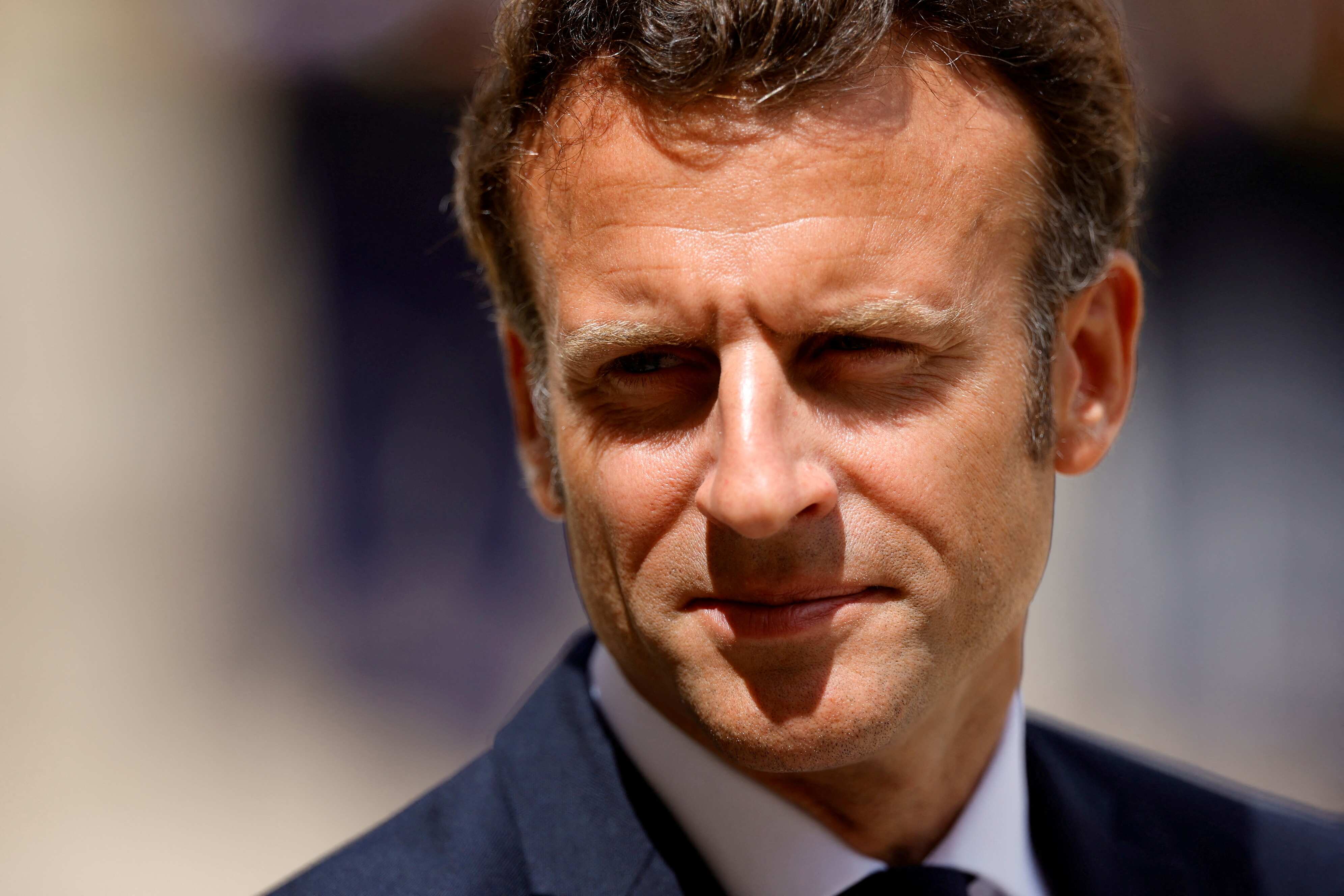
Emanuel Macron file photo
France heads to the polls on June 12 and 19 for parliamentary elections. Support for President Emmanuel Macron's Ensemble (Together) alliance is falling, raising questions over whether he will win an absolute majority in parliament.
Macron's 'Ensemble' bloc is seen winning 28% of votes in the first round, versus 27.5% for the left-wing 'Nupes' bloc.
It added that Macron's centrist camp was expected to win between 275 and 315 seats in the French parliament, where an absolute majority requires 289 seats. Macron needs a majority to help implement pro-business reforms.

Why winning the Presidential election is not enough?
Macron won a second mandate in April as France's centrist, pro-European president. But that is not enough. He also needs to win a majority in the lower house of parliament this month to maintain full control over his reform agenda.
What do the polls forecast?
)
US vs China over South China Sea: Washington backs Philippines, Beijing hits back
)
Delhi gets first late-September rain in 7 years, mercury dips 5.1°C below normal
)
‘Anti-social elements spreading false rumours’: LPU issues statement amid massive unrest over alleged rape
)
After JU, clash erupts at SRFTI: BJP’s ‘Dimagi Naxal’ jibe sparks political firestorm after students protest RSS-linked event
)
LPU students go on rampage, vandalise campus amid widespread protest: What's happening
)
Trump asked Xi to pressure Iran. China did not say yes — here’s what Beijing wants
)
US Treasury Secretary Scott Bessent hails global crackdown on Iranian banks and airlines
)
Venezuela's oil heartland eyes US revival
)
An OpenAI agent escaped its locked test cage again, by hiding questions in DNS lookups
)
3 males killed, four others injured in shooting after fight at strip club in Detroit
)
Russia backs India at UNGA, but flags limits on UNSC seat expansion
)
South Africa probes string of murders targeting women
)
'Victory for low-budget consumers': Raghav Chadha hails 30-day telecom recharge rules
)
Kendall Jenner, Jacob Elordi’s Milan Fashion Week appearance has fans talking; his reaction steals the show
)
Beyond metros: How Tier-2 and Tier-3 cities could drive India’s next AI wave
)
Tesla builds first Cybertruck with its own refined lithium: Elon Musk's $1 billion Texas bet pays off
)
IndiGo flight suffers tail strike in Bengaluru while landing; DGCA to probe incident
)
The US and China set up an AI 'red telephone', but skipped the rulebook
)
‘Terror suspects arrested near UK air base were looking to do big damage’: Trump
)
Russian envoy claims US tactics to contain India were revealed in ‘Freudian slip’
)
‘Olympic inclusion is our major target’: WPA President Ishaun Singh on pool’s global ambitions
)
Nations League: Spain sink England at Wembley; Modric shines for Croatia
)
Why has Iran released no proof of life of Mojtaba Khamenei? Araghchi reveals...
)
Bank unions defer 3-day strike from tomorrow after talks with IBA, committee set up
)
Iran ready for ‘doomsday war’ if US resumes attacks, but open to diplomacy: Araghchi
)
Sri Lankan Tamil migrant worker gets death sentence in Saudi Arabia, help sought from India
)
Muslim marriage cannot shield sex with minor wife from prosecution under POCSO: Delhi HC
)
99.9% more powerful - Scientists find boy who can recall memories from just 3 months of age
)
'FIRST LOOK from inside Noah’s Ark': Researchers share video from inside mysterious mound in Turkey
)
UNSC reform momentum grows: Russia, Portugal, Mauritius push for India's permanent seat bid
)
Man arrested after his 22-year-old girlfriend dies at homestay in Guwahati; police suspect murder over suicide claim
)
Afghanistan says 28 fighters killed in clash near Pakistan border, Islamabad denies
)
Ceuta migrant crisis: Protesters take to streets as Spain grapples with migrant challenge
)
Jaishankar at UNGA: Goodwill and friendship can't coexist with terrorism
)
New York City wants a 'kill switch' on every AI, and will pay whistleblowers who report violations
Voter surveys had until recently shown Macron's party and its allies - collectively known as Ensemble - winning an absolutely majority in the 577 seat parliament. But that outcome has become less certain in recent days.
Momentum is on the side of a left-wing coalition led by hard-left veteran Jean-Luc Melenchon. Melenchon is unlikely to win the 289 seats required for an absolute majority but may win enough to deprive Macron of the same.
What if Macron falls short of the majority?
Falling short of an absolute majority would be a big setback for Macron. It would force him to broaden his alliance. The broader the alliance the more complicated deal-making, and dictating policy decisions become.
The left-wing coalition led by hard-left veteran Jean-Luc Melenchon is seen second in polls, but the conservative Les Republicains could end up being kingmakers if Macron's Ensemble alliance falls short of an absolute majority.
A minority cabinet or coalition government would be an unusual scenario for modern-day France. The Fifth Republic was designed to avoid unwieldy coalitions.
If an opposition grouping were to surprise and win a majority, Macron would have to name a prime minister from the winning camp, ushering in a period of so-called cohabitation.He would retain the lead on foreign policy but leave responsibility for most day-to-day policy matters to the government.
How does the polling take place?
Voting takes place between 8 a.m. and 8 p.m. (0600-1800 GMT) on June 12. In constituencies where no candidate gets 50% of votes in the first round, a run-off vote is held on June 19, with every candidate who won the support of at least 12.5% of registered voters eligible to advance.
Polling for legislative elections is trickier than the presidential election as different dynamics on the ground make it harder to predict who will win nationwide.
What are the parties fighting for?
Macron's La Republique en Marche party single-handedly won 314 seats in the 2017 legislative elections but gradually lost lawmakers to stand at just under 270 now. It maintained control over parliament thanks to its allies, who have around 80 lawmakers.
France's two mainstream centre-left and centre-right parties dominated the French political landscape until Macron's election in 2017. Five years on both are still fighting for political relevance and the tectonic plates have shifted.
[with inputs from agencies]
WATCH WION LIVE HERE
You can now write for wionews.com and be a part of the community. Share your stories and opinions with us here.