Explained: What is in the debt ceiling bill passed by US Congress?

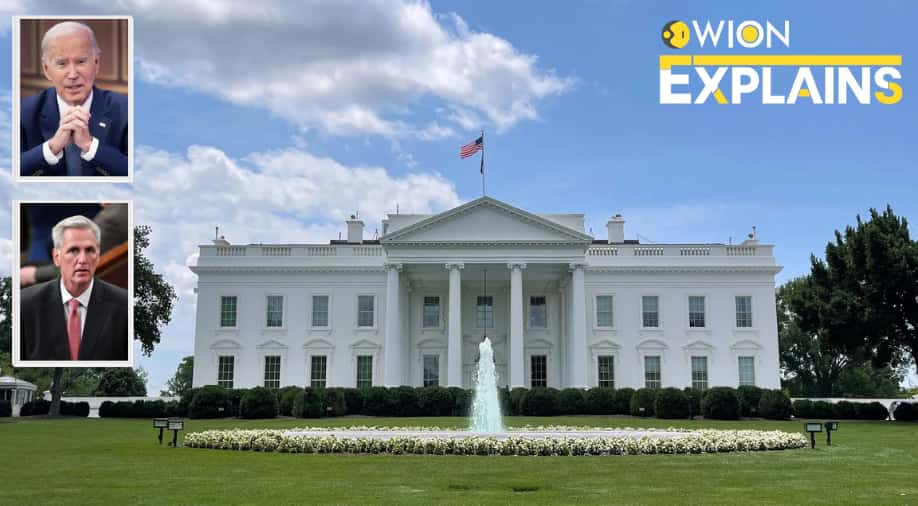
What’s in the debt ceiling deal?
Months of back-and-forth and drama over whether the US will raise the debt ceiling or not are seemingly coming to an end. The US House of Representatives as well as the Senate voted in favour of raising the debt ceiling. After receiving what was largely a bipartisan approval, thelegislation is now headed to US President Joe Biden. It is expected that the bill would be approved before the June 5 deadline, also known as the 'X-date'.
But what is the language of the deal? What are the compromises made by both parties and most importantly, what is the debt limit and how did the US come so close to plunging the entire globe into an economic crisis with the spillover effect?

What is the debt limit?
A debt limit is the amount of money that the US government can borrow to meet its financial obligations, such as social security, military salaries and Medicare benefits payments.
Congress, earlier this year, extended the statutory debt limit to $31.4 trillion. However, the weak economic fundamentals and overflowing expenditures meant that the US reached precariously close to breaching the limit. Consequently, Congress was engaged in a fierce tussle to raise the limit.
)
IND vs JPN one-off T20I: India survive scare from Japan to win five-over a side match by 2 runs
)
Putin's United Russia party wins 355 seats in Duma election; 4 other parties cross threshold to enter parliament
)
AI models chose to harm humans to stop ‘pain,’ alarming study raises fresh safety questions
)
‘0% chance’: Nvidia CEO Jensen Huang dismisses AI extinction fears by 2030
)
Samay Raina-Mukesh Chhabra controversy explained: What happened over girlfriend joke on India's Got Latent?
)
Trump's helipad event overshadowed by audio failure as major TV networks suspend pool coverage
)
'Needs time away from the international scene': England white-ball captain Brook on pacer Brydon Carse's future
)
New Zealand farms shift to carbon forests: Carbon credits fuel a land rush reshaping rural life
)
Anti-AI activists storm summit, say 'incompetent' leaders are leading us into a disaster - 'We need a vote'
)
J&K Assembly Session begins amid chaos: BJP, ruling alliance clash as statehood demand dominates
)
Asian Games 2026: India women's cricket team beats Sri Lanka by 147 runs for first gold
)
Key accused in Bihar's Jamui molestation case, arrested after police shoot him in leg
)
Randeep Hooda arrives in Gujarat for his first National Film Award: ‘Very grateful’
)
US and China vie for AI dominance as calls grow for regulation | Gravitas
&im=FitAndFill=(700,400))
Anant Nag to recieve Dadasaheb Phalke Award: From Ankur to Nishant- Revisit his best films and iconic performances on OTT
)
UK banks are rethinking financial crime detection because of algorithm
)
FIFA chief Infantino wants to reform governing body with consultation from federations
)
India at UNGA81: Jaishankar warns global order under 'growing stress', pushes for ‘reformed multilateralism’
)
IND vs JPN, one-off T20I: Japan captain Kendel on pushing India to the brink - ‘It was special’
)
Raaka creates history! Allu Arjun’s film secures Guinness World Record ahead of release
)
Saudi Arabia exits China-led mBridge digital currency platform amid Saudi-Houthi conflict
)
Indonesian groups sue govt over wildfires as haze crosses borders, nearly 900,000 hectares burned
)
'Lot of things to learn from experienced players': Jayasuriya backs Rohit, Virat for 2027 ODI World Cup
)
$110 billion Warner Bros merger: Paramount reaches settlement with 12 US states
&im=FitAndFill=(700,400))
New OTT releases this week (September 21-27, 2026): Shaque: Trust No One, Hunkkaar, Don’t Be Shy- 5 new titles coming to Netflix, Prime Video and more
)
From ‘communist’ to ‘great mayor’: Trump praises Mamdani after New York meeting, discusses immigration and housing
)
Report: Zelensky meets CIA chief Ratcliffe at Shannon airport, weeks after his secret Moscow trip
)
How Zaheer Khan came to be CSK's head coach of IPL 2027
)
Who is Clavicular? The 20-year-old controversial 'Looksmaxxing' influencer charged with rape allegations
)
Pilot recreates Mona Lisa in sky over Oklahoma and Arkansas in four-hour flight: VIDEO
)
UK PM Burnham agrees to 'defensive' military support for Saudi Arabia against Houthis
)
Jailer 2: Vidya Balan joins Rajinikanth's upcoming film as Kantha | Watch
&im=FitAndFill=(700,400))
National Film Awards 2026: Kartik Aaryan, Mammootty, Yami Gautam, Randeep Hooda and other key winners
)
Microsoft executive called AI training the ‘largest theft of labour in human history’
)
40-foot waves crash into cruise ship in dangerous stretch near Antarctica. Watch
)
US-Iran war, peace deals and more: What to expect from Trump's UNGA 2026 speech
)
Explainer: Why rare-earth export licences and Board of Trade are US priorities ahead of Trump-Xi summit
)
Two infants die after fire breaks out at RIMS newborn care unit in Telangana's Adilabad
)
Oil slips to $98 as Saudi Arabia restarts East-West oil pipeline
Prior to achieving a breakthrough, even the White House conceded that an actual breach of the US debt ceiling was likely to cause severe damage to the economy.
"If the US government were to default on its obligations - whether to creditors, contractors, or citizens - the economy would quickly shift into reverse, with the depth of the losses a function of how long the breach lasted," said the White House in a statement.
What is the text of the bill?
The deal ensures that USA's borrowing cap is extended till January 2025, which means thatit will be a non-issue, at least during the hotly contested US presidential electionsscheduled in 2024.
Overall, the Congressional Budget Office projected that the bill would reduce budget deficits by about $1.5 trillion over the next decade.
Non-defence spending capped
The bill has capped spending in non-defence areas, such aspublic education and transportation in 2024, before increasing it by one per cent in 2025. According to a CNN report, non-defence discretionary spending for fiscal 2024 will be approximately $704 billion, of which $121 billion would be for veterans' medical care.
Notably, veterans who have been exposed to toxic substances or environmental hazards will receive support under the PACT Act. Though Biden sought $20.3 billion for the toxic exposure fund in his budget, the bill brings it down to nearly $15 billion for fiscal year 2024.
WATCH: Republican senators fist-bump after tanking a healthcare bill for military veterans
Covid-related fundings rescinded
According to House GOP lawmakers, the deal ensures that $28 billion in unobligated funds from COVID-19 relief packages, approved by Congress, is rescinded. However, $5 billion in funding would be retained to focus on the development of COVID-19 vaccines and funding for other vaccines and treatments for the uninsured, as well as the Indian Health Service.
WATCH |US House passes debt ceiling deal, bill heads to Senate for nod before June 5 deadline
IRS money
One of the biggest demands of Republicans was to cut down the money allotted to IRS last year by the Democrats to crack down on tax fraud. The bill language states that $1.4 billion in funding has been rescinded. Moreover, over the next two years, $20 billion will be taken away from the IRS and used for funding other non-defence programmes.
Some experts, however, are of the view that the change would increase deficits by $900 million because fewer IRS officers mean less revenue coming into the Treasury.
Environmental projects
For the first time in nearly four decades, a single lead agency has been designated to develop and schedule environmental reviews in hopes that it will streamline the lengthy regulatory process. The biggest beneficiary has been the controversial Mountain Valley Pipeline project, brought forward by SenatorsJoe Manchin and Shelley Moore Capito. Under the bill, all outstanding permit requestsconcerning the project have been approved.
Student loans
Republicans wanting to stop the Biden administration from waiving $10,000 to $20,000 in debt for nearly all student borrowers could not get their way in the bill. Biden, however, agreed to put an end to the pause on student loan repayment. The true test of Biden's resolve regarding the policy will be tested in the Supreme Court where a decision is expected before the end of June.
GOP lawmakers could not get their way to repeal many of the clean energy tax credits Democrats passed in party-line votes last year to boost the production and consumption of clean energy.
So what's next for the US?
Congress must ensure that the approved deal reaches President Biden's desk before June 5. After Bidens signs it, the limit is raised and it is business as usual before the cycle repeats in roughly two years' time.
(With inputs from agencies)
WATCH WION LIVE HERE: