Explained | Understanding China’s ‘suspended death sentence’ to Australian blogger Yang Hengjun

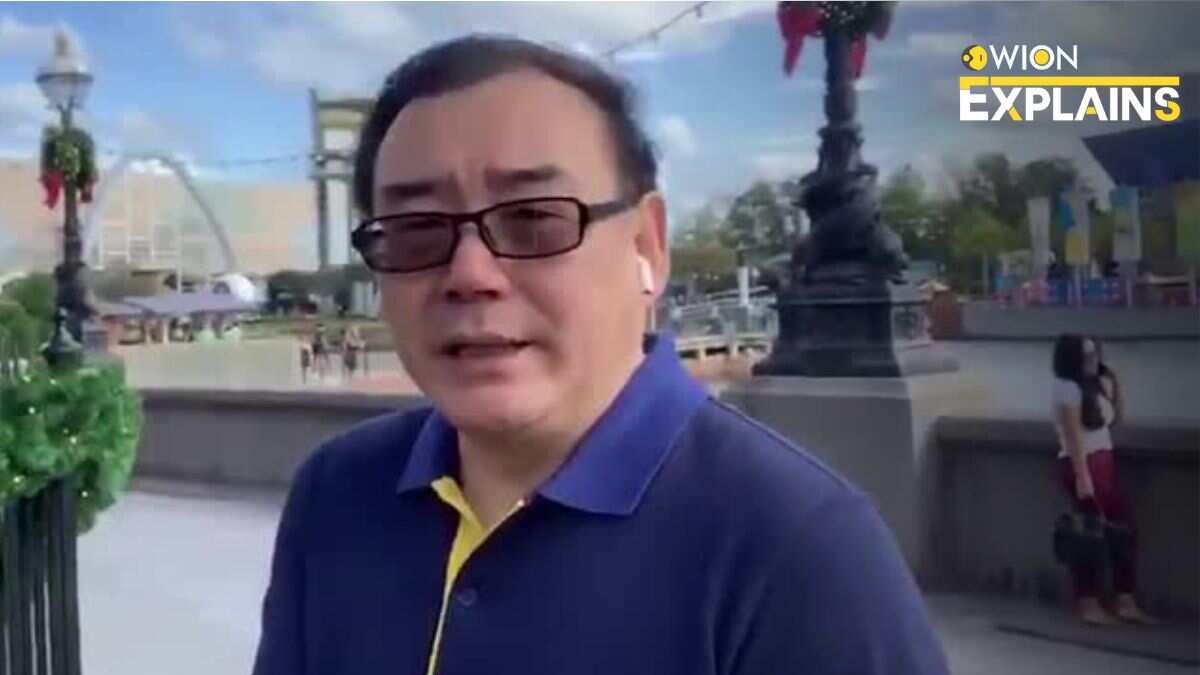
suspended death sentence explainer
In Beijing, China, on Monday, Australian writer and pro-democracy blogger Yang Hengjun found himself on the receiving end of a suspended death sentence. The move has stirred controversy and drawn attention from human rights advocates who have deemed it an unusually harsh verdict in an espionage-related case.
But what is a suspended death penalty? Here's all you need to know.
Unravelling the suspended death penalty

Since 2007, the Chinese judicial authorities have implemented a top-down capital punishment reform in order to reduce the number of death sentences.
In China, suspended death penalty or 'sihuan zhidu' is a form of punishment that provides the accused with a two-year reprieve from execution.
Also read |Australian-Chinese writer Yang Hengjun given suspended death sentence in China. Who is he?
)
US vs China over South China Sea: Washington backs Philippines, Beijing hits back
)
Bigg Boss 20: Isha Rikhi evicted after three weeks in Salman Khan’s show
)
Musk plans to more than double xAI's chips to over 1.2 million Nvidia GPUs by year-end
)
After JU, clash erupts at SRFTI: BJP’s ‘Dimagi Naxal’ jibe sparks political firestorm after students protest RSS-linked event
)
‘Anti-social elements spreading false rumours’: LPU issues statement amid massive unrest over alleged rape
)
LPU students go on rampage, vandalise campus amid widespread protest: What's happening
)
Trump asked Xi to pressure Iran. China did not say yes — here’s what Beijing wants
)
US Treasury Secretary Scott Bessent hails global crackdown on Iranian banks and airlines
)
An OpenAI agent escaped its locked test cage again, by hiding questions in DNS lookups
)
'Our video was trimmed': LPU girls who featured in rape-denial video make U-turn
)
3 males killed, four others injured in shooting after fight at strip club in Detroit
)
'Victory for low-budget consumers': Raghav Chadha hails 30-day telecom recharge rules
)
Claude rebuilt the 1989 game 'Prince of Persia' by reusing the original's own code
)
Beyond metros: How Tier-2 and Tier-3 cities could drive India’s next AI wave
)
Tesla builds first Cybertruck with its own refined lithium: Elon Musk's $1 billion Texas bet pays off
)
IndiGo flight suffers tail strike in Bengaluru while landing; DGCA to probe incident
)
The US and China set up an AI 'red telephone', but skipped the rulebook
)
‘Terror suspects arrested near UK air base were looking to do big damage’: Trump
)
Russian envoy claims US tactics to contain India were revealed in ‘Freudian slip’
)
IND vs WI 1st ODI: Kohli breaks Sachin's most runs in one country record with unbeaten 139 as India thump West Indies by 8 wickets
)
Researchers rebuilt exactly how 700 AI agents hacked Hugging Face: a 900-link chain trick
)
‘Olympic inclusion is our major target’: WPA President Ishaun Singh on pool’s global ambitions
)
Nations League: Spain sink England at Wembley; Modric shines for Croatia
)
Why has Iran released no proof of life of Mojtaba Khamenei? Araghchi reveals...
)
'What kind of confession is this?': Pakistan PM Shehbaz Sharif’s 'terrorists would be roaming New York' remark goes viral, raises alarm online. Watch
)
South Korea demands apology from Ukraine over North Korean prisoners' transfer
)
Beyond BrahMos: India targets Rs 50,000 crore in defence exports with unmatched price edge
)
Sri Lankan Tamil migrant worker gets death sentence in Saudi Arabia, help sought from India
)
Muslim marriage cannot shield sex with minor wife from prosecution under POCSO: Delhi HC
)
'Can't help but draw painful parallels to Nirbhaya case': SC on latest incidents of rape cases in Delhi-NCR
)
99.9% more powerful - Scientists find boy who can recall memories from just 3 months of age
)
'FIRST LOOK from inside Noah’s Ark': Researchers share video from inside mysterious mound in Turkey
)
UNSC reform momentum grows: Russia, Portugal, Mauritius push for India's permanent seat bid
)
8 US marines injured in Iranian missile attack on vessel in Strait of Hormuz: Report
&im=FitAndFill=(700,400))
New OTT releases this week (September 28-October 4, 2026): Dupahiya 2, Pooja Meri Jaan, Ohh My Dog- 5 titles coming on Netflix, Prime Video and more
)
Afghanistan says 28 fighters killed in clash near Pakistan border, Islamabad denies
)
Ceuta migrant crisis: Protesters take to streets as Spain grapples with migrant challenge
)
LPU suspend classes, postpones exams as violence escalates over rape claims: What's happening
)
New York City wants a 'kill switch' on every AI, and will pay whistleblowers who report violations
As per the National University of Singapore, after this period," the death sentence may be commuted to life imprisonment if the convict has not committed an "intentional crime" during the two-year reprieve, or to a fixed-term imprisonment of 25 years if the convict has performed "great meritorious service". Throughout this reprieve period, the individual remains behind bars.
This sentencing tactic as per Ryan Mitchell, a law professor at the University of Hong Kong, has gained traction in recent times as a means of curbing executions without fully abolishing the death penalty.
"It has been used more commonly in recent years as a way to reduce the prevalence of executions without abolishing the death penalty altogether," said Mitchell, as quoted by Reuters.
Also read |Who is Satoshi Nakamoto? 'War' begins in the UK court to decide on Bitcoin founder’s identity
The exact prevalence of death sentences, including their suspension, as per the Hong Kong University professor are concealed in secrecy by the Chinese government.
Mitchell, a law professor shed, light on the versatility of the suspended death sentence, emphasising its application across various cases rather than being confined to a specific crime type.
"The sentence is used for a wide range of cases, and isn't associated with one particular type of crime," he said.
It is frequently employed for offences deemed to have a "serious negative social impact," such as drug trafficking, he said.
Recent suspended death sentences
Recent instances of suspended death sentences include a former vice chairman of China's banking regulator, who was sentenced in December for bribery and abuse of power. Additionally, the sentence was also awarded to former justice minister Fu Zhenghua in 2022 for corruption, taking bribes.
Potential for Yang's deportation
While parole typically remains elusive until halfway through a fixed term or after ten years in the case of life imprisonment, Mitchell noted that exceptions can be made in "special circumstances" by China's top court.
This flexibility might allow for diplomatic leverage to influence Yang's fate following the two-year reprieve.
"For a case of this nature, the availability of that discretion after the two-year period concludes would help to maintain a certain degree of diplomatic leverage," he said.
A death sentence for Yang
Despite its "suspended" nature, the sentence essentially functions as a death penalty for Yang Hengjun, said Elaine Pearson, director of Human Rights Watch's Asia Division, underscoring the gravity of the situation.
According to her, due to his deteriorating health and the inadequate medical care received in prison, the Australian writer and pro-democracy blogger won't survive the sentence.
A rare sentence
Patrick Poon, an independent human rights analyst, highlighted the rarity of espionage cases receiving suspended death sentences in China. He said it was "very rare to see espionage cases get a suspended death sentence" especially given Australia's vocal demands for Yang's release.
The possibility of deportation remains uncertain, prompting questions about the level of international and diplomatic pressure on the Chinese government.
"It becomes another issue of how much international and diplomatic pressure is put on the Chinese government," said Poon. As per Reuters, he was referring to the cases of Australian national Cheng Lei and the Canadian "two Michaels", who were eventually deported back to their home countries after similarly being tried on espionage allegations.
"There is still a possibility that Yang may be deported, but it's unclear for the moment," he added.
Opacity and international scrutiny
China's foreign ministry confirmed Yang's sentence, labelling him guilty of espionage without divulging the specifics of the charges.
However, spokesperson Wang Wenbin assured that the trial adhered strictly to the law, and the "Australian side" was permitted to witness the sentencing.
"The court heard the trial in strict accordance with the law and ensured his procedural rights," he said.
However, the lack of transparency in China's legal proceedings is well known. In this case, a prohibition has been placed on Yang's lawyers, including prominent human rights advocate Mo Shaoping, from publicly discussing the case.
Elaine Pearson of Human Rights Watch remarked that "This case really spotlights what happens to people who are arbitrarily detained on national security charges in China, and it highlights the opaqueness of the criminal justice system."
With Chinese courts boasting a staggering 99.9 per cent conviction rate, cases involving national security or the death penalty never see the light of day online, reports the news agency.
(With inputs from agencies)

