
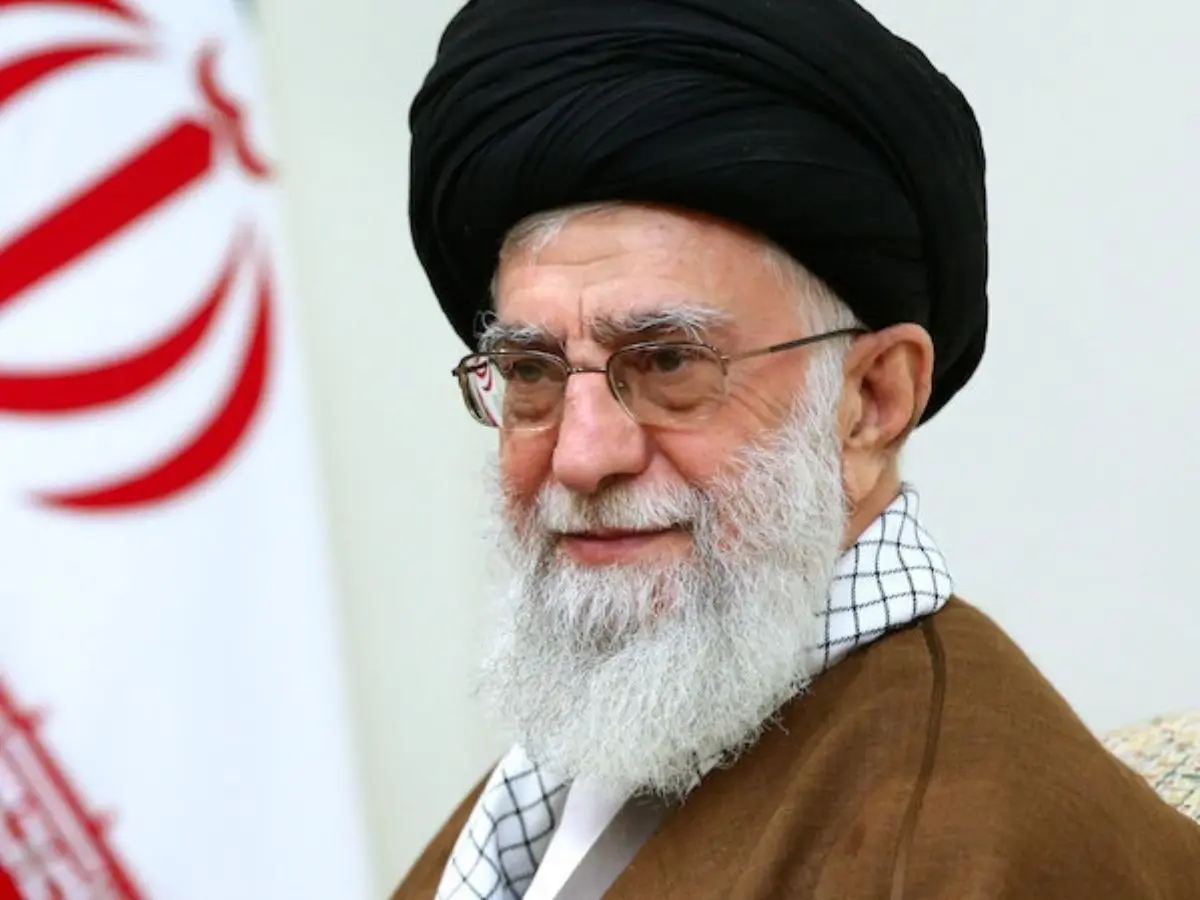
&imwidth=800&imheight=600&format=webp&quality=medium "EXPLAINED: Is Iran really a threat or a victim of US? Know history of 70 years of betrayals, coups and bombs")
Tension between the United States and Iran has increased to the highest point after decades following the order of President Donald Trump to strike the key nuclear facilities across the Middle Eastern country. Conflictss between these nations are not new. Iran has always remained one of the greatest adversaries of the US since the 1979 Islamic revolution, after Ayatollah Ruhollah Khomeini threw pro-Western Mohammad Reza Pahlavi out of power in Tehran.
Since then, the region has always remained heated, beginning with the conflicts on the issue of oil production to nuclear ambitions, Iran’s backing of proxies in the region, and US political interference. Trump was dragged into the recent war after Israel, considering Iran a nuclear threat, launched unprecedented strikes across the country, accusing Tehran of developing nuclear weapons.
So, how has Iran always remained a target of the US? What is the real history behind this war? Was Iran a threat to the US or other nations else US begin war and always target Iran with the influence of colonial rulers (England) for its own selfish purpose?

Let's delve into the timeline of the history of both nations' conflicts and know the facts:
(1953) CIA-Backed Coup and Return of the Shah:
Tensions between Iran and Western powers escalated when Prime Minister Mohammad Mosaddegh, elected in 1951, initiated steps to nationalise the Anglo-Iranian Oil Company, an enterprise largely under British control since the early 20th century. This move to take control of Iran’s oil resources infuriated Britain, prompting it to seek American support. In response, the US Central Intelligence Agency collaborated with British intelligence to orchestrate a coup that ousted Mosaddegh and reinstated Mohammad Reza Pahlavi, the previously exiled monarch, as shah.
Trending Stories
)
Saudi Arabia accuses Houthis of drone attack on Mecca, first-ever red alert in Islam's holiest site sparks panic
)
India to host IPL 2027 auction; WPL 2027 auction set for late October in Kochi
)
Ed Sheeran’s US tour loses all support acts after Macklemore’s removal | Controversy explained
)
OpenAI boss Sam Altman repeats AI 'slow down' call, says world 'right to be afraid'
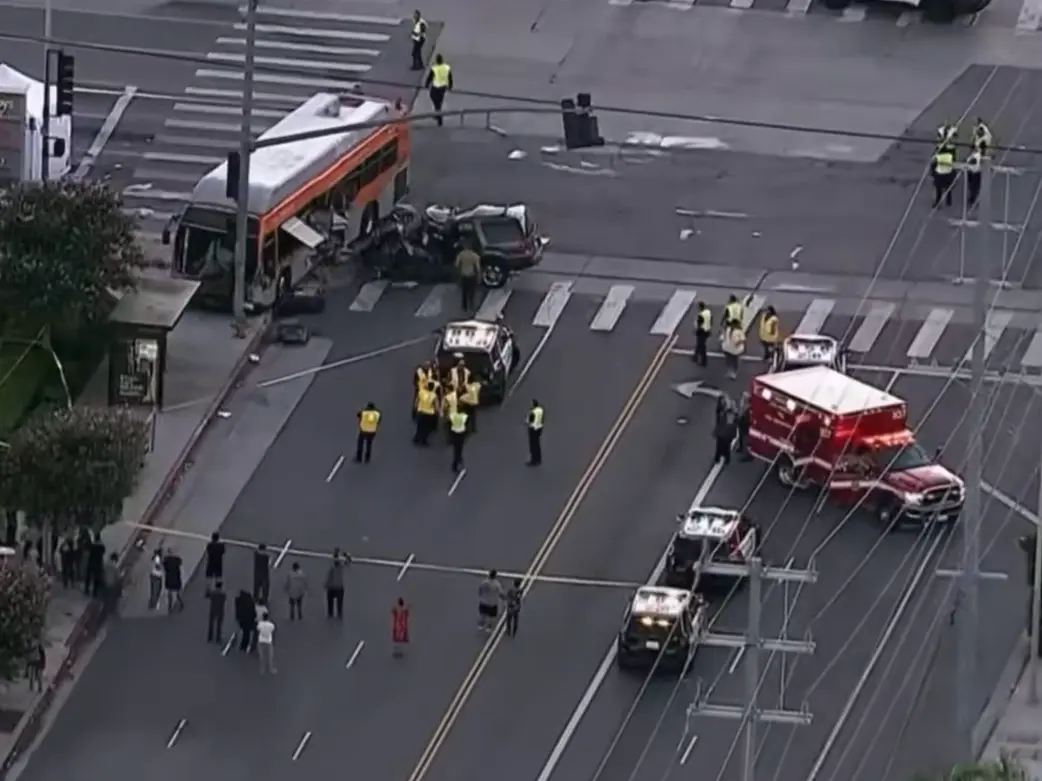)
Los Angeles helicopter crash: At least three dead, several injured; NTSB to investigate
)
China's property crisis deepens as investment plunges nearly 20%
)
Bitter Zelensky snubs Trump for playing politics with Ukraine war | Gravitas
)
Top military commanders from US, Israel, and 7 Arab nations held secret meeting on Iran War
&im=FitAndFill=(700,400))
New OTT releases this week (September 14-20, 2026): Lust Stories 3, Waiting Hai, Irumudi- 5 new titles coming on Netflix, Prime Video and more
)
Who is Kalyan Bainsla, accused in the Gurugram hit-and-run case involving woman biker?
)
Trump's name cannot return to Kennedy Center, US judge rules
)
Abhishek Sharma rises to No. 2 in T20Is; ENG’s Robinson 3rd after record Pakistan Tests
)
'Like a thug you are using agency to go after..': Kash Patel grilled by Senate Democrats over FBI firings, journalist investigations and hiring policy
)
Water equivalent to two Pacific Oceans could be stashed 2,900 km inside Earth
)
Ex-CIA officer caught with gold bars worth $40 million seeks plea deal | Gravitas
)
Sydney Sweeney defends provocative ad choice, the internet is still not impressed
)
India summons top Pakistan diplomat after Pak Navy ship collides with Indian warship at high seas
)
‘Kill all in the name of...’: FBI arrests 21-year-old over alleged ISIS-inspired mass-casualty attack plot
)
Ex-India all-rounder Yuvraj Singh wants India to avoid 'massive changes' before ODI World Cup 2027
)
US Treasury yields cross 5% as Scott Bessent warns of ‘global issues’ impacting bonds
)
Who was Eliana Moreno? NBC LA aerial reporter killed in Chatsworth crash
)
Saudi Arabia discovers 110 million tonnes of Uranium-rich ore in Madinah region
)
800 million years old - Scientists discover 'fingerprints' of supercontinent Gondwana in ancient rocks
)
US fires up to 70 interceptors against Iran attack on Jordan, putting supplies under pressure
)
Alex Saab, ally of Venezuela's Maduro, pleads guilty in US corruption case
)
US, China dominate global economy: Where does India rank among the world's biggest economies?
)
Pakistan naval vessel returns to harbour with 'severe damage' after collision with Indian warship in Arabian Sea
)
Ex-England footballer Raheem Sterling pleads guilty in reckless driving and crashing his Lamborghini
)
Putin-linked Russian oligarch, Melania links: Why Trump skipped his son’s Bahamas wedding bash?
)
Space mines, lasers & robotic arms: Lt Gen Pannu decodes US disclosure of weapons in space
)
‘US military task force aiding Saudi Arabia forces with intel, planning support’: Official
)
Pakistan: Imran Khan's sons Kasim & Sulaiman claim their father is 'tortured' in jail
)
'Definitely feel bad for yourself': Kuldeep Yadav opens up on India Test snubs
)
Shahzad Bhatti Network declared terrorist organisation under UAPA: Govt order
)
Messi set to play in farewell match on October 6 in Argentina vs Benin friendly
)
Canada to become EU’s first ‘associate member’? Von der Leyen proposes move amid US tensions
)
Trump's Iran war faces fresh House rebuke; 7 Republicans join Democrats in push to end conflict ahead of midterms
(1957) Civilian nuclear agreement – Atoms for Peace:
Iran’s interest in developing nuclear energy began to take shape under the Shah’s leadership, with significant backing from the United States and its allies. In 1957, the two nations entered into a nuclear cooperation agreement under US President Dwight D. Eisenhower’s "Atoms for Peace" initiative. This agreement was aimed at promoting the peaceful use of nuclear technology. By the late 1960s, the US had supplied Iran with a nuclear research reactor and uranium fuel, laying the groundwork for Iran’s current nuclear programme and the global debates that followed.
(1979) Islamic revolution:
While relations between Tehran and Washington were increasing, people of Iran were agitating under the dictatorship of the shah, demanding the removal of Western influence in the nation. Revolutionary protests also began rocking the country in late 1978, which forced the shah to flee in January 1979. As a result, the exiled Islamic scholar Ayatollah Ruhollah Khomeini returned to power in Iran as the new Islamic Republic.
(1980) Diplomatic break with the US:
After the United States permitted the exiled Shah of Iran to receive cancer treatment, Iranian students stormed the American embassy in Tehran, taking 52 hostages and holding them for 444 days. In response, the US severed diplomatic relations and implemented economic sanctions. The former shah eventually died in exile.
(1980–1988) US support for Iraq in war:
When Saddam Hussein launched a military assault on Iran, aiming to weaken Ayatollah Khomeini’s revolutionary influence, the US aligned itself with Iraq. This decision escalated hostilities between Washington and Tehran. The brutal conflict continued until 1988, causing massive casualties on both sides, with Iraq even deploying chemical weapons against Iranian forces.
(1984) Iran labelled terror sponsor:
Amid increasing regional unrest, President Ronald Reagan designated Iran as a "state sponsor of terrorism" following deadly attacks in Lebanon, where US troops were stationed after Israel’s incursion. One of the deadliest assaults, on a US Marine barracks in Beirut, killed 241 American personnel. Washington attributed the attack to Hezbollah, a militant group with Iranian support. Despite this, Reagan’s administration later covertly negotiated with Iran for the release of hostages held by Hezbollah — a revelation that sparked the infamous Iran-Contra scandal.
(1988) Civilian plane downed by US Navy:
Amid escalating military tensions in the Persian Gulf, a US Navy warship mistakenly shot down Iran Air Flight 655 en route to Dubai on July 8, killing all 290 people aboard. Although the US called the incident an error, it neither issued a formal apology nor accepted full responsibility. However, it eventually compensated victims' families with a payment totalling $61.8 million.
(1995) Sanction against Iran:
US's sanctions against Iran escalated between 1995 and 1996 as then President Bill Clinton’s executive orders banned US companies from making any deal with Iran. Meanwhile, the Congress also passed a law penalising foreign entities from making any kind of investment in the country's energy sector or selling Iran advanced weapons. Meanwhile, the US also went for nuclear advancement and support of groups like Hezbollah, Hamas, and Palestinian Islamic Jihad.
(2002) Post-9/11 tensions:
In the wake of the September 11 attacks, US President George W. Bush labelled Iran, Iraq, and North Korea as an “Axis of Evil” during his State of the Union speech. This declaration came despite Iran and the US having cooperated covertly at the time to combat mutual enemies, including the Taliban and al-Qaeda in Afghanistan. However, the relationship quickly deteriorated, and by late 2022, Iran was found to possess highly enriched uranium, prompting renewed international sanctions.
(2013–2015) Iran’s Nuclear Agreement:
Beginning in 2013, President Barack Obama initiated direct negotiations with Iran, which culminated in the 2015 Joint Comprehensive Plan of Action (JCPOA). The deal, also signed by China, Russia, France, Germany, the United Kingdom, and the European Union, required Iran to restrict its nuclear enrichment to 3.67 per cent in return for sanction relief.
(2018) US Exit from JCPOA:
In 2018, President Donald Trump pulled the US out of the JCPOA, reinstating sanctions on Iran. The move was supported by Israel and criticised the agreement’s effectiveness. In response, Iran abandoned its nuclear restrictions under the deal and resumed uranium enrichment beyond agreed limits.
(2019) The US designates Iran’s military institution as a terrorist org:
The US designated the Islamic Revolutionary Guard Corps, the most powerful military institution of Iran, as a terrorist organisation. Following this, it has become the first time that the Americans assigned such a classification to a part of a foreign government.
(2020) Assassination of Qassem Soleimani:
In one of the most escalatory moves of Trump’s presidency, Iranian General Qassem Soleimani, head of the Quds Force of the Islamic Revolutionary Guard Corps (IRGC), was killed in a US drone strike in Baghdad. The assassination followed the US decision in 2019 to designate the Quds Force as a terrorist organisation. Iran retaliated with missile attacks targeting American bases in Iraq.
(2025) Letter to Tehran and US attack:
Trump sent a letter to Iran’s Supreme Leader, Ayatollah Ali Khamenei, in March demanding new negotiations on a nuclear deal, giving deadlines of 60 days. During the negotiations, Khamenei rejected the proposal, viewing it as the US trying to dictate terms. The discussions had quietly begun in countries like Oman and Italy, with Muscat playing a mediating role. Former US President Donald Trump stated that his administration had come “very close” to reaching an agreement after several dialogue rounds, even cautioning Israel against military actions.
Iran remained cautiously hopeful but firmly maintained its right to continue uranium enrichment, which remained a major point of contention. A day before the sixth round of US-Iran negotiations, Israel carried out airstrikes across Iranian territory.
Shortly after, the US joined the Israeli assault, targeting three of Iran’s major nuclear sites, including Fordow and Natanz. This offensive included the first combat use of America’s most powerful "bunker-buster" bomb. In retaliation, Iran launched missile strikes on the Al Udeid Air Base in Qatar, which hosts US forces. Qatari officials later confirmed the missiles were intercepted and that the base had been evacuated ahead of the attack.

