
&imwidth=800&imheight=600&format=webp&quality=medium "EXPLAINED: How a US firm helped elevate Pakistan’s role in Iran's war diplomacy")
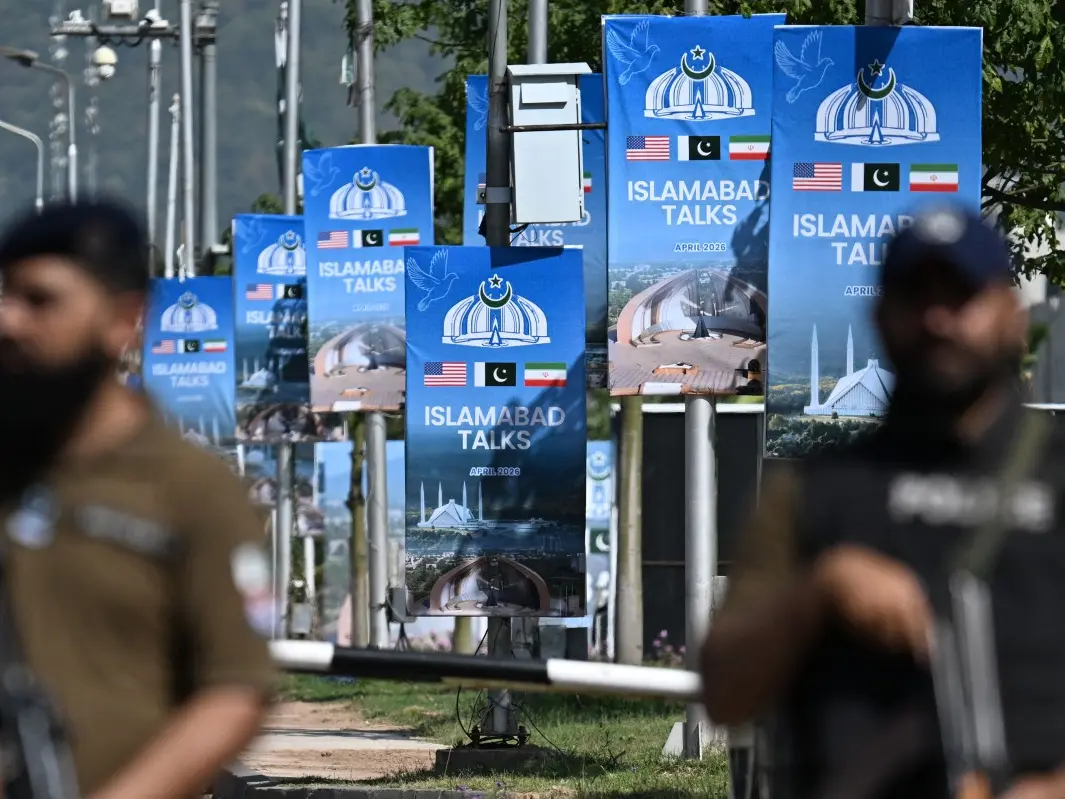
Pakistan’s emergence as a key diplomatic player in the ongoing US-Iran conflict is being attributed to years of behind-the-scenes lobbying by a Texas-based firm that cultivated deep ties in Washington. What is now widely seen by many Pakistanis as a moment of national significance did not materialise overnight. It followed sustained backchannel efforts by Houston-headquartered Linden Strategies, led by its chairman, Stephen Payne. The firm played a role in facilitating high-level access for Pakistan’s military leadership, including a 2025 meeting between Field Marshal Asim Munir and US President Donald Trump.
During April, as Iran-US discussions began in Islamabad, many Pakistanis shared the biblical phrase “Blessed are the peacemakers” on social media, reflecting the symbolic weight of the moment for the country.
The earlier Oval Office meeting between Munir and Trump, held while Pakistan’s Prime Minister Shehbaz Sharif remained in office, drew attention for its unusual nature. While it did not necessarily signal tensions between civilian and military leadership, observers say it underscored the strength of Pakistan’s channels within the White House. Payne had also reportedly encouraged Sharif to nominate Trump for the Nobel Peace Prize, part of a broader communication strategy.

That access now appears to be yielding diplomatic dividends. Islamabad has positioned itself at the centre of efforts to mediate the Iran conflict, hosting and facilitating high-stakes negotiations amid growing global concern over supply chain disruptions.
‘Pakistan has not been as generous as India’
Trending Stories
&im=FitAndFill=(700,400))
National Handloom Day 2026: From Alia Bhatt to Samantha Ruth Prabhu; Actresses who celebrated India's textile heritage as brides
)
The Royals enter the Doctor Who universe: King Charles and Queen Camilla beam into Commonwealth Games in TARDIS
)
Unitree Robotics targets $9 billion valuation in landmark IPO backed by DeepSeek and Tencent
)
India names 27 sites in Arunachal Pradesh
)
Bharat Bhhagya Viddhaata OTT: When will Kangana Ranaut's film stream online?
&im=FitAndFill=(700,400))
How many soldiers operate one S-400 battery?
)
Shakib Al Hasan ready to return to Bangladesh—under one condition
)
‘Fake news’: MEA rejects report claiming India sought defence pact with Israel after Pakistan, Saudi Arabia, Turkey deal
)
Rockstar to unveil GTA 6 extended look ahead of November launch
)
Russia forms Ukrainian Volunteer Spetsnaz Brigade to fight Ukraine
)
Drug-resistant fungus that hides in hair and enters bloodstream reported in 23 US states
)
Technology transfer deal boosts India's defence manufacturing ambitions
)
Border row erupts in Europe after Ceuta crossings, Spain imposes border controls on Italy
)
Morale plummets on USS Abraham Lincoln: Are US sailors reaching a breaking point? | GRAVITAS
)
'Security can't be bought with Pakistan, Turkey deal': Iran tells Saudi Arabia
)
Baba Vanga's 2026 prophecy: 2 predictions 'already came true', 3 terrifying ones remain. Details inside
)
Colombia’s new president Abelardo de la Espriella vows to ‘defeat narco-terrorists’, signals hardline shift
&im=FitAndFill=(700,400))
New Friday OTT releases (August 7, 2026): Operation Safed Sagar, Vadhandhi, Main Vaapis Aaunga- 6 movies and TV shows on Netflix, Prime Video and more
)
Squadron Leader Bhawana Kanth scripts history as Indian Air Force gets its first woman ‘Top Gun’ pilot
)
RSS says Gen Z protests reflect genuine distress
)
Trump says Iranian school bombing photos could be AI-generated - 'I don’t think...'
)
IAF officer held for sharing sensitive information in 'honey trap' case, booked under Official Secrets Act
)
Stray Kids under scrutiny? Fans react to Grammy submission silence after BTS boycott
&im=FitAndFill=(700,400))
Why the Su-30MKI doesn't need external fuel tanks to fly vast distances
)
Jugal Hansraj reunites with Shekhar Kapur after 40 years for Masoom: The Next Generation
)
New speed limits, automatic challans: Big traffic change coming to Delhi-Meerut Expressway. All you need to know
)
India officially names 27 places in Arunachal to counter China's renaming claims
)
Trump calls White House ballroom ruling a 'national disgrace' as court says Congress approval needed
)
US sanctions Iran’s crypto network after Strait of Hormuz attacks, offers $15m bounty for intel on IRGC finance
&im=FitAndFill=(700,400))
Why the Su-30MKI is one of the heaviest fighters ever built
)
Uttarakhand young innovator builds India's own flying vehicle, conducts first test flight: WATCH
)
Chilling video shows students take cover as teen opens fire at Thai school
)
Reese Witherspoon's father hospitalised after poolside incident in Nashville: Report
Despite the current momentum, representing Pakistan in Washington has historically been challenging. Public perception remains a significant barrier. A July 2025 Gallup & Gilani survey found that only 1 per cent of Pakistanis named the US as their favourite country. Meanwhile, a February 2025 Gallup World Affairs Poll indicated that between 81 per cent and 84 per cent of Americans view Pakistan unfavourably, placing it among the lowest-ranked countries globally.
“Pakistan has usually not been as good and generous as India in lobbying efforts,” a Pakistani journalist familiar with the matter told Turkey Today, noting comparatively lower spending on influence campaigns.
Origins of the relationship
The partnership between Linden and Pakistan dates back to 2001, shortly before the September 11 attacks reshaped global geopolitics. Payne began representing Pakistani interests during the presidency of Pervez Musharraf, formalising ties through a contract signed in June that year.
Following the attacks, the existing relationship proved pivotal. The firm supported negotiations that helped secure a five-year, $3 billion US aid package for Pakistan. It also played a role in easing sanctions imposed during the Bill Clinton administration, contributing to Pakistan’s designation as a Major Non-NATO Ally in 2004. That status enabled access to military equipment, including F-16 fighter jets and C-130 aircraft.
Navigating financial scrutiny
Linden’s involvement continued through successive governments. In 2020, during the tenure of former Prime Minister Imran Khan, the firm was engaged to address the risk of Pakistan being blacklisted by the Financial Action Task Force over deficiencies related to illicit financing controls.
According to officials, the firm assisted in resolving the 27 identified issues, helping Pakistan avoid the blacklist and eventually exit the FATF grey list, a move seen as critical for maintaining access to global financial systems.
Payne has acknowledged strains in US-Pakistan relations during the administrations of Barack Obama and Joe Biden, citing reduced military exchanges and communication gaps.
Role in Iran diplomacy
Payne has argued that these long-term efforts have enabled Pakistan to assume a central role in the current Iran-US talks. Analysts say Islamabad’s ability to engage multiple global powers has strengthened its position. Serhan Afacan of the Ankara-based Iran Research Centre said Pakistan’s ties with both Washington and Beijing were a factor in Iran accepting it as a venue for negotiations.
“Pakistan can reach decision-makers via different channels in both China and the US,” Afacan said, adding that its relationship with China enhances its diplomatic leverage. While Linden Strategies has previously worked on diplomatic engagements involving countries such as Libya and Latvia, its role in Pakistan’s current position is drawing increased scrutiny.

