Explained: Efforts to get Brittney Griner home

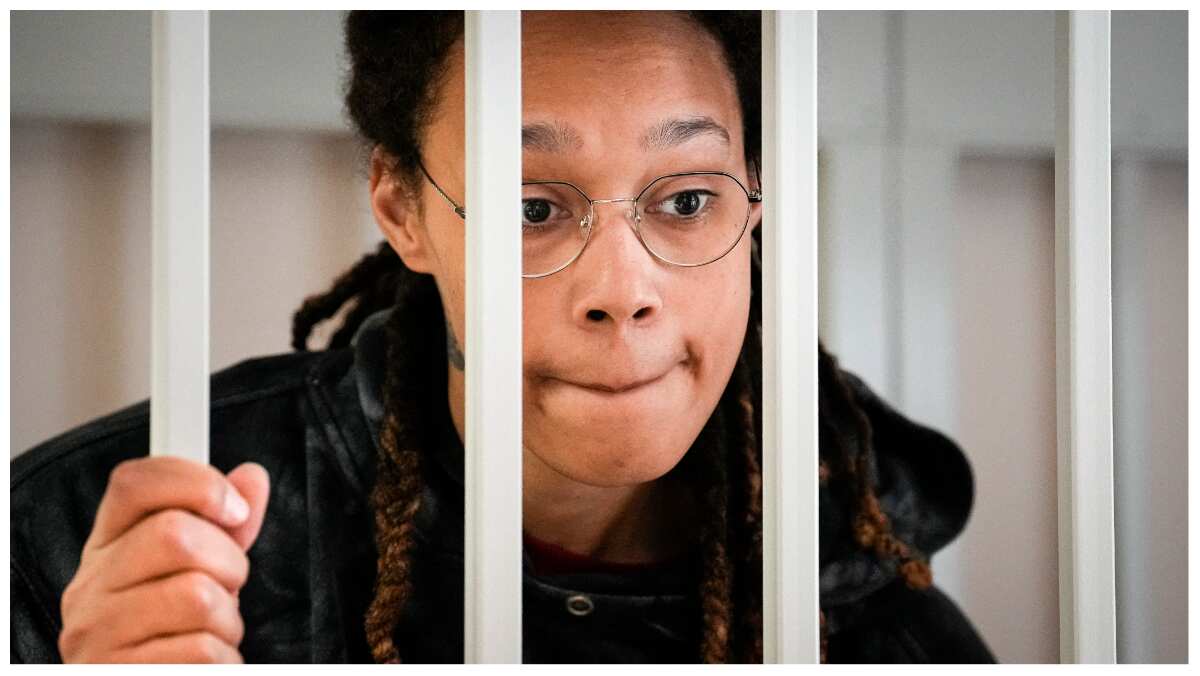
Russian court sentences US basketball star Brittney Griner to nine years in jail
Following Brittney Griner's conviction for narcotics possession and nine-year prison term, discussion has turned to the possibility of a prisoner swap between the United States and Russia that would bring her home.
Last week, Secretary of State Antony Blinken made that possibility known by saying that the United States had made a "serious proposal" to free Griner and another imprisoned American, Paul Whelan.
Such a bargain, should one can be negotiated with the Russians, is Griner's best hope of being released early now that her court case has been resolved and her sentence has been issued.

Though the guilty conviction was anticipated, the imposition of a sentence that her attorneys criticised as excessively long would give the United States further motivation to reach a favourable agreement with Russia as quickly as feasible. The formal conclusion of the court action may also provide both parties with the impetus they need to negotiate a diplomatic settlement.
A look at the issues at hand.
&imwidth=180&imheight=135&format=webp&quality=medium)
US to review Russia sanctions waiver within 60 days as Rubio cites India’s ‘substantial’ Russian energy imports
&im=FitAndFill=(700,400)&imwidth=180&imheight=135&format=webp&quality=medium)
New OTT releases this week (October 19-25, 2026): Gajab Raat to Chaar Yaar-8 titles to watch during Dussehra week on Netflix, Prime Video and more
&im=FitAndFill=(700,400)&imwidth=180&imheight=135&format=webp&quality=medium)
Tesla Roadster engineering: The hidden hardware behind its flying demonstration
&imwidth=180&imheight=135&format=webp&quality=medium)
Why France looks the most fragile in the G7 amid protests and budget deadlock
&imwidth=180&imheight=135&format=webp&quality=medium)
Tiger Shroff shows injuries after Juhu firing incident; Eknath Shinde says Mumbai won’t tolerate gang wars
&imwidth=180&imheight=135&format=webp&quality=medium)
China responds to Trump's Press Secretary Katie Zacharia after toilet remark: 'Visit China more often'
&imwidth=180&imheight=135&format=webp&quality=medium)
Cattle-feed bran in biscuits, detergent in milk: FSSAI acts against 3 companies
&imwidth=180&imheight=135&format=webp&quality=medium)
Elon Musk features on Lucknow's 'anti-India' Ravan poster alongside Rahul Gandhi, Akhilesh
&imwidth=180&imheight=135&format=webp&quality=medium)
MI5 is opening an AI threat centre, and OpenAI just told MPs the worst isn't over
&imwidth=180&imheight=135&format=webp&quality=medium)
'Those who have destroyed must pay': Macron says France feels 'anger and shame' over protest violence
&imwidth=180&imheight=135&format=webp&quality=medium)
Anthropic’s public benefit plan: What its 5% share commitment means for AI’s future
&imwidth=180&imheight=135&format=webp&quality=medium)
Kylie Jenner makes Victoria’s Secret debut in $50 million diamond-encrusted design as Timothée Chalamet cheers
&imwidth=180&imheight=135&format=webp&quality=medium)
4 killed, 19 critically injured in grass fire at Canada's largest military base
&imwidth=180&imheight=135&format=webp&quality=medium)
Cattle feed found in biscuits of Indian company, FSSAI sends legal notice
&imwidth=180&imheight=135&format=webp&quality=medium)
Brendan Taylor overtakes Andy Flower to become Zimbabwe’s leading ODI run-scorer
&imwidth=180&imheight=135&format=webp&quality=medium)
India moves to buy 10,000 more AI chips for a national compute pool open to startups
&imwidth=180&imheight=135&format=webp&quality=medium)
No Ravindra Jadeja, Yashasvi Jaiswal in India’s 2027 ODI World Cup plans: Report
&imwidth=180&imheight=135&format=webp&quality=medium)
'It's a joy to see the makers bring it on such a grand scale': SS Rajamouli on Ramayana
&imwidth=180&imheight=135&format=webp&quality=medium)
Priest dies after crucifix falls on his head during livestreamed Mass in Ecuador | VIDEO
&imwidth=180&imheight=135&format=webp&quality=medium)
Girl 'dead' for 8 hours wakes up at her own funeral, dad insists she wasn't breathing
&imwidth=180&imheight=135&format=webp&quality=medium)
Saudi Arabia asks skyscraper employees to work from home amid Houthi threats
&imwidth=180&imheight=135&format=webp&quality=medium)
NFl 2026/27 - Saints vs Steelers to go ahead in Paris next week despite protest
&imwidth=180&imheight=135&format=webp&quality=medium)
Tiger Shroff attacked by three gunmen in Mumbai, actor safe, two injured
&imwidth=180&imheight=135&format=webp&quality=medium)
After Kennedy Center and reflecting pool disputes, Trump turns to Washington golf course plan amid legal battle
&imwidth=180&imheight=135&format=webp&quality=medium)
Flying car race: Alef Aeronautics welcomes Tesla Roadster '11 years' later, but are the two models the same?
&imwidth=180&imheight=135&format=webp&quality=medium)
Anirudh Ravichander-Kavya Maran wedding: Telangana CM reveals Chennai reception date
&imwidth=180&imheight=135&format=webp&quality=medium)
'Grassroots leagues help bridge the gap': India's ODI WC winner Suresh Raina lauds ISCL ahead of Season 2
&imwidth=180&imheight=135&format=webp&quality=medium)
Shastri backs Shami comeback; lauds Bhuvi and warns Bumrah on format workload ahead of World Cup
&imwidth=180&imheight=135&format=webp&quality=medium)
Researchers name newly discovered Andean plant after Argentina legend Lionel Messi
&imwidth=180&imheight=135&format=webp&quality=medium)
'We feel like Mr India': Gujarat’s undercover SHE team guard garba nights at Navratri
&im=FitAndFill=(700,400)&imwidth=180&imheight=135&format=webp&quality=medium)
5 technologies that could make the Tesla Roadster one of the most unusual cars ever built
&imwidth=180&imheight=135&format=webp&quality=medium)
Lawrence Bishnoi gang claims responsibility for firing at Tiger Shroff over ties to Salman Khan
&imwidth=180&imheight=135&format=webp&quality=medium)
Nobel laureate Machado, who dedicated prize to Trump, confirmed as Venezuela opposition leader
&imwidth=180&imheight=135&format=webp&quality=medium)
Putin wants joint meeting with Trump-Xi summit on Ukraine war, proposes talks alongside APEC: Report
WHAT DID THE U.S. OFFER?
Other than to describe the offer as substantial and something he intended to discuss with Russian Foreign Minister Sergey Lavrov, Blinken did not provide any specifics.
According to a person with knowledge of the situation, the United States offered to free Viktor Bout, a Russian arms dealer who was convicted and is currently serving a 25-year prison term after being accused of conspiring to sell tens of millions of dollars' worth of weapons to Colombia's former FARC guerrilla army. The group was categorised by the US as a foreign terrorist organisation at the time of his conviction, but that classification was removed last year.
Last Friday's phone call between the authorities was the highest-level communication between the two sides since Russia invaded Ukraine. Additionally, they are in Cambodia for conferences with foreign ministers from Southeast Asian nations.
WHAT HAS BEEN THE RUSSIAN RESPONSE?
After his call with Lavrov, Blinken did not elaborate on his remark. Other than a statement warning the United States to pursue the Americans' liberation through "quiet diplomacy, without disclosures of speculative material," the Russians made no indication that they were interested in the offer.
Karine Jean-Pierre, the press secretary for the White House, claimed on Monday that the Russian government had made a "poor faith" offer in response, which was not taken seriously by American officials. She made no further mention of the fact that Moscow also demanded the release of a former colonel from one of its espionage services who was found guilty of murder in Germany last year, according to a report by CNN last week.
WOULD THERE BE A PRECEDENT FOR A PRISONER SWAP?
Yes, in many ways—and it's also recent. In April, Russia exchanged Konstantin Yaroshenko, a Russian pilot serving time for a cocaine trafficking conspiracy, for Marine veteran Trevor Reed, who had been found guilty of striking a Moscow police officer.
That, however, involves a Russian who was considerably less well-known than Bout, a former Soviet air force officer who was the subject of a Hollywood film and was given the moniker "Merchant of Death" due to claims that he supplied weapons for civil wars in several nations around the world. He has steadfastly insisted that he is innocent.
However, there isn't much recent precedent for prisoner swaps being discussed in public before the deal is finalised and planes take off, at least not by the American administration. Blinken's revelation from the State Department briefing room was all the more startling in light of that.
On the one hand, it appeared to be meant to convey to the public that the administration will take whatever steps are necessary to repatriate Americans who have been unfairly incarcerated.
However, making such a public offer runs the risk of weakening the administration's bargaining position to the point that it makes the United States appear unduly eager to reach an agreement or sends a message to other nations that it is prepared to fulfil potentially unreasonable demands.
SO WILL THE DEAL HAPPEN?
It's difficult to say, but the interaction between Blinken and Lavrov does seem to indicate more development than previously. It also supports the notion that the two nations are eager to keep in touch despite the extreme tensions brought on by Moscow's invasion of Ukraine.
Griner is the most well-known American being held captive abroad. She is a two-time Olympic gold medallist who has been arrested since February after authorities claimed they discovered cannabis oil-infused vape cartridges in her luggage at a Moscow airport. The conviction and sentence will only increase pressure on the government to find a deal that can get her out of prison quickly, even though several Republicans, including former President Donald Trump, have expressed opposition to a deal.
“Today’s sentencing of Brittney Griner was severe by Russian legal standards and goes to prove what we have known all along, that Brittney is being used as a political pawn,” Lindsay Kagawa Colas, Griner’s agent, tweeted Thursday.
It may be challenging, but it is "essential" and the "proper thing to do" to reach a resolution for Griner and Whelan, a Michigan corporate security executive serving a jail sentence on an espionage conviction that he and his family claim is unfounded. Whelan is likewise viewed by the US government as having been wrongly convicted.
Russian authorities, for their part, have said that they essentially view a conviction as a requirement for a prisoner swap.
President Joe Biden pleaded with Russia once more to free Griner on Thursday.
He promised in a statement that "my administration will continue to work relentlessly and pursue every available option to return Brittney and Paul Whelan home safely as soon as possible."
(As reported by Eric Tucker for AP)