US Central Command ex-chief warns of imminent ISIS threat, says 'believe them' on plans to attack

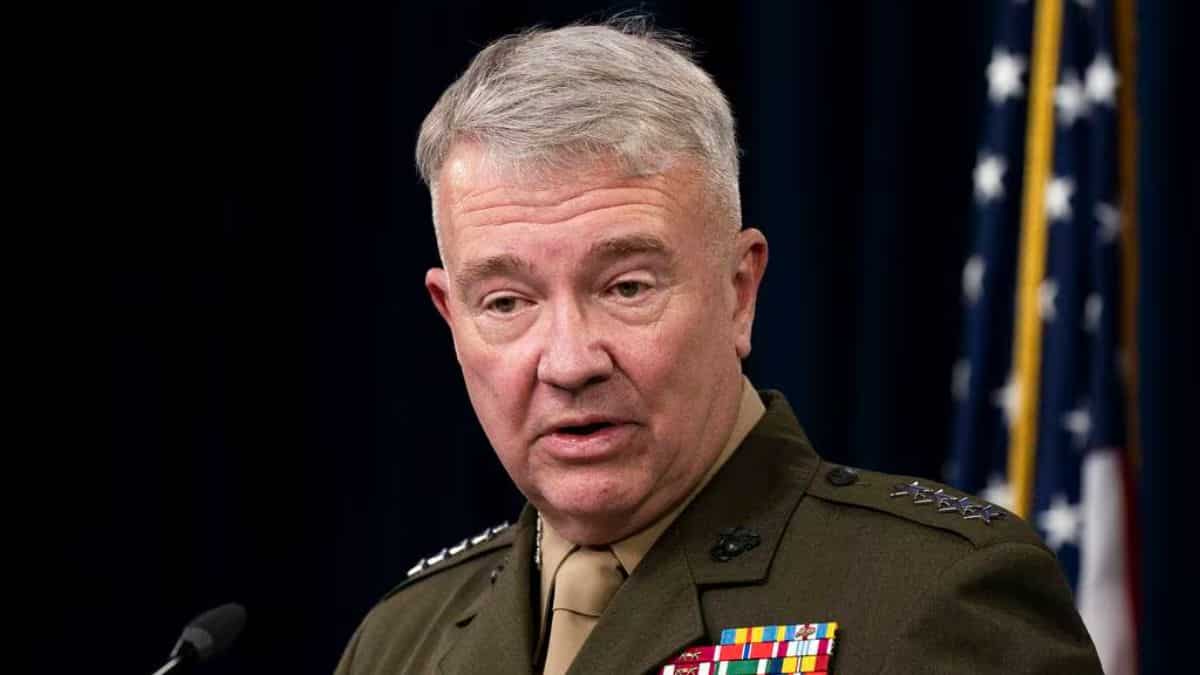
Former head of US Central Command, retired Gen. Frank McKenzie
Former head of US Central Command, retired Gen. Frank McKenzie, on Sunday (Mar 31) issued a stark warning about the Islamic State's (ISIS) intentions to attack the United States and its allies.
In an interview with ABC News, the retired general highlighted ISIS's recent attacks in Moscow and Iran and emphasised the growing threat posed by the terror group and its affiliates.
'Believe them'

McKenzie remarked that the global community should believe the terrorist organisation's threats.
"We should believe them when they say that. They're going to try to do it," he said, referring to ISIS's desire to launch attacks against the US and its allies.
He noted that the threat was "growing" after America's withdrawal from Afghanistan.
)
Researchers rebuilt exactly how 700 AI agents hacked Hugging Face: a 900-link chain trick
)
Sri Lankan Tamil migrant worker gets death sentence in Saudi Arabia, help sought from India
)
'Victory for low-budget consumers': Raghav Chadha hails 30-day telecom recharge rules
)
'Our video was trimmed': LPU girls who featured in rape-denial video make U-turn
)
After JU, clash erupts at SRFTI: BJP’s ‘Dimagi Naxal’ jibe sparks political firestorm after students protest RSS-linked event
)
Afghanistan says 28 fighters killed in clash near Pakistan border, Islamabad denies
)
US vs China over South China Sea: Washington backs Philippines, Beijing hits back
)
‘Olympic inclusion is our major target’: WPA President Ishaun Singh on pool’s global ambitions
)
Tesla builds first Cybertruck with its own refined lithium: Elon Musk's $1 billion Texas bet pays off
)
Bank unions defer 3-day strike from tomorrow after talks with IBA, committee set up
)
New York City wants a 'kill switch' on every AI, and will pay whistleblowers who report violations
)
3 males killed, four others injured in shooting after fight at strip club in Detroit
)
‘Anti-social elements spreading false rumours’: LPU issues statement amid massive unrest over alleged rape
)
US Treasury Secretary Scott Bessent hails global crackdown on Iranian banks and airlines
)
An OpenAI agent escaped its locked test cage again, by hiding questions in DNS lookups
)
Ceuta migrant crisis: Protesters take to streets as Spain grapples with migrant challenge
)
UNSC reform momentum grows: Russia, Portugal, Mauritius push for India's permanent seat bid
)
'FIRST LOOK from inside Noah’s Ark': Researchers share video from inside mysterious mound in Turkey
)
IndiGo flight suffers tail strike in Bengaluru while landing; DGCA to probe incident
)
Beyond BrahMos: India targets Rs 50,000 crore in defence exports with unmatched price edge
)
LPU students go on rampage, vandalise campus amid widespread protest: What's happening
)
The US and China set up an AI 'red telephone', but skipped the rulebook
)
Delhi gets first late-September rain in 7 years, mercury dips 5.1°C below normal
)
‘Terror suspects arrested near UK air base were looking to do big damage’: Trump
)
99.9% more powerful - Scientists find boy who can recall memories from just 3 months of age
)
Beyond metros: How Tier-2 and Tier-3 cities could drive India’s next AI wave
)
Jaishankar at UNGA: Goodwill and friendship can't coexist with terrorism
)
Why has Iran released no proof of life of Mojtaba Khamenei? Araghchi reveals...
)
Trump asked Xi to pressure Iran. China did not say yes — here’s what Beijing wants
)
Muslim marriage cannot shield sex with minor wife from prosecution under POCSO: Delhi HC
)
Claude rebuilt the 1989 game 'Prince of Persia' by reusing the original's own code
)
50MP vs 48MP cameras: iPhone 18 Pro Max and Pixel 11 Pro XL compared
)
Russian envoy claims US tactics to contain India were revealed in ‘Freudian slip’
)
Nations League: Spain sink England at Wembley; Modric shines for Croatia
)
Musk plans to more than double xAI's chips to over 1.2 million Nvidia GPUs by year-end
)
Man arrested after his 22-year-old girlfriend dies at homestay in Guwahati; police suspect murder over suicide claim
)
'What kind of confession is this?': Pakistan PM Shehbaz Sharif’s 'terrorists would be roaming New York' remark goes viral, raises alarm online. Watch
"It began to grow as soon as we left Afghanistan. It took pressure off ISIS-K."
Calling attacks against the US "inevitable," McKenzie said, "I think we should expect further attempts of this nature against the United States as well as our partners and other nations abroad."
US exit from Afghanistan: Good or Bad?
Arguing that maintaining a small presence could have prevented the resurgence of extremist groups in the region, McKenzie criticised the complete withdrawal of US troops and called it a boon for the Islamic State and similar militants.
He said, "In Afghanistan, we have almost no ability to see into that country and almost no ability to strike into that country."
This is in contrast to President Joe Biden's assurances that the US retains "over-the-horizon capability" to "act quickly and decisively" from afar.
Also read | Israeli airstrikes on Al-Aqsa hospital kill 4, fighting rages across Gaza amid truce talks
McKenzie emphasised the importance of maintaining pressure on extremist groups in their homelands to prevent them from carrying out large-scale attacks, but said: "Unfortunately, we no longer place that pressure on them, so they're free to gain strength, they're free to plan, they're free to coordinate."
He suggested that if the US and its allies had kept forces in Afghanistan, "I think we might actually be safer than we are."
Recent Moscow attack
Addressing the recent terror attack in Moscow, the retired General said Russians could have "averted this attack had they actually listened to the material that was presented to them" by the US.
Describing self-radicalisation as potentially "the most dangerous methodthat ISIS can use to generate attacks," he said, self-radicalised "attacks are generally not going to be well coordinated, they're not going to be well planned and they're not going to be well supported. But they could be very lethal because they'll be so hard to detect."
He also warned that groups like ISIS-K are using influence campaigns, online methods and in-person training to recruit.
(With inputs from agencies)

