

&imwidth=800&imheight=600&format=webp&quality=medium "This tiny nation gave a massive NO to foreign military bases, in huge setback for US regional plans")
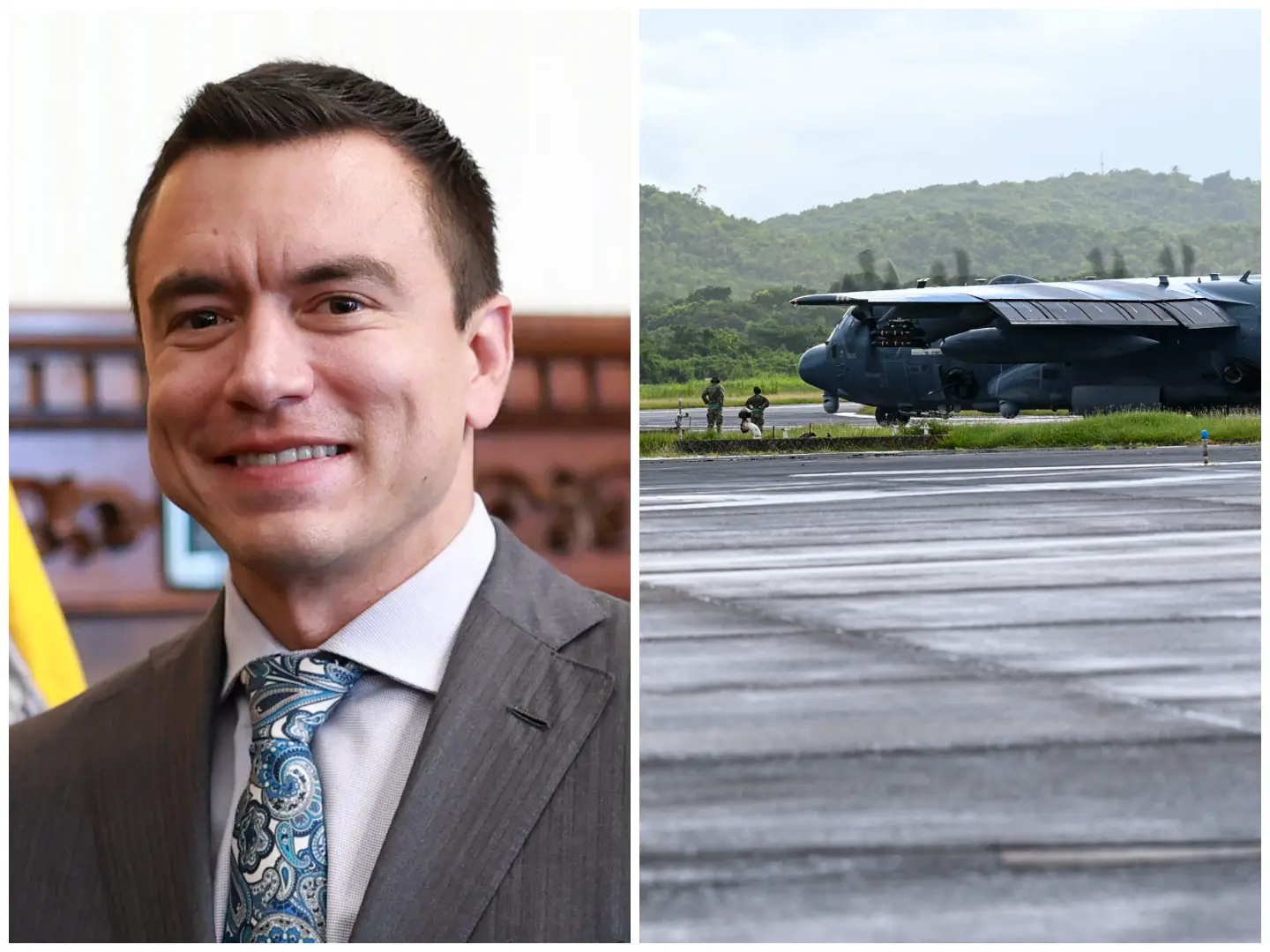
People of Ecuador have voted against allowing foreign military bases in the Pacific nation, dealing a major setback to United States' ambitions in the region and contradicting the position of the country’s president, who supported such cooperation. In a national referendum held on Sunday, (Nov 16), nearly 60 per cent of voters rejected lifting the longstanding constitutional ban on foreign bases. Another proposal to convene a new constitution-drafting assembly was also rejected by similar margins. The results reflected public resistance to wide-ranging institutional reforms.
Ecuador’s referendum rebuffs Noboa’s security rationale on foreign military bases
The proposal to allow foreign military facilities was central to President Daniel Noboa’s security agenda. The referendum sought permission to overturn Article 5 of the 2008 constitution, which designates Ecuador as a territory of peace and prohibits the establishment of foreign military bases. The defeat of the proposal represents a significant political setback for Noboa, who came to power in 2023 and had attempted to link the measure to his broader anti-crime strategy in a country beset by gang violence.
Noboa had argued that Ecuador’s escalating drug-related violence required international support, particularly from the United States. He maintained that tackling transnational criminal networks demanded coordinated responses and described foreign military facilities or shared operations centres as essential tools. Allowing foreign bases, he said, would enhance intelligence sharing and counter-narcotics surveillance.
The United States had a military base in Ecuador until 2009
Trending Stories
&imwidth=180&imheight=135&format=webp&quality=medium)
Other Mommy leads North American box Office as Verity, Resident Evil round out top four
&im=FitAndFill=(700,400)&imwidth=180&imheight=135&format=webp&quality=medium)
Navratri 2026: 9 days, 9 forms of Goddess Durga and 9 colours- Check the complete list
&im=FitAndFill=(700,400)&imwidth=180&imheight=135&format=webp&quality=medium)
Is sending robots to Mars easier than sending humans?
&imwidth=180&imheight=135&format=webp&quality=medium)
A watchdog rated 'ChatGPT for Teens' an unacceptable risk and says keep under-18s off it
&imwidth=180&imheight=135&format=webp&quality=medium)
1,500 drones illuminate Mumbai sky as Cordelia Cruises unveils second ship, Cordelia Sky
&imwidth=180&imheight=135&format=webp&quality=medium)
'Just coincidence': Police mistakes protester as AISA chief Neha Bora, arrests her from site
&imwidth=180&imheight=135&format=webp&quality=medium)
Anthropic's AI invented a murder witness and sent the fake tip to Philadelphia police
&imwidth=180&imheight=135&format=webp&quality=medium)
CJI Surya Kant declines INDIA bloc leaders’ request for meeting ahead of march to SC, asks them to file petition
&imwidth=180&imheight=135&format=webp&quality=medium)
'Turn approver, resign, we'll forgive you': Rahul Gandhi claims receiving messages from CEC Gyanesh Kumar
&imwidth=180&imheight=135&format=webp&quality=medium)
Aamir Khan's niece, actress Zayn Marie shares injury pictures after being detained with Imran Khan at Mumbai protest
&imwidth=180&imheight=135&format=webp&quality=medium)
One Indian killed in Riyadh airport attack; 11 others injured : MEA
&imwidth=180&imheight=135&format=webp&quality=medium)
Nathan Lyon completes 1,000 Test runs at No. 10 to script rare cricket feat
&imwidth=180&imheight=135&format=webp&quality=medium)
Top AI models flunked a test of inventing new AI research, so much for self-improving AI
&imwidth=180&imheight=135&format=webp&quality=medium)
Wasim Jaffer blames Ajit Agarkar-led selection panel for Virat Kohli’s Test retirement
&imwidth=180&imheight=135&format=webp&quality=medium)
'Ouch!!! That must hurt': Kangana Ranaut hails Kamal Haasan's sharp reply to Elon Musk over Starlink row
&imwidth=180&imheight=135&format=webp&quality=medium)
Sidhu Moose Wala’s younger brother wins hearts by recreating late singer’s signature move at Toronto Hologram Show
&imwidth=180&imheight=135&format=webp&quality=medium)
Meta's Muse AI could be a security nightmare for India's billion-plus users
&imwidth=180&imheight=135&format=webp&quality=medium)
UK school ditches technology, shifts from screen to pen and paper for learning
&imwidth=180&imheight=135&format=webp&quality=medium)
IND vs WI, 3rd T20I: Abhishek Sharma smashes 18-ball fifty, sets record for fastest to 2,000 T20I runs
&imwidth=180&imheight=135&format=webp&quality=medium)
Houthis claim Riyadh airport attacks, Aramco strikes; issue fresh warning to airlines, travellers and workers
&imwidth=180&imheight=135&format=webp&quality=medium)
Portugal Federation confirms Cristiano Ronaldo’s return to national team despite suspension
&imwidth=180&imheight=135&format=webp&quality=medium)
Delhi protests: 'Court should not be dragged into political activity', says CJI Surya Kant
&im=FitAndFill=(700,400)&imwidth=180&imheight=135&format=webp&quality=medium)
New OTT releases this week (October 12-18, 2026): Sacrifice, Koffee with Karan S9, Roadies Rebirth- 6 titles coming on Netflix, JioHotstar and more
&imwidth=180&imheight=135&format=webp&quality=medium)
Microsoft's Nadella says treat every AI model as already hacked, and build an 'emergency brake'
&imwidth=180&imheight=135&format=webp&quality=medium)
Delhi protest: CJI Surya Kant declines to meet India Bloc leaders
&imwidth=180&imheight=135&format=webp&quality=medium)
China imposes first-ever sanctions on ministers from Taiwan allies: What this means
&imwidth=180&imheight=135&format=webp&quality=medium)
McSweeney reveals how studying Virat Kohli’s YouTube clips helped Australia A conquer India
&imwidth=180&imheight=135&format=webp&quality=medium)
Maharashtra appoints FDA commissioner Tukaram Mundhe as secretary of committee for MPSC overhaul amid stir
&imwidth=180&imheight=135&format=webp&quality=medium)
Iran: US accepted some conditions, Clarity needed on others
&imwidth=180&imheight=135&format=webp&quality=medium)
Nana Patekar's cause of death confirmed; here's what his postmortem report says
&imwidth=180&imheight=135&format=webp&quality=medium)
iPhone Duo price index: Tracking Apple’s latest pricing trends
&imwidth=180&imheight=135&format=webp&quality=medium)
'Say no to Muse': Meta has no control over its own moderation AI while it forces a security nightmare on everyone
&imwidth=180&imheight=135&format=webp&quality=medium)
Delhi wakes up to heavy rain, thunderstorms; yellow alert in place; temperature drops
Before the 2008 constitution came into force, the United States operated a Forward Operating Location in Manta from 1999 until 2009. The American presence supported regional anti-drug surveillance flights until former President Rafael Correa refused to renew the agreement, citing sovereignty concerns. Noboa repeatedly invoked this earlier period of cooperation between Ecuador and the United States while campaigning for a Yes vote.
Ecuadorians favour sovereignty over foreign military presence
Left-wing parties, including Correa’s Citizens’ Revolution, characterised the foreign military base proposal as an unacceptable intrusion on Ecuador’s national sovereignty. Opponents argued that allowing foreign military forces risked opening the door to greater US influence in Latin America. Regarding Ecuador’s security crisis, they insisted that solutions should be pursued domestically without compromising constitutional protections.
Ecuador referendum: Strategic implications for the United States
The referendum result is widely viewed as a lost opportunity for the United States to re-establish a strategic foothold on the Pacific coast. Reopening Manta would have strengthened US surveillance of drug trafficking routes across Colombia, Peru, and Bolivia. It would also have aligned with Washington’s broader interest in monitoring left-leaning governments in the region, including developments in Venezuela.
Since the closure of Manta in 2009, Ecuador has hosted no foreign military bases, and the referendum has firmly upheld the 2008 prohibition. Noboa accepted the results and pledged to continue combating organised crime with the tools currently available.

