DECODING: What does Nepal’s new Prachanda-Oli coalition mean for India?


DECODING: What does Nepal’s new Prachanda-Oli coalition mean for India?
Several experts have expressed concerns that Nepal would now turn pro-China under the new Prachanda-Oli alliance. But if one examines closely, there are few catches and subtleties to it.
WION spoke to experts on Nepalese politics, including former ambassador to Nepal, Ranjit Rae.
How will the new Prachanda-Oli alliance impact India-Nepal relations?

In a conversation with WION, former Indian envoy to Nepal, Ranjit Rae said India and Nepal have very “comprehensive, strong and ancient relationship” which is not just between the governments but also between the people. He said India has to work with whichever government is in power in Nepal because both countries have economic and security interests with each other.
So are the apprehensions that Nepal will turn anti-India unwarranted then?
Aditya Gowdara Shivamurthy, an expert with the think tank ORF, opined that it is difficult to say if the current election results could drastically damage India-Nepal relations.
)
Justice eludes Air India 1985 bombing victims as Canada probe goes 'inactive' | Gravitas
)
Trump revives India-Middle East-Europe economic corridor as India emerges central to West Asia’s future: What is it?
)
Erdogan again raises Kashmir issue at UNGA, calls for dialogue under UN Charter
)
Trump signs Greenland security deal with Denmark, paving way for two new US military bases
)
IND vs JPN T20I: How an overturned wide became point of difference between India's win and a tie
)
Trump-Xi summit: From trade to Taiwan, what will the US and Chinese presidents discuss in Washington?
)
Cyclone Arnab: Landfall expected before midnight tomorrow as IMD issues orange alerts across six states
)
ICC plans T20I expansion and fewer ODIs in 2027–2031 FTP cycle: Report
)
US-China tech war: Businesses in the front line
)
'Mumma’s boy from Gwalior who dared to dream': Kartik Aaryan pens long note after first National Award win
)
Gravitas | Boosting NHS productivity could save 20,600 lives in UK annually: Report
)
Nor'easter could batter 13 US states this week. What you should know
)
US and China vie for AI dominance as calls grow for regulation | Gravitas
)
Yemen clashes kill 154 people in two days as cornered Saudi battles Houthi offensive | Gravitas
)
Bomb scare in New York amid UNGA: Suspicious suitcase found near UN headquarters
)
IND vs JPN, one-off T20I: Japan captain Kendel on pushing India to the brink - ‘It was special’
)
Mikel Arteta verbally agrees to three-year extension with Arsenal after title-winning Premier League season
)
WION Iconic Tourism Summit and Awards 2026: Key voices to discuss India’s tourism future
)
WION Iconic Tourism Summit and Iconic Awards 2026: India's travel economy leaders gather in Delhi
)
Oil slips to $98 as Saudi Arabia restarts East-West oil pipeline
&im=FitAndFill=(700,400))
New OTT releases this week (September 21-27, 2026): Shaque: Trust No One, Hunkkaar, Don’t Be Shy- 5 new titles coming to Netflix, Prime Video and more
)
81st UN General Assembly: Burnham announces UK-US AI defence tie-up
)
Trump calls on nations to quit ‘rogue’ and ‘out-of-control’ International Criminal Court, rips UN
)
Infections transmitted from pregnant woman linked to autism risk
)
'What kind of confession is this?': Pakistan PM Shehbaz Sharif’s 'terrorists would be roaming New York' remark goes viral, raises alarm online. Watch
)
Elephants hide behind trees, stage surprise attack on poachers targeting rhinos in South Africa
)
IIT Bombay professor Suryanarayana Doolla sent on leave amid Sahil Wakode death probe
&im=FitAndFill=(700,400))
National Film Awards 2026: Kartik Aaryan, Mammootty, Yami Gautam, Randeep Hooda and other key winners
)
El Niño 2026 heats up to become strongest in 1,000 years
)
Anne Hathaway to run in supporting race for Nolan's epic
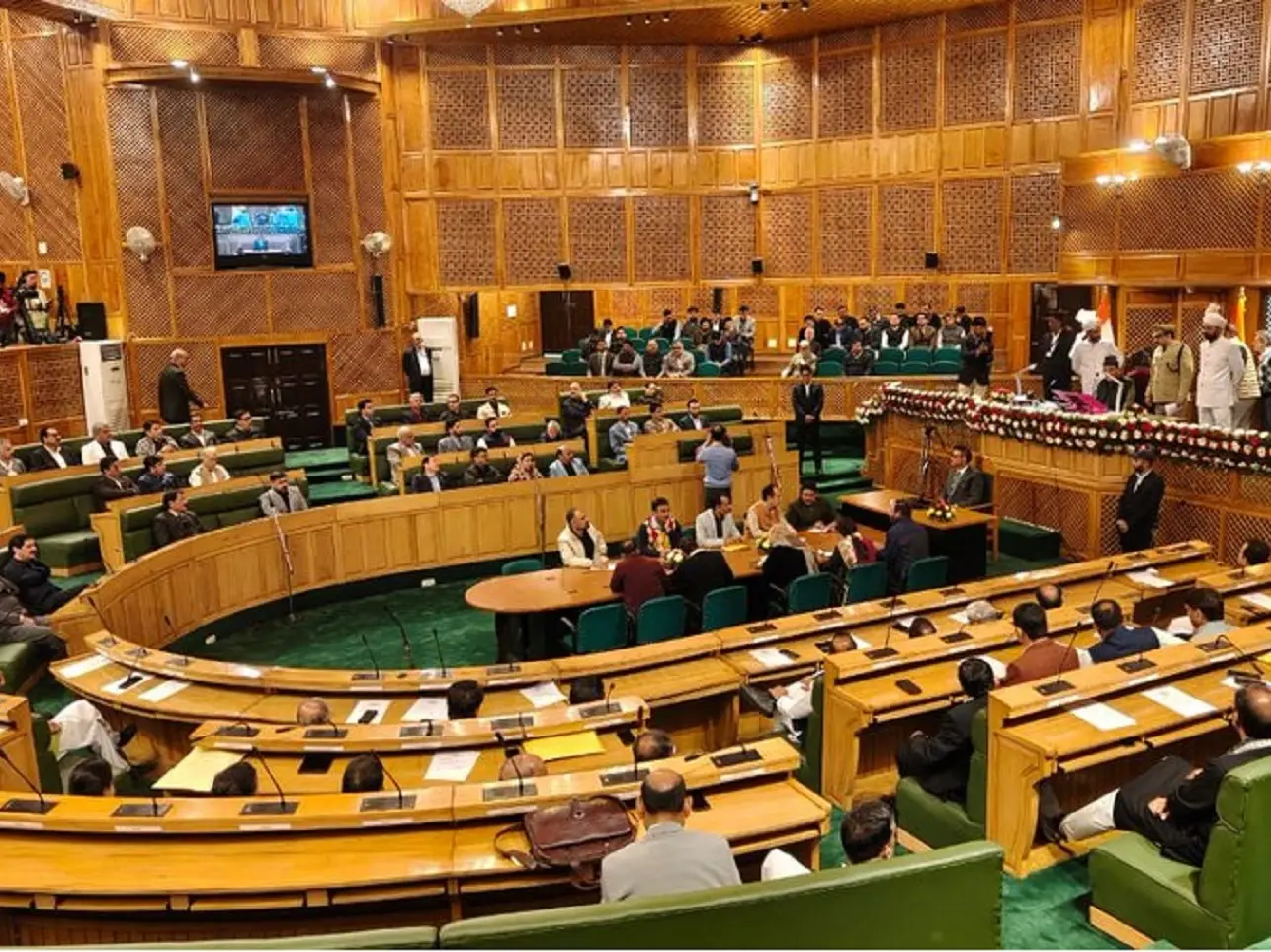)
Over 4,200 books withdrawn from circulation in J&K colleges, 94% from Kashmir
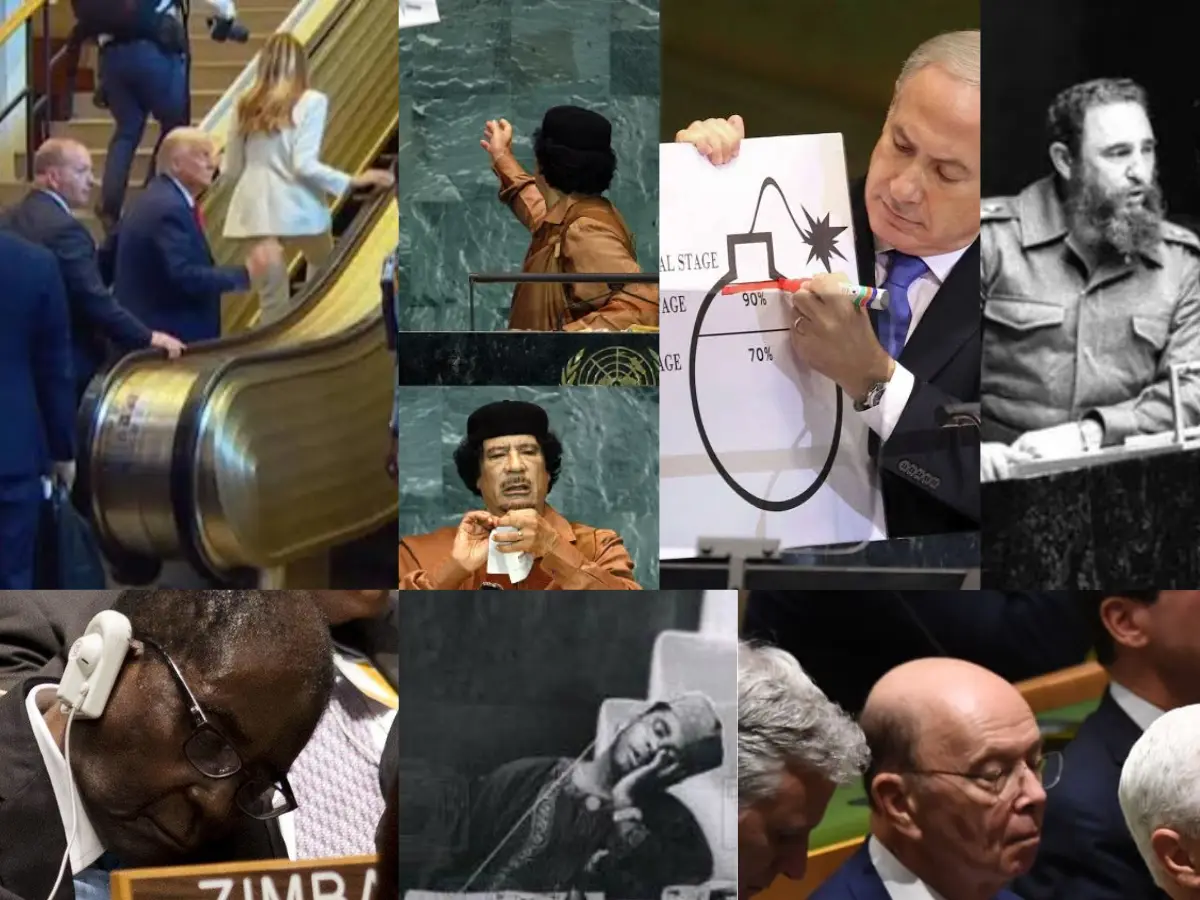)
From Gaddafi tearing up UN Charter to Trump’s ‘escalatorgate’: Most unforgettable UNGA moments
)
Explainer: Why rare-earth export licences and Board of Trade are US priorities ahead of Trump-Xi summit
)
Asia prepares for record El Nino, food shock
)
Forget apps: Qualcomm CEO says AI agents will change how we use smartphones
)
Four female students raped during 'Red Zone' at California university. What we know
Shivamurthy said political stability inside Nepal is itself a challenge.
“The current coalition government is a compromise of various parties with very different ideologies. It is not difficult to suggest that internal cohesion and compromise will be a challenge in the coming days. The strong anti-Indian policy will also likely trigger more divisions within the coalition,” he pointed out.
Dr. Anshuman Behera, Associate professor at National Institute of Advanced Studies, Bengaluru, termed Nepal a kind of “paradox” with respect to its relations with India.
He pointed out that Nepalese people and the political elite want India to help Nepal but at the same time, they hold India responsible for all that is happening wrong.
“This is a very subtle but important mindset they have,” he said adding, “They (Nepal) have to do business with India because it is a landlocked country.”
South Asian nations today are displaying more agency than they ever did, Shivamurthy said in regards to China-Nepal alliance.
However, he also cautioned that it is pivotal that they maintain balance.
This will likely shape how Nepal-China relations will factor in India. “They might muster anti-Indian sentiments but they will also hesitate to cross the red lines,” he added.
WION Dispatch: Pushpa Kamal Dahal 'Prachanda' takes oath as Nepal's PM for third time
Anti-India rhetoric for domestic political gains
Dr. Behera, Ambassador Rae and Shivamurthy all agreed that Nepal's rhetoric against India is primarily helping leaders advance in their local political ambitions.
“In Nepal, all leaders play the anti-India card to become popular. Politically, it makes sense for leaders to say we can stand up to India. I am the stronger leader. Therefore, in every election, you have this kind of rhetoric. That is why when there is any issue in India, it is blown up in the Nepalese media,” said Rae.
“Oli highlights issues with India, for it has been easier to make domestic political gains by putting up a Goliath vs David story,” said Shivamurthy.
He remarked that cultural similarities and political relations with India only give this a political flavour as China on the other hand is a new player and might not be able to muster political and nationalist sentiments like India does.
Commenting over how domestic political gainis one of the most important reasons for Nepal’s anti-India rhetoric, Dr. Behera asked, “If not this, how do you create an euphoria in Nepal?”
“Domestic politics in Nepal is more and more conceived around anti-India and pro-India rhetoric because India does play an important role not in politics but also in the Nepal’s society, culture and religions,” he said.
India-Nepal border issues
Limpiyadhura, Kalapani and Lipulekh regions have remained sore points in India-Nepal relations. Ambassador Rae said that border issue has become very complicated as Nepal in its new map showed some Indian territories as its own.
“This map has been endorsed by two-thirds majority in the Nepalese parliament. I don’t think this is going to get resolved anytime soon,” he said.
Dr. Behera said India should not have apprehensions but at the same time it cannot relax as well. “There are concerns about territorial incursions that KP Oli brought in for a couple of years. If not anything, this is for India's territorial integrity.”
He said in the run-up to the elections, there was something very interesting happened this time. “For the first time, Chinese incursions were highlighted in the elections by Nepali Congress,” he said.
What is the future of US’ $500 million MCC project?
The US government aid agency had agreed in 2017 to provide USD 500 million in grants for cross-border electricity transmission and road connectivity to Nepal. This is known as Millennium Challenge Corporation (MCC). However, the project has been surrounded by Nepal's internal political conflicts with one party supporting the grant while others, not so much.
The relevance of balancing and agency display could also be seen here, said expert Shivamurthy. Under the government of Sher Bahadur Deuba, Nepal tried to build a broader political coalition to pass the MCC Act but how the new dispensation will react to the US will also depend on the extent of China's “elite capture” in the government, and the political stability of the government, he added.
If the project goes smoothly, it will benefit India as well.
How? Ex-envoy Rae explained that communist parties were opposed to MCC earlier as they thought it was anti-China and part of the Indo-Pacific strategy.
Now the communist parties are ruling the country. “I hope the implementation of this goes ahead smoothly as it is very important to building Nepal's productive capacity in terms of road infrastructure and transmission lines,” he elaborated.
Dr Behera explained that the one reason Oli was not supporting MCC was because he had a lot of corruption charges against him. “By negating MCC in the Nepalese parliament, Oli was trying to overshadow a lot of corruption charges that are there against him. So when the Nepali Congress came for a short stint they tried to push MCC.”
He also said that MCC will benefit Nepal’s economy.
Why Deuba was trying to push this was because following the pandemic in Nepal, the economy of Nepal was in a very bad shape. “$500 million boost would have actually supported Nepal's economy to a great extent.”
China’s interference in Nepal’s domestic affairs
In India, some policymakers and experts often feel Nepal will be taken over by China and Beijing has a very important role to play in Nepal. But many tend to forget that Nepal is an independent and sovereign country, said Dr. Behera.
On the other hand, he continued, some critics over-aspire that India should play an important role in Nepal's politics. “Both of them are mutually flawed. One has to understand that Nepal has an independent internal political balance,” he asserted.
Shivamurthy argued that this is not the first time that China has intervened in Nepal’s domestic affairs. “It had played a crucial role in bringing the communist alliance together when the divisions were at their peak during the last tenure. This election has a lot at stake for China after Deuba's tenure. Most of Beijing’s projects continue to be unimplemented yet. Beijing's role in bridging an alliance between two factions cannot be overruled,” he pointed out.
Meanwhile, Rae underscored that the Prachanda-Oli coalition is something that has been tried earlier with the help of Chinese support but had come to an end earlier.
Internal fighting and Prachanda’s political opportunism
“KP Oli is anti-India, if not completely unconditionally pro-China. At the same time, Prachanda's political opportunism does not give him the credentials of a seasoned politician to the extent that his own party's people, including ex-prime minister of Nepal, Baburam Bhattarai, walked out on Maoists,” Dr. Behera said.
Prachanda and Oli were co-chairs of the unified CPM but the fallout between the two led to the division of the party and the eventual ouster of Oli as Prime Minister of Nepal. Now the friends-turned-foes are friends again.
On this, Dr. Behera said, “I have been following him (Prachanda). He is known to have deviated from any political ideology he claims to follow. There is this unholy alliance between CPM (Maoist) and UML but just remember that a year before, the same Prachanda withdrew from the communist alliance between KP Oli and the undivided UML and the CPM formed the government.”
“If one looks at this pre-election alliance, it takes Nepal politics to a different level of unethical political stand. Prachanda's government is going to survive going by the new constitution of Nepal and they cannot hold a no-confidence motion against him. But whether Prachanda will support Oli or not it is not sure.”
WATCH WION LIVE HERE
You can now write for wionews.com and be a part of the community. Share your stories and opinions with us here.