Climate change threatens South Korea's famous kimchi industry

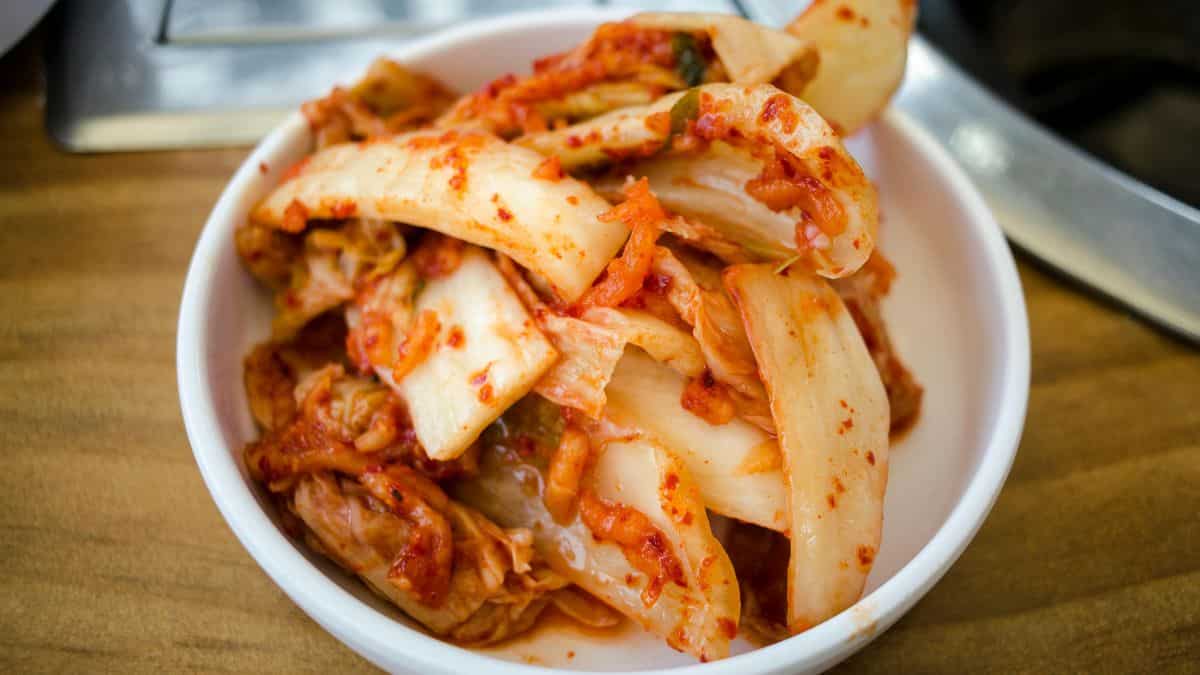
Kimchi dish
Climate change is threatening the plantation of napa cabbage that is used to make South Korea's signature dish, Kimchi. The rising temperatures are leading to a decline in the quality and quantity of the produce, according to farmers, manufacturers, and scientists.
Napa cabbage thrives in colder climates and is grown in mountainous regions with temperatures below 25 degrees Celsius during the summer months. The rise of warmth in the weather conditions makes it unsuitable to grow this crop, which could lead to South Korea not being able to grow napa cabbage altogether one day due to rising heat.
"We hope these predictions don’t come to pass," plant pathologist and virologist Lee Young-gyu said.

"Cabbage likes to grow in cool climate and adapts to a very narrow band of temperatures," Lee said. "The optimal temperatures are between 18 and 21 Celsius."
The spicy and fermented dish can be made with a variety of vegetables like green onion, cucumber, and radish, however, cabbage remains the most popular among kimchi lovers. The hotter climate has already started showing signs for farmers and kimchi makers, both commercially and domestically.
)
Nigeria: Protesters take to the streets, police fire shots
)
US-Iran war: Tehran draws red lines — seven demands before any peace talks
)
Russia-Europe tensions: Polish PM warns Russian attacks could test NATO's unity
&im=FitAndFill=(700,400))
‘Not the US or China’: These are the countries leading the world in arable land
)
Mark Carney mimics Trump in hilarious moment over C$70 billion clean-energy investment; room erupts in laughter
)
Delhi voter roll shake-up: 3.31 million electors flagged in SIR review
)
‘End of my career...’: NSA Doval recalls tense Sikkim mission when China captured Indian intelligence team
)
Report: Iran rebuilding Taleghan 2, nuclear site tied to past weapons research, hit twice by Israel
)
Trump defends AI amid growing alarm, announces new 'AI force' and promises an 'AI czar'
)
Iran sets 7 conditions to end war with US: What are Tehran’s demands?
)
Trump announces ‘AI Force’ as debate grows over AI risks and regulation
)
China may have gained access to US's classified F-35 jets; parts meant for repairs diverted to Hong Kong, sparking Pentagon inquiry
)
Gaza under attack: Health chief's son killed in IDF strikes
)
Arvind Kejriwal, family members, Delhi CM Rekha Gupta get SIR notices
)
Cochin shipyard starts building Indian Navy's next-gen missile vessels
)
Saudi vs Houthis: Houthis claim missiles & drones used in attack on key Saudi sites
)
Ed Sheeran addresses Macklemore's removal, Gaza conflict during Philadelphia concert: 'I cannot hide how I feel'
)
‘Will go to any extent’: Pakistan vows to defend Saudi Arabia amid Houthi attacks
66 years of the Indus Waters Treaty: How India and Pakistan settled a bitter river dispute
)
The Verdict | When precision fails: US commits war crime in Minab school strike, UN finds
Russia attacks Ukraine with 174 drones, kills 8; 2 vessels hit in Black Sea
)
9 women found dead near Johannesburg: South Africans rally, demand 'enough' to femicide
)
Kampala-Ankara rift deepens: Uganda suspends military ties, seeks Fred Lumbuye's extradition
)
Trump wants to rename ‘Artificial Intelligence’, gives 3 options: Which one would you pick?
)
US-Iran war: Tehran sets seven conditions to re-engage in talks with US
)
Reacher star Alan Ritchson opens up about alleged blackmail, suicide attempt during difficult period
)
Africa is splitting, and a lot sooner than estimated, giving way to a new ocean
)
Flying cars in UAE: Ras Al Khaimah signs deal with Chinese company to test new transport
)
Trump bans CNN, MS NOW and Politico from White House over ‘FAKE NEWS’
)
Trump 2.0: Dark days ahead for America’s ‘imperial presidency’
&im=FitAndFill=(700,400))
How many F-35s does Britain, Japan and Israel have?
)
Harry Brook targets long reign at top of T20I rankings after Sri Lanka sweep
)
Russia's deadly Ukraine strikes kill 2 in Sumy, hit Dnipro mall
)
Russia holds first parliamentary elections since the beginning of the Ukraine war
&im=FitAndFill=(700,400))
Meet top 5 Indian batters with fastest T20I centuries
)
Raphinha hat-trick powers Barcelona to 3-1 win over Sevilla in La Liga
)
)
The heart of the cabbage "goes bad, and the root becomes mushy," said Lee Ha-yeon, who holds the title of Kimchi Master from the Agriculture Ministry, on the effect of rising temperatures on the crop.
"If this continues, then in the summer time we might have to give up cabbage kimchi," said Lee. Her contribution to food culture has been significant.
Shrinkingproduction of napa cabbage
The statistical data from government agencies shows the area of cabbage grown last year had been less than half of the area 20 years ago. The farming of the vegetable has dipped to 3,995 hectares from 8,796 hectares.
Researchers have attributed this decline in production to higher temperatures, unpredictable heavy rains, and pests which make it difficult to grow the crop in summer, its prime time. The Rural Development Administration has predicted there will be no cabbage left by the year 2090.
South Korea's kimchi industry is already dealing with lower-priced imports from China and climate change can worsen the situation. The government has brought up climate-controlled storage to regulate prices and supply shortages.
Scientists are working to develop crop varieties resistant to warm climates, unpredictable rain, and infections. However, farmers believe these crops would be expensive to grow and taste different.
(With inputs from agencies)

