Climate change: Chile, Argentina face scorching heatwave in middle of winter

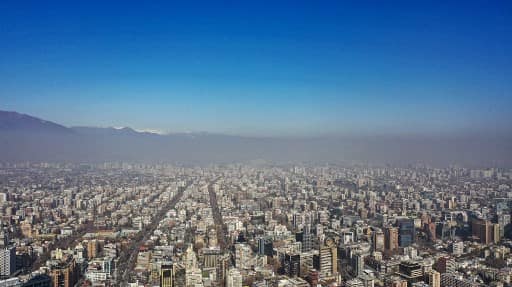
Chile, Argentina faces scorching heat in middle of winter
Latin American countries like Chile and Argentina are experiencing high temperatures like those in the northern hemisphere, but at a time whenit was supposed to be their winter.
A Chilean meteorologist expert Cristobal Torres in conversation withAFP said that the mountain town of Vicuna recorded 37 degrees for the first time in 70 years. Additionally, the capital city Santiago recorded 24 degreeCelsius and is likely to register similar temperatures on Thursday and Friday.

One of the most significant impacts of hot temperatures in Chile was on snowpacks in the mountains, a vital water source in the country's capital.
Meanwhile, in Argentina's Buenos Aires, the temperature exceeded 30 degreeCelsius on August 1, the National Meteorological Service reported. The usual temperature in the city at this time varies between 9 degreesand 18 degreeCelsius.
Several parts across Uruguay also recorded temperatures near 30 degrees on Wednesday.
)
Justice eludes Air India 1985 bombing victims as Canada probe goes 'inactive' | Gravitas
)
Trump revives India-Middle East-Europe economic corridor as India emerges central to West Asia’s future: What is it?
)
Erdogan again raises Kashmir issue at UNGA, calls for dialogue under UN Charter
)
Major League Soccer referee sacked for sexist comment about female match referee
)
Trump signs Greenland security deal with Denmark, paving way for two new US military bases
)
IND vs JPN T20I: How an overturned wide became point of difference between India's win and a tie
)
Trump-Xi summit: From trade to Taiwan, what will the US and Chinese presidents discuss in Washington?
)
Cyclone Arnab: Landfall expected before midnight tomorrow as IMD issues orange alerts across six states
)
ICC plans T20I expansion and fewer ODIs in 2027–2031 FTP cycle: Report
)
US-China tech war: Businesses in the front line
)
Gravitas | Boosting NHS productivity could save 20,600 lives in UK annually: Report
)
Nor'easter could batter 13 US states this week. What you should know
)
WION Iconic Tourism Summit: Seychelles envoy says India partnership is important for Seychelles
)
US and China vie for AI dominance as calls grow for regulation | Gravitas
)
Yemen clashes kill 154 people in two days as cornered Saudi battles Houthi offensive | Gravitas
)
China to test supersonic jet that moves at Mach 2, double the speed of sound
)
Bomb scare in New York amid UNGA: Suspicious suitcase found near UN headquarters
)
IND vs JPN, one-off T20I: Japan captain Kendel on pushing India to the brink - ‘It was special’
)
Mikel Arteta verbally agrees to three-year extension with Arsenal after title-winning Premier League season
)
WION Iconic Tourism Summit and Awards 2026: Key voices to discuss India’s tourism future
)
WION Iconic Tourism Summit and Iconic Awards 2026: India's travel economy leaders gather in Delhi
&im=FitAndFill=(700,400))
New OTT releases this week (September 21-27, 2026): Shaque: Trust No One, Hunkkaar, Don’t Be Shy- 5 new titles coming to Netflix, Prime Video and more
)
81st UN General Assembly: Burnham announces UK-US AI defence tie-up
)
Trump calls on nations to quit ‘rogue’ and ‘out-of-control’ International Criminal Court, rips UN
)
Infections transmitted from pregnant woman linked to autism risk
)
'What kind of confession is this?': Pakistan PM Shehbaz Sharif’s 'terrorists would be roaming New York' remark goes viral, raises alarm online. Watch
)
Elephants hide behind trees, stage surprise attack on poachers targeting rhinos in South Africa
)
IIT Bombay professor Suryanarayana Doolla sent on leave amid Sahil Wakode death probe
&im=FitAndFill=(700,400))
National Film Awards 2026: Kartik Aaryan, Mammootty, Yami Gautam, Randeep Hooda and other key winners
)
El Niño 2026 heats up to become strongest in 1,000 years
)
Anne Hathaway to run in supporting race for Nolan's epic
)
Over 4,200 books withdrawn from circulation in J&K colleges, 94% from Kashmir
)
From Gaddafi tearing up UN Charter to Trump’s ‘escalatorgate’: Most unforgettable UNGA moments
)
Explainer: Why rare-earth export licences and Board of Trade are US priorities ahead of Trump-Xi summit
)
Asia prepares for record El Nino, food shock
)
Forget apps: Qualcomm CEO says AI agents will change how we use smartphones
)
Four female students raped during 'Red Zone' at California university. What we know
Hot weather in Chile: Global warming and El Nino phenomenon
Chile's Environment Minister Miasa Rojas, a climatologist, explained that the sudden change in the climate is due to global warming and the El Nino phenomenon.
"What we are experiencing is the combination of two phenomena: a global warming trend due to climate change plus the El Nino phenomenon." He added that once the El Nino phenomenon ends, the weather should also stop being this extreme.
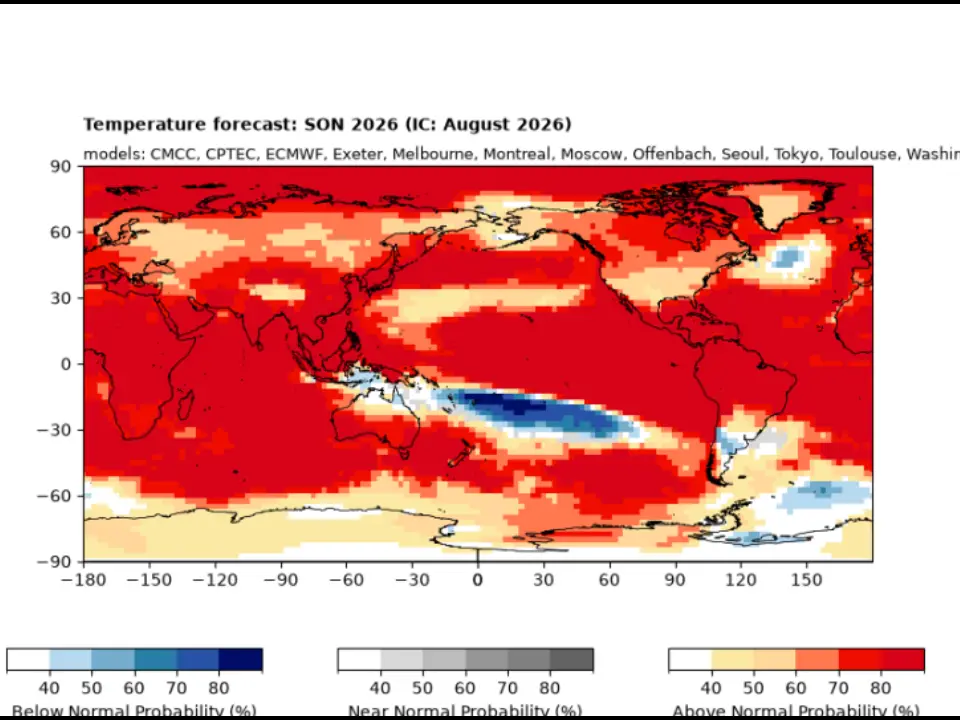
An El Nino phenomenon is a climate pattern which describes the increased Pacific Ocean temperatures, causing rainfall, floods and avalanches in western South America as well as heatwaves.
According to AFP temperatures in Santiago, Buenos Aires and Montevideo are expected to return to normal in the coming days, but are expected to experience similar heatwaves in the coming time.
Raul Cordero, a climatologist at the University of Santiago said, "It is very likely that the heat record will be broken this year (in Santiago), and that is extraordinarily abnormal. Ten years ago we had two heat waves a year and now we are talking about nine."
Furthermore, she warned about the effects of heat at the poles."The ice around the polar areas is at minimum levels. Especially around Antarctica, where at this time of year sea ice grows to reach a maximum in September, it is at a historic minimum," Raul added.
(WIth inputs from agencies)
WATCH WION LIVE HERE
You can now write for wionews.com and be a part of the community. Share your stories and opinions with us here.