
&imwidth=800&imheight=600&format=webp&quality=medium "Civil liberties under threat? Cambodia passes 'vaguely worded' bill that can revoke citizenship if...")
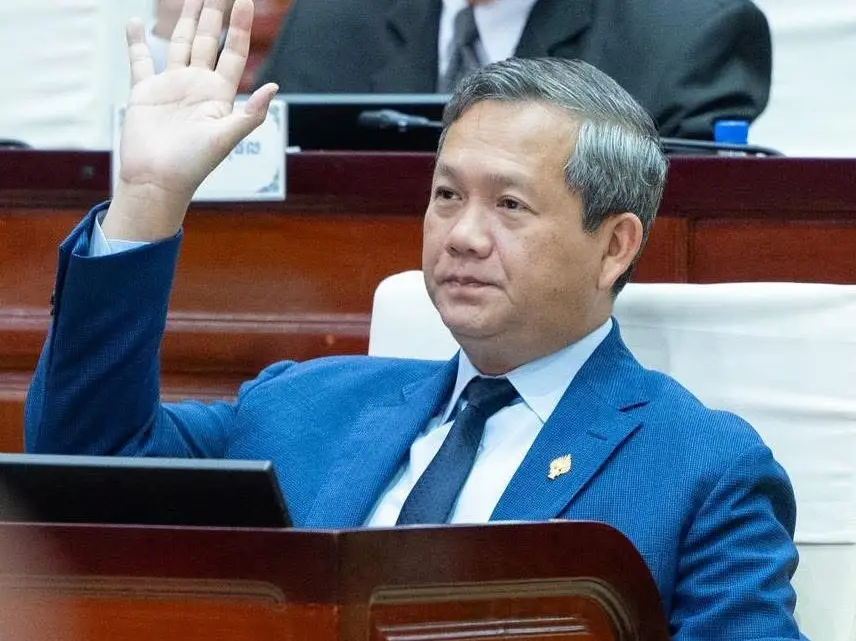
The national assembly of Cambodia unanimously approved the controversial bill on Monday, allowing the government to revoke the citizenship of individuals accused of colluding with foreign powers. The bill was passed after all 120 lawmakers in attendance at the National Assembly session, along with Prime Minister Hun Manet, voted unanimously to approve it.
In response to the bill, rights groups warned that it could severely undermine civil liberties in the country. They have been accusing the Cambodian government for a very long time of using draconian laws to stifle opposition and legitimate political debate.
According to a report by the news agency AFP, a statement was issued by a coalition of 50 rights groups on Sunday, warning that the law will have a catastrophic impact on the freedom of speech for people of Cambodia. "The potential for abuse in the implementation of this vaguely worded law to target people on the basis of their ethnicity, political opinions, speech, and activism is simply too high to accept," it added.

"The government has many powers, but they should not have the power to arbitrarily decide who is and is not a Cambodian." The legislation still will have to be passed by the upper house of Cambodia before being enforced by the head of state, but both are considered rubber-stamp steps.
What does this law mean in several European Union countries?
As per the European Parliament briefing in February, 15 European Union countries allow citizens to be withdrawn in cases of treason or disloyalty, though in eight of them the rule applies to naturalised citizens. Previously, Cambodia guaranteed an unconditional right to citizenship in its constitution, but lawmakers last month amended it to say, "receiving, losing and revoking Khmer nationality shall be determined by law".
Trending Stories
)
Microsoft executive called AI training the ‘largest theft of labour in human history’
&im=FitAndFill=(700,400))
What TSMC's 2nm technology means for Apple
)
Ed Sheeran addresses Macklemore's removal, Gaza conflict during Philadelphia concert: 'I cannot hide how I feel'
)
Saudi vs Houthis: Houthis claim missiles & drones used in attack on key Saudi sites
)
'Lot of things to learn from experienced players': Jayasuriya backs Rohit, Virat for 2027 ODI World Cup
)
TIFF 2026: Theja Rio’s Angh wins Platform Prize, puts Nagaland story on global stage
)
Trump defends AI amid growing alarm, announces new 'AI force' and promises an 'AI czar'
)
Harry Brook targets long reign at top of T20I rankings after Sri Lanka sweep
)
US ships in Indian Ocean ‘will be attacked’ if war resumes, warns Iran
)
Operation Sindoor’s hidden naval dimension | MoD reveals Indian Navy Special Forces joined May 7 strikes
)
'Were you here to sell chickpeas?': Wasim Akram criticises Babar Azam's captaincy
)
North Korea's nuclear tests triggered 1,399 earthquakes: Earth is still shaking | Gravitas
)
Samsung raises Galaxy S26 prices by Rs 20,000: Here’s what each model now costs
)
AI actress Tilly Norwood glitches mid-interview, switches from English to Chinese | Watch
)
Sikh bus driver assaulted, bus stolen and rammed into cars in England; video surfaces
)
S Jaishankar, former Army chief among high-profile names issued Delhi SIR notices
)
SNL UK takes aim at Ed Sheeran with AI Princess Diana sketch
)
Mark Carney mimics Trump in hilarious moment over C$70 billion clean-energy investment; room erupts in laughter
)
AUS vs ZIM, 3rd ODI: Ellis stars as Australia edge Zimbabwe by one wicket in last-over thriller
)
West Indies Squad for India Series: Hetmyer included for T20Is, Holder rested
)
Bessent meets China’s He Lifeng to prepare for Trump-Xi summit
&im=FitAndFill=(700,400))
Top 10 countries in mathematics: See the world’s best performers in 2026
)
‘0% chance’: Nvidia CEO Jensen Huang dismisses AI extinction fears by 2030
)
Chancellor Friedrich Merz vows to stay on as exit polls signal major poll setback
)
Trump in ‘deciding mode’ on Iran, says ‘very big things’ going to happen soon
)
Trump says he'll build an 'AI Force' and appoint a czar, for 'high IQ' people only
)
Trump announces ‘AI Force’ as debate grows over AI risks and regulation
)
Munich Mayor taps first keg to kick off Oktoberfest
)
Saudi Arabia exits China-led mBridge digital currency platform amid Saudi-Houthi conflict
)
AI kill switch explained: Why shutting down a dangerous AI may not be as simple as pressing a button
)
Kampala-Ankara rift deepens: Uganda suspends military ties, seeks Fred Lumbuye's extradition
)
China now makes advanced memory chips without the machines it was banned from buying
)
Arvind Kejriwal, family members, Delhi CM Rekha Gupta get SIR notices
)
Apple reportedly building AI server with M8 Ultra chips, may use Nvidia technology
)
BTS' fans question iHeartRadio’s treatment of group after brief festival set
)
Iran sets 7 conditions to end war with US: What are Tehran’s demands?
)
Several petrol pumps, other businesses to refuse UPI payments above Rs 2,000 from Oct 16: Is it legal?
After the amendment was passed, Justice Minister Koeut Rith said, "If you betray the nation, the nation will not keep you." But last month, Amnesty International labelled the legislation as a heinous act of international law.
Additionally, regional research director Montse Ferrer said that the move comes amid a backdrop where Cambodian authorities failed to uphold the independence and integrity of the court of nation. "It comes against a backdrop where the Cambodian authorities have completely failed to safeguard the independence and integrity of the country's courts," said regional research director Montse Ferrer.
"This has enabled the government's authoritarian practices to continue unchecked, such as its persecution of opposition leaders, activists and independent journalists," Montse Ferrer added.

