

&imwidth=800&imheight=600&format=webp&quality=medium "Carcasses in Caracas: US 'running' Venezuela is a bad idea, and we've seen that movie before. How it failed in Latin America")
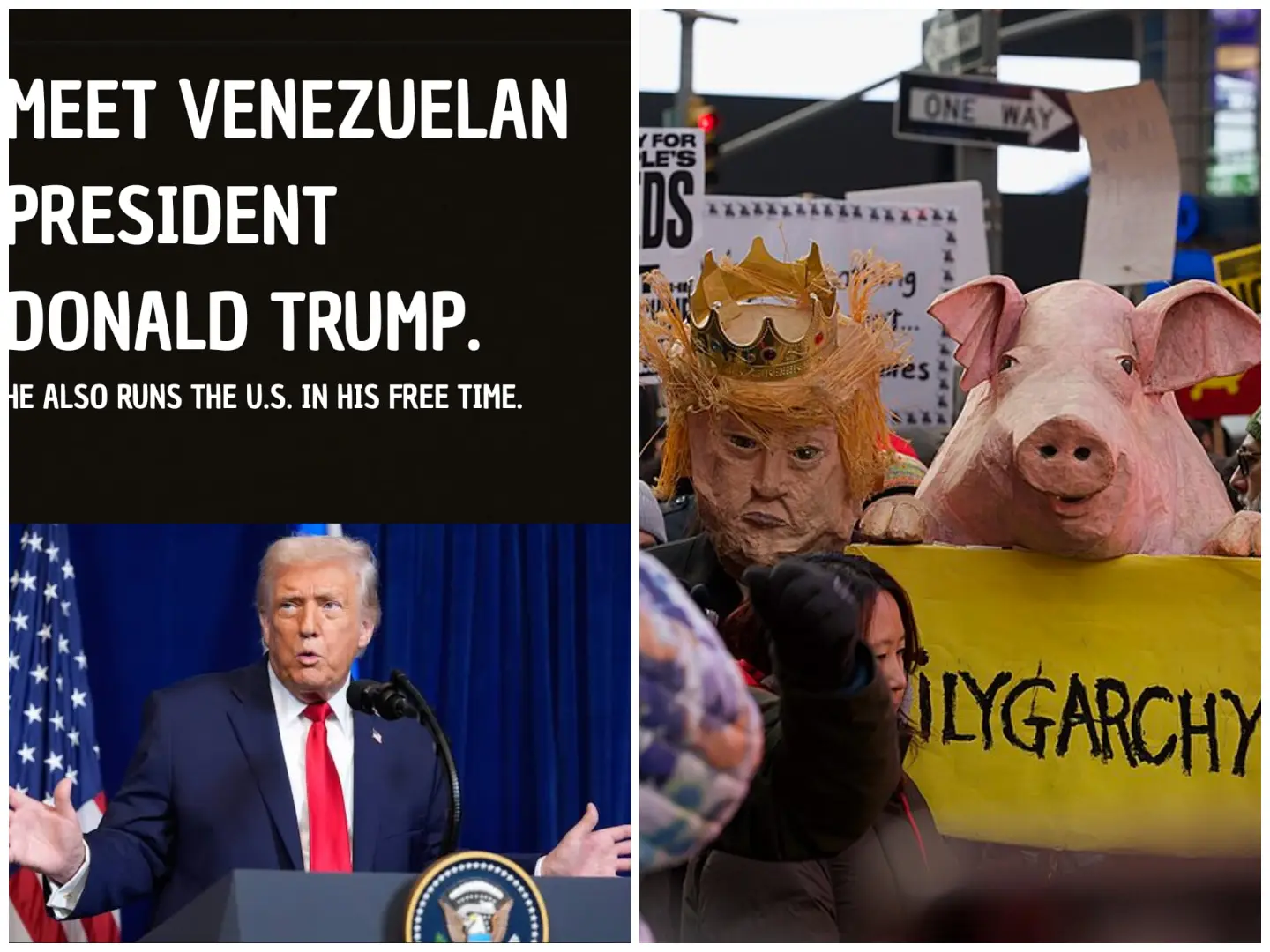
Nicolás Maduro is in US custody. In a span of over 48 hours, he went from being president of Venezuela to being extracted from his own capital city Caracas, taken blindfolded—first to a ship and then an aircraft— prep-walked before media and photographed, and 'showcased in the back of an open vehicle in New York, to standing trial in a court in the American city. To much of the shocked world, this is an act of humiliation. President Donald Trump's idea of the US 'running Venezuela' and 'managing' its oil could lead to more deaths, destruction, and chaos. Indignation and hurt to national pride could unite the people of Venezuela, only to bring back another socialist regime after a long guerrilla war. Here is a prognosis, based on expert opinion and the history of US interventions in Latin America.
US involvement in Venezuela: A recipe for disaster?
A deeper involvement of the US—either as an occupier or as manager of the Venezuelan oil or economy—is sure to exacerbate violence and chaos, according to experts. Organisations like the Washington Office on Latin America (WOLA) have condemned unilateral US military intervention, saying it would undermine a peaceful democratic transition and risk broader regional instability.
The January 3 overnight attack on Venezuela has already raised serious questions about violation of international norms and could provoke prolonged conflict.
There is a view that the drug-trafficking allegations against Maduro—which are cited as the reason for his extraction—are "flimsy" and do not justify intervention. Analysts warned that such pretexts echo past failed policies and could position the US as a "rogue state" in global eyes.
Global reactions underscored this: Many Latin American and world leaders decried the strike on Caracas that culminated in Maduro's detention as violation of international law, predicting resentment and unification of adversaries in Venezuela against the US.
Trending Stories
&imwidth=180&imheight=135&format=webp&quality=medium)
Priyanka Chopra celebrates Dussehra 2026 with Nick Jonas and daughter Malti Marie | See pics
&imwidth=180&imheight=135&format=webp&quality=medium)
Diljit Dosanjh's Oct 30 Delhi show hits roadblock, Delhi Police denies permission
&imwidth=180&imheight=135&format=webp&quality=medium)
China's dancing robot turns violent bodyguard, lifts cars and fights intruders - Watch
&imwidth=180&imheight=135&format=webp&quality=medium)
Will Rohit and Kohli play ODI World Cup 2027? BCCI president Manhas says board 'not in a position to comment'
&imwidth=180&imheight=135&format=webp&quality=medium)
Rafale Marine fighter begins flight trials in Goa ahead of Indian Navy induction
&imwidth=180&imheight=135&format=webp&quality=medium)
Feds obtain DNA evidence that could prove Ilhan Omar married her brother: Report
&imwidth=180&imheight=135&format=webp&quality=medium)
16-foot doomsday fish in Chile triggers fears that the next earthquake is coming
&imwidth=180&imheight=135&format=webp&quality=medium)
US midterms 2026: What polls and prediction markets indicate about Congress
&imwidth=180&imheight=135&format=webp&quality=medium)
Pakistan signs another defence pact even as Makkah Alliance shows no teeth. This time, it's with Qatar, Indonesia, Turkey
&im=FitAndFill=(700,400)&imwidth=180&imheight=135&format=webp&quality=medium)
New OTT releases this week (October 19-25, 2026): Gajab Raat to Chaar Yaar-8 titles to watch during Dussehra week on Netflix, Prime Video and more
&imwidth=180&imheight=135&format=webp&quality=medium)
Why websites around the world are suddenly going offline? What you need to know about PHP
&imwidth=180&imheight=135&format=webp&quality=medium)
From Agni-V to Project Kusha: How are India’s indigenous missile systems and defence shield reshaping modern warfare
&imwidth=180&imheight=135&format=webp&quality=medium)
Are the US and Israel preparing for another major attack on Iran? Here's what report claims
&imwidth=180&imheight=135&format=webp&quality=medium)
Ranbir Kapoor apologises for Dussehra speech slip, clarifies remark at Ramayana event
&imwidth=180&imheight=135&format=webp&quality=medium)
'Gyanu must go': CJP's Saurav Das, Ashutosh Ranka after release, despite Jantar Mantar protest undertaking
&imwidth=180&imheight=135&format=webp&quality=medium)
US-Iran war: Bibi, Trump gamble on new Iran war to save themselves in polls
&imwidth=180&imheight=135&format=webp&quality=medium)
Viral video shows cross falling on Colombia priest, no official confirmation | WATCH
&imwidth=180&imheight=135&format=webp&quality=medium)
Australia police arrest former national 100m champ Jake Doran for alleged child abuse
&imwidth=180&imheight=135&format=webp&quality=medium)
Kolkata airport: CISF detects ₹1.13 crore in US dollars hidden in bags of 2 Bangkok-bound passengers
&imwidth=180&imheight=135&format=webp&quality=medium)
EU probes Booking.com under Digital Services Act
&imwidth=180&imheight=135&format=webp&quality=medium)
'Father of all bombs' vs 'mother of all bombs': Iran threatens US with new weapon as Trump hints at MOAB strike
&imwidth=180&imheight=135&format=webp&quality=medium)
WATCH: Woman IPS officer fires several rounds of AK-47, ignites debate online
&imwidth=180&imheight=135&format=webp&quality=medium)
‘I caution the president...’: Trump’s ex-press secretary warns after Zacharia’s exit
&imwidth=180&imheight=135&format=webp&quality=medium)
'It's a crime not to see this scene': Tehran puts Trump 'behind bars'
&imwidth=180&imheight=135&format=webp&quality=medium)
US to get 850 F-35 stealth fighter jets under 10-year Pentagon-Lockheed deal
&imwidth=180&imheight=135&format=webp&quality=medium)
'You are a dummy, you are a stupid person': Trump loses temper with CNN, ABC reporters after questions about Russia sanctions
&imwidth=180&imheight=135&format=webp&quality=medium)
US midterms 2026: Trump's approval rating hits record low as Democrats gain ground
&imwidth=180&imheight=135&format=webp&quality=medium)
Meta slapped with $25 billion fine in New Mexico over Facebook data practices, company plans appeal
&imwidth=180&imheight=135&format=webp&quality=medium)
Ilhan Omar breaks silence over alleged marriage to her brother; Trump thinks it's 'really good answer'
Targeting Maduro selectively ignored other brutal regimes worldwide, suggesting the move is more about power projection and greed for Venezuela's covted oil and natural resources than justice.
Experts noted that Venezuela's alliances with US adversaries like Russia, Iran, China and Cuba could give it external support, complicating any occupation. This could turn into a quagmire for the US, akin to Afghanistan or Iraq.
What could follow: Smooth transition, guerrilla warfare, or a return to socialism?
Fears have been expressed already that any US occupation would likely unite the disparate factions of Venezuelan politics: Chavistas (followers of Hugo Chávez's ideology), nationalists, and even some opposition groups under an anti-imperialist banner.
Venezuela's military, though weakened by economic collapse, is reportedly preparing for asymmetric guerrilla warfare, dispersing units and leveraging armed groups to resist conventional forces. A protracted insurgency is likely, and could cause thousands of deaths, infrastructure destruction, and humanitarian crises.
Occupation of the nation, as the US envisages, could prove practically impossible given Venezuela's vast terrain and impoverished economy despite being oil-rich. The deep-seated Bolivarian socialist legacy under Hugo Chávez would frame any American intervention as colonial theft of resources.
Socialist networks could be mobilised domestically, regionally and globally as seen in rapid pro-Maduro activism by US-based groups following the recent events.
We have been here before: How US interventions in Latin America panned out
The US has a long history of intervening in Latin American countries, ostensibly to promote democracy, combat threats, or secure its economic interests. Most of these caused widespread deaths and long-term instability in the relevant countries. Resentment against the US united local populations against perceived imperialism and new-age colonialism. Resistance to American activities often paved the way for revolutionary or leftist regimes to gain or retake power.
The 1954, a CIA-orchestrated coup in Guatemala ousted democratically elected President Jacobo Árbenz. It led to decades of civil war, authoritarian rule, and an estimated 200,000 deaths, much of it fuelled by anti-US sentiment.
US support for the 1973 coup in Chile against the Salvador Allende government installed the Augusto Pinochet regime. The dictator killed thousands and tortured tens of thousands. It sowed seeds of political revolution that eventually shifted the nation back toward progressive governments.
In Nicaragua during the 1980s, the US backed the Contra rebels against the Sandinista government, prolonging a brutal civil war that caused an estimated 30,000 deaths and economic devastation. Despite that, the Sandinistas returned to power democratically in 2006 amid lingering anti-imperialist fervour.
This falls into a familiar pattern seen since the early 20th century. Since Cold War days, US intervened in Cuba, Panama, and other nations under the guise of "strategic denial" or protecting US interests. This often escalated into prolonged conflicts and crises, leading to regional backlash.
US is not a stablising force in Latin America
As one analyst put it, the US actions generated needless resentment in the region and called into question its real commitment to democracy and self-determination, often leading to cycles of instability rather than stability.
Trump's plans for "running" Venezuela would likely follow a similar trajectory. This could set the stage for the resurgence of socialist ideologies popularised by Maduro and his predecessor, Hugo Chávez. The future could echo Nicaragua's Sandinista revival or Bolivia's return to MAS rule after US-backed interventions. The cycle of intervention, resistance, and ideological resurgence has been a hallmark of Latin American history and the US role in it. Venezuela's strong anti-Yankee sentiment, amplified by Maduro's alliances, makes this outcome probable.

